
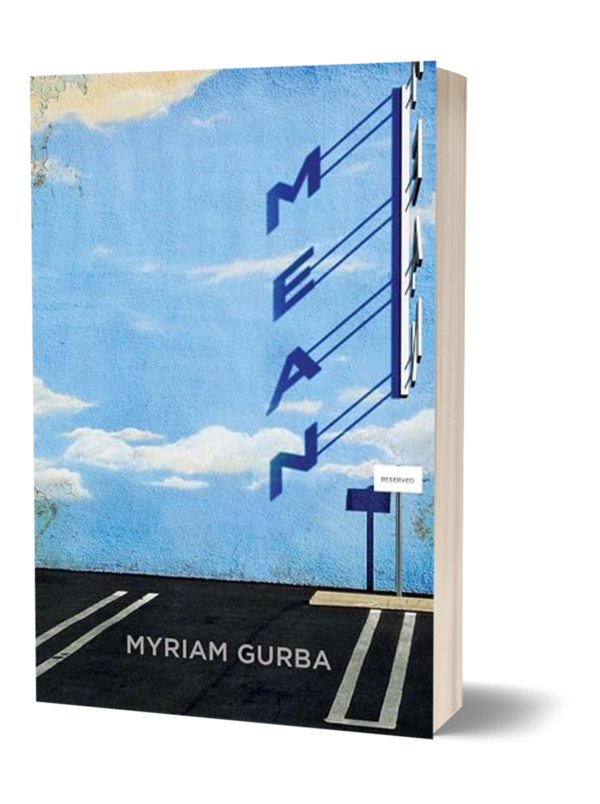
Gurba grows up queer, Chicana, and take no prisoners. Her story is a revelation, a delight, and an eye-opener.
True crime, memoir, and ghost story, Mean is the bold and hilarious tale of Myriam Gurba’s coming of age as a queer, mixed-race Chicana. Blending radical formal fluidity and caustic humor, Gurba takes on sexual violence, small towns, and race, turning what might be tragic into piercing, revealing comedy. This is a confident, intoxicating, brassy book that takes the cost of sexual assault, racism, misogyny, and homophobia deadly seriously.
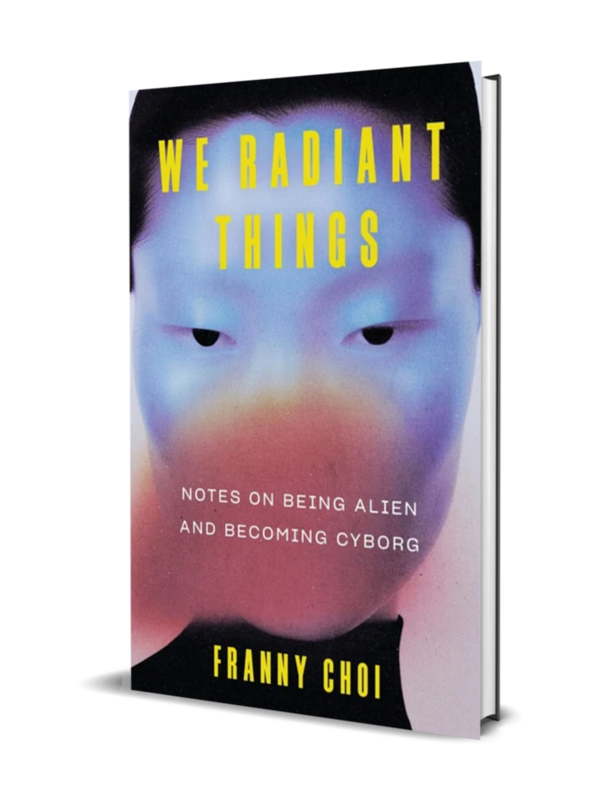
"We Radiant Things is criticism at its most intimate and alive. I am grateful for this book.”—Cathy Park Hong, author of Minor Feelings
Blending lyric memoir and cultural criticism, acclaimed poet Franny Choi’s debut essay collection explores our obsession with cyborgs and what sci-fi representations of Asian femmes reveal about race, gender, sexuality, disability, labor, technology, and language.
In the 2014 film Ex-Machina, a Japanese maid named Kyoko—beautiful, obedient, unspeaking—peels back the skin on her face to reveal glimmering circuitry. The white man who has been trying to understand her inscrutable behavior looks on in horror. When Franny Choi first watches this scene, their own face awash in the screen’s eerie glow, they feel a familiar mix of revulsion and self-recognition. Yes, Choi thinks, that’s what I’ve been trying to say.
In this luminous essay collection, Choi descends into the uncanny valley to encounter notable cyborgs and robots from across American culture and asks why so many of them bear the faces of East Asian women. Just why is it that whenever artificial intelligence is represented, a sexy but unfeeling Asian woman enters the frame? What does the literal objectification of Asian femmes say about how the West imagines—and dreads—an increasingly automated future?
Choi draws from their own experiences along with queer, feminist, and critical race theory to answer these questions. Refusing the detached safety of critical distance, they write instead “at stabbing range”—a risky intimacy that collapses the space between human and machine, critic and subject. We Radiant Things draws closer to the images carved out for us, the histories of oppression that animate them, and the future in which we try, painfully, to find ourselves.
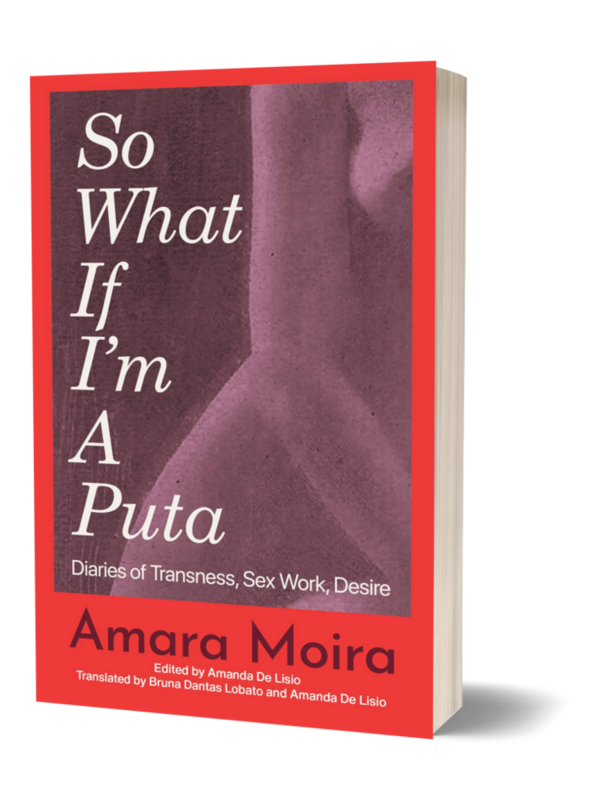
An incisive, intimate diary of the life of a travesti sex worker in Brazil, with a foreword by Charlotte Shane
So What If I’m a Puta, originally published on author Amara Moira’s popular blog of the same name, consists of 44 crônicas that wryly portray her experiences as a trans sex worker in Brazil. In a brazen, funny, and at times heartbreaking voice, Moira explores the political and personal textures of her encounters with the men who buy sex from her, and the complex reality of her labor of a sort of love.
Woven through Moira’s essays are reflections on transition, safe sex, desire, whorephobia, consent—in the grim context of Brazil’s record rates of violence against trans women. Ultimately, Moira writes to center trans sex workers in Brazil’s putafeminist movement, modeling a feminism that envisions inclusivity, safety, self-determination, and joy for us all.
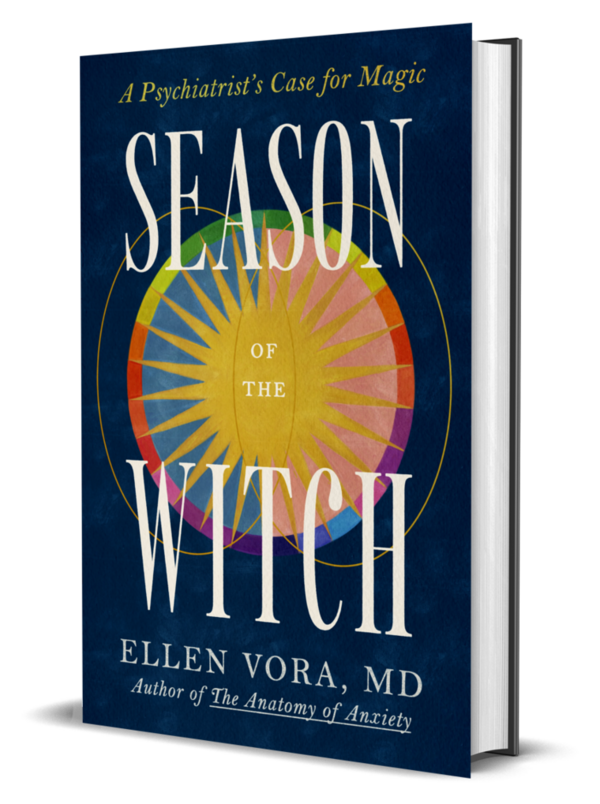
A provocative call for women to reclaim the intuition, mystery, and transcendence that modern life has trained us to dismiss—from Dr. Ellen Vora, author of The Anatomy of Anxiety
Witch: /wiCH/ noun: Any woman who has reclaimed the intuitive, mystical, and embodied ways of knowing that our culture tries to shame and suppress
We are caught in a crisis of disconnection. The cost of this shows up everywhere: in our bodies, which cry out with digestive issues and chronic conditions; in our relationships, where we’ve lost the communities that once held us; and in our day-to-day, where we feel rudderless, anxious, and incapable of navigating our lives without outsourced advice.
For years, Yale and Columbia-trained psychiatrist Ellen Vora has taken a holistic approach to helping her patients navigate these challenges. But when she herself experienced a shattering loss, she realized that true healing will never come from a wellness program.
According to Vora, every woman possesses a natural connection to magic, but our culture’s biases have severed our ties to the mystical. In Season of the Witch, Vora examines those biases and reveals the five practices that can help us reclaim the full spectrum of our intelligence: embodiment; presence; valuing the yin; being open to mystery; and serving the collective.
By engaging with these practices, we become witches: women who walk through the world with a quiet conviction, anchored in our own knowing, trusting that we are whole unto ourselves—women fully alive to mystery. This is what true witchiness looks like: not an escape from reality, but a deeper way of being in it.
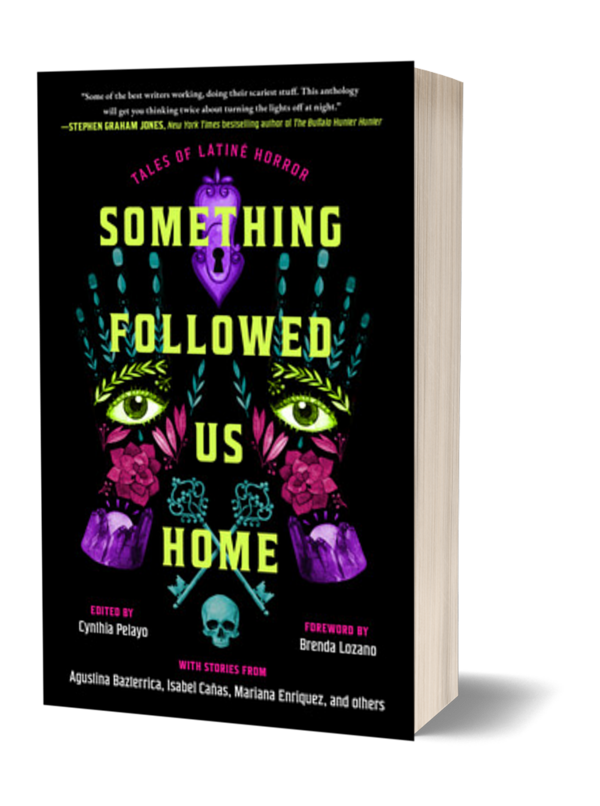
“Insightful, humane, and original, Something Followed Us Home features the most exciting voices in dark fiction today and is a must read for any weird/lit/horror fan.” —Paul Tremblay, New York Times bestselling author of Horror Movie and A Head Full of Ghosts
Dive into the chilling depths of Latine horror with this groundbreaking anthology, edited by Bram Stoker Award winner Cynthia Pelayo, where each story reimagines immigration, colonization, faith, and folklore as the fears we inherit and carry across borders and generations.
Something followed us home. It crawled in with our prayers, slipped into our beds, watched from mirrors, waited in water, and learned our names.
Gathering chilling work from some of today’s most acclaimed Latiné voices, this horror anthology moves through haunted households, brutal landscapes, sacred spaces turned dangerous, and bodies claimed by forces both ancient and intimate. The dead murmur behind locked doors. Bones rebuild themselves under merciless suns. Love becomes a doorway for demonic hunger. Blood, devotion, and memory intertwine as the past presses back with teeth.
Something Followed Us Home is an unnerving, visceral, and impossible-to-shake collection that proves that what is carried forward does not remain quiet, and what follows us rarely leaves without taking something in return.
Featuring stories by: Agustina Bazterrica, Isabel Cañas, Gerardo Sámano Córdova, Zoraida Córdova, Ann Dávila Cardinal, Mariana Enriquez, Carolina Flórez-Cerchiaro, Xochitl Gonzalez, Leopoldo Goût, Ananda Lima, Juan Martinez, Mónica Ojeda, Daniel José Older, Cynthia Pelayo, Lilliam Rivera, Diana Rodriguez Wallach, Alex Segura
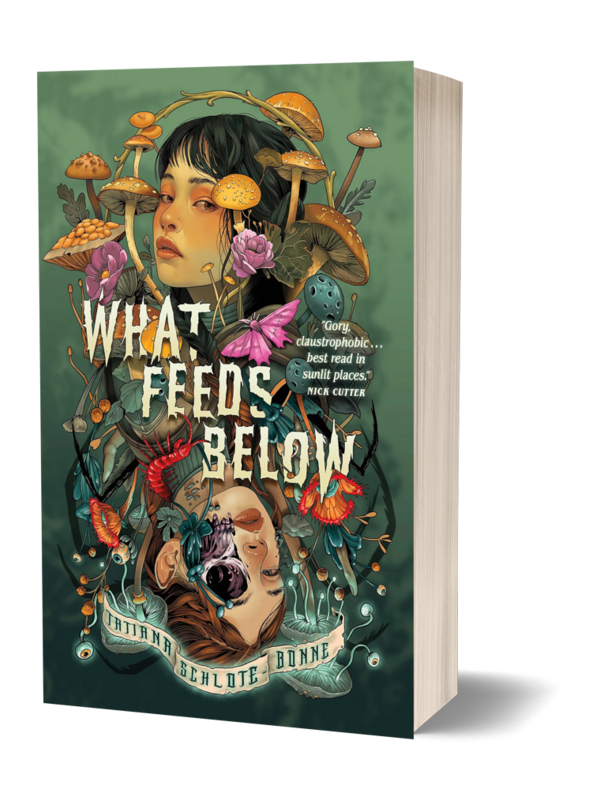
BEGINS SHIPPING 10/6/26
STARRED PUBLISHERS WEEKLY REVIEW: "Astounding, inventive."
STARRED KIRKUS REVIEW: "Lush and innovative world-building, gruesome body horror . . . A nail-biting tale set in a beautifully rendered world of darkness and danger"
The darkness isn’t empty. It’s hungry.
At the edge of the City of the Void, a massive chasm extends miles into the earth, its treacherous terrain overrun with vicious monsters and carnivorous plants. For orphaned best friends Petra and Jade, guiding treasure-seeking tourists down into the Void is the only way to earn enough to pull themselves up out of the slums for good.
Petra prefers to play it safe and take jobs only in the Void’s upper levels, where the dangers are better understood, while Jade wants to risk a descent to the deepest and most mysterious Sixth Layer. Because the deeper they go, the better the payout, and the sooner their dreams can become reality. Their friendship is Petra’s whole world, and Jade’s approval means everything—so Petra agrees to do it Jade’s way.
When their job goes wrong and Jade is lost in the Void, Petra must plunge deeper than she’s ever dared to save her friend.
But she doesn’t know the truth of the Void . . . or what really waits for her in its depths.
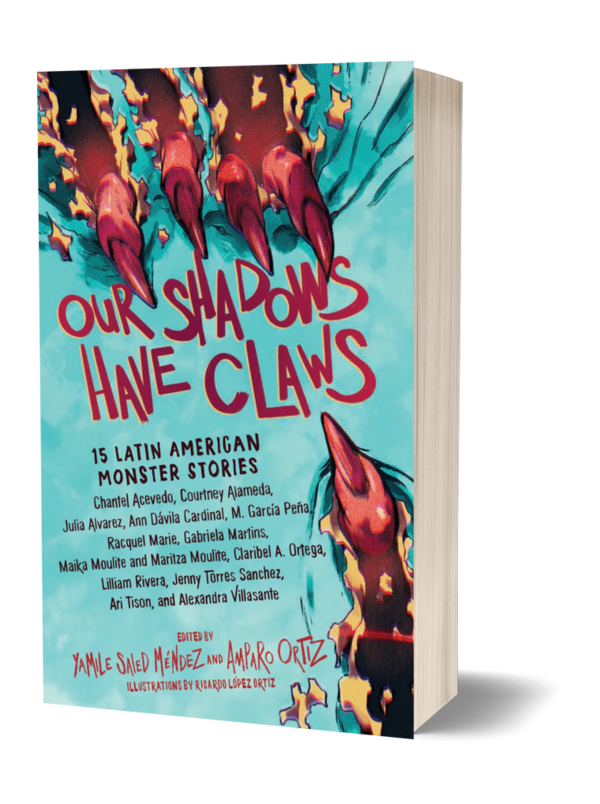
“This bloodcurdling anthology soars.” —Kirkus Reviews, starred review
From zombies to cannibals to star-crossed, shapeshifting lovers, this cross-genre anthology written by superstar YA authors from across the Latin American diaspora offers bold new thrills for every monster fan.
In these fifteen original short stories, bloodthirsty vampires are hunted by a quick-witted slayer; children are taken from their beds by “el Viejo de la Bolsa” while a military dictator steals their parents; and anyone you love might be a monster waiting to strike. The sinister worlds of these narratives are also magical ones, where supernatural beings can be avatars for justice, vengeance, sisterhood, and empowerment. Some monsters need to be slain; others should be embraced.
So, step into the darkness. See what you find.
Full contributor list: Chantel Acevedo, Courtney Alameda, Julia Alvarez, Ann Dávila Cardinal, M. García Peña, Racquel Marie, Gabriela Martins, Yamile Saied Méndez, Maika Moulite and Maritza Moulite, Claribel A. Ortega, Amparo Ortiz, Lilliam Rivera, Jenny Torres Sanchez, Ari Tison, and Alexandra Villasante.
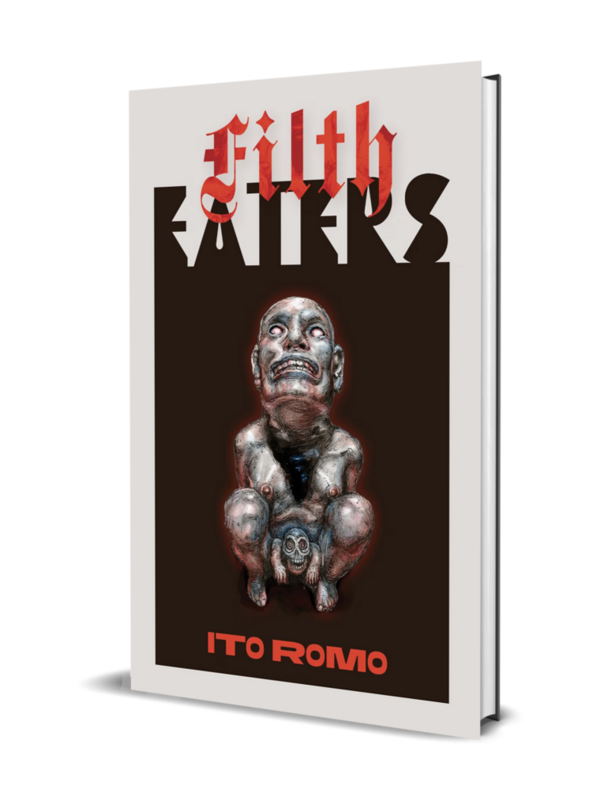
A high-strung and inventive literary horror that will delight fans of Stephen Graham Jones and Mariana Enriquez, Ito Romo’s debut novel traces the thousand-year lineage of a new kind of vampire—the mestizo Filth Eater.
Granada, 1849. After centuries of scrounging in the shadows, the vampire Radamés discovers an ancient Aztec codex that reveals the vampires of the “New World” live a more “human” life—they marry, they give birth. Spurred on by tantalizing promise of a fuller existence, Radamés glamours and schemes his way onto a ship headed for Mexico. There, in the underbelly of the forgotten city of Teotihuacán, the Andalusian vampire falls in love with a member of this ancient sect of vampires who call themselves Filth Eaters. From their union, the mestizo vampire Doro is born.
Hopping back and forth in time from the Indus River Delta in 1099 to the Muslim Spanish empire of the 1400s to a flooded cyberpunk New York City of the future, Filth Eaters pulls at the threads of empire, greed, and climate collapse, but the beating, bloody heart of the story is our very human desire for the love that gives life meaning. The debut novel from a celebrated writer of “Chicano Gothic” stories, this surprising, gory saga turns a new page for a centuries-old genre.
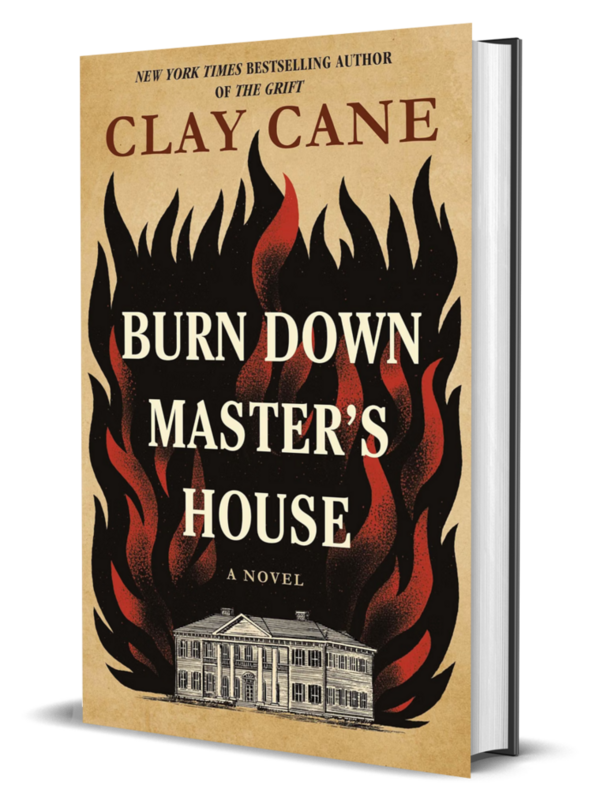
Inspired by true, long-buried stories of enslaved people who dared to fight back, a searing portrayal of resistance for readers of Colson Whitehead, Jesmyn Ward, and Percival Everett, from Clay Cane, award-winning journalist and New York Times bestselling author of The Grift.
As turmoil simmers within a divided nation, smoke from another blaze begins to rise. Sparked by individual acts of resistance among those enslaved across the American South, their seemingly disparate rebellions fuel a singular inferno of justice, connecting them in ways quiet at times, explosive at others. As these flames rise, so will they.
Luke, quick-witted and literate, and Henri, a man with a strong and defiant spirit, forge an unbreakable bond at a Virginia plantation called Magnolia Row. Both seek escape from unimaginable cruelty. And sure as the fires of hell, Luke and Henri will leave their mark, sparking resistance among the lives they touch…
One is Josephine, a young, sharp, and observant girl who wields silence as her greatest weapon. A witness to Luke and Henri’s resilience, she listens, watches, waits for the moment to make her move.
Then there is Charity Butler, her husband a formerly enslaved man who proved his ferocity as a young boy standing alongside Josephine. At his encouragement, Charity fights for her freedom in court and wins – only to battle a deeply unjust system designed to destroy the life they’ve built.
And finally, there is Nathaniel, who ruthlessly exploits other Black people and mirrors the cruelty of the white men who, like him, are enslavers. A perversion of the system of slavery, his fragile and contradictory rule will become a catalyst of its own.
Inspired by the true stories of the profoundly courageous men and women who dared to fight back, Burn Down Master’s House is a singular tour de force of a novel—breathtaking in scope, compassion, and a timeliness that speaks powerfully to our present era.
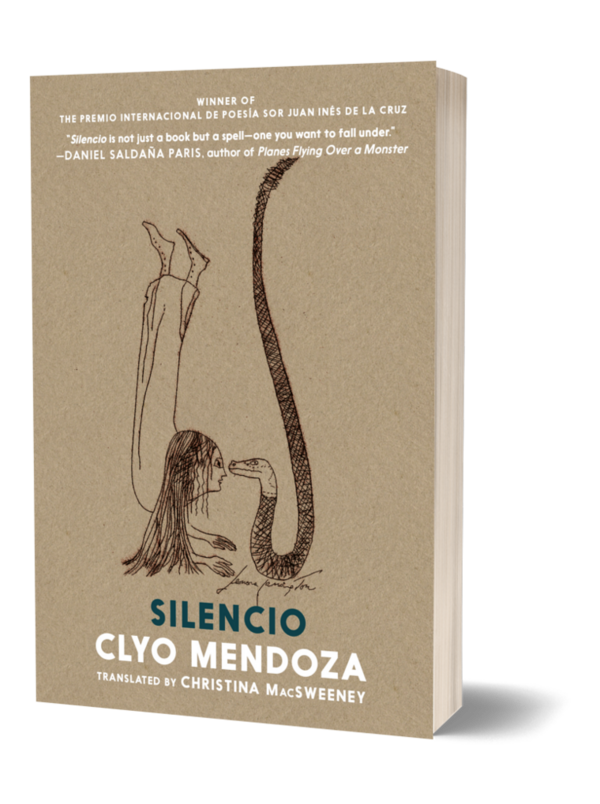
A lyrically haunting and powerful account of women surviving femicide and destruction in Mexico, using fantasy to relate atrocities that exist beyond language.
From the award-winning author of the highly praised novel, Fury, one of Publisher’s Weekly’s Best Books of 2024 and an Indie Next Pick.
Silencio tells the story of Águeda, a young woman mourning the death of her mother. When the townspeople deny her a grave in the local cemetery, the mother’s body vanishes. Águeda knows her father is hiding it, and when she confronts him, he punishes her defiance with confinement.
Serving her sentence in a house, Águeda lives within those walls as if in a second maternal womb—one that will transform her. In chapters alternating between the real and the imaginary, she mourns the destroyed futures of those who were silenced as she listens to her neighbors’ stories of loss—a child worker; a boy from the Tacuate community; and Mexican refugees in Canada. Through the walls, she senses the world: birds in dialogue, the beauty of the arid landscape, experiences of love and devastation. She comes to realize that in this mountain region that resembles the author’s hometown of Oaxaca, where organized crime holds sway, many—like her—mourn their dead and search for the disappeared.
In her second book to be translated into English, Clyo Mendoza transcends the limits of language and realism to represent with lyric brutality the unspeakable violence in towns where narcotrafficking rules.
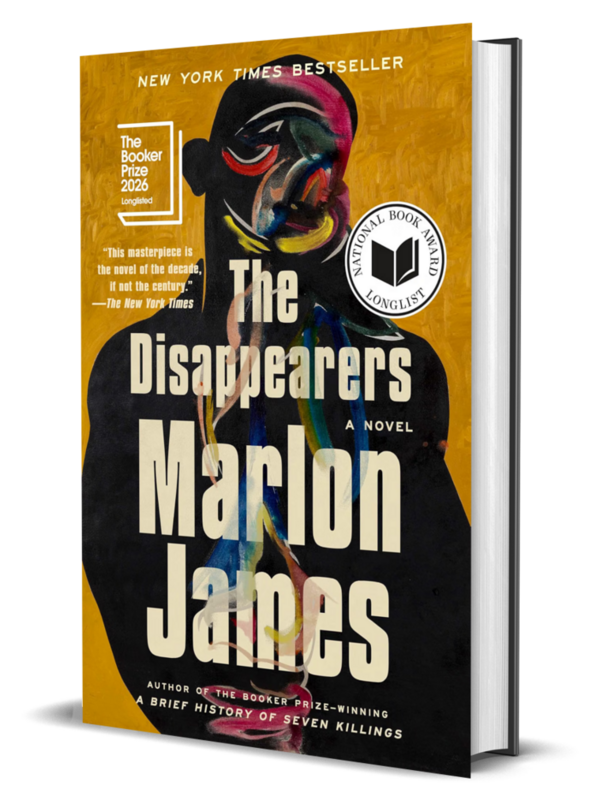
AN INSTANT NEW YORK TIMES BESTSELLER
LONGLISTED FOR THE 2026 BOOKER PRIZE
LONGLISTED FOR THE 2026 NATIONAL BOOK AWARD FOR FICTION
From Marlon James, author of the Booker Prize–winning A Brief History of Seven Killings: the electrifying story of the murder of a gay man in 1980s Jamaica and its far-reaching consequences
In 1988, eight men in Kingston, Jamaica, begin rehearsals for a play. Though strangers to one another, they share an inescapable truth: All of them are gay. And they live in a world that refuses to accept them.
One night the men are savagely beaten and one of them is killed. As their bodies heal, the survivors begin to face the hatred and contempt that the violence laid bare. Some try to ignore what happened. Others double down on retribution. Some disappear completely.
In this spellbinding novel, Marlon James has written a propulsive crime story that is also a deeply human account of connection and acceptance. Full of fascinating characters, biting humor, and unapologetic sex, The Disappearers is both a thrilling page-turner and a finely etched portrait of queer life.
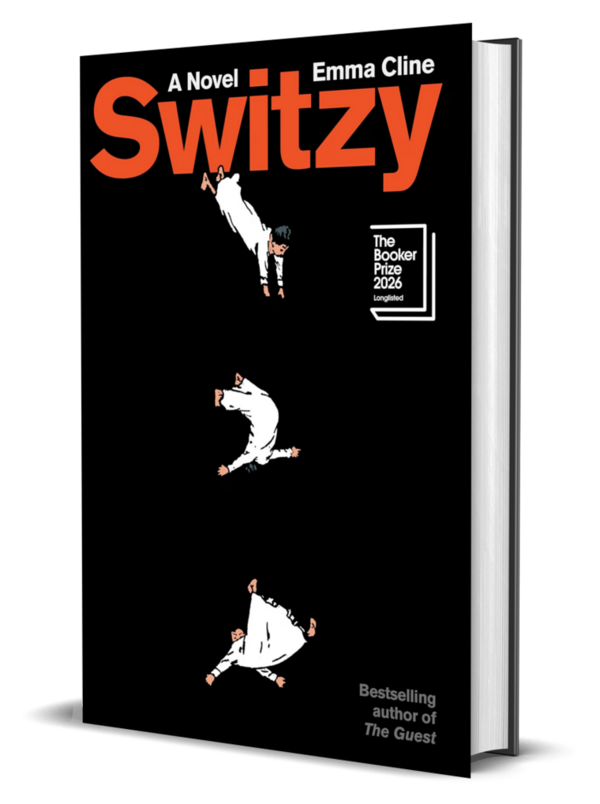
A mesmerizing portrait of an aging man’s last pilgrimage, from the New York Times best selling author of The Girls and The Guest.
A private plane cuts through the winter night, somewhere over Greenland. David, a retired executive, sits back in his leather seat, playing solitaire on his phone. Click. Click. Drag. Click. The notebook in his jacket pocket is filled with familiar phrases, urgent reminders to himself, but he struggles to recognize his own handwriting.
A mystery, among many mysteries. The world, once so knowable, has been rendered inscrutable.
This is what David knows: Cody, his assistant, asleep in the seat next to him, will shepherd him along the voyage. A stopover in London. Dinner with his adult daughter. A meeting in France with an old friend, estranged for decades.
His final destination is Zurich.
David glides through hotel rooms and airports and foreign cities, running out the clock on his mortal life. His grasp on the present slips away, and the past rushes in: the Sunday roasts of childhood. The stiff clothes meant only for church. A summer at a school friend’s house. The losses and missteps that punctuate a life.
As David’s arrival in Zurich looms, an exquisitely rendered portrait of an unraveling mind emerges, both darkly humorous and profoundly moving. Hypnotic and startlingly original, Switzy probes the depths of human consciousness, revealing what a man is left with when the accomplishments and compromises that have defined him, and the illusions he's relied on, vanish.
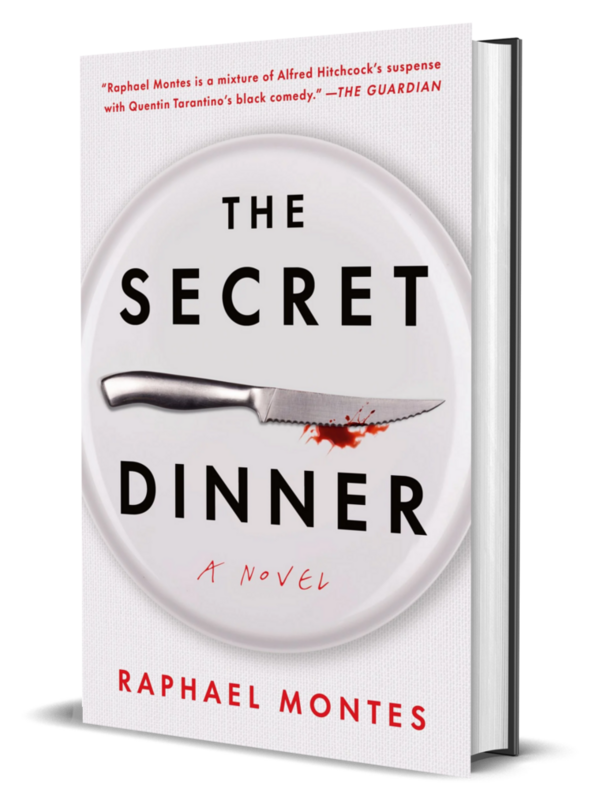
"Bold and bloody, it's a thriller with real bite." ―Riley Sager
Four childhood friends, eager for a taste of city life, swap rural Brazil for an apartment in Copacabana, Rio. But they have no idea of the fate that awaits them there. . . .
Dante, Piglet, Miguel, and Hugo are your average students trying to make ends meet with part-time jobs, excited about the bright futures at their fingertips. So when their rent skyrockets, they struggle to keep their new lives and big dreams afloat. They need to make money however they can. In order to keep their apartment, the friends adopt an unorthodox plan and are soon sucked into a dark world of secret dinner parties catering to the twisted fantasies of Rio's elite.
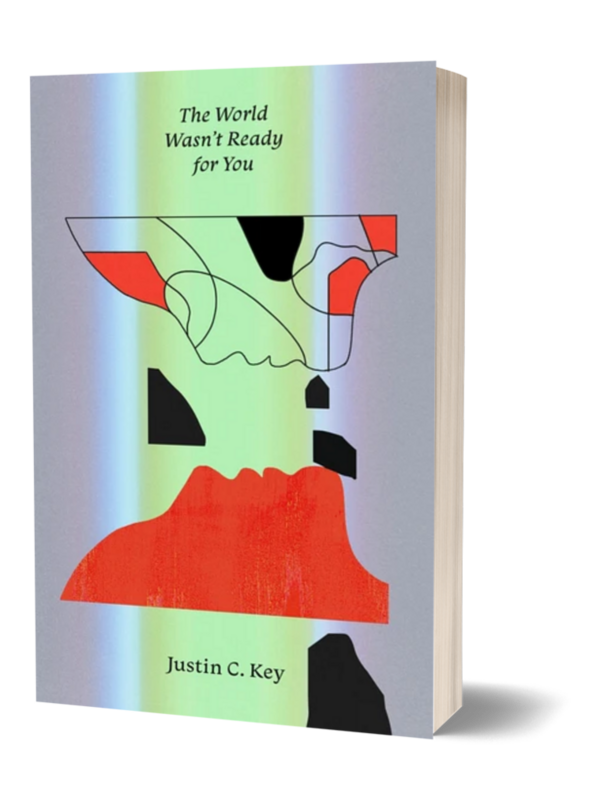
“The most profound terror is rooted in love—the terror of losing love, of love betrayed, of love in peril. Justin C. Key’s work is a cold knife through a hot heart, a surgical blade unleashing gouts of searing fear.”—Cory Doctorow, author of Red Team Blues, Little Brother, and Radicalized
“An electrifying collection of stories that would make Octavia E. Butler smile.”—Ebony
Black Mirror meets Get Out in this gripping story collection reminiscent of the work of Octavia E. Butler, deftly blending science fiction, horror, and fantasy to examine issues of race, class, and prejudice—an electrifying, oftentimes heartbreaking debut from an extraordinary new voice—
now available as a limited Olive Edition from Harper Perennial.
In The World Wasn’t Ready for You, Justin C. Key builds on his lifelong obsession with monsters as he expands and subverts the horror genre to expertly explore issues of race, class, prejudice, love, exclusion, loneliness, and what it means to be a person in the world, while revealing the horrifying nature inherent in all of us.
In the opening story, “The Perfection of Theresa Watkins,” a sci-fi love story turned nightmare, a husband uses new technology to download the consciousness of his recently deceased Black wife into the body of a white woman. In “Spider King,” an inmate agrees to participate in an experimental medical study offered to Black prisoners in exchange for early release, only to find his body reacting with disturbing symptoms. And in the title story, a father tries to protect his son, teaching him how to navigate a racist world that does not understand him and sees him as a threat.
The World Wasn’t Ready for You is a gripping, provocative, and distinctly original collection that demonstrates Key’s remarkable literary gifts—a skill at crafting science fiction stories equaled by an ability to sculpt characters and narrative—as well as his utterly fresh take on how genre can be used to delight, awe, frighten, and ultimately challenge our perceptions. Wildly imaginative and powerfully resonant, it introduces an unforgettable new voice in fiction.
The full set of books in the 2026 Olive Editions series include:
Guards! Guards! by Terry Pratchett
Changing Planes by Ursula K. Le Guin
Island by Aldous Huxley
Alas, Babylon by Pat Frank
The Princess Bride by William Goldman
The Hidden Palace by Helene Wecker
Highfire by Eoin Colfer
The World Wasn’t Ready for You by Justin Key
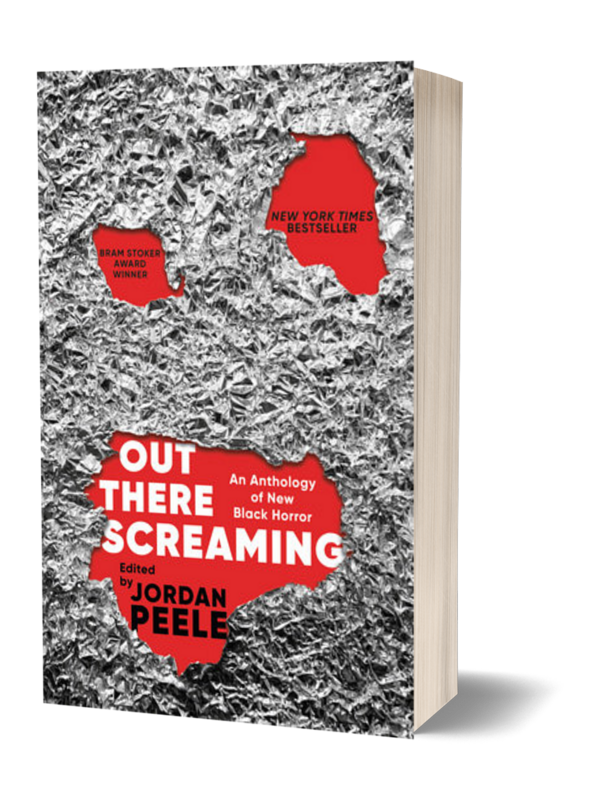
NEW YORK TIMES BESTSELLER
The visionary writer and director of Get Out, Us, and Nope, and founder of Monkeypaw Productions, curates this groundbreaking anthology of all-new stories of Black horror, exploring not only the terrors of the supernatural but the chilling reality of injustice that haunts our nation.
“Every piece is strong and memorable, making this not only likely to be the best anthology of the year, but one for the ages.”—The Guardian
A cop begins seeing huge, blinking eyes where the headlights of cars should be that tell him who to pull over. Two freedom riders take a bus ride that leaves them stranded on a lonely road in Alabama where several unsettling somethings await them. A young girl dives into the depths of the Earth in search of the demon that killed her parents. These are just a few of the worlds of Out There Screaming, Jordan Peele’s anthology of all-new horror stories by Black writers. Featuring an introduction by Peele and an all-star roster of beloved writers and new voices, Out There Screaming is a master class in horror, and—like his spine-chilling films—its stories prey on everything we think we know about our world . . . and redefine what it means to be afraid.
Featuring stories by: Erin E. Adams, Violet Allen, Lesley Nneka Arimah, Maurice Broaddus, Chesya Burke, P. Djèlí Clark, Ezra Claytan Daniels, Tananarive Due, Nalo Hopkinson, N. K. Jemisin, Justin C. Key, L. D. Lewis, Nnedi Okorafor, Tochi Onyebuchi, Rebecca Roanhorse, Nicole D. Sconiers, Rion Amilcar Scott, Terence Taylor, and Cadwell Turnbull.
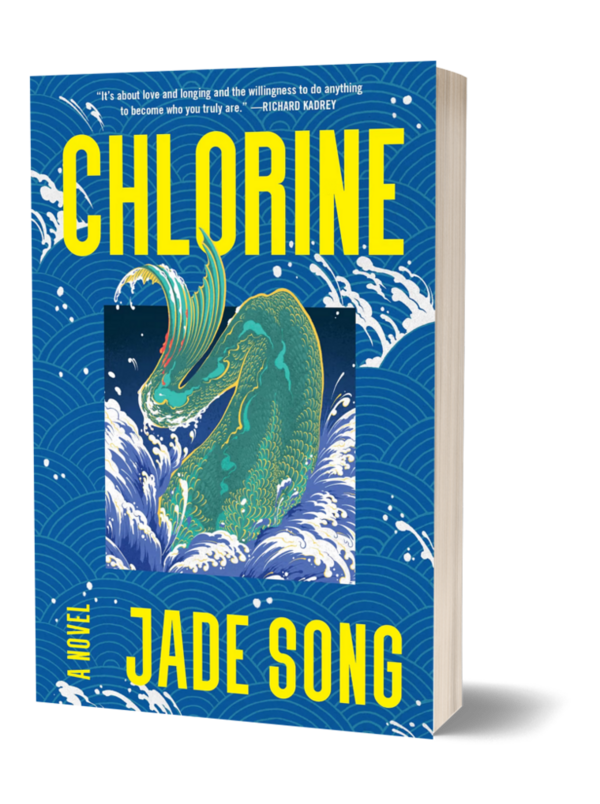
In the vein of The Pisces and The Vegetarian, Chlorine is a debut novel that blurs the line between a literary coming-of-age narrative and a dark unsettling horror tale, told from an adult perspective on the trials and tribulations of growing up in a society that puts pressure on young women and their bodies... a powerful, relevant novel of immigration, sapphic longing, and fierce, defiant becoming.
Ren Yu is a swimmer. Her daily life starts and ends with the pool. Her teammates are her only friends. Her coach, her guiding light. If she swims well enough, she will be scouted, get a scholarship, go to a good school. Her parents will love her. Her coach will be kind to her. She will have a good life.
But these are human concerns. These are the concerns of those confined to land, those with legs. Ren grew up on stories of creatures of the deep, of the oceans and the rivers. Ones that called sailors to their doom. Ones that dragged them down and drowned them. Ones that feasted on their flesh. Ones of the creature that she's always longed to become: mermaid.
Ren aches to be in the water. She dreams of the scent of chlorine--the feel of it on her skin. And she will do anything she can to make a life for herself where she can be free. No matter the pain. No matter what anyone else thinks. No matter how much blood she has to spill.
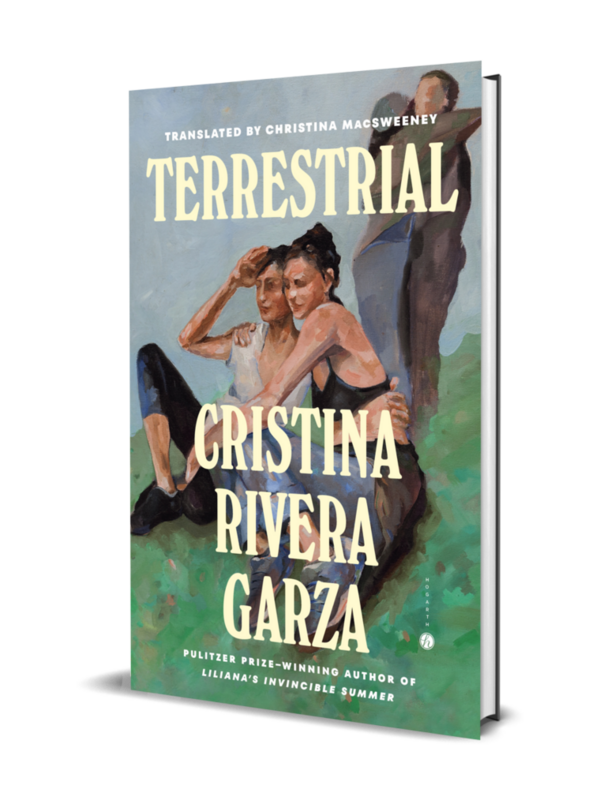
A fiercely poetic, tenderly observed portrait of young women’s travels on the fringes of Mexico and the United States, by the Pulitzer-Prize winning author of Liliana’s Invincible Summer
In this new collection of genre-defying stories by Cristina Rivera Garza, a woman visits what she thinks could be her old lover's hometown after being abandoned by her, years earlier. Two herons hitchhike across Mexico. A group of workers build a new home, only to see it destroyed by the state.
With little baggage and much bravado, the characters in Terrestrial hitchhike, migrate, take trains, wander or, at times, fly, to survive the mandates of patriarchy and capitalism. On dusty roads or by a lake turned suddenly ominous, they remain in close contact with the earth's surface, sensing its wild promise and capacity for violence, its degradation and enduring beauty.
As she did in her Pulitzer Prize winning memoir Liliana’s Invincible Summer, Rivera Garza forges new forms, experimenting with structure and time as she tails the intrepid travelers with shimmering and honest prose. Combining journalism, novelistic writing, and themes of female freedom, gore capitalism, and class struggle, Terrestrial is a meditation on travel and distance, and our ties to the earth we tread on.
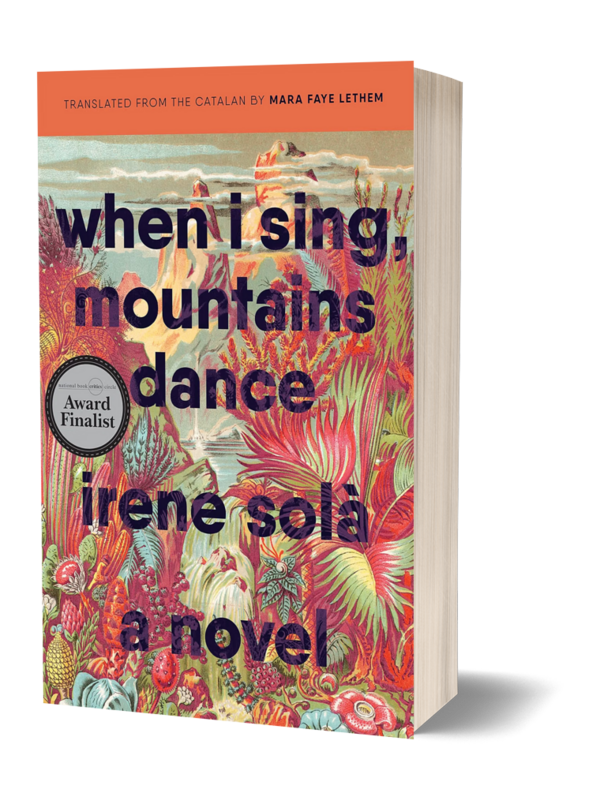
Near a village high in the Pyrenees, Domènec wanders across a ridge, fancying himself more a poet than a farmer, to “reel off his verses over on this side of the mountain.” He gathers black chanterelles, attends to a troubled cow. And then storm clouds swell, full of electrifying power. Reckless, gleeful, they release their bolts of lightning, one of which strikes Domènec. He dies. The ghosts of seventeenth-century witches gather around him, taking up the chanterelles he’d harvested before going on their merry ways. So begins this novel that is as much about the mountains and the mushrooms as it is about the human dramas that unfold in their midst.
When I Sing, Mountains Dance, winner of the European Union Prize, is a giddy paean to the land in all its interconnectedness, and in it Sola finds a distinct voice for each extraordinary consciousness: the lightning bolts, roe deer, mountains, the ghosts of the civil war, the widow Sió and later her grown children, Hilari and Mia, as well as Mia’s lovers with their long-buried secrets and their hidden pain.
Irene Solà animates the polyphonic world around us, the fierce music of the seasons, as well as the stories we tell to comprehend loss and love on a personal, historical, and even geological scale. Lyrical, elemental, and mythic, hers is a fearlessly imaginative new voice that brilliantly renders both our tragedies and our triumphs.
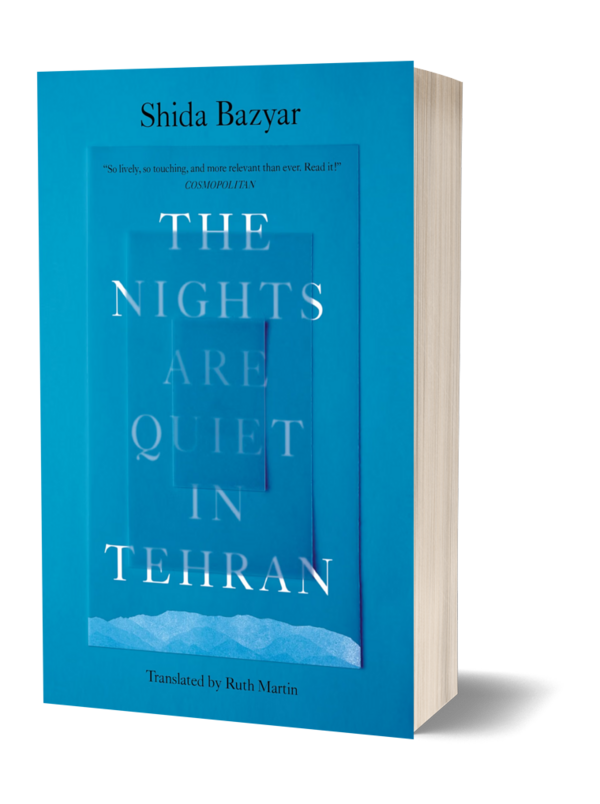
A captivating, polyphonic novel of one family’s flight from and return to Iran.
1979. Behsad, a young communist revolutionary, fights with his friends for a new order after the Shah’s expulsion. He tells of sparking hope, of clandestine political actions, and of how he finds the love of his life in the courageous, intelligent Nahid.
1989. Nahid lives her new life in West Germany with Behsad. With their young children, they spend hour after hour in front of the radio, hoping for news from others who went into hiding after the mullahs came to power.
1999. Laleh returns to Iran with her mother, Nahid. Between beauty rituals and family secrets, she gets to know a Tehran that hardly matches her childhood memories.
2009. Laleh’s brother Mo is more concerned with a friend’s heartbreak than with student demonstrations in Germany. But then the Green Revolution breaks out in Iran and turns the world upside down …
A topical, moving novel about revolution, oppression, resistance, and the absolute desire for freedom.
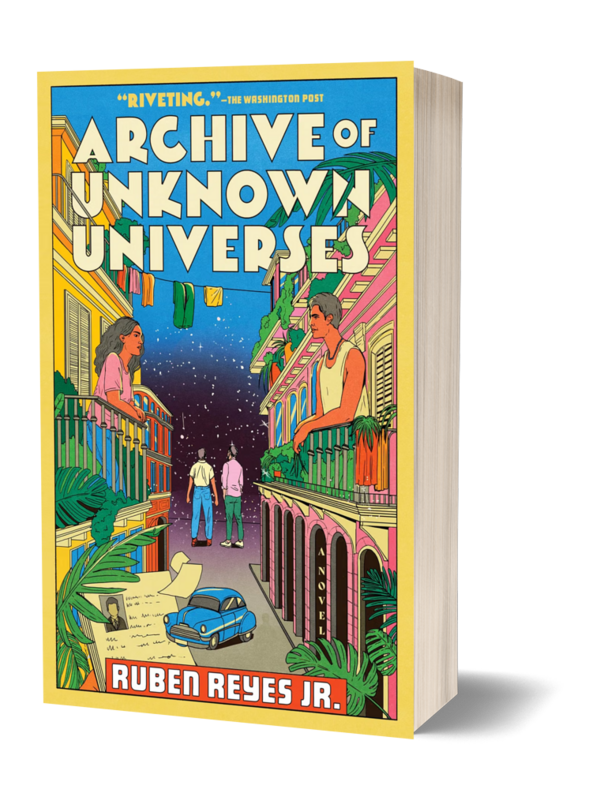
From the author of There Is a Rio Grande in Heaven, a piercing debut novel following two families in alternative timelines of the Salvadoran civil war—a stunning exploration of the mechanisms of fate, the gravity of the past, and the endurance of love.
Cambridge, 2018. Ana and Luis’s relationship is on the rocks, despite their many similarities, including their mothers who both fled El Salvador during the war. In her search for answers, and against her best judgement, Ana uses The Defractor, an experimental device that allows users to peek into alternate versions of their lives. What she sees leads her and Luis on a quest through Havana and San Salvador to uncover the family histories they are desperate to know, eager to learn if what might have been could fix what is.
Havana, 1978. The Salvadoran war is brewing, and Neto, a young revolutionary with a knack for forging government papers, meets Rafael at a meeting for the People's Revolutionary Army. The two form an intense and forbidden love, shedding their fake names and revealing themselves to each other inside the covert world of their activism. When their work separates them, they begin to exchange weekly letters, but soon, as the devastating war rages on, forces beyond their control threaten to pull them apart forever.
Ruben Reyes Jr.’s debut novel is an epic, genre-bending journey through inverted worlds—one where war ends with a peace treaty, and one where it ends with a decisive victory by the Salvadoran government. What unfolds is a stunning story of displacement and belonging, of loss and love. It’s both a daring imagining of what might have been and a powerful reckoning of our past.
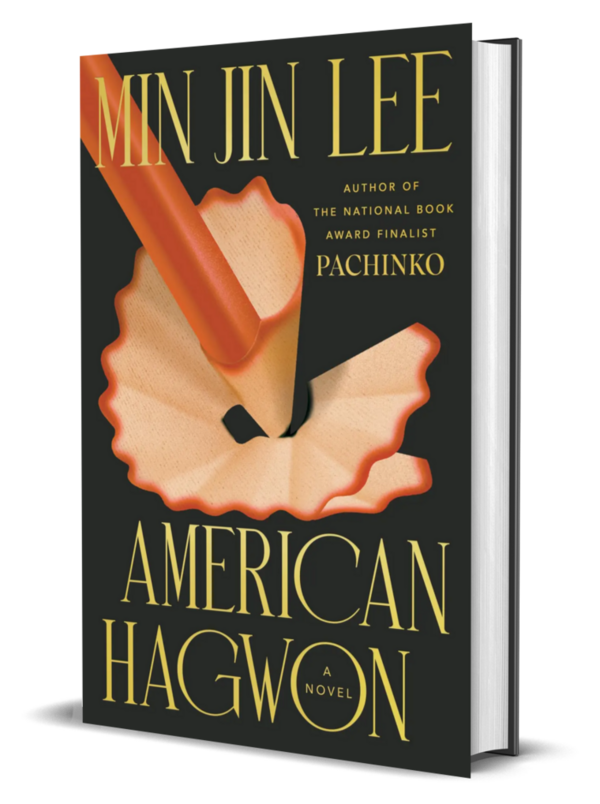
The National Book Award finalist and New York Times bestselling author of Pachinko returns with a breathtaking contemporary epic: a masterpiece by turns sweeping and intimate, that reckons with ambition and moderation, lust and loyalty, personal dreams and familial duty.
Min Jin Lee brings grand ambition, fierce heart, and the tenderest hope to a novel I didn’t want to end.” —Roxane Gay, bestselling author of Bad Feminist and Hunger
In schools and churches, hotel rooms and nail salons, law firms and fried-fish shops; in cramped, dingy apartments and luxury, gated communities, the men, women, and children in American Hagwon struggle to find satisfaction and meaning in a world that seems to grow less forgiving with each passing year. Once comfortably middle class in Korea, John and Helen Koh and their three children—Bo, DH, and Mido—find their lives upended, first by a shocking betrayal by John’s oldest friend, then by the 1997 Asian financial crisis.
Desperately striving to regain their footing, they leave Seoul for Sydney and eventually settle in Southern California—where new vistas of opportunity open up for the children as their parents, strangers in a strange land, must adjust to a new life in which their experience and education mean little, and they set their sights on whatever it takes to provide for their children’s futures. The Kohs, their friends, relatives, and even their foes move in and out of each other’s lives as they navigate new courses across the years, always nursing the almost all-consuming faith that education will lead the next generation to success and security.
In American Hagwon, Min Jin Lee has crafted an unforgettable, panoramic novel where the smallest of gestures can have enormous repercussions, where the bonds of family and of memory twist and fray but rarely break, and where willful self-sacrifice—for the benefit of loved ones and even strangers—is a kind of prayer.
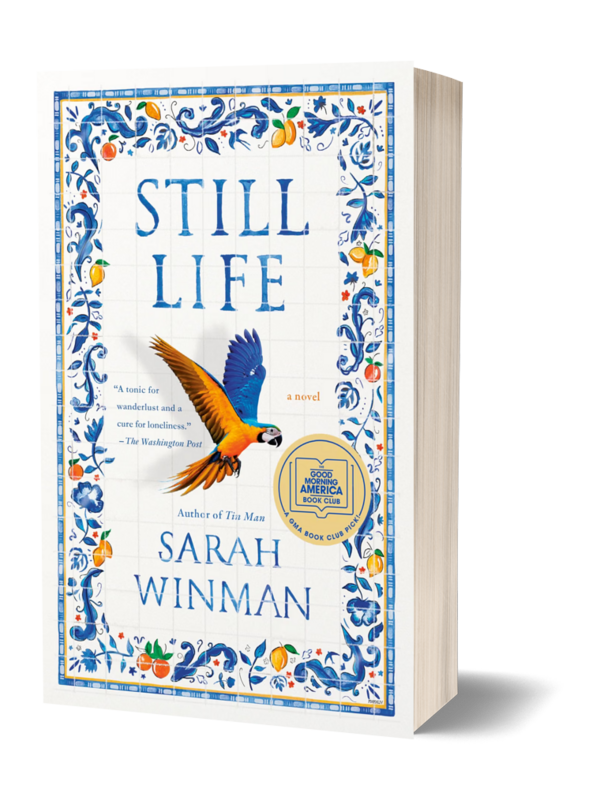
Tuscany, 1944: As Allied troops advance and bombs fall around deserted villages, a young English soldier, Ulysses Temper, finds himself in the wine cellar of a deserted villa. There, he has a chance encounter with Evelyn Skinner, a middle-aged art historian who has come to Italy to salvage paintings from the ruins and recall long-forgotten memories of her own youth. In each other, Ulysses and Evelyn find a kindred spirit amongst the rubble of war-torn Italy, and set off on a course of events that will shape Ulysses's life for the next four decades.
As Ulysses returns home to London, reimmersing himself in his crew at The Stoat and Parrot -- a motley mix of pub crawlers and eccentrics -- he carries his time in Italy with him. And when an unexpected inheritance brings him back to where it all began, Ulysses knows better than to tempt fate, and returns to the Tuscan hills.
With beautiful prose, extraordinary tenderness, and bursts of humor and light, Still Life is a sweeping portrait of unforgettable individuals who come together to make a family, and a richly drawn celebration of beauty and love in all its forms.
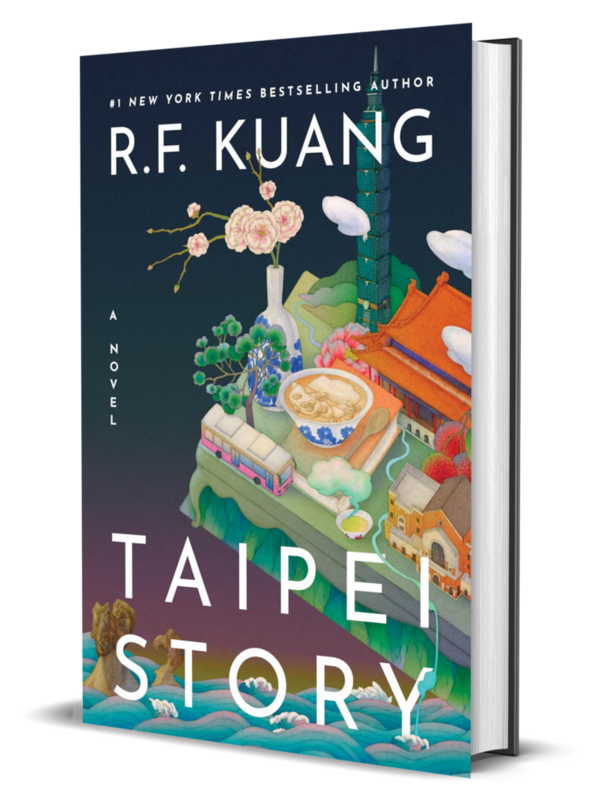
From R.F. Kuang, the acclaimed #1 New York Times bestselling author of Katabasis and Yellowface, comes a wryly humorous and profoundly moving coming-of-age novel that grapples with grief, language, and culture shock—all set against the backdrop of an unforgettable summer in Taipei.
College freshman Lily Chen is off to spend the summer in Taipei at an intensive language program like so many Chinese American students before her, hoping to connect with the culture she inherited but never fully understood. But a promising start quickly unravels. Her classes are grueling, her roommate is driving her insane, and a reckless trip to the hot springs with a guy she barely knows soon has her classmates viciously gossiping. She feels adrift, a foreigner in a country she thought would feel like home.
Then shocking news Lily’s grandfather has passed away. The loss forces her to grapple with now-unanswerable questions about her family history. As Lily grieves, she’s drawn into a journey of self-discovery—piecing together memories, stories, and silences over a series of hilarious and devastating attempts at connection.
Taipei Story What if the diaspora fantasy of homecoming never comes true? What if learning a language can’t bring you any closer to the people you’re trying to reach? What if you search for your family’s history, but your family doesn’t want to share? What if you wait too long to ask the right questions? As Lily struggles for answers, her summer becomes a poignant search for understanding—of herself, her family, and the meaning of home.
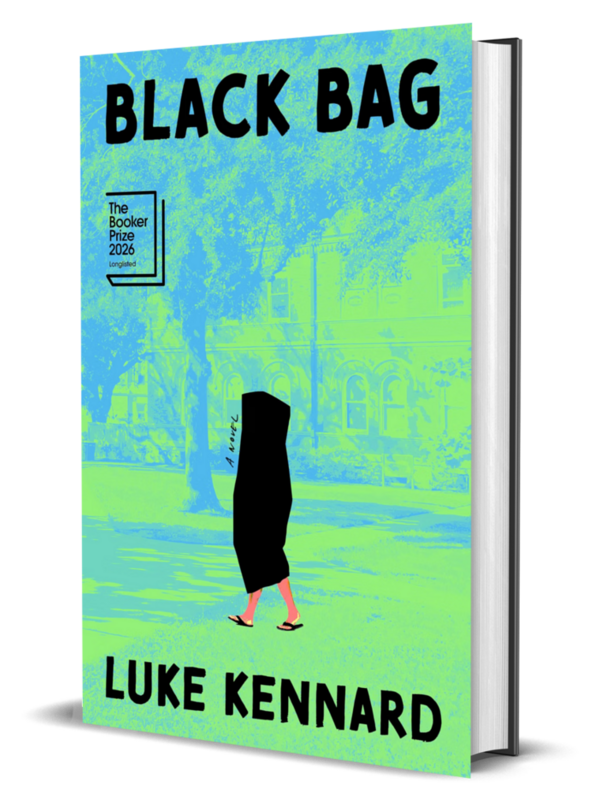
LONGLISTED FOR THE BOOKER PRIZE 2026
An out-of-work actor accepts the role of a lifetime—sitting soundlessly in a lecture theater, zipped into a large leather bag—to aid a professor’s psychological experiment. What could possibly go wrong?
In Luke Kennard’s audacious new novel, a penniless actor picks up a job working for Dr. Blend, a university professor who is conducting a psychological experiment. Dr. Blend wants to know: how will his students react to someone zipped into an oversized bag, sitting at the back of the lecture hall over a series of Fall lectures?
The role, eagerly accepted, soon yields unexpected consequences, from a professor of post-humanism developing research questions of her own—in particular, can you love someone secreted away inside a black bag?—to the actor’s childhood friend forming a vision for monetizing this unique new situation. In the end, only Black Bag will be able to say what it all means . . .
A warped campus novel, an investigation into the crisis of masculinity, and an off-kilter love story, Black Bag is a firework of a novel: blazingly funny and profoundly humane.
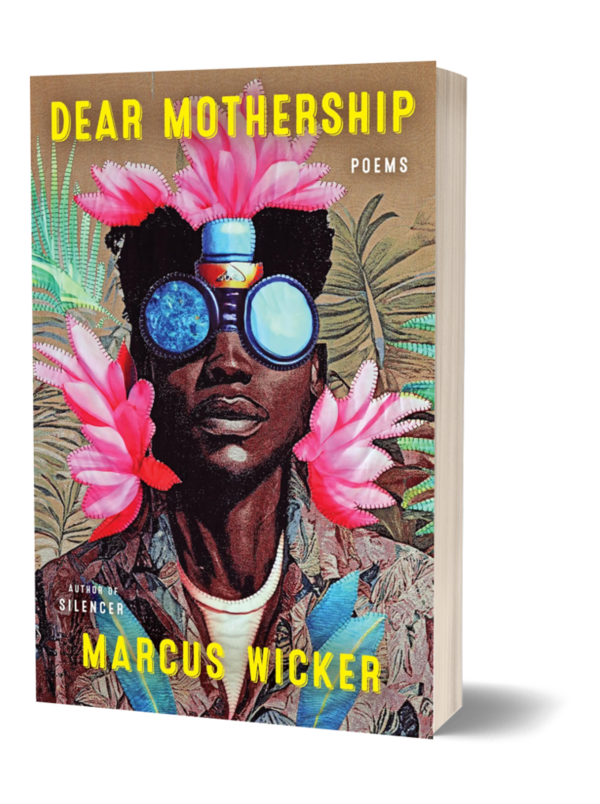
From the author of Maybe the Saddest Thing and Silencer comes a playful yet profound poetry collection that orbits the intersections of public loss, private grief, (dis)connection, capitalism, and identity.
In Dear Mothership, Marcus Wicker channels the lyrical dexterity of Outkast and the speculative vision of poet Robert Hayden to chart a course through personal and political upheaval.
The collection’s centerpiece is the “Break Beat Crown”—Wicker’s original take on the heroic crown of sonnets—presented as a travelogue from an extraterrestrial who has touched down in modern-day Atlanta. Across linked poems, the outsider records field notes on pandemic discord, isolation, tenderness, late-stage capitalism, empathy, and art. The longer the speaker inhabits a dysfunctional society, the more alien he feels. In addition to these science fictional experiments, Wicker delivers affecting, personal poems grounded in lived experience: lingering grief over two miscarriages, the sudden death of a friend, a sustained search for joy on the other side of those heartbreaks.
With its singular imagination, Dear Mothership kindles a new understanding of what makes us most human.
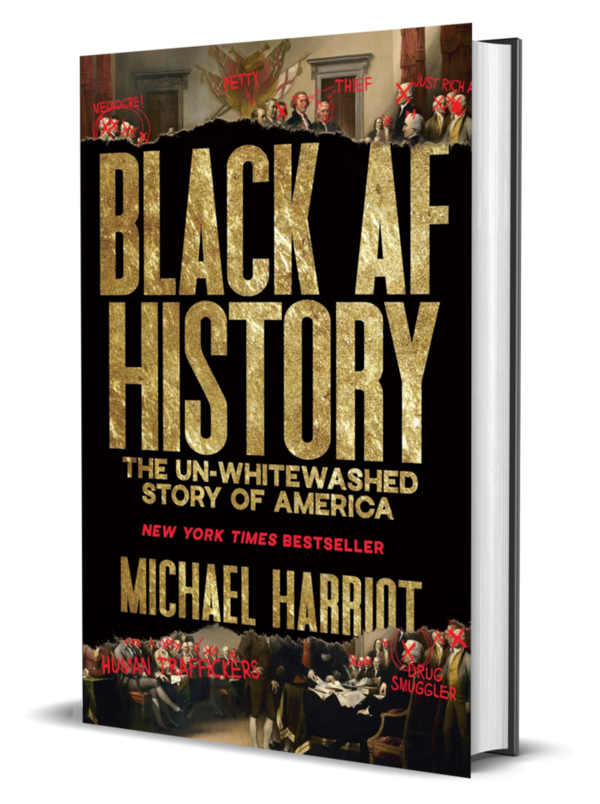
From acclaimed columnist and political commentator Michael Harriot, a searingly smart and bitingly hilarious retelling of American history that corrects the record and showcases the perspectives and experiences of Black Americans.
America’s backstory is a whitewashed mythology implanted in our collective memory. It is the story of the pilgrims on the Mayflower building a new nation. It is George Washington’s cherry tree and Abraham Lincoln’s log cabin. It is the fantastic tale of slaves that spontaneously teleported themselves here with nothing but strong backs and negro spirituals. It is a sugarcoated legend based on an almost true story.
It should come as no surprise that the dominant narrative of American history is blighted with errors and oversights—after all, history books were written by white men with their perspectives at the forefront. It could even be said that the devaluation and erasure of the Black experience is as American as apple pie.
In Black AF History, Michael Harriot presents a more accurate version of American history. Combining unapologetically provocative storytelling with meticulous research based on primary sources as well as the work of pioneering Black historians, scholars, and journalists, Harriot removes the white sugarcoating from the American story, placing Black people squarely at the center. With incisive wit, Harriot speaks hilarious truth to oppressive power, subverting conventional historical narratives with little-known stories about the experiences of Black Americans. From the African Americans who arrived before 1619 to the unenslavable bandit who inspired America’s first police force, this long overdue corrective provides a revealing look into our past that is as urgent as it is necessary. For too long, we have refused to acknowledge that American history is white history. Not this one. This history is Black AF.

From the author of the acclaimed The World Wasn’t Ready for You comes a thrilling first novel, set in a near future where artificial intelligence runs the world, involving a young medical student who must unravel family secrets to uncover the truth of his father’s mysterious death.
In a time not so far from our own, society is run by a global AI system controlled by an all powerful corporation. The Shepherd Organization oversees every medical school in the country save one in New Orleans, the renegade Hippocrates which still insists on human-led medicine. It is the last choice school for an ambitious young New Yorker named Pok. But after his father—himself a physician—dies under mysterious circumstance that seems connected to “the shepherds” and their megalomaniacal young CEO, Pok finds himself on a quest for answers that leads right to Hippocrates. Once enrolled, he stumbles upon a further mystery: a strange illness is plaguing newcomers to New Orleans who grew up under shepherd rule. What is causing this fatal anomaly? And how does it relate to the mystery of Pok’s father’s death and his own mysterious past?
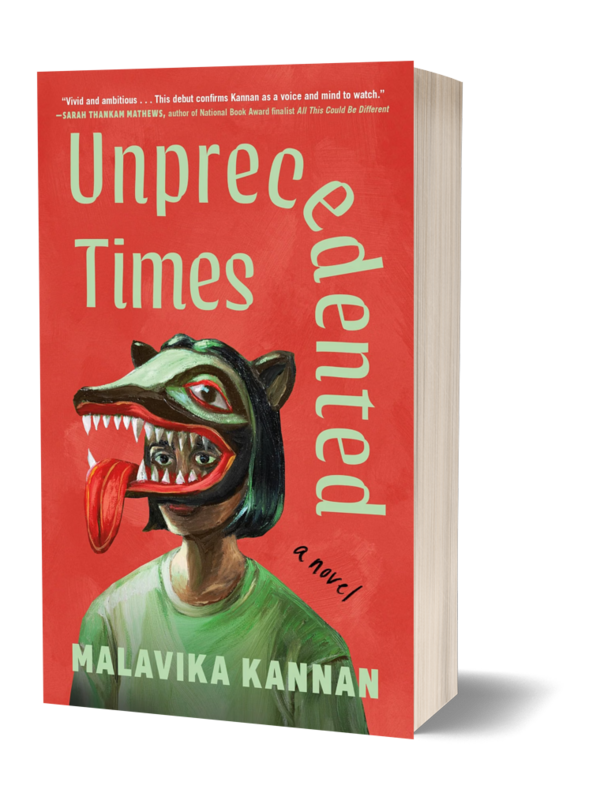
Malavika Kannan establishes herself as an inimitable voice of Gen Z in this piercing coming-of-age debut novel.
Which comes first: experience or narrative? Rishi thinks she knows the answer as she arrives on campus for her first year at Stanford. A burnt-out youth climate activist, she used to want to save the world, but now she just wants to have gay sex. Her plan is set—she’s going to leave behind the strict trappings of her Indian American childhood in Florida, study literature, experiment with love, and write all about it. Within a few months, she makes her first best friend, falls in love with her situationship, and promptly gets her heart broken.
What is not a part of Rishi’s plan is the onset of the COVID pandemic. As the outside world becomes a terrifying place, she increasingly finds solace in the friendships she’s made. Instead of virtual college, however, Rishi and her classmates join a farm collective, where their political discussions and growing disillusionment collide with sexual tension and responsibility. It’s only when those relationships start fracturing under the stress of careless decisions, unrequited crushes, jealousies, and, yes, unprecedented times, that Rishi begins to question her own story.
Unprecedented Times captures the beauty, humor, pain, and straight-up chaos that exist in relationships between best friends and lovers, mothers and daughters, and between storytellers and themselves. Malavika Kannan’s fresh, arresting novel is a testament to the power of self-narrative for Gen Z American women: of writing oneself into existence where no previous script exists.
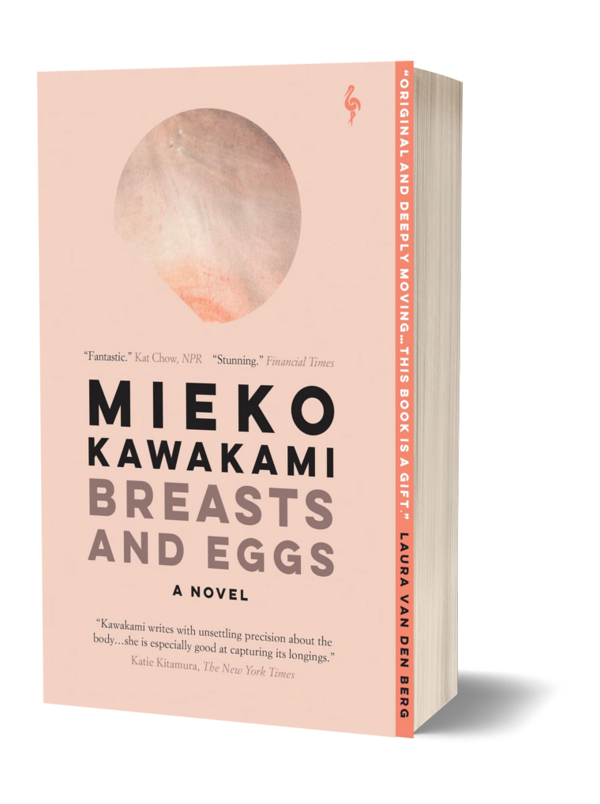
A BEST BOOK OF 2020 TIME Magazine・The Atlantic・Book Riot・Electric Literature・The New York Times (Notable Book of the Year)
Challenging every preconception about storytelling and prose style, mixing wry humor and riveting emotional depth, Kawakami is today one of Japan’s most important and best-selling writers. She exploded onto the cultural scene first as a musician, then as a poet and popular blogger, and is now an award-winning novelist.
Breasts and Eggs paints a portrait of contemporary womanhood in Japan and recounts the intimate journeys of three women as they confront oppressive mores and their own uncertainties on the road to finding peace and futures they can truly call their own.
It tells the story of three women: the thirty-year-old Natsu, her older sister, Makiko, and Makiko’s daughter, Midoriko. Makiko has traveled to Tokyo in search of an affordable breast enhancement procedure. She is accompanied by Midoriko, who has recently grown silent, finding herself unable to voice the vague yet overwhelming pressures associated with growing up. Her silence proves a catalyst for each woman to confront her fears and frustrations.
On another hot summer’s day ten years later, Natsu, on a journey back to her native city, struggles with her own indeterminate identity as she confronts anxieties about growing old alone and childless.

From award-winning novelist and journalist Omar El Akkad comes a powerful reckoning with what it means to live in a West that betrays its fundamental values
On October 25, 2023, after just three weeks of the bombardment of Gaza, Omar El Akkad put out a tweet: “One day, when it’s safe, when there’s no personal downside to calling a thing what it is, when it’s too late to hold anyone accountable, everyone will have always been against this.” This tweet has been viewed more than 10 million times.
As an immigrant who came to the West, El Akkad believed that it promised freedom. A place of justice for all. But in the past twenty years, reporting on the War on Terror, Ferguson, climate change, Black Lives Matter protests, and more, and watching the unmitigated slaughter in Gaza, El Akkad has come to the conclusion that much of what the West promises is a lie. That there will always be entire groups of human beings it has never intended to treat as fully human—not just Arabs or Muslims or immigrants, but whoever falls outside the boundaries of privilege. One Day, Everyone Will Have Always Been Against This is a chronicle of that painful realization, a moral grappling with what it means, as a citizen of the U.S., as a father, to carve out some sense of possibility in a time of carnage.
This is El Akkad’s nonfiction debut, his most raw and vulnerable work to date, a heartsick breakup letter with the West. It is a brilliant articulation of the same breakup we are watching all over the United States, in family rooms, on college campuses, on city streets; the consequences of this rupture are just beginning. This book is for all the people who want something better than what the West has served up. This is the book for our time.

The Trinity of Fundamentals follows the story of 22-year-old Kan’an during his nine years of hiding from the occupation between 1982 and 1991. Driven by an unshakable commitment to the Palestinian cause, Kan’an takes the reader through his compelling journey filled with sacrifice and struggle, love and pain, isolation and liberation. All the while, major political and historical transformations unfold across international, regional, and local contexts, including the First Intifada. Throughout all this, Kan’an maintains a spirit of revolutionary optimism so strong that the reader is bound to be transformed. It is all the more moving to know that Kan’an’s story is inspired by the real-life experience of Rafeedie as he organized and struggled against the Zionist oppression of his people.
Love, revolution, and life—these are the “Trinity of Fundamentals'' that pave Kan’an’s path of struggle. Although the novel is set in the past, it holds many lessons that resonate with our current political moment, mobilizing us into collective action.

A landmark history of one hundred years of war waged against the Palestinians from the foremost US historian of the Middle East, told through pivotal events and family history.
In 1899, Yusuf Diya al-Khalidi, mayor of Jerusalem, alarmed by the Zionist call to create a Jewish national home in Palestine, wrote a letter aimed at Theodore Herzl: the country had an indigenous people who would not easily accept their own displacement. He warned of the perils ahead, ending his note, “in the name of God, let Palestine be left alone.” Thus Rashid Khalidi, al-Khalidi’s great-great-nephew, begins this sweeping history, the first general account of the conflict told from an explicitly Palestinian perspective.
Drawing on a wealth of untapped archival materials and the reports of generations of family members—mayors, judges, scholars, diplomats, and journalists—The Hundred Years' War on Palestine upends accepted interpretations of the conflict, which tend, at best, to describe a tragic clash between two peoples with claims to the same territory. Instead, Khalidi traces a hundred years of colonial war on the Palestinians, waged first by the Zionist movement and then Israel but backed by Britain and the United States, the great powers of the age. He highlights the key episodes in this colonial campaign, from the 1917 Balfour Declaration to the destruction of Palestine in 1948, from Israel’s 1982 invasion of Lebanon to the endless and futile peace process.
Original, authoritative, and important, The Hundred Years' War on Palestine is not a chronicle of victimization, nor does it whitewash the mistakes of Palestinian leaders or deny the emergence of national movements on both sides. In reevaluating the forces arrayed against the Palestinians, it offers an illuminating new view of a conflict that continues to this day.

A Palestinian activist jailed at sixteen after a confrontation with Israeli soldiers illuminates the daily struggles of life under occupation in this moving, deeply personal memoir.
ONE OF THE BEST BOOKS OF THE YEAR: Kirkus Reviews
“What would you do if you grew up seeing your home repeatedly raided? Your parents arrested? Your mother shot? Your uncle killed? Try, for just a moment, to imagine that this was your life. How would you want the world to react?”
Ahed Tamimi is a world-renowned Palestinian activist, born and raised in the small West Bank village of Nabi Saleh, which became a center of the resistance to Israeli occupation when an illegal, Jewish-only settlement blocked off its community spring. Tamimi came of age participating in nonviolent demonstrations, and her global renown reached an apex in December 2017, when, at sixteen years old, she was filmed slapping an Israeli soldier who refused to leave her front yard. The video went viral, and Tamimi was arrested.
But this is not just a story of activism or imprisonment. It is the human-scale story of an occupation that has riveted the world and shaped global politics, from a girl who grew up in the middle of it. An essential addition to an important conversation, THEY CALLED ME A LIONESS shows us what is at stake in this struggle and offers a fresh vision for resistance. With their unflinching, riveting storytelling, Ahed Tamimi and Dena Takruri shine a light on the humanity not just in occupied Palestine but also in the unsung lives of people struggling for freedom around the world.

The renowned poet and literature professor Refaat Alareer was killed by an Israeli airstrike in Gaza City alongside his brother, sister, and nephews in December 2023. He was just forty-four years old, but had already established a worldwide reputation that was further enhanced when, in the wake of his death, the poem that gives this book its title became a global sensation. “If I Must Die” is included here, alongside Refaat’s other poetry.
Refaat wrote extensively about a range of topics: teaching Shakespeare and the way Shylock could be appreciated by young Palestinian students; the horrors of living under repeated brutal assaults in Gaza, one of which, in 2014, killed another of his brothers; and the generosity of Palestinians to each other, fighting, in the face of it all, to be the one paying at the supermarket checkout.
Such pieces, some never before published, have been curated here by one of Refaat’s closest friends and collaborators. This collection forms a fitting testament to a remarkable writer, educator, and activist, one whose voice will not be silenced by death but will continue to assert the power of learning and humanism in the face of barbarity.
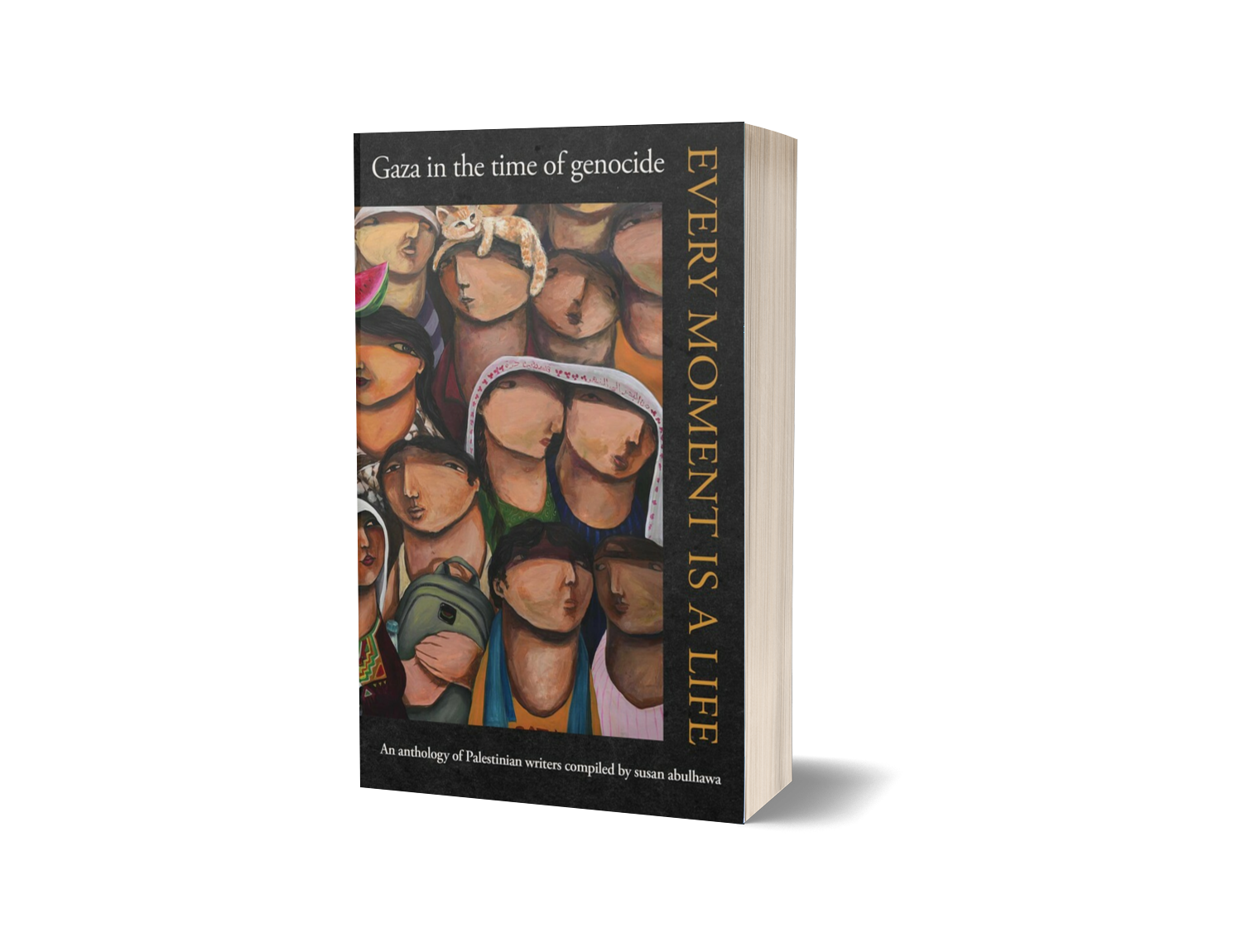
Compiled by bestselling author susan abulhawa, an Arabic-English bilingual anthology of essays from eighteen young Palestinian writers trying to survive the genocide in Gaza.
In early 2024, writer and activist susan abulhawa managed to enter Gaza twice through the Rafah crossing. There, at the Culture and Free Thought Association, susan held a series of workshops for young people who had been displaced to tent encampments. The lives of all participants were marked by unrelenting Israeli violence and extraordinary loss—of home, family, safety, education, electricity, and all the structures of life. They’d fled from place to place as Israel’s colonial violence swirled around them, complete with food and water insecurity and constant threat. Still, despite the bitterness of life in tents and the dangers of travel, they came together to share in the refuge of writing and community.
Samya recounts a tender moment with an old man mending shoes in the street, while her cousin Saja hides books in her closet, hoping they and her home will still be there when she returns. Ghassan is haunted by the baby he rescued from the rubble, who for a time became his son. Fatima risks it all retrieve her clothes from a danger zone buzzing with drones and warplanes. Maram’s loving aunt is gone, and chaos inhabits Amr’s mind. Samah, Lubna, Rizq, and Nebal take us by the hand through raining death, trails of tears, classroom shelters, and shared clothes in crowded tents.
Every Moment Is a Life delivers rare, unfiltered portraits of life under genocide, platforming the emerging voices struggling to survive in Gaza today. These essays are raw and real, capturing human moments—buying bread, going to the bathroom, sharing a meal, drinking coffee—all set against the backdrop of history’s first livestreamed ethnic cleansing. With courage, anger, love, agony, and—impossibly—hope, these achingly tender voices from Gaza will stay with us, captured in these pages, forever.

A NEW YORK TIMES BESTSELLER
Part activist memoir, part crash course in Jewish and Palestinian history, Genocide Bad dismantles Zionist propaganda and maps a course towards collective liberation in ten unapologetic essays.
Part activist memoir, part crash course in Jewish and Palestinian history, Genocide Bad dismantles Zionist propaganda in ten unapologetic essays. Drawing connections between Biblical promises and exploding pagers, medieval dress codes and modern-day apartheid, Kern sketches a sweeping history of imperialism with their characteristic blend of far-ranging research, pop-culture insights, and scathing humor.
Kern, a former teacher, journalist, novelist, and book influencer, gained international recognition as an anti-Zionist Jewish activist in the days after October 7th, 2023. At a time when social media was flooded with “I Stand with Israel” posts, Kern started sharing content encouraging their followers to read Palestinian books, learn Palestinian history, and question Western reporting on Palestine—videos which went viral into tens of millions of views.
Despite facing hate messages, death threats, and exile from the Zionist Jewish community, Kern has remained steadfast in their advocacy over the past year. They’ve posted daily videos on Palestinian, Jewish, and colonial history, and they’ve raised over $500,000 in direct aid for families in Gaza—all while navigating the challenges of pregnancy, childbirth, and parenting a newborn. In Genocide Bad, Kern reflects on the life experiences that led them to anti-Zionist activism, while capturing and expanding upon their online educational content.
Kern doesn’t flinch when confronting the horrors of genocides past and present, but there is also tremendous hope contained in these pages—hope that springs from examples of courage and resilience in the face of extreme violence, and from the kinds of resistance that might just lead to our collective liberation.

A NEW YORK TIMES NOTABLE BOOK
You are alive
for a moment
when living people
run after you.
Barely thirty years old, Mosab Abu Toha was already a well-known poet when the current siege of Gaza began. After the Israeli army bombed and destroyed his house, pulverizing a library he had painstakingly built for community use, he and his family fled for their safety. Not for the first time in their lives.
Somehow, amid the chaos, Abu Toha kept writing poems. These are those poems. Uncannily clear, direct, and beautifully tuned, they form one of the most astonishing works of art wrested from wartime. Here are directives for what to do in an air raid; here are lyrics about the poet’s wife, singing to his children to distract them. Huddled in the dark, Abu Toha remembers his grandfather’s oranges, his daughter’s joy in eating them.
Moving between glimpses of life in relative peacetime and absurdist poems about surviving in a barely livable occupation, Forest of Noise invites a wide audience into an experience that defies the imagination—even as it is watched live. Abu Toha's poems introduce readers to his extended family, some of them no longer with us. This is an urgent, extraordinary, and arrestingly whimsical book. Searing and beautiful, it brings us indelible art in a time of terrible suffering.

A Latina Writing Comunidad Book Pick
An NPR Best Book of the Year
A TimeMagazine Most Anticipated Book of the Year
The acclaimed New York Times bestselling author of A Woman Is No Man returns with a striking exploration of the expectations of a Palestinian-American woman, the meaning of a fulfilling life, and the ways our unresolved pasts affect our presents.
Yara Murad has worked hard to outrun the demons of her tumultuous Brooklyn childhood. Now living far from home, Yara has achieved everything she aspired to: She is highly educated and teaches art to college student. She's also raising two daughters with her businessman husband, Fadi. Her marriage is nothing like her parents' high-conflict relationship, and she knows her life is worlds better and freer than her mother’s.
So why doesn’t it feel that way? Why does Yara experience flashes of anger out of nowhere or a sadness she can’t name? When an incident at the college threatens her job, her mother suggests that a family curse could be to blame. While Yara doesn’t believe in old superstitions, she's shaken as she finds her carefully constructed world beginning to implode. To save herself, Yara must finally confront the childhood she thought she’d left behind and forge her own path forward.

Longlisted for the 2021 International Booker Prize
Finalist for the National Book Award
Minor Detail begins during the summer of 1949, one year after the war that the Palestinians mourn as the Nakba—the catastrophe that led to the displacement and exile of some 700,000 people—and the Israelis celebrate as the War of Independence. Israeli soldiers murder an encampment of Bedouin in the Negev desert, and among their victims they capture a Palestinian teenager and they rape her, kill her, and bury her in the sand.
Many years later, in the near-present day, a young woman in Ramallah tries to uncover some of the details surrounding this particular rape and murder, and becomes fascinated to the point of obsession, not only because of the nature of the crime, but because it was committed exactly twenty-five years to the day before she was born. Adania Shibli masterfully overlays these two translucent narratives of exactly the same length to evoke a present forever haunted by the past.

The #1 New York Times bestselling author of Between the World and Me travels the world to explore how the stories we tell--and the ones we don't--shape our realities.
Coates originally set off to write a book about writing, in the tradition of Orwell's classic Politics and the English Language, but found himself grappling with deeper questions about how our stories—our reporting and imaginative narratives and mythmaking—expose and distort our realities.
The first of the book's three intertwining essays is set in Dakar, Senegal. Despite being raised as a strict Afrocentrist—and named for Nubian pharaoh—Coates had never set foot on the African continent until now. He roams the "steampunk" city of "old traditions and new machinery," meeting with strangers and dining with local writers who quiz him in French about African American politics. But everywhere he goes he feels as if he's in two places at once: a modern city in Senegal and a mythic kingdom in his mind, the pan-African homeland he was raised to believe was the origin and destiny for all black people. Finally he travels to the slave castles off the coast and touches the ocean that carried his ancestors away in chains—and has his own reckoning with the legacy of the Afrocentric dream.
Back in the USA he takes readers along with him to Columbia, South Carolina, where he explores a different mythology, this one enforced on its subjects by the state. He enters the world of the teacher whose job is threatened for teaching one of Coates's own books and discovers a community of mostly white supporters who were transformed and even radicalized by the stories they discovered in the "racial reckoning" of 2020o. But he also explores the backlash to this reckoning and the deeper myths and stories of the community—a capital of the confederacy with statues of segregationists looming over the its public squares.
In Palestine, the longest of the essays, he discovers the devastating gap between the narratives we've accepted and the clashing reality of life on the ground. He meets with activists and dissidents, Israelis and Palestinians--the old, who remember their dispossessions on two continents, and the young who have only known struggle and disillusionment. He travels into Jerusalem, the heart of Zionist mythology, and to the occupied territories, where he sees the reality the myth is meant to hide. It is this hidden story that draws him in and profoundly changes him--and makes the war that would soon come all the more devastating.
Written at a dramatic moment in American and global life, this work from one of the country's most important writers is about the urgent need to untangle ourselves from the destructive nationalist myths that shape our world--and our own souls-- and embrace the liberating power of even the most difficult truths.

Begins Shipping 2/11/25
Perfect Victims is an urgent affirmation of the Palestinian condition of resistance and refusal―an ode to the steadfastness of a nation.
Palestine is a microcosm of the world: on fire, stubborn, fragmented, dignified. While a settler colonial state continues to inflict devastating violence, fundamental truths are deliberately obscured—the perpetrators are coddled while the victims are blamed and placed on trial.
Why must Palestinians prove their humanity? And what are the implications of such an infuriatingly impossible task? With fearless prose and lyrical precision, Mohammed El-Kurd refuses a life spent in cross-examination. Rather than asking the oppressed to perform a perfect victimhood, El-Kurd asks friends and foes alike to look Palestinians in the eye, forgoing both deference and condemnation.
How we see Palestine reveals how we see each other; how we see everything else. Masterfully combining candid testimony, history, and reportage, Perfect Victims presents a powerfully simple demand: dignity for the Palestinian.

The Gaza Strip is among the most densely populated places in the world. More than two-thirds of its inhabitants are refugees, and more than half are under eighteen years of age. Since 2004, Israel has launched eight devastating “operations” against Gaza’s largely defenseless population. Thousands have perished, and tens of thousands have been left homeless. In the meantime, Israel has subjected Gaza to a merciless illegal blockade.
What has befallen Gaza is a man-made humanitarian disaster.
Based on scores of human rights reports, Norman G. Finkelstein's new book presents a meticulously researched inquest into Gaza’s martyrdom. He shows that although Israel has justified its assaults in the name of self-defense, in fact these actions constituted flagrant violations of international law.
But Finkelstein also documents that the guardians of international law—from Amnesty International and Human Rights Watch to the UN Human Rights Council—ultimately failed Gaza. One of his most disturbing conclusions is that, after Judge Richard Goldstone's humiliating retraction of his UN report, human rights organizations succumbed to the Israeli juggernaut.
Finkelstein’s magnum opus is both a monument to Gaza’s martyrs and an act of resistance against the forgetfulness of history.
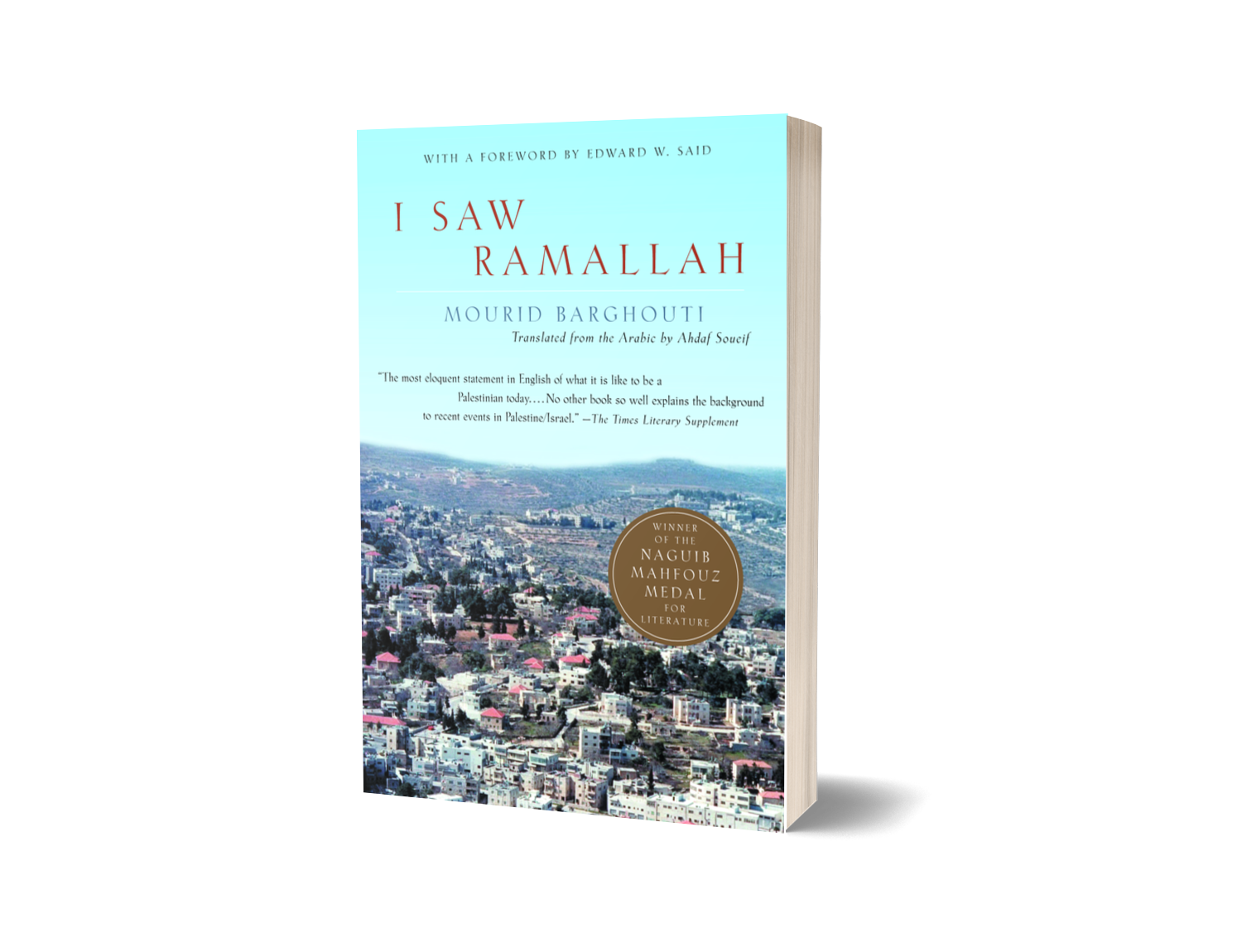
WINNER OF THE NAGUIB MAHFOUZ MEDAL FOR LITERATURE
A fierce and moving work and an unparalleled rendering of the human aspects of the Palestinian predicament.
Barred from his homeland after 1967’s Six-Day War, the poet Mourid Barghouti spent thirty years in exile—shuttling among the world’s cities, yet secure in none of them; separated from his family for years at a time; never certain whether he was a visitor, a refugee, a citizen, or a guest. As he returns home for the first time since the Israeli occupation, Barghouti crosses a wooden bridge over the Jordan River into Ramallah and is unable to recognize the city of his youth. Sifting through memories of the old Palestine as they come up against what he now encounters in this mere “idea of Palestine,” he discovers what it means to be deprived not only of a homeland but of “the habitual place and status of a person.” A tour de force of memory and reflection, lamentation and resilience, I Saw Ramallah is a deeply humane book, essential to any balanced understanding of today’s Middle East.

Linda Sarsour, co-organizer of the Women’s March, shares an “unforgettable memoir” (Booklist) about how growing up Palestinian Muslim American, feminist, and empowered moved her to become a globally recognized activist on behalf of marginalized communities across the country.
On a chilly spring morning in Brooklyn, nineteen-year-old Linda Sarsour stared at her reflection, dressed in a hijab for the first time. She saw in the mirror the woman she was growing to be—a young Muslim American woman unapologetic in her faith and her activism, who would discover her innate sense of justice in the aftermath of 9/11. Now heralded for her award-winning leadership of the Women’s March on Washington, Sarsour offers a “moving memoir [that] is a testament to the power of love in action” (Michelle Alexander, author of The New Jim Crow).
From the Brooklyn bodega her father owned, where Linda learned the real meaning of intersectionality, to protests in the streets of Washington, DC, Linda’s experience as a daughter of Palestinian immigrants is a moving portrayal of what it means to find one’s voice and use it for the good of others. We follow Linda as she learns the tenets of successful community organizing and through decades of fighting for racial, economic, gender, and social justice, as she becomes one of the most recognized activists in the nation. We also see her honoring her grandmother’s dying wish, protecting her children, building resilient friendships, and mentoring others even as she loses her first mentor in a tragic accident. Throughout, she inspires you to take action as she reaffirms that we are not here to be bystanders.
In this “book that speaks to our times” (The Washington Post), Harry Belafonte writes of Linda in the foreword, “While we may not have made it to the Promised Land, my peers and I, my brothers and sisters in liberation can rest easy that the future is in the hands of leaders like Linda Sarsour. I have often said to Linda that she embodies the principle and purpose of another great Muslim leader, Brother Malcolm X.”
This is her story.
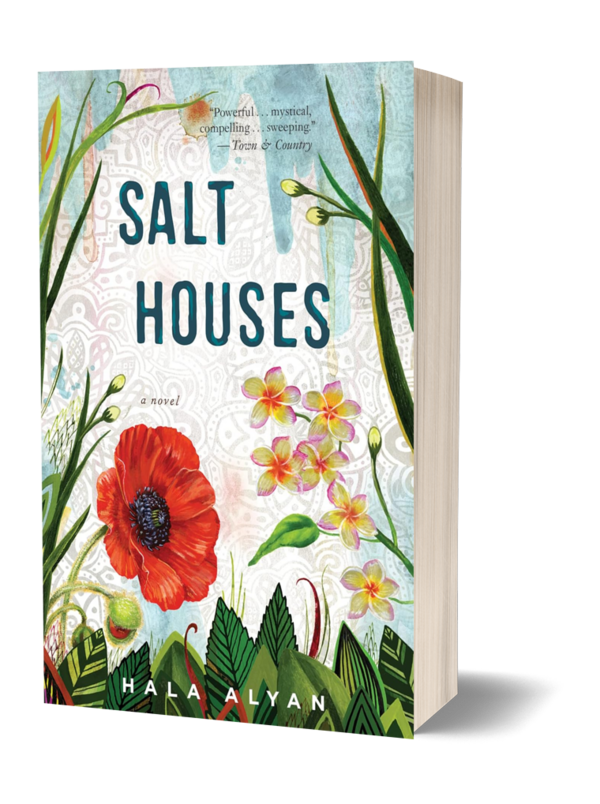
Winner of the Dayton Literary Peace Prize and the Arab American Book Award
A Best Book of the Year: NPR, NYLON, Kirkus, Bustle, BookPage.
"What does home mean when you no longer have a house—or a homeland? This beautiful novel traces one Palestinian family’s struggle with that question and how it can haunt generations. . . . This is an example of how fiction is often the best filter for the real world around us." — NPR
Lyrical and heartbreaking, Salt Houses is a multigenerational saga that follows three generations of a Palestinian family and asks us to confront that most devastating of all truths: you can’t go home again.
On the eve of her daughter Alia’s wedding, Salma reads the girl’s future in a cup of coffee dregs. She sees an unsettled life for Alia and her children; she also sees travel and luck. While she chooses to keep her predictions to herself that day, they will all soon come to pass when the family is uprooted in the wake of the Six-Day War of 1967.
Salma is forced to leave her home in Nablus; Alia’s brother gets pulled into a politically militarized world he can’t escape; and Alia and her gentle-spirited husband move to Kuwait City, where they reluctantly build a life with their three children. When Saddam Hussein invades Kuwait in 1990, Alia and her family once again lose their home and their land, scattering to Beirut, Paris, Boston, and beyond. Soon Alia’s children begin families of their own, once again navigating the burdens (and blessings) of assimilation in foreign cities.
A remarkable work of diaspora fiction, Salt Houses is a debut novel that challenges and humanizes an age-old conflict we might think we understand.

Pre-orders begin shipping on September 16, 2025
Everything Grows in Jiddo’s Garden is the story of a young Palestinian girl and her Jiddo–her grandfather.
Jiddo’s garden is a wonder. In it grows so many amazing things–to see, smell, and taste. But helping him to tend the garden teaches this young girl about even more than fig trees. It gives her a chance to discover just who she is.
Many years ago, like so many Palestinians, her family was forced to leave their homeland. But Jiddo shows her how, until they can return, tending a garden can connect them to home–and to each other!
This heartwarming debut picture book by Jenan Matari explores themes of displacement, belonging, and an enduring connection to the land. With stunning illustrations by Aya Ghanameh, it’s a poignant celebration of love, identity, and hope.

In these newly collected essays, interviews, and speeches, world-renowned activist and scholar Angela Y. Davis illuminates the connections between struggles against state violence and oppression throughout history and around the world.
Reflecting on the importance of black feminism, intersectionality, and prison abolitionism for today's struggles, Davis discusses the legacies of previous liberation struggles, from the Black Freedom Movement to the South African anti-Apartheid movement. She highlights connections and analyzes today's struggles against state terror, from Ferguson to Palestine.
Facing a world of outrageous injustice, Davis challenges us to imagine and build the movement for human liberation. And in doing so, she reminds us that "Freedom is a constant struggle."

From one of the most influential intellectuals of our time comes an extraordinary story of exile and a celebration of an irrecoverable past. A fatal medical diagnosis in 1991 convinced Edward Said that he should leave a record of where he was born and spent his childhood, and so with this memoir, he rediscovers the lost Arab world of his early years in Palestine, Lebanon, and Egypt.
Said writes with great passion and wit about his family and friends from his birthplace in Jerusalem, schools in Cairo, summers in the mountains above Beirut, to boarding school and college in the United States, revealing an unimaginable world of rich, colorful characters and exotic eastern landscapes. Underscoring all is the confusion of identity the young Said experienced as he came to terms with the dissonance of being an American citizen, a Christian, a Palestinian, and, ultimately, an outsider. Richly detailed, moving, and often profound, Out of Place depicts a young man's coming of age and the genesis of a great modern thinker.

Renowned Israeli historian, Ilan Pappe’s groundbreaking work on the formation of the State of Israel.
Between 1947 and 1949, over 400 Palestinian villages were deliberately destroyed, civilians were massacred and around a million men, women, and children were expelled from their homes at gunpoint.
Denied for almost six decades, had it happened today it could only have been called ‘ethnic cleansing’. Decisively debunking the myth that the Palestinian population left of their own accord in the course of this war, Ilan Pappe offers impressive archival evidence to demonstrate that, from its very inception, a central plank in Israel’s founding ideology was the forcible removal of the indigenous population. Indispensable for anyone interested in the current crisis in the Middle East.
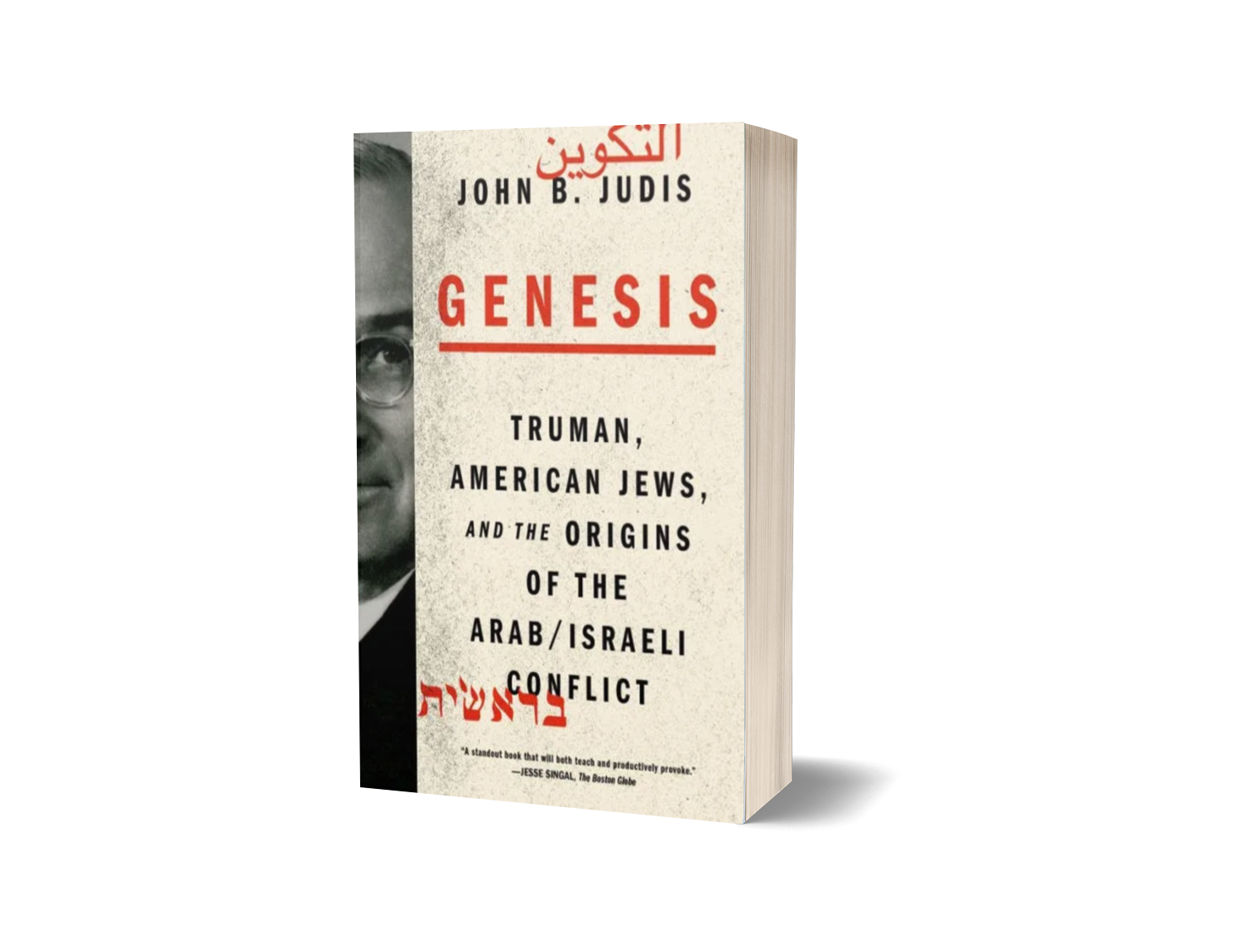
A probing look at one of the most incendiary subjects of our time—the relationship between the United States and Israel.
There has been more than half a century of raging conflict between Jews and Arabs—a violent, costly struggle that has had catastrophic repercussions in a critical region of the world. In Genesis, John B. Judis argues that, while Israelis and Palestinians must shoulder much of the blame, the United States has been the principal power outside the region since the end of World War II and, as such, must account for its repeated failed diplomacy efforts to resolve this enduring strife.
The fatal flaw in American policy, Judis shows, can be traced back to the Truman years. What happened between 1945 and 1949 sealed the fate of the Middle East for the remainder of the century. As a result, understanding that period holds the key to explaining almost everything that follows—right down to George W. Bush's unsuccessful and ill-conceived effort to win peace through holding elections among the Palestinians and Barack Obama's failed attempt to bring both parties to the negotiating table. A provocative narrative history animated by a strong analytical and moral perspective and peopled by colorful and outsized personalities and politics, Genesis offers a fresh look at these critical postwar years, arguing that if we can understand how this stalemate originated, we will be better positioned to help end it.

For readers of Pachinko and Queenie, a funny, sexy, and heart-wrenching literary debut that explores exile, ambition, and hope across three generations of Palestinian American women.
Arabella gets an unexpected chance at love when she’s thrust into a conflict and history she’s tried to avoid all her life.
Zoya is playing matchmaker for her last unmarried granddaughter and stirring up buried memories.
Naya is keeping a secret from her children that will change all their lives.
Thirty-five-year-old Arabella, a New York theatre director whose dating and career prospects are drying up, is offered an opportunity to direct a risqué cross-dressing interpretation of a Shakespeare classic—that might garner international attention—in the West Bank. Her mother, Naya, and grandmother, Zoya, hatch a plot to match her with Aziz, a Palestinian American doctor volunteering in Gaza. Arabella agrees to meet Aziz, since her growing feelings for Yoav, a celebrated Israeli American theatre designer, seem destined for disaster...
With biting hilarity, Too Soon introduces us to a trio of bold and unforgettable voices. This dramatic saga follows one family’s epic journey fleeing war-torn Jaffa in 1948, chasing the American Dream in Detroit and San Francisco in the sixties and seventies, hustling in the New York theatre scene post-9/11, and daring to stage a show in Palestine in 2012. Upon learning one of them is living on borrowed time, the three women fight to live, make art, and love on their own terms. A funny, sexy, and heart-wrenching literary debut, Too Soon illuminates our shared history and asks, how can we set ourselves free?

A Goodreads Choice Awards Finalist for Best Fiction and Best Debut
A Marie Claire Best Women's Fiction of the Year
A New York Times Book Review Editors’ Choice
The New York Times bestseller and Read with Jenna TODAY SHOW Book Club pick telling the story of three generations of Palestinian-American women struggling to express their individual desires within the confines of their Arab culture in the wake of shocking intimate violence in their community.
"Where I come from, we’ve learned to silence ourselves. We’ve been taught that silence will save us. Where I come from, we keep these stories to ourselves. To tell them to the outside world is unheard of—dangerous, the ultimate shame.”
Palestine, 1990. Seventeen-year-old Isra prefers reading books to entertaining the suitors her father has chosen for her. Over the course of a week, the naïve and dreamy girl finds herself quickly betrothed and married, and is soon living in Brooklyn. There Isra struggles to adapt to the expectations of her oppressive mother-in-law Fareeda and strange new husband Adam, a pressure that intensifies as she begins to have children—four daughters instead of the sons Fareeda tells Isra she must bear.
Brooklyn, 2008. Eighteen-year-old Deya, Isra’s oldest daughter, must meet with potential husbands at her grandmother Fareeda’s insistence, though her only desire is to go to college. Deya can’t help but wonder if her options would have been different had her parents survived the car crash that killed them when Deya was only eight. But her grandmother is firm on the matter: the only way to secure a worthy future for Deya is through marriage to the right man.
But fate has a will of its own, and soon Deya will find herself on an unexpected path that leads her to shocking truths about her family—knowledge that will force her to question everything she thought she knew about her parents, the past, and her own future.
Free Palestine!
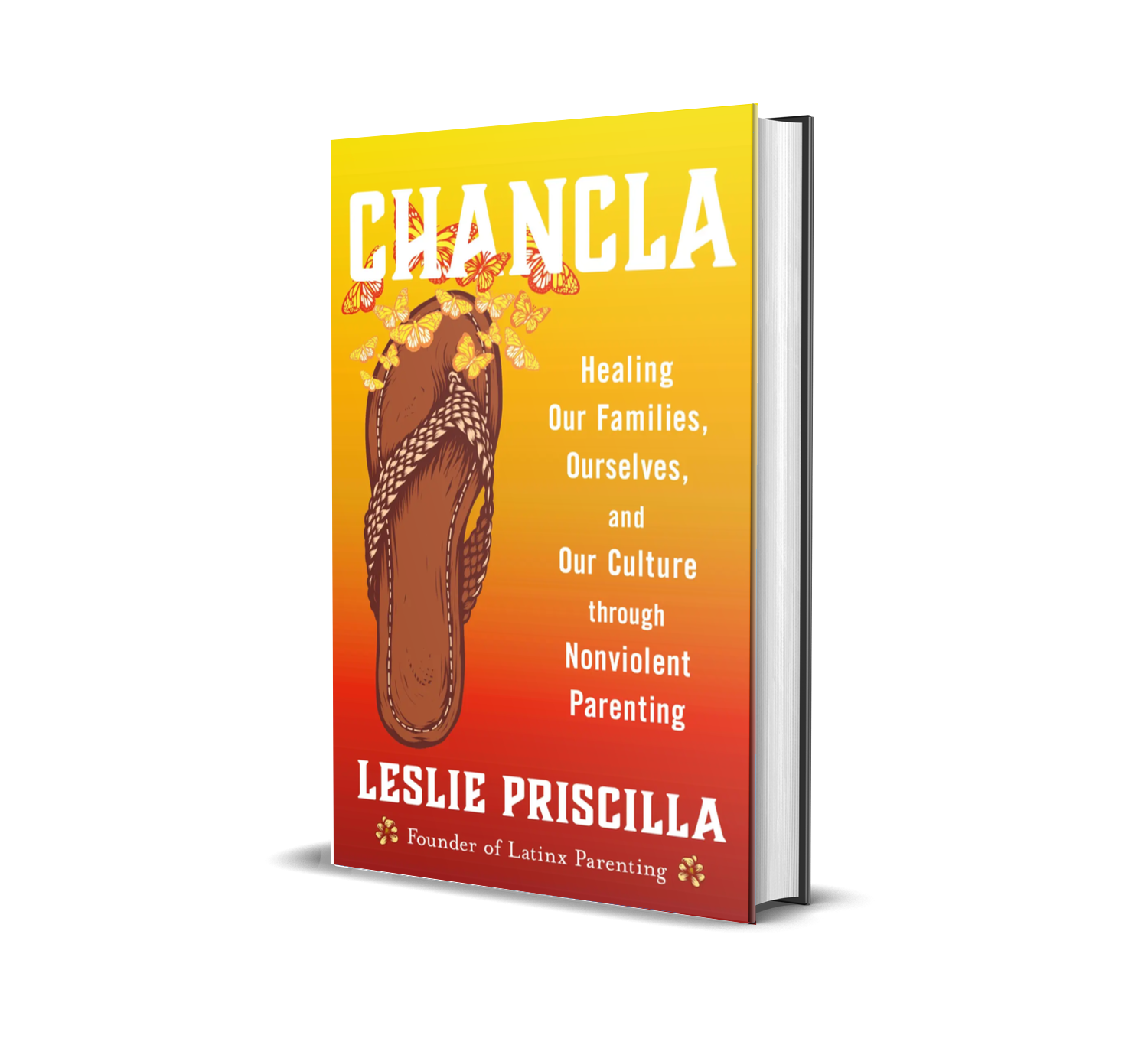
Begins Shipping August 18, 2026
For many in the Latinx community, “la Chancla”—what we learn to see as the warning sign for disciplinary violence—has become a cultural symbol that has spawned relatable memes that many of us laugh about and bond over. But what if it’s also a symbol of something more harmful?
In Chancla, educator and Latinx Parenting founder, Leslie Priscilla, invites readers, parents, and the Latinx community on a transformative journey away from cycles of fear, shame, and corporal punishment. With warmth and deep cultural insight, Priscilla explores the historical legacies attached to Chancla while offering a path forward rooted in connection, self-reflection, and ancestral healing. Chancla is the nonviolent parenting practice that celebrates Latinx cultura, while teaching its readers—and their Mamis, Papis, Tias, and Tios—how to heal from generational violence.
Blending personal storytelling, historical context, and actionable tools, Chancla helps readers not only nurture their children, but their wounded inner child. Readers will see themselves in these pages, because ultimately Chancla encourages them to unlearn what they’ve inherited and make space for what they deserve: homes full of love, safety, and respect.

Celebrating its 30th anniversary in 2024, internationally bestselling author and literary icon Julia Alvarez’s In the Time of the Butterflies is “beautiful, heartbreaking and alive … a lyrical work of historical fiction based on the story of the Mirabal sisters, revolutionary heroes who had opposed and fought against Trujillo.” (Concepción de León, New York Times)
It is November 25, 1960, and three beautiful sisters have been found near their wrecked Jeep at the bottom of a 150-foot cliff on the north coast of the Dominican Republic. The official state newspaper reports their deaths as accidental. It does not mention that a fourth sister lives. Nor does it explain that the sisters were among the leading opponents of Gen. Rafael Leónidas Trujillo’s dictatorship. It doesn’t have to. Everybody knows of Las Mariposas—the Butterflies.
In this extraordinary novel, the voices of all four sisters–Minerva, Patria, María Teresa, and the survivor, Dedé–speak across the decades to tell their own stories, from secret crushes to gunrunning, and to describe the everyday horrors of life under Trujillo’s rule. Through the art and magic of Julia Alvarez’s imagination, the martyred Butterflies live again in this novel of courage and love, and the human costs of political oppression.
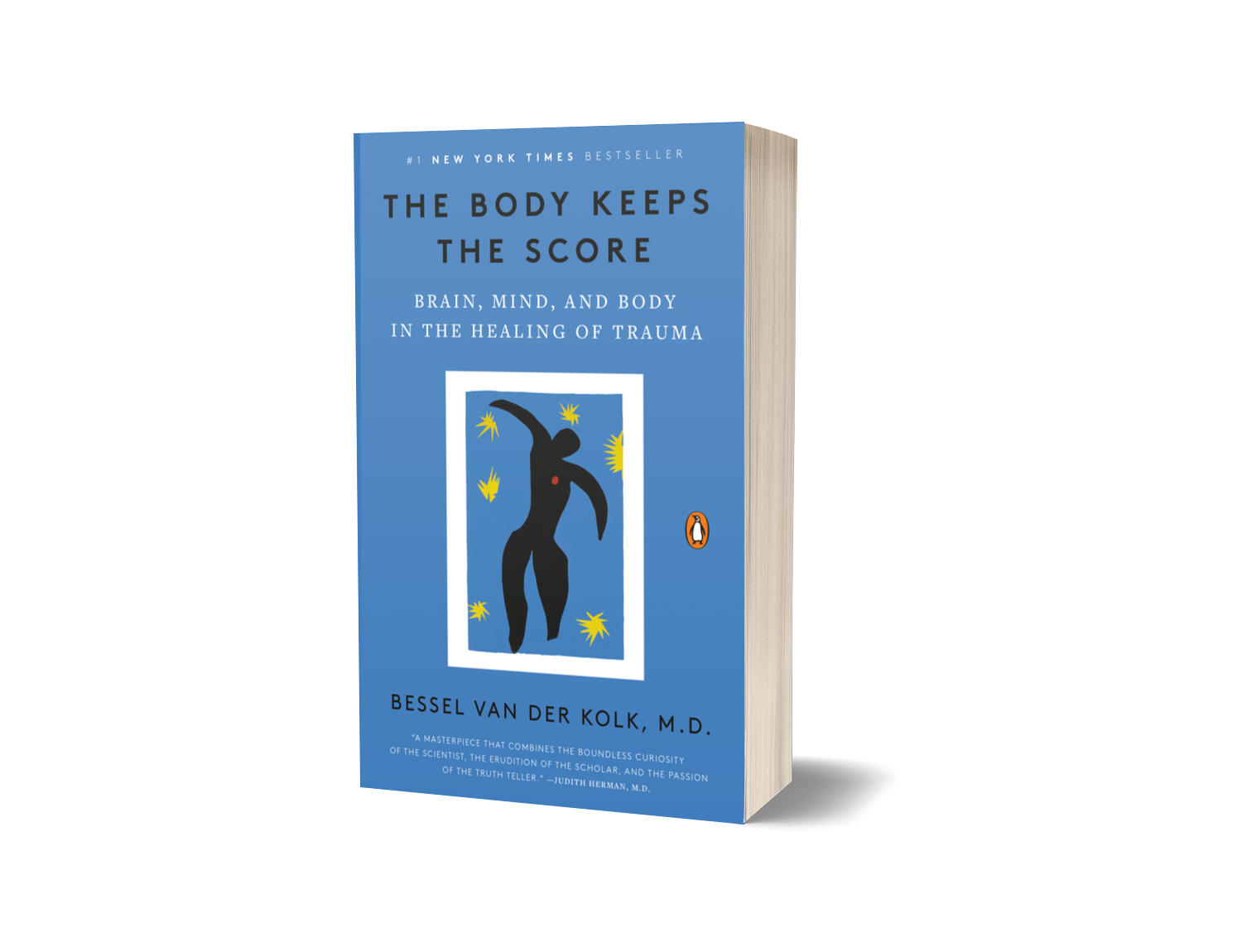
#1 New York Times bestseller
One of the world's leading experts on traumatic stress explains how trauma affects people, its underlying neurobiology, and the many new treatments that are making it possible for sufferers to move beyond trauma in order to reclaim their lives.
Trauma is a fact of life. Veterans and their families deal with the painful aftermath of combat; one in five Americans has been molested; one in four grew up with alcoholics; and one in three couples have engaged in physical violence. Such experiences inevitably leave traces on minds, emotions, and even on biology. Sadly, trauma sufferers frequently pass on their stress to their partners and children as well.
Renowned trauma expert Bessel van der Kolk has spent over three decades working with survivors. In The Body Keeps the Score, he transforms our understanding of traumatic stress, revealing how it literally rearranges the brain's wiring--specifically areas dedicated to pleasure, engagement, control, and trust. He shows how these areas can be reactivated through innovative treatments including neurofeedback, mindfulness techniques, play, yoga, and other therapies. Based on Dr. van der Kolk's own research and that of other leading specialists, The Body Keeps the Score offers proven alternatives to drugs and talk therapy—and a way to reclaim lives.
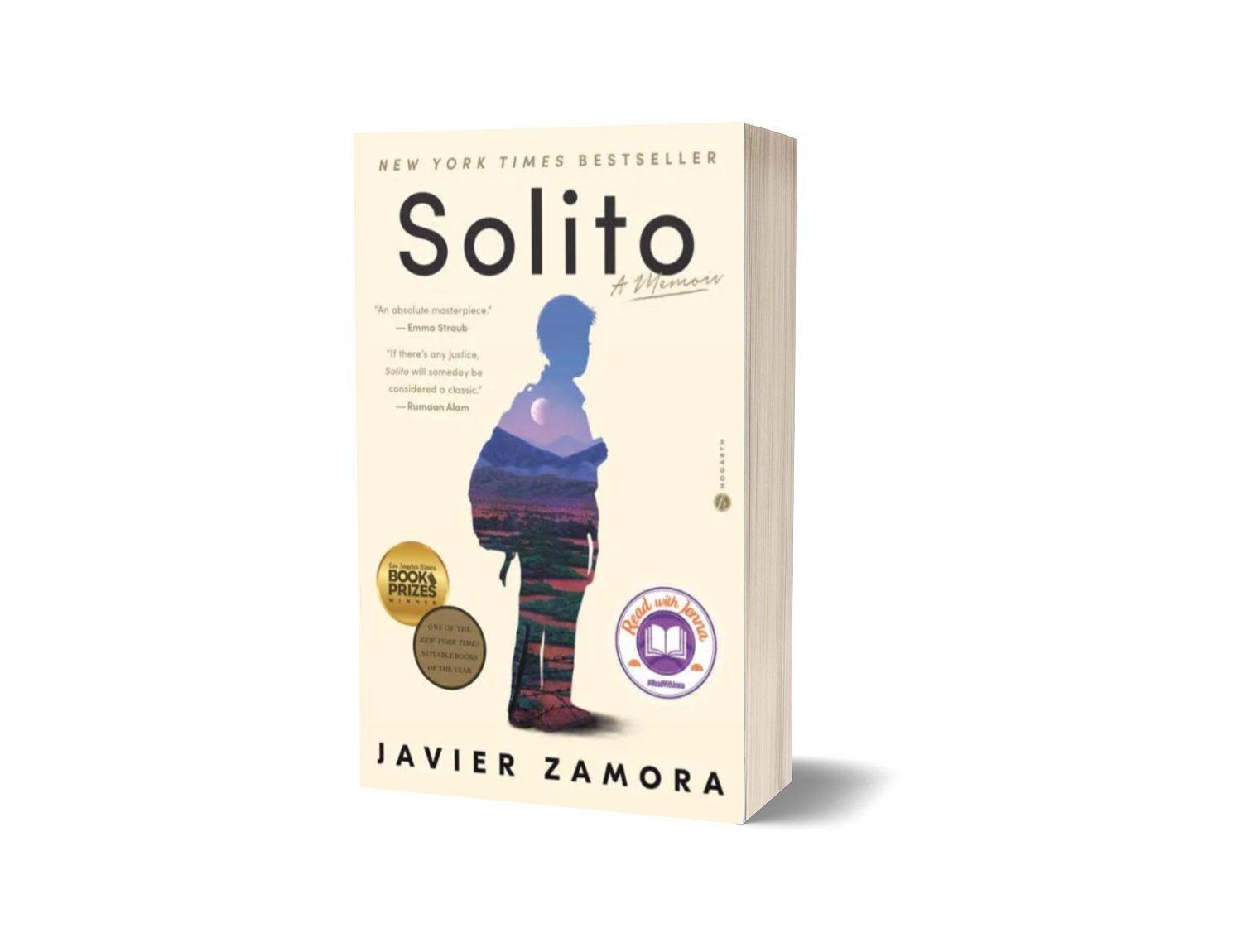
New York Times Bestseller
Read With Jenna Book Club Pick
Winner of the Los Angeles Times Christopher Isherwood Prize for Autobiography
Winner of the American Library Association Alex Award
ONE OF THE BEST BOOKS OF THE YEAR: The New York Times Book Review, NPR, The Washington Post, San Francisco Chronicle, Vulture, She Reads, Kirkus Reviews
Trip. My parents started using that word about a year ago—“one day, you’ll take a trip to be with us. Like an adventure.”
Javier Zamora’s adventure is a three-thousand-mile journey from his small town in El Salvador through Guatemala and Mexico and across the U.S. border. He will leave behind his beloved aunt and grandparents to reunite with a mother who left four years ago and a father he barely remembers. Traveling alone amid a group of strangers and a “coyote” hired to lead them to safety, Javier expects his trip to last two short weeks.
At nine years old, all Javier can imagine is rushing into his parents’ arms, snuggling in bed between them, and living under the same roof again. He cannot foresee the perilous boat trips, relentless desert treks, pointed guns, arrests, and deceptions that await him, nor can he know that those two weeks will expand into two life-altering months alongside fellow migrants who will come to encircle him like an unexpected family.
A memoir as gripping as it is moving, Solito provides an immediate and intimate account not only of a treacherous and near-impossible journey but also of the miraculous kindness and love delivered at the most unexpected moments. Solito is Javier Zamora’s story, but it’s also the story of millions of others who had no choice but to leave home.

One of the most influential literary works of our time, One Hundred Years of Solitude remains a dazzling and original achievement by the masterful Gabriel Garcia Marquez, winner of the Nobel Prize in Literature.
One Hundred Years of Solitude tells the story of the rise and fall, birth and death of the mythical town of Macondo through the history of the Buendiá family. Inventive, amusing, magnetic, sad and alive with unforgettable men and women—brimming with truth, compassion, and a lyrical magic that strikes the soul—this novel is a masterpiece in the art of fiction.
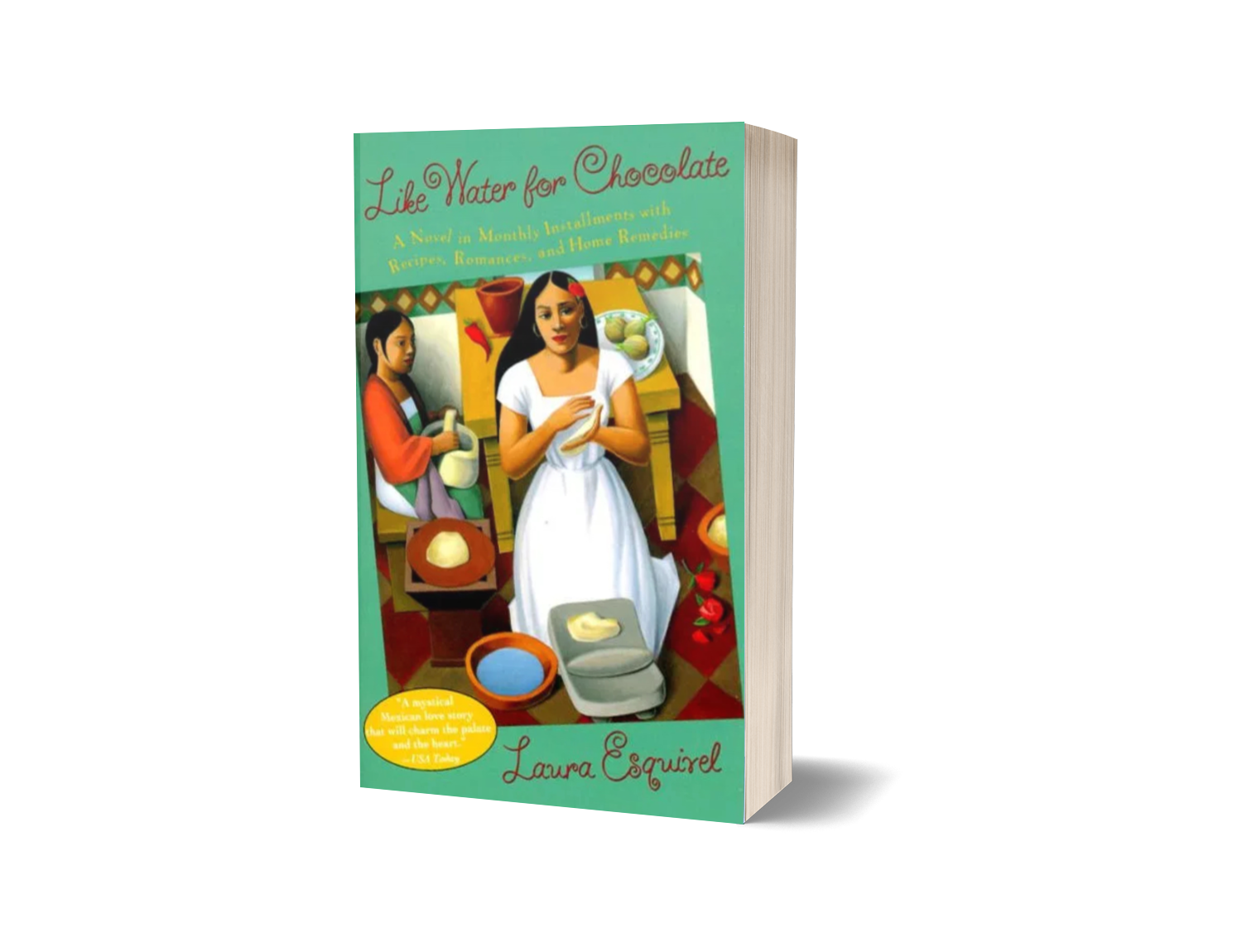
Earthy, magical, and utterly charming, this tale of family life in turn-of-the-century Mexico blends poignant romance, bittersweet wit, and delicious recipes.
This classic love story takes place on the De la Garza ranch, as the tyrannical owner, Mama Elena, chops onions at the kitchen table in her final days of pregnancy. While still in her mother's womb, her daughter to be weeps so violently she causes an early labor, and little Tita slips out amid the spices and fixings for noodle soup. This early encounter with food soon becomes a way of life, and Tita grows up to be a master chef, using cooking to express herself and sharing recipes with readers along the way.
Founder’s Faves
In the vein of The Pisces and The Vegetarian, Chlorine is a debut novel that blurs the line between a literary coming-of-age narrative and a dark unsettling horror tale, told from an adult perspective on the trials and tribulations of growing up in a society that puts pressure on young women and their bodies... a powerful, relevant novel of immigration, sapphic longing, and fierce, defiant becoming.
Ren Yu is a swimmer. Her daily life starts and ends with the pool. Her teammates are her only friends. Her coach, her guiding light. If she swims well enough, she will be scouted, get a scholarship, go to a good school. Her parents will love her. Her coach will be kind to her. She will have a good life.
But these are human concerns. These are the concerns of those confined to land, those with legs. Ren grew up on stories of creatures of the deep, of the oceans and the rivers. Ones that called sailors to their doom. Ones that dragged them down and drowned them. Ones that feasted on their flesh. Ones of the creature that she's always longed to become: mermaid.
Ren aches to be in the water. She dreams of the scent of chlorine--the feel of it on her skin. And she will do anything she can to make a life for herself where she can be free. No matter the pain. No matter what anyone else thinks. No matter how much blood she has to spill.
From acclaimed columnist and political commentator Michael Harriot, a searingly smart and bitingly hilarious retelling of American history that corrects the record and showcases the perspectives and experiences of Black Americans.
America’s backstory is a whitewashed mythology implanted in our collective memory. It is the story of the pilgrims on the Mayflower building a new nation. It is George Washington’s cherry tree and Abraham Lincoln’s log cabin. It is the fantastic tale of slaves that spontaneously teleported themselves here with nothing but strong backs and negro spirituals. It is a sugarcoated legend based on an almost true story.
It should come as no surprise that the dominant narrative of American history is blighted with errors and oversights—after all, history books were written by white men with their perspectives at the forefront. It could even be said that the devaluation and erasure of the Black experience is as American as apple pie.
In Black AF History, Michael Harriot presents a more accurate version of American history. Combining unapologetically provocative storytelling with meticulous research based on primary sources as well as the work of pioneering Black historians, scholars, and journalists, Harriot removes the white sugarcoating from the American story, placing Black people squarely at the center. With incisive wit, Harriot speaks hilarious truth to oppressive power, subverting conventional historical narratives with little-known stories about the experiences of Black Americans. From the African Americans who arrived before 1619 to the unenslavable bandit who inspired America’s first police force, this long overdue corrective provides a revealing look into our past that is as urgent as it is necessary. For too long, we have refused to acknowledge that American history is white history. Not this one. This history is Black AF.
Malavika Kannan establishes herself as an inimitable voice of Gen Z in this piercing coming-of-age debut novel.
Which comes first: experience or narrative? Rishi thinks she knows the answer as she arrives on campus for her first year at Stanford. A burnt-out youth climate activist, she used to want to save the world, but now she just wants to have gay sex. Her plan is set—she’s going to leave behind the strict trappings of her Indian American childhood in Florida, study literature, experiment with love, and write all about it. Within a few months, she makes her first best friend, falls in love with her situationship, and promptly gets her heart broken.
What is not a part of Rishi’s plan is the onset of the COVID pandemic. As the outside world becomes a terrifying place, she increasingly finds solace in the friendships she’s made. Instead of virtual college, however, Rishi and her classmates join a farm collective, where their political discussions and growing disillusionment collide with sexual tension and responsibility. It’s only when those relationships start fracturing under the stress of careless decisions, unrequited crushes, jealousies, and, yes, unprecedented times, that Rishi begins to question her own story.
Unprecedented Times captures the beauty, humor, pain, and straight-up chaos that exist in relationships between best friends and lovers, mothers and daughters, and between storytellers and themselves. Malavika Kannan’s fresh, arresting novel is a testament to the power of self-narrative for Gen Z American women: of writing oneself into existence where no previous script exists.
A BEST BOOK OF 2020 TIME Magazine・The Atlantic・Book Riot・Electric Literature・The New York Times (Notable Book of the Year)
Challenging every preconception about storytelling and prose style, mixing wry humor and riveting emotional depth, Kawakami is today one of Japan’s most important and best-selling writers. She exploded onto the cultural scene first as a musician, then as a poet and popular blogger, and is now an award-winning novelist.
Breasts and Eggs paints a portrait of contemporary womanhood in Japan and recounts the intimate journeys of three women as they confront oppressive mores and their own uncertainties on the road to finding peace and futures they can truly call their own.
It tells the story of three women: the thirty-year-old Natsu, her older sister, Makiko, and Makiko’s daughter, Midoriko. Makiko has traveled to Tokyo in search of an affordable breast enhancement procedure. She is accompanied by Midoriko, who has recently grown silent, finding herself unable to voice the vague yet overwhelming pressures associated with growing up. Her silence proves a catalyst for each woman to confront her fears and frustrations.
On another hot summer’s day ten years later, Natsu, on a journey back to her native city, struggles with her own indeterminate identity as she confronts anxieties about growing old alone and childless.
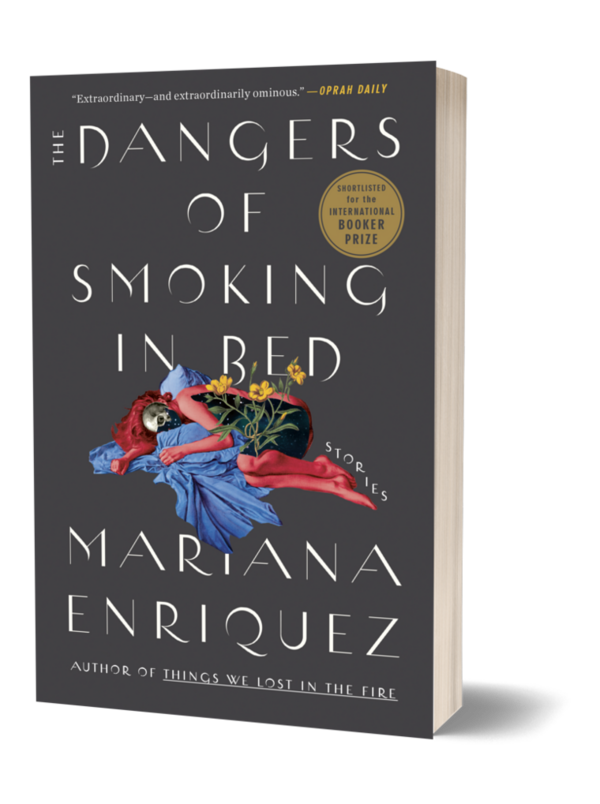
SHORTLISTED FOR THE INTERNATIONAL BOOKER PRIZE. Named one of the Best Books of the year by Oprah Magazine Electric Lit, and Lit Hub.
A new collection of singularly unsettling stories, by an Argentine author who has earned comparisons to Shirley Jackson and Jorge Luis Borges.
“The beautiful, horrible world of Mariana Enriquez, as glimpsed in The Dangers of Smoking in Bed, with its disturbed adolescents, ghosts, decaying ghouls, the sad and angry homeless of modern Argentina, is the most exciting discovery I’ve made in fiction for some time.” – Kazuo Ishiguro
Mariana Enriquez has been critically lauded for her unconventional and sociopolitical stories of the macabre: populated by unruly teenagers, crooked witches, homeless ghosts, and hungry women, they walk the uneasy line between urban realism and horror. The stories in her next collection are as terrifying as they are socially conscious, and press into being the unspoken -- fetish, illness, the female body, the darkness of human history -- with unsettling urgency. A woman is sexually obsessed with the human heart; a lost, rotting baby crawls out of a backyard and into a bedroom; a pair of teenage girls can't let go of their idol; an entire neighborhood is cursed to death by a question of morality they fail to answer correctly.
Written against the backdrop of contemporary Argentina, and with resounding tenderness towards those in pain, in fear, and in limbo, this new collection from one of Argentina's most exciting writers finds Enriquez at her most sophisticated, and most chilling.
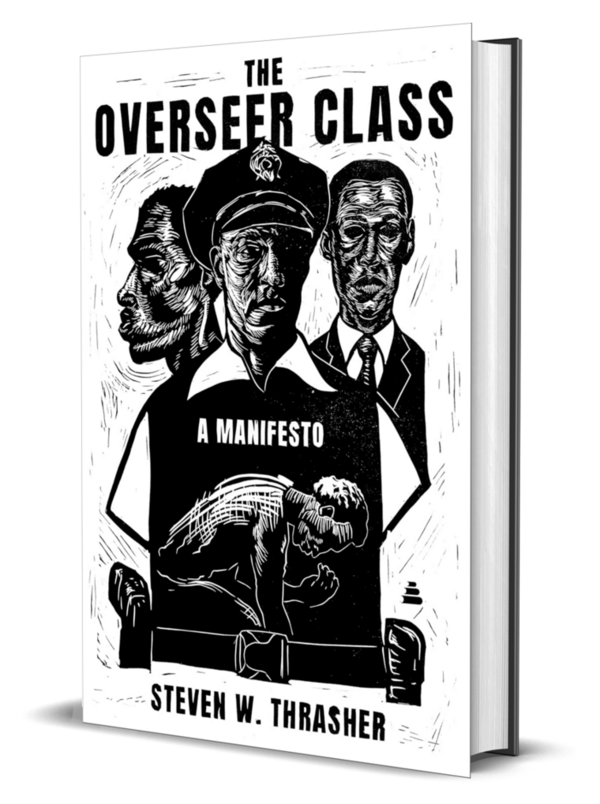
The author of the critically acclaimed The Viral Underclass (one of Kirkus Reviews best books of 2022) is back with The Overseer Class, which explores what happens when members of historically minoritized groups are selected for high-visibility positions of power within existing institutions—but under the conditions of a kind of Faustian bargain.
Our society places so much weight and attention on those who become the first or only of their identifying group that we miss one of the inherent issues in that model. This book is about the kinds of compromises made by a small but influential group of people from minoritized groups in the United States as they have entered segregated institutions in highly visible positions. People in the overseer class wield enormous institutional power, even necropolitical power over who lives and who dies; it’s just that their power is predicated upon repressing other people who look (or speak/have sex/come from places) like them.
The most obvious contemporary overseer is the Black police officer. The Overseer Class begins with this quote from James Baldwin from 1967:
“The poor, of whatever color, do not trust the law and certainly have no reason to, and God knows we didn't. ‘If you must call a cop,’ we said in those days, ‘for God's sake, make sure it's a white one.’ We did not feel that the cops were protecting us, for we knew too much about the reasons for the kinds of crimes committed in the ghetto; but we feared black cops even more than white cops, because the black cop had to work so much harder--on your head--to prove to himself and his colleagues that he was not like all the other n******.”
But this dynamic does not only exist within law enforcement, it exists in many different spheres and The Overseer Class explores what it looks like in mass media, universities, corporate America, the military, and government. The Overseer Class aims not only to educate us and start this discussion but to provide a framework for challenging that dynamic. It is a weighty topic but one that Dr. Thrasher is well-equipped to handle.

Casa de Niebla se inicia con una advertencia: ”No habrá asesinato ni asesino, pero sí existirá un crimen”. Ubicada en los primeros días del siglo XX, esta novela cuenta la historia de Helga en una mansión cercada por la niebla, mientras el fantasma de Teresa aparece todas las noches rondando las aguas de la laguna. Se crea así la atmósfera de una novela llena de sombras y misterios para la protagonista, que vive el amor no correspondido e incursiona en la realidad onírica. Escrita en la década de los cuarenta, la estética gótica se elabora utilizando técnicas cinematográficas de aquella época en el estilo tan peculiar de María Luisa Bombal. El crimen descifrado a través del formato detectivesco arroja pistas sobre un adulterio que irónicamente resulta impune. Y en el contraste, lo sobrenatural, la vida más allá de la muerte se presenta como aquello que no admite pesquisas racionales. Publicada en 1947 en inglés bajo el título House of mist y traducida hasta ahora al francés, sueco, portugués y japonés, después de sesenta y cinco años los lectores de habla hispana pueden acceder a la única obra inédita en español de una de las más grandes escritoras chilenas y latinoamericanas del siglo XX.
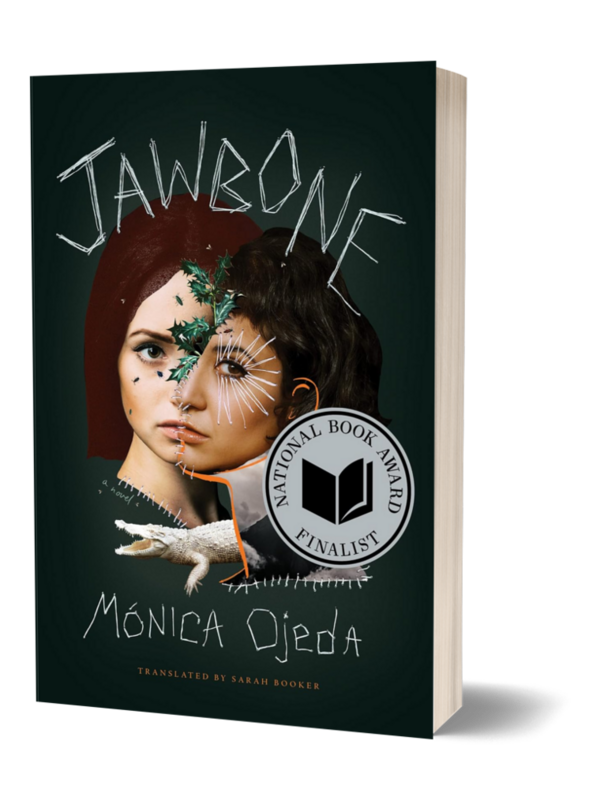
“Was desire something like being possessed by a nightmare?”
Fernanda and Annelise are so close they are practically sisters: a double image, inseparable. So how does Fernanda end up bound on the floor of a deserted cabin, held hostage by one of her teachers and estranged from Annelise?
When Fernanda, Annelise, and their friends from the Delta Bilingual Academy convene after school, Annelise leads them in thrilling but increasingly dangerous rituals to a rhinestoned, Dior-scented, drag-queen god of her own invention. Even more perilous is the secret Annelise and Fernanda share, rooted in a dare in which violence meets love. Meanwhile, their literature teacher Miss Clara, who is obsessed with imitating her dead mother, struggles to preserve her deteriorating sanity. Each day she edges nearer to a total break with reality.
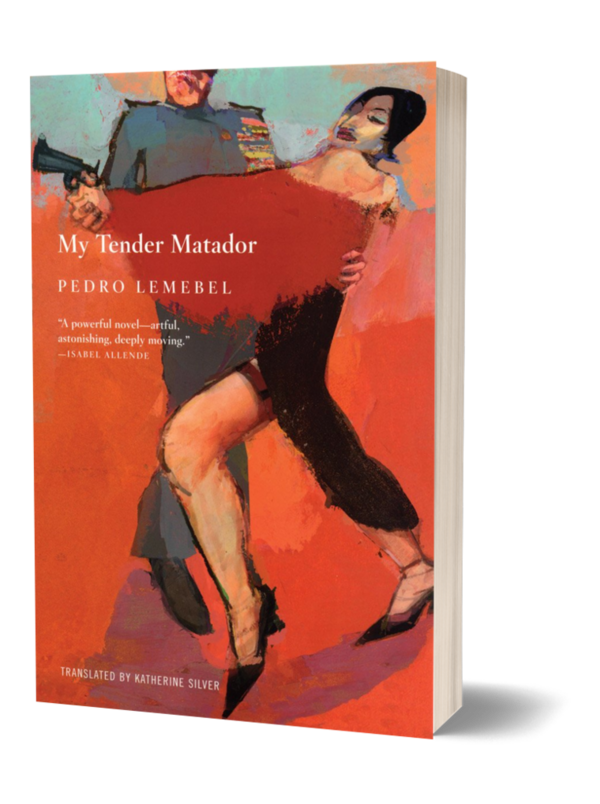
Centered around the 1986 attempt on the life of Augusto Pinochet, an event that changed Chile forever, My Tender Matador is one of the most explosive, controversial, and popular novels to have been published in that country in decades. It is spring 1986 in the city of Santiago, and Augusto Pinochet is losing his grip on power. In one of the city's many poor neighborhoods works the Queen of the Corner, a hopeless and lonely romantic who embroiders linens for the wealthy and listens to boleros to drown out the gunshots and rioting in the streets. Along comes Carlos, a young, handsome man who befriends the aging homosexual and uses his house to store mysterious boxes and hold clandestine meetings. My Tender Matador is an extraordinary novel of revolution and forbidden love, and a stirring portrait of Chile at an historical crossroads. By turns funny and profoundly moving, Pedro Lemebel's lyrical prose offers an intimate window into the mind of Pinochet himself as the world of Carlos and the Queen prepares to collide with the dictator's own in a fantastic and unexpected way.
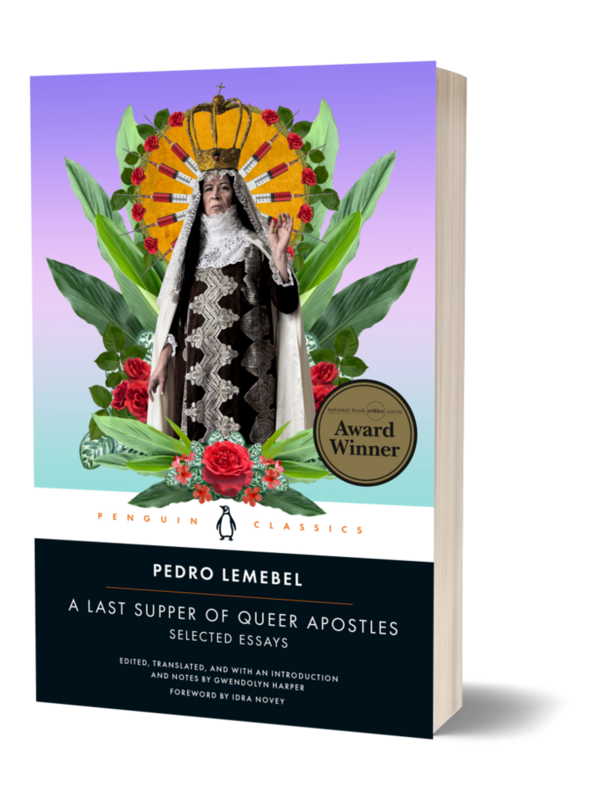
Winner of the National Book Critics Circle Translation Prize
*Finalist for the National Translation Award*
*Honorable Mention for the Society of Authors TA (Translators Association) First Translation Prize*
*Honorable Mention for the Queen Sofía Spanish Institute Translation Prize*
“These days, when an American president has decreed that ‘there are only two genders: male and female’ . . . an undaunted, lyrical voice from a southern corner of the hemisphere offers a model of resistance.” —The New Yorker
“Intoxicating . . . Sexy, political and deeply humane . . . We all owe Penguin Classics a round of shots for A Last Supper of Queer Apostles.” —The Washington Post
A galvanizing look at life on the margins of society by a crowning figure of Latin America's queer counterculture who celebrated “melodrama, kitsch, extravagance, and vulgarity of all kinds” (Garth Greenwell) in playful, performative, linguistically inventive essays, now in English for the first time.
“I speak from my difference,” wrote Pedro Lemebel, an openly queer writer and artist living through Chile’s AIDS epidemic and the collapse of the Pinochet dictatorship. In brilliantly innovative essays—known as crónicas—that combine memoir, reportage, fiction, history, and poetry, he brought visibility and dignity to sexual minorities, the poor, and the powerless. Touching on everything from Che Guevara to Elizabeth Taylor, from the aftermath of authoritarian rule to the daily lives of Chile’s locas—a slur for trans women and effeminate gay men that he boldly reclaims—his writing infuses political urgency with playfulness, realism with absurdism, and resistance with camp, and his AIDS crónicas immortalize a generation of Chileans doubly “disappeared” by casting each loca, as she falls sick, in the starring role of her own private tragedy. This volume brings together the best of his work, introducing readers of English to the subversive genius of a literary activist and queer icon whose acrobatic explorations of the Santiago demimonde reverberate around the world.

Set in an alternate reality where pregnancy endows women with exceptional powers, one new mother uncovers terrifying truths about herself and life in this philosophical and propulsive tale of a woman and mother in crisis.
In a world where drastic measures have averted the global environmental crisis, humans too are now subject to great transformation.
Vivi should be happy she’s pregnant. But she’s troubled by a looming reality that seemingly bothers no one else: having a baby also means birthing an identical, nearly indestructible self who will eat her and take her place. “Rebirth” is simply a fact of life—nature’s way of equipping women for the challenges of motherhood. But as Vivi’s unborn child develops, so does her fear.
In a rare turn of events, Vivi emerges from rebirth weakened rather than strong. When her husband cannot tolerate her defects, they divorce and Vivi relocates to the country with her baby to work for her old boss.
Chronically exhausted, mentally struggling, and on her own, Vivi must move on—for her own and her son’s sake. But just as with her failed rebirth, swapping old for new isn’t as straightforward as it seems. When Vivi finally discovers what went wrong during childbirth, it will rewrite her life utterly: future, present, and past.
An inspired blend of Nightbitch and The Substance, as enthralling and incisive as The School of Good Mothers and The Need, But Won’t I Miss Me is a gripping and profound exploration of the physical and psychological tolls of motherhood, with a speculative horror spin. Tiffany Tsao imaginatively reveals the macabre hidden in the mundane and asks us to consider what we lose of ourselves when we leave our broken parts behind.
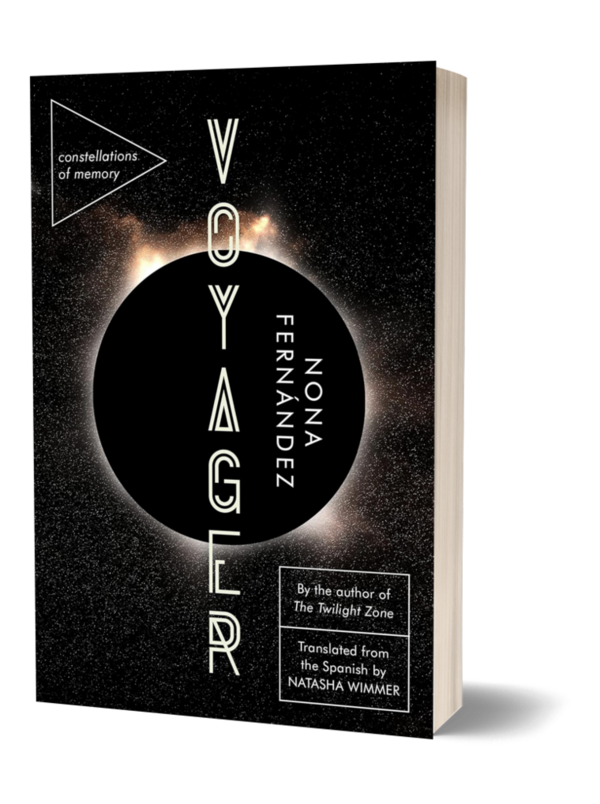
A startling book-length essay, at once grand and intimate, from National Book Award finalist Nona Fernández.
Voyager begins with Nona Fernández accompanying her elderly mother to the doctor to seek an explanation for her frequent falls and inability to remember what preceded them. As the author stares at the image of her mother’s brain scan, it occurs to her that the electrical signals shown on the screen resemble the night sky.
Inspired by the mission of the Voyager spacecrafts, Fernández begins a process of observation and documentation. She describes a recent trip to the remote Atacama desert―one of the world’s best spots for astronomical observation―to join people who, like her, hope to dispel the mythologized history of Chile’s new democracy. Weaving together the story of her mother’s illness with story of her country and of the cosmos itself, Fernández braids astronomy and astrology, neuroscience and memory, family history and national history into this brief but intensely imagined autobiographical essay. Scrutinizing the mechanisms of personal, civic, and stellar memory, she insists on preserving the truth of what we’ve seen and experienced, and finding ways to recover what people and countries often prefer to forget.
In Voyager, Fernández finds a new container for her profound and surreal reckonings with the past. One of the great chroniclers of our day, she has written a rich and resonant book.
Winner of the Dayton Literary Peace Prize and the Arab American Book Award
A Best Book of the Year: NPR, NYLON, Kirkus, Bustle, BookPage.
"What does home mean when you no longer have a house—or a homeland? This beautiful novel traces one Palestinian family’s struggle with that question and how it can haunt generations. . . . This is an example of how fiction is often the best filter for the real world around us." — NPR
Lyrical and heartbreaking, Salt Houses is a multigenerational saga that follows three generations of a Palestinian family and asks us to confront that most devastating of all truths: you can’t go home again.
On the eve of her daughter Alia’s wedding, Salma reads the girl’s future in a cup of coffee dregs. She sees an unsettled life for Alia and her children; she also sees travel and luck. While she chooses to keep her predictions to herself that day, they will all soon come to pass when the family is uprooted in the wake of the Six-Day War of 1967.
Salma is forced to leave her home in Nablus; Alia’s brother gets pulled into a politically militarized world he can’t escape; and Alia and her gentle-spirited husband move to Kuwait City, where they reluctantly build a life with their three children. When Saddam Hussein invades Kuwait in 1990, Alia and her family once again lose their home and their land, scattering to Beirut, Paris, Boston, and beyond. Soon Alia’s children begin families of their own, once again navigating the burdens (and blessings) of assimilation in foreign cities.
A remarkable work of diaspora fiction, Salt Houses is a debut novel that challenges and humanizes an age-old conflict we might think we understand.
Después de sufrir un colapso emocional y dejar su carro parado en medio del tránsito, Juan renuncia a su vida. A su vez, Greta, tras acarrear como un lastre la pérdida de su hija en un accidente automovilístico, pone fin a su matrimonio y se empeña, en modo de catarsis, recolectar las partes perdidas del mismo furgón donde ocurrió el accidente. Desde una narración fragmentaria que toca las fibras más sensibles de las pérdidas y anhelos de los personajes, Nona Fernández escribe de manera clara e íntima el trauma de la pérdida y como ésta une como un hilo invisible a sus protagonistas, que aislados, escindidos y despojados buscan resignificar su trauma incluso después de la muerte.
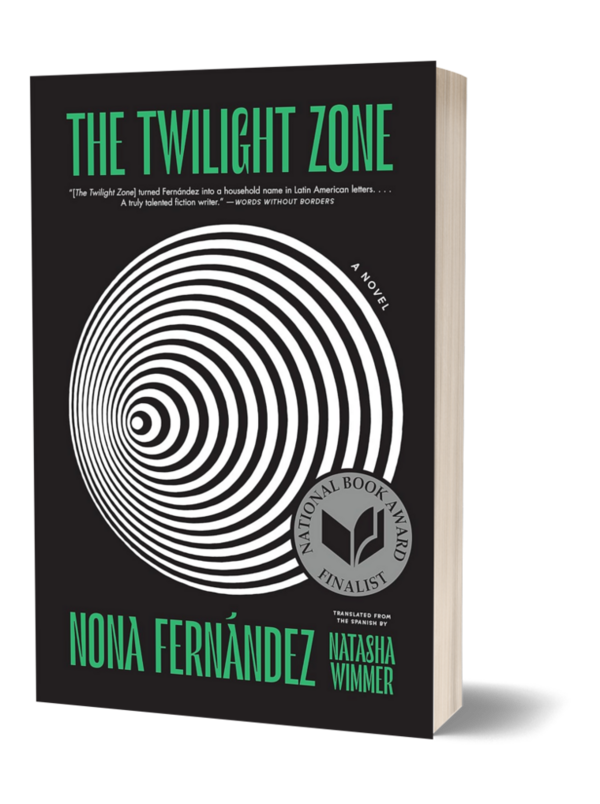
Finalist for the National Book Award for Translated Literature
An engrossing, incantatory novel about the legacy of historical crimes by the author of Space Invaders
It is 1984 in Chile, in the middle of the Pinochet dictatorship. A member of the secret police walks into the office of a dissident magazine and finds a reporter, who records his testimony. The narrator of Nona Fernández’s mesmerizing and terrifying novel The Twilight Zone is a child when she first sees this man’s face on the magazine’s cover with the words “I Tortured People.” His complicity in the worst crimes of the regime and his commitment to speaking about them haunt the narrator into her adulthood and career as a writer and documentarian. Like a secret service agent from the future, through extraordinary feats of the imagination, Fernández follows the “man who tortured people” to places that archives can’t reach, into the sinister twilight zone of history where morning routines, a game of chess, Yuri Gagarin, and the eponymous TV show of the novel’s title coexist with the brutal yet commonplace machinations of the regime.
How do crimes vanish in plain sight? How does one resist a repressive regime? And who gets to shape the truths we live by and take for granted? The Twilight Zone pulls us into the dark portals of the past, reminding us that the work of the writer in the face of historical erasure is to imagine so deeply that these absences can be, for a time, spectacularly illuminated.
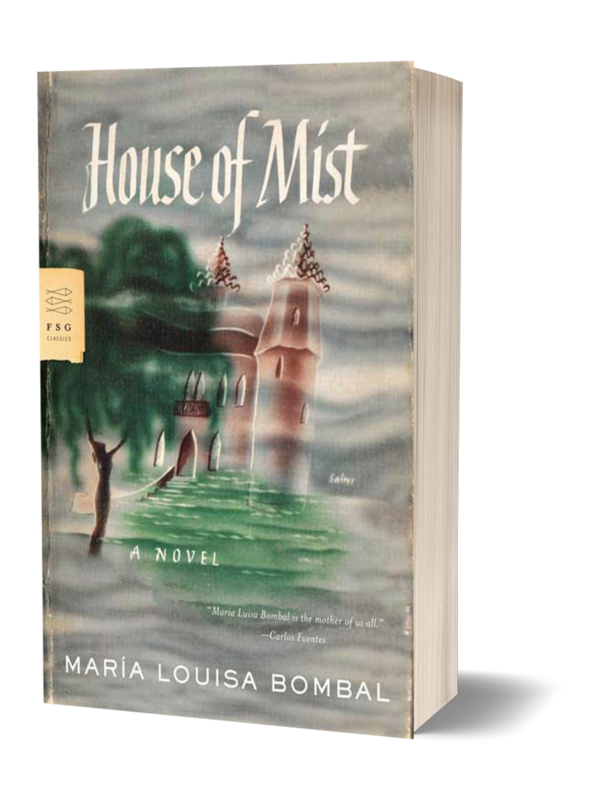
House of Mist stands as one of the first South American novels written in the style that was later called magical realism. Of this story of a young bride struggling with her marriage to an aloof landowner―and the mysteries surrounding their life together―in a house deep in the lush Chilean woods, Penelope Mesic wrote in the Chicago Tribune that Bombal showed "bold disregard for simple realism in favor of a heightened reality in which the external world reflects the internal truth of the characters' feeling . . . mingling . . . fantasy, memory and event."
"One of the most outstanding representations of the avant-garde in Latin America." -Women Writers of Spanish America
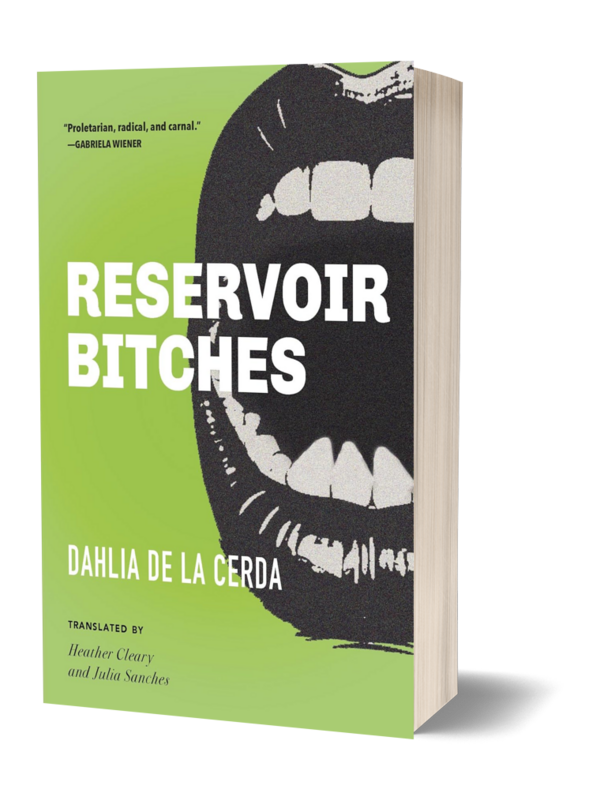
Longlisted for the 2025 International Booker Prize
Named one of the Best Books of the Year by NPR
“Life’s a bitch. That’s why you gotta rattle her cage, even if she’s foaming at the mouth.” In the linked stories of Reservoir Bitches, thirteen Mexican women prod the bitch that is Life and become her. From the all-powerful daughter of a cartel boss to the victim of transfemicide, from a houseful of spinster seamstresses to a socialite who supports her politician husband by faking Indigenous roots, these women spit on their own reduction and invent new ways to endure, telling their own stories in bold, unapologetic voices. At once a work of dark humor and social critique, Reservoir Bitches is a raucous debut from one of Mexico’s most thrilling new writers.
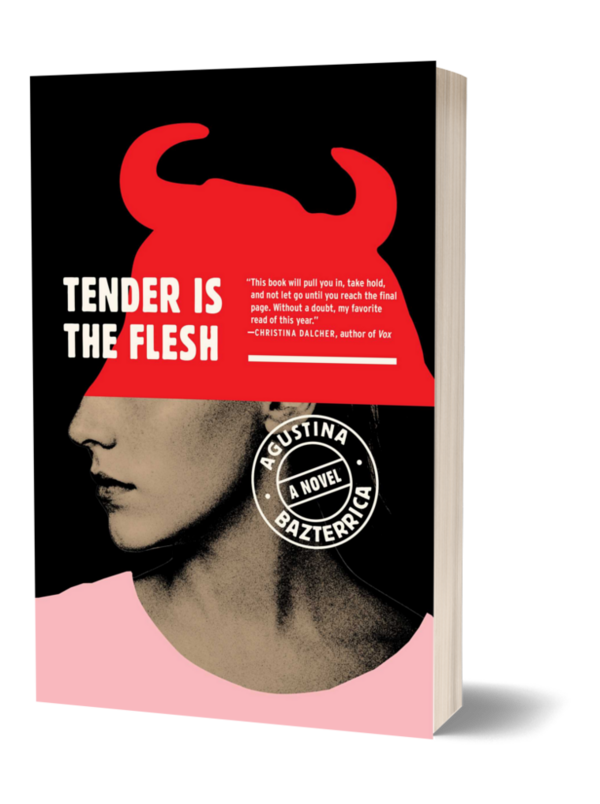
Working at the local processing plant, Marcos is in the business of slaughtering humans—though no one calls them that anymore.
His wife has left him, his father is sinking into dementia, and Marcos tries not to think too hard about how he makes a living. After all, it happened so quickly. First, it was reported that an infectious virus has made all animal meat poisonous to humans. Then governments initiated the “Transition.” Now, eating human meat—“special meat”—is legal. Marcos tries to stick to numbers, consignments, processing.
Then one day he’s given a gift: a live specimen of the finest quality. Though he’s aware that any form of personal contact is forbidden on pain of death, little by little he starts to treat her like a human being. And soon, he becomes tortured by what has been lost—and what might still be saved.
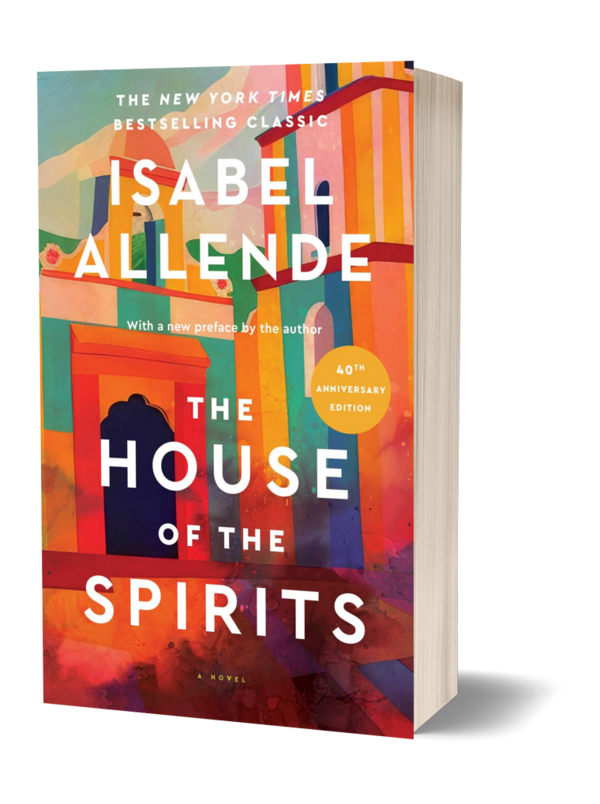
The House of the Spirits, which introduced Isabel Allende as one of the world’s most gifted storytellers, brings to life the triumphs and tragedies of three generations of the Trueba family. The patriarch Esteban is a volatile, proud man whose voracious pursuit of political power is tempered only by his love for his delicate wife Clara, a woman with a mystical connection to the spirit world. When their daughter Blanca embarks on a forbidden love affair in defiance of her implacable father, the result is an unexpected gift to Esteban: his adored granddaughter Alba, a beautiful and strong-willed child who will lead her family and her country into a revolutionary future.
One of the most important novels of the twentieth century, The House of the Spirits is an enthralling epic that spans decades and lives, weaving the personal and the political into a universal story of love, magic, and fate.
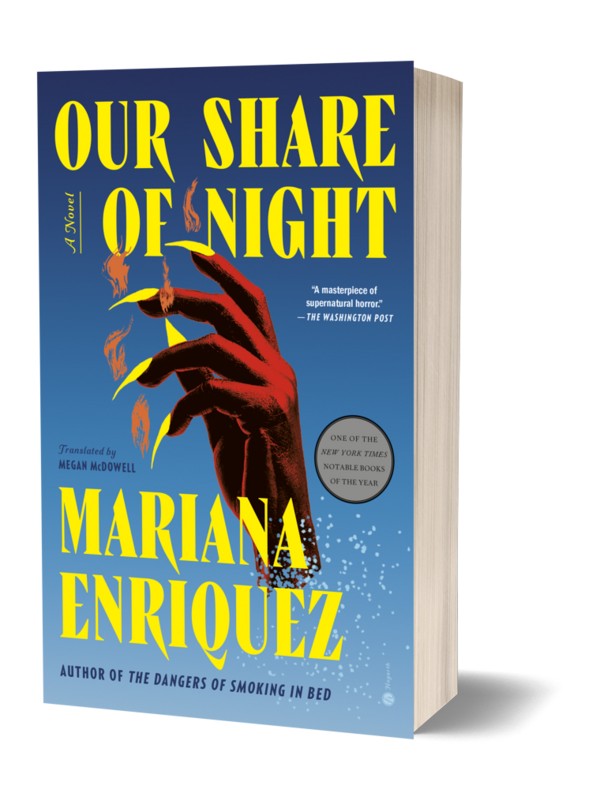
GOOD MORNING AMERICA BUZZ PICK
A woman’s mysterious death puts her husband and son on a collision course with her demonic family in the first novel to be translated into English by the International Booker Prize
A young father and son set out on a road trip, devastated by the death of the wife and mother they both loved. United in grief, they travel to her ancestral home, where they must confront the terrifying legacy she has bequeathed: a family called the Order that commits unspeakable acts in search of immortality.
For Gaspar, the son, this maniacal cult is his destiny. As the Order tries to pull him into their evil, he and his father take flight, attempting to outrun a powerful clan that will do anything to ensure its own survival. But how far will Gaspar's father go to protect his child? And can anyone escape their fate?
Moving back and forth in time, from London in the swinging 1960s to the brutal years of Argentina's military dictatorship and its turbulent aftermath, Our Share of Night is a novel like no other: a family story, a ghost story, a story of the occult and the supernatural, a book about the complexities of love and longing with queer subplots and themes.
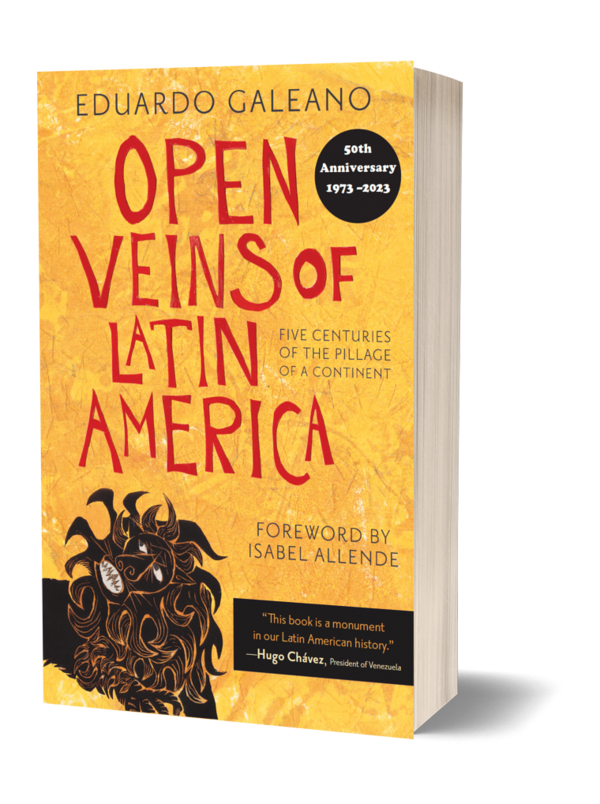
Honored by an inspiring introduction by one of the most influential writers of our time, Isabel Allende
With its U.S. debut fifty years ago, this brilliant classic set the standard for historical scholarship on Latin America. Rather than charting the continent according to more traditional geographic or chronological delineations, Eduardo Galeano told the story of Latin America by uncovering the patterns of five centuries of exploitation. Thus he was concerned with gold and silver, cacao and cotton, rubber and coffee, fruit, hides and wool, petroleum, iron, nickel, manganese, copper, aluminum ore, nitrates, and tin. These are the veins that he traced through the body of the entire continent, up to the Rio Grande and throughout the Caribbean, and all the way to their open ends where to this day, they empty continuously into the coffers of wealth in the United States and Europe.
Weaving fact and imagery into a rich tapestry, Galeano never faltered as he fused the scientific analysis of an immense vault of historical material with the impassioned perspective of plundered peoples. Readers in all manner of great historical, economic, political, and social writing have found in Open Veins of Latin America a singularly rigorous analytical achievement that never lost vigor, an overwhelming narrative that makes history speak, unforgettably.

A collection of stories by Sandra Cisneros, the celebrated bestselling author of The House on Mango Street and the winner of the 2019 PEN/Nabokov Award for Achievement in International Literature.
The lovingly drawn characters of these stories give voice to the vibrant and varied life on both sides of the Mexican border with tales of pure discovery, filled with moments of infinite and intimate wisdom.