
Search By Category
- AAPI Authors & Culture
- Aliens
- Anthology
- Astrology
- Astronomy
- Autobiography & Memoirs
- Banned
- Bestsellers
- Black / African Authors & Culture
- Business, Economics & Finance
- Children's
- Classics
- Comics & Graphic Novels
- Critically Acclaimed
- Dystopian
- Environmental & Nature
- Fairy, Folk Tales & Mythology
- Feminism & Women Studies
- Fiction
- Food & Beverages
- Founder's Faves
- Free Palestine
- Gardening
- Health & Fitness
- Hispanic/Latine Authors & Culture
- Historical
- Horror
- Indie Author
- Indigenous Authors & Culture
- Journal
- LGBTQ+
- Literary Fiction
- Magical Realism
- Medical
- Mental Health
- Middle Eastern Authors & Culture
- Misc Gifts
- Motivational & Self-Help
- Music
- NYT 100 Best Books of 21st Century
- Nobel Prize Winner
- Nonfiction
- Persian Authors & Culture
- Philosophy
- Poetry
- Political Science
- Psychology
- Pulitzer Prize Winner
- Reference
- Religion
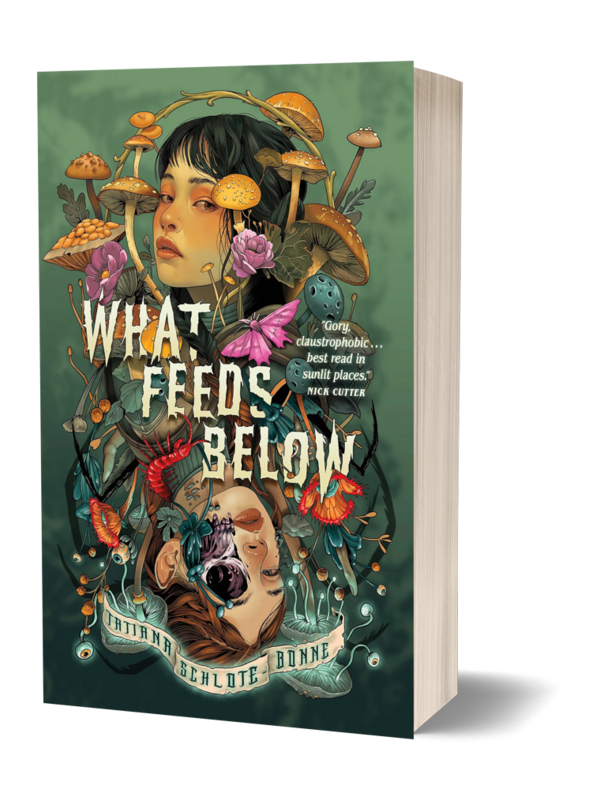
BEGINS SHIPPING 10/6/26
STARRED PUBLISHERS WEEKLY REVIEW: "Astounding, inventive."
STARRED KIRKUS REVIEW: "Lush and innovative world-building, gruesome body horror . . . A nail-biting tale set in a beautifully rendered world of darkness and danger"
The darkness isn’t empty. It’s hungry.
At the edge of the City of the Void, a massive chasm extends miles into the earth, its treacherous terrain overrun with vicious monsters and carnivorous plants. For orphaned best friends Petra and Jade, guiding treasure-seeking tourists down into the Void is the only way to earn enough to pull themselves up out of the slums for good.
Petra prefers to play it safe and take jobs only in the Void’s upper levels, where the dangers are better understood, while Jade wants to risk a descent to the deepest and most mysterious Sixth Layer. Because the deeper they go, the better the payout, and the sooner their dreams can become reality. Their friendship is Petra’s whole world, and Jade’s approval means everything—so Petra agrees to do it Jade’s way.
When their job goes wrong and Jade is lost in the Void, Petra must plunge deeper than she’s ever dared to save her friend.
But she doesn’t know the truth of the Void . . . or what really waits for her in its depths.
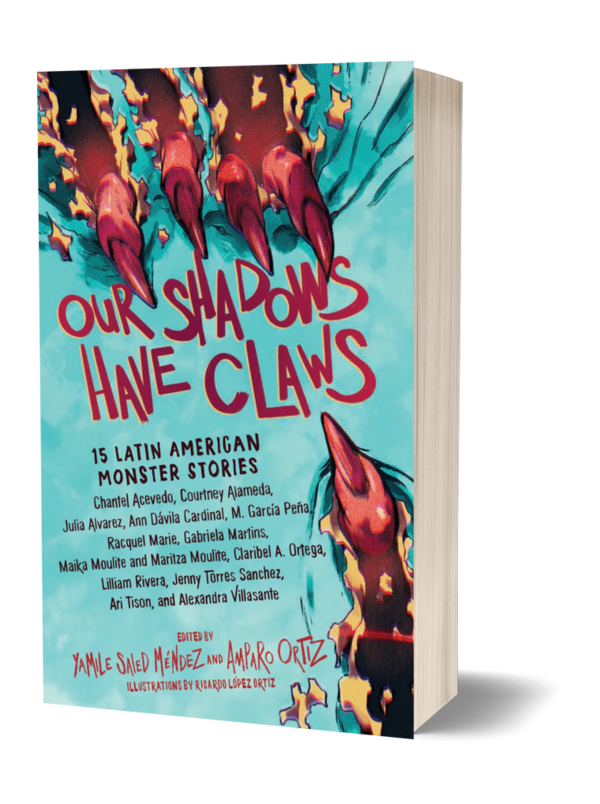
“This bloodcurdling anthology soars.” —Kirkus Reviews, starred review
From zombies to cannibals to star-crossed, shapeshifting lovers, this cross-genre anthology written by superstar YA authors from across the Latin American diaspora offers bold new thrills for every monster fan.
In these fifteen original short stories, bloodthirsty vampires are hunted by a quick-witted slayer; children are taken from their beds by “el Viejo de la Bolsa” while a military dictator steals their parents; and anyone you love might be a monster waiting to strike. The sinister worlds of these narratives are also magical ones, where supernatural beings can be avatars for justice, vengeance, sisterhood, and empowerment. Some monsters need to be slain; others should be embraced.
So, step into the darkness. See what you find.
Full contributor list: Chantel Acevedo, Courtney Alameda, Julia Alvarez, Ann Dávila Cardinal, M. García Peña, Racquel Marie, Gabriela Martins, Yamile Saied Méndez, Maika Moulite and Maritza Moulite, Claribel A. Ortega, Amparo Ortiz, Lilliam Rivera, Jenny Torres Sanchez, Ari Tison, and Alexandra Villasante.
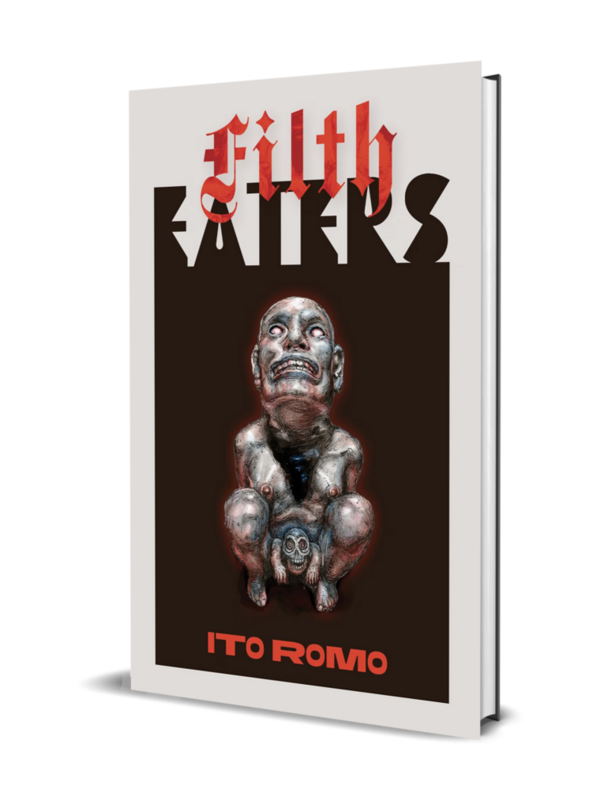
A high-strung and inventive literary horror that will delight fans of Stephen Graham Jones and Mariana Enriquez, Ito Romo’s debut novel traces the thousand-year lineage of a new kind of vampire—the mestizo Filth Eater.
Granada, 1849. After centuries of scrounging in the shadows, the vampire Radamés discovers an ancient Aztec codex that reveals the vampires of the “New World” live a more “human” life—they marry, they give birth. Spurred on by tantalizing promise of a fuller existence, Radamés glamours and schemes his way onto a ship headed for Mexico. There, in the underbelly of the forgotten city of Teotihuacán, the Andalusian vampire falls in love with a member of this ancient sect of vampires who call themselves Filth Eaters. From their union, the mestizo vampire Doro is born.
Hopping back and forth in time from the Indus River Delta in 1099 to the Muslim Spanish empire of the 1400s to a flooded cyberpunk New York City of the future, Filth Eaters pulls at the threads of empire, greed, and climate collapse, but the beating, bloody heart of the story is our very human desire for the love that gives life meaning. The debut novel from a celebrated writer of “Chicano Gothic” stories, this surprising, gory saga turns a new page for a centuries-old genre.
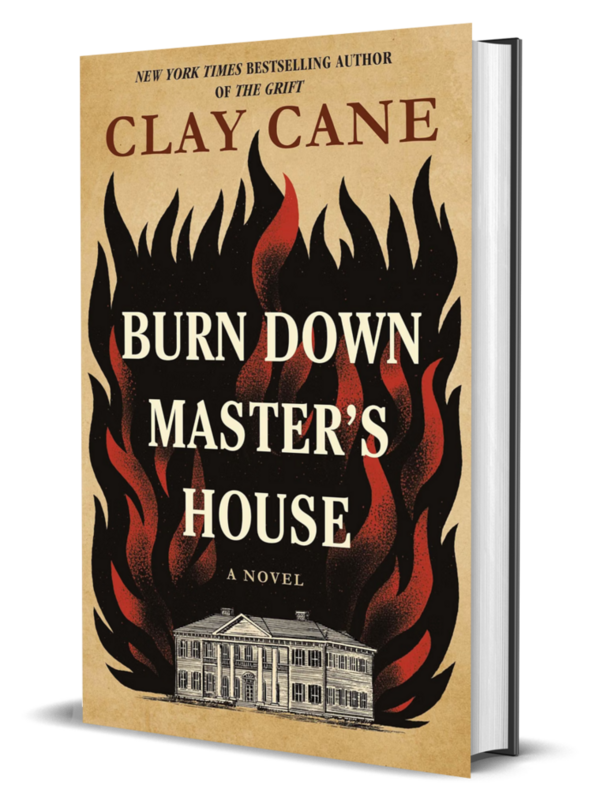
Inspired by true, long-buried stories of enslaved people who dared to fight back, a searing portrayal of resistance for readers of Colson Whitehead, Jesmyn Ward, and Percival Everett, from Clay Cane, award-winning journalist and New York Times bestselling author of The Grift.
As turmoil simmers within a divided nation, smoke from another blaze begins to rise. Sparked by individual acts of resistance among those enslaved across the American South, their seemingly disparate rebellions fuel a singular inferno of justice, connecting them in ways quiet at times, explosive at others. As these flames rise, so will they.
Luke, quick-witted and literate, and Henri, a man with a strong and defiant spirit, forge an unbreakable bond at a Virginia plantation called Magnolia Row. Both seek escape from unimaginable cruelty. And sure as the fires of hell, Luke and Henri will leave their mark, sparking resistance among the lives they touch…
One is Josephine, a young, sharp, and observant girl who wields silence as her greatest weapon. A witness to Luke and Henri’s resilience, she listens, watches, waits for the moment to make her move.
Then there is Charity Butler, her husband a formerly enslaved man who proved his ferocity as a young boy standing alongside Josephine. At his encouragement, Charity fights for her freedom in court and wins – only to battle a deeply unjust system designed to destroy the life they’ve built.
And finally, there is Nathaniel, who ruthlessly exploits other Black people and mirrors the cruelty of the white men who, like him, are enslavers. A perversion of the system of slavery, his fragile and contradictory rule will become a catalyst of its own.
Inspired by the true stories of the profoundly courageous men and women who dared to fight back, Burn Down Master’s House is a singular tour de force of a novel—breathtaking in scope, compassion, and a timeliness that speaks powerfully to our present era.
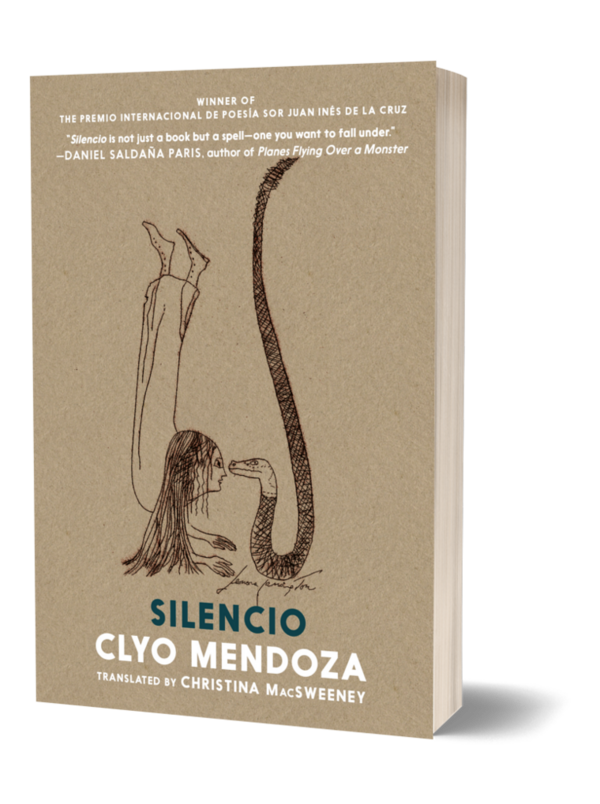
A lyrically haunting and powerful account of women surviving femicide and destruction in Mexico, using fantasy to relate atrocities that exist beyond language.
From the award-winning author of the highly praised novel, Fury, one of Publisher’s Weekly’s Best Books of 2024 and an Indie Next Pick.
Silencio tells the story of Águeda, a young woman mourning the death of her mother. When the townspeople deny her a grave in the local cemetery, the mother’s body vanishes. Águeda knows her father is hiding it, and when she confronts him, he punishes her defiance with confinement.
Serving her sentence in a house, Águeda lives within those walls as if in a second maternal womb—one that will transform her. In chapters alternating between the real and the imaginary, she mourns the destroyed futures of those who were silenced as she listens to her neighbors’ stories of loss—a child worker; a boy from the Tacuate community; and Mexican refugees in Canada. Through the walls, she senses the world: birds in dialogue, the beauty of the arid landscape, experiences of love and devastation. She comes to realize that in this mountain region that resembles the author’s hometown of Oaxaca, where organized crime holds sway, many—like her—mourn their dead and search for the disappeared.
In her second book to be translated into English, Clyo Mendoza transcends the limits of language and realism to represent with lyric brutality the unspeakable violence in towns where narcotrafficking rules.
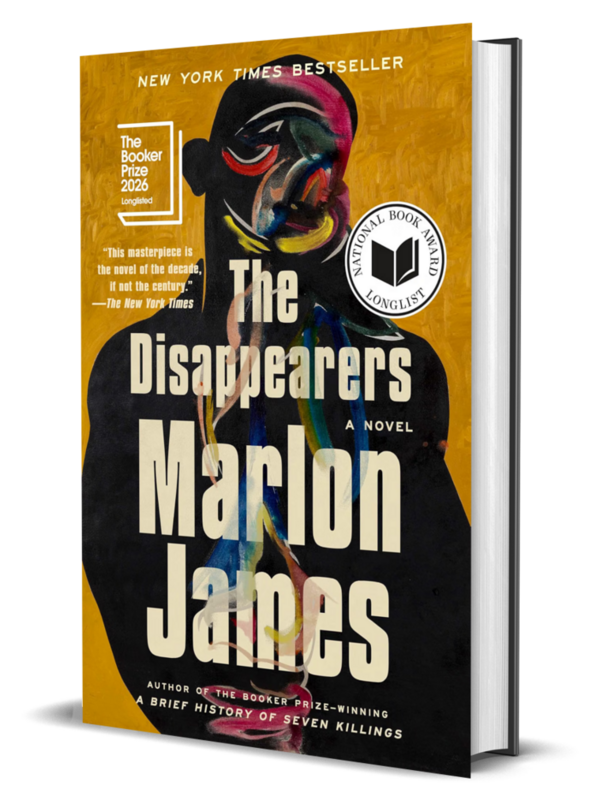
AN INSTANT NEW YORK TIMES BESTSELLER
LONGLISTED FOR THE 2026 BOOKER PRIZE
LONGLISTED FOR THE 2026 NATIONAL BOOK AWARD FOR FICTION
From Marlon James, author of the Booker Prize–winning A Brief History of Seven Killings: the electrifying story of the murder of a gay man in 1980s Jamaica and its far-reaching consequences
In 1988, eight men in Kingston, Jamaica, begin rehearsals for a play. Though strangers to one another, they share an inescapable truth: All of them are gay. And they live in a world that refuses to accept them.
One night the men are savagely beaten and one of them is killed. As their bodies heal, the survivors begin to face the hatred and contempt that the violence laid bare. Some try to ignore what happened. Others double down on retribution. Some disappear completely.
In this spellbinding novel, Marlon James has written a propulsive crime story that is also a deeply human account of connection and acceptance. Full of fascinating characters, biting humor, and unapologetic sex, The Disappearers is both a thrilling page-turner and a finely etched portrait of queer life.
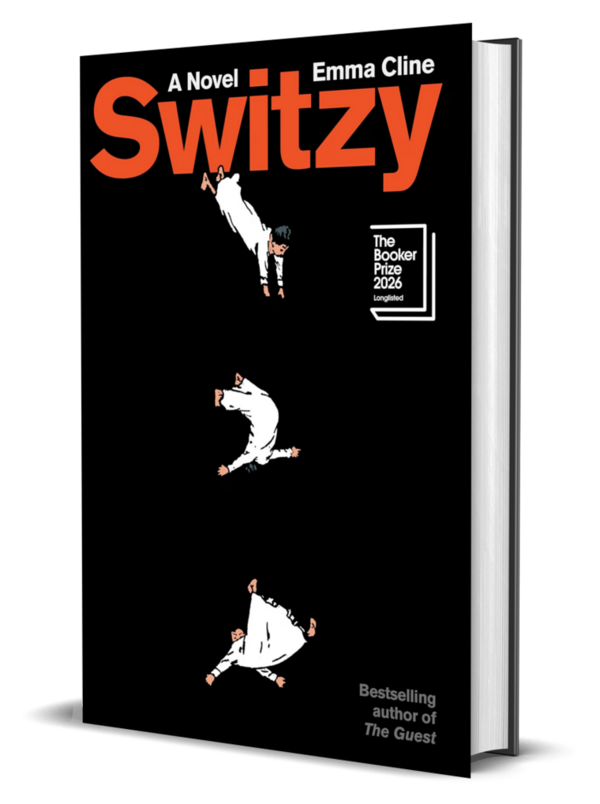
A mesmerizing portrait of an aging man’s last pilgrimage, from the New York Times best selling author of The Girls and The Guest.
A private plane cuts through the winter night, somewhere over Greenland. David, a retired executive, sits back in his leather seat, playing solitaire on his phone. Click. Click. Drag. Click. The notebook in his jacket pocket is filled with familiar phrases, urgent reminders to himself, but he struggles to recognize his own handwriting.
A mystery, among many mysteries. The world, once so knowable, has been rendered inscrutable.
This is what David knows: Cody, his assistant, asleep in the seat next to him, will shepherd him along the voyage. A stopover in London. Dinner with his adult daughter. A meeting in France with an old friend, estranged for decades.
His final destination is Zurich.
David glides through hotel rooms and airports and foreign cities, running out the clock on his mortal life. His grasp on the present slips away, and the past rushes in: the Sunday roasts of childhood. The stiff clothes meant only for church. A summer at a school friend’s house. The losses and missteps that punctuate a life.
As David’s arrival in Zurich looms, an exquisitely rendered portrait of an unraveling mind emerges, both darkly humorous and profoundly moving. Hypnotic and startlingly original, Switzy probes the depths of human consciousness, revealing what a man is left with when the accomplishments and compromises that have defined him, and the illusions he's relied on, vanish.
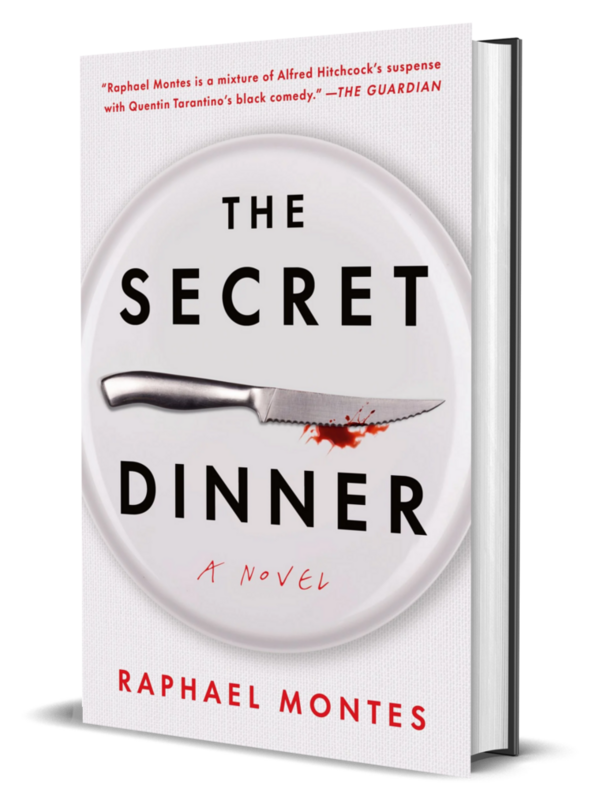
"Bold and bloody, it's a thriller with real bite." ―Riley Sager
Four childhood friends, eager for a taste of city life, swap rural Brazil for an apartment in Copacabana, Rio. But they have no idea of the fate that awaits them there. . . .
Dante, Piglet, Miguel, and Hugo are your average students trying to make ends meet with part-time jobs, excited about the bright futures at their fingertips. So when their rent skyrockets, they struggle to keep their new lives and big dreams afloat. They need to make money however they can. In order to keep their apartment, the friends adopt an unorthodox plan and are soon sucked into a dark world of secret dinner parties catering to the twisted fantasies of Rio's elite.
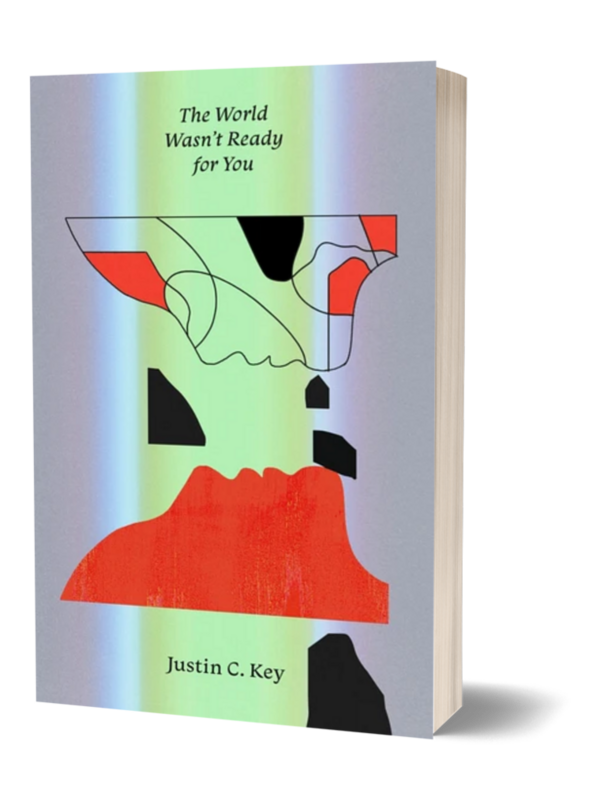
“The most profound terror is rooted in love—the terror of losing love, of love betrayed, of love in peril. Justin C. Key’s work is a cold knife through a hot heart, a surgical blade unleashing gouts of searing fear.”—Cory Doctorow, author of Red Team Blues, Little Brother, and Radicalized
“An electrifying collection of stories that would make Octavia E. Butler smile.”—Ebony
Black Mirror meets Get Out in this gripping story collection reminiscent of the work of Octavia E. Butler, deftly blending science fiction, horror, and fantasy to examine issues of race, class, and prejudice—an electrifying, oftentimes heartbreaking debut from an extraordinary new voice—
now available as a limited Olive Edition from Harper Perennial.
In The World Wasn’t Ready for You, Justin C. Key builds on his lifelong obsession with monsters as he expands and subverts the horror genre to expertly explore issues of race, class, prejudice, love, exclusion, loneliness, and what it means to be a person in the world, while revealing the horrifying nature inherent in all of us.
In the opening story, “The Perfection of Theresa Watkins,” a sci-fi love story turned nightmare, a husband uses new technology to download the consciousness of his recently deceased Black wife into the body of a white woman. In “Spider King,” an inmate agrees to participate in an experimental medical study offered to Black prisoners in exchange for early release, only to find his body reacting with disturbing symptoms. And in the title story, a father tries to protect his son, teaching him how to navigate a racist world that does not understand him and sees him as a threat.
The World Wasn’t Ready for You is a gripping, provocative, and distinctly original collection that demonstrates Key’s remarkable literary gifts—a skill at crafting science fiction stories equaled by an ability to sculpt characters and narrative—as well as his utterly fresh take on how genre can be used to delight, awe, frighten, and ultimately challenge our perceptions. Wildly imaginative and powerfully resonant, it introduces an unforgettable new voice in fiction.
The full set of books in the 2026 Olive Editions series include:
Guards! Guards! by Terry Pratchett
Changing Planes by Ursula K. Le Guin
Island by Aldous Huxley
Alas, Babylon by Pat Frank
The Princess Bride by William Goldman
The Hidden Palace by Helene Wecker
Highfire by Eoin Colfer
The World Wasn’t Ready for You by Justin Key
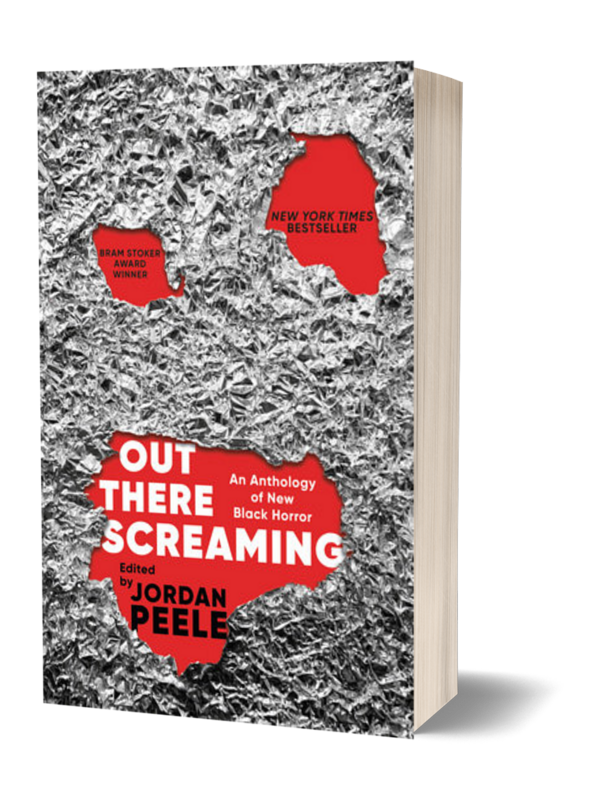
NEW YORK TIMES BESTSELLER
The visionary writer and director of Get Out, Us, and Nope, and founder of Monkeypaw Productions, curates this groundbreaking anthology of all-new stories of Black horror, exploring not only the terrors of the supernatural but the chilling reality of injustice that haunts our nation.
“Every piece is strong and memorable, making this not only likely to be the best anthology of the year, but one for the ages.”—The Guardian
A cop begins seeing huge, blinking eyes where the headlights of cars should be that tell him who to pull over. Two freedom riders take a bus ride that leaves them stranded on a lonely road in Alabama where several unsettling somethings await them. A young girl dives into the depths of the Earth in search of the demon that killed her parents. These are just a few of the worlds of Out There Screaming, Jordan Peele’s anthology of all-new horror stories by Black writers. Featuring an introduction by Peele and an all-star roster of beloved writers and new voices, Out There Screaming is a master class in horror, and—like his spine-chilling films—its stories prey on everything we think we know about our world . . . and redefine what it means to be afraid.
Featuring stories by: Erin E. Adams, Violet Allen, Lesley Nneka Arimah, Maurice Broaddus, Chesya Burke, P. Djèlí Clark, Ezra Claytan Daniels, Tananarive Due, Nalo Hopkinson, N. K. Jemisin, Justin C. Key, L. D. Lewis, Nnedi Okorafor, Tochi Onyebuchi, Rebecca Roanhorse, Nicole D. Sconiers, Rion Amilcar Scott, Terence Taylor, and Cadwell Turnbull.
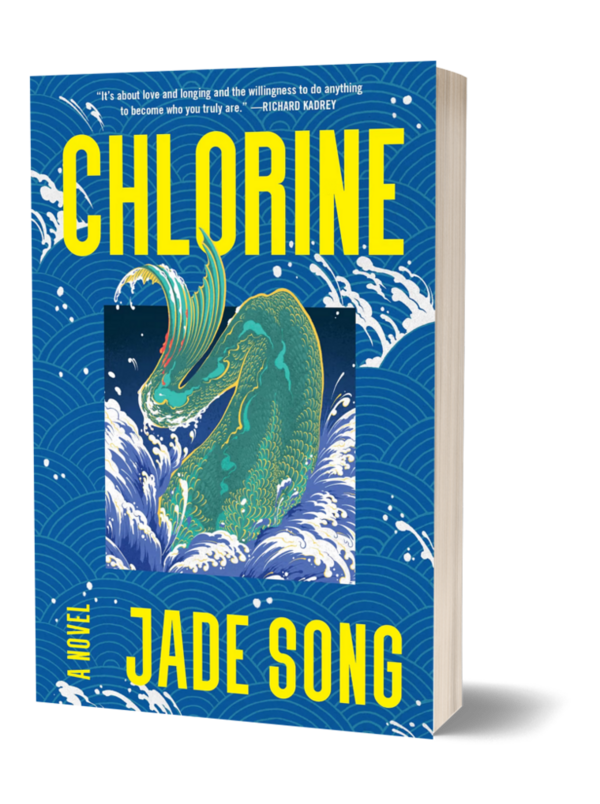
In the vein of The Pisces and The Vegetarian, Chlorine is a debut novel that blurs the line between a literary coming-of-age narrative and a dark unsettling horror tale, told from an adult perspective on the trials and tribulations of growing up in a society that puts pressure on young women and their bodies... a powerful, relevant novel of immigration, sapphic longing, and fierce, defiant becoming.
Ren Yu is a swimmer. Her daily life starts and ends with the pool. Her teammates are her only friends. Her coach, her guiding light. If she swims well enough, she will be scouted, get a scholarship, go to a good school. Her parents will love her. Her coach will be kind to her. She will have a good life.
But these are human concerns. These are the concerns of those confined to land, those with legs. Ren grew up on stories of creatures of the deep, of the oceans and the rivers. Ones that called sailors to their doom. Ones that dragged them down and drowned them. Ones that feasted on their flesh. Ones of the creature that she's always longed to become: mermaid.
Ren aches to be in the water. She dreams of the scent of chlorine--the feel of it on her skin. And she will do anything she can to make a life for herself where she can be free. No matter the pain. No matter what anyone else thinks. No matter how much blood she has to spill.
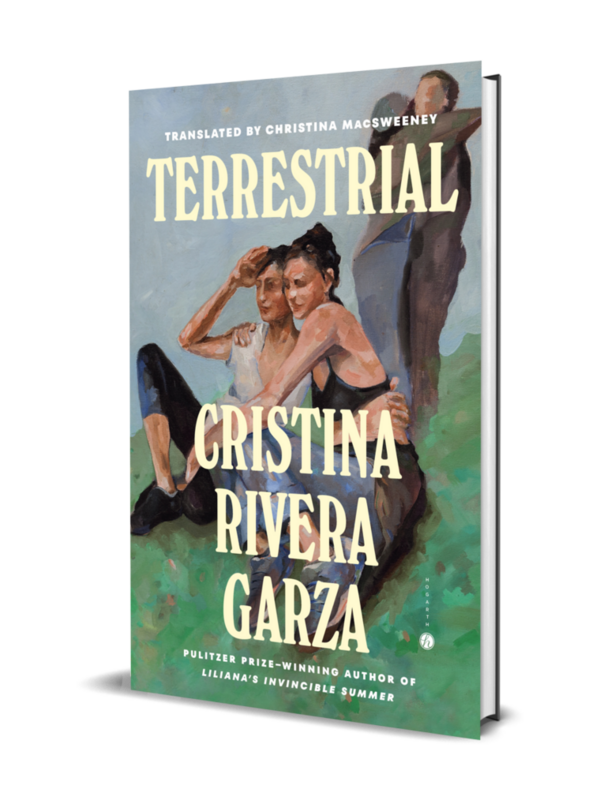
A fiercely poetic, tenderly observed portrait of young women’s travels on the fringes of Mexico and the United States, by the Pulitzer-Prize winning author of Liliana’s Invincible Summer
In this new collection of genre-defying stories by Cristina Rivera Garza, a woman visits what she thinks could be her old lover's hometown after being abandoned by her, years earlier. Two herons hitchhike across Mexico. A group of workers build a new home, only to see it destroyed by the state.
With little baggage and much bravado, the characters in Terrestrial hitchhike, migrate, take trains, wander or, at times, fly, to survive the mandates of patriarchy and capitalism. On dusty roads or by a lake turned suddenly ominous, they remain in close contact with the earth's surface, sensing its wild promise and capacity for violence, its degradation and enduring beauty.
As she did in her Pulitzer Prize winning memoir Liliana’s Invincible Summer, Rivera Garza forges new forms, experimenting with structure and time as she tails the intrepid travelers with shimmering and honest prose. Combining journalism, novelistic writing, and themes of female freedom, gore capitalism, and class struggle, Terrestrial is a meditation on travel and distance, and our ties to the earth we tread on.
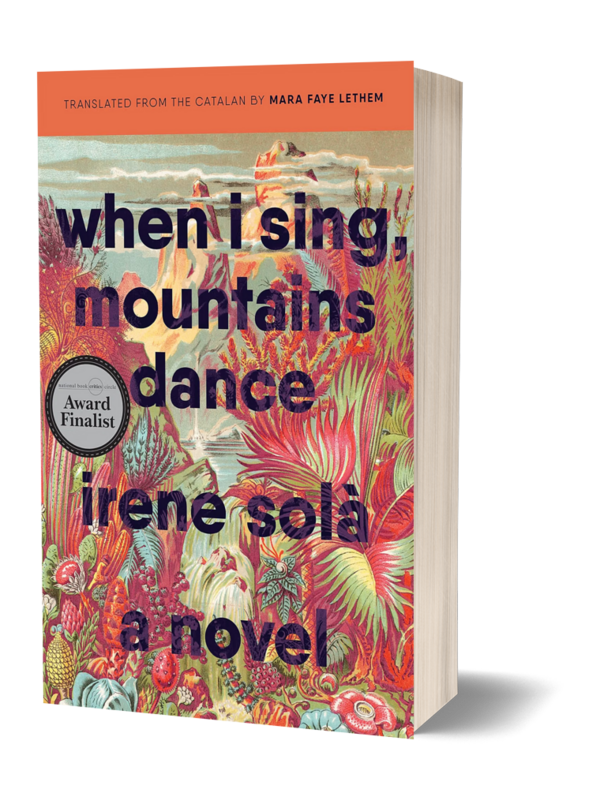
Near a village high in the Pyrenees, Domènec wanders across a ridge, fancying himself more a poet than a farmer, to “reel off his verses over on this side of the mountain.” He gathers black chanterelles, attends to a troubled cow. And then storm clouds swell, full of electrifying power. Reckless, gleeful, they release their bolts of lightning, one of which strikes Domènec. He dies. The ghosts of seventeenth-century witches gather around him, taking up the chanterelles he’d harvested before going on their merry ways. So begins this novel that is as much about the mountains and the mushrooms as it is about the human dramas that unfold in their midst.
When I Sing, Mountains Dance, winner of the European Union Prize, is a giddy paean to the land in all its interconnectedness, and in it Sola finds a distinct voice for each extraordinary consciousness: the lightning bolts, roe deer, mountains, the ghosts of the civil war, the widow Sió and later her grown children, Hilari and Mia, as well as Mia’s lovers with their long-buried secrets and their hidden pain.
Irene Solà animates the polyphonic world around us, the fierce music of the seasons, as well as the stories we tell to comprehend loss and love on a personal, historical, and even geological scale. Lyrical, elemental, and mythic, hers is a fearlessly imaginative new voice that brilliantly renders both our tragedies and our triumphs.
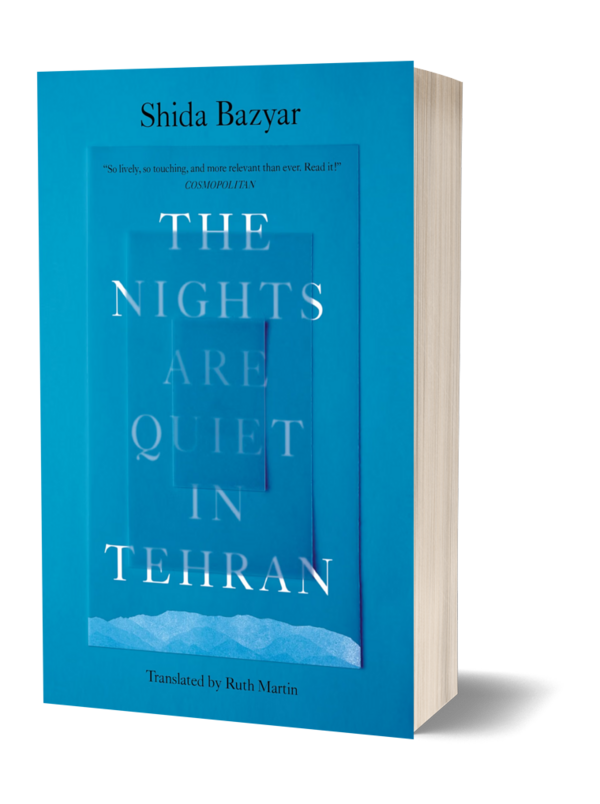
A captivating, polyphonic novel of one family’s flight from and return to Iran.
1979. Behsad, a young communist revolutionary, fights with his friends for a new order after the Shah’s expulsion. He tells of sparking hope, of clandestine political actions, and of how he finds the love of his life in the courageous, intelligent Nahid.
1989. Nahid lives her new life in West Germany with Behsad. With their young children, they spend hour after hour in front of the radio, hoping for news from others who went into hiding after the mullahs came to power.
1999. Laleh returns to Iran with her mother, Nahid. Between beauty rituals and family secrets, she gets to know a Tehran that hardly matches her childhood memories.
2009. Laleh’s brother Mo is more concerned with a friend’s heartbreak than with student demonstrations in Germany. But then the Green Revolution breaks out in Iran and turns the world upside down …
A topical, moving novel about revolution, oppression, resistance, and the absolute desire for freedom.
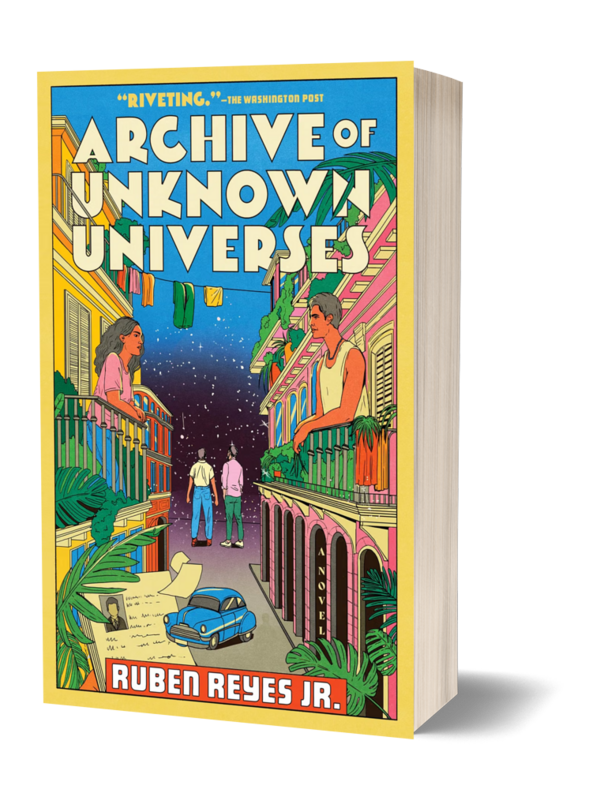
From the author of There Is a Rio Grande in Heaven, a piercing debut novel following two families in alternative timelines of the Salvadoran civil war—a stunning exploration of the mechanisms of fate, the gravity of the past, and the endurance of love.
Cambridge, 2018. Ana and Luis’s relationship is on the rocks, despite their many similarities, including their mothers who both fled El Salvador during the war. In her search for answers, and against her best judgement, Ana uses The Defractor, an experimental device that allows users to peek into alternate versions of their lives. What she sees leads her and Luis on a quest through Havana and San Salvador to uncover the family histories they are desperate to know, eager to learn if what might have been could fix what is.
Havana, 1978. The Salvadoran war is brewing, and Neto, a young revolutionary with a knack for forging government papers, meets Rafael at a meeting for the People's Revolutionary Army. The two form an intense and forbidden love, shedding their fake names and revealing themselves to each other inside the covert world of their activism. When their work separates them, they begin to exchange weekly letters, but soon, as the devastating war rages on, forces beyond their control threaten to pull them apart forever.
Ruben Reyes Jr.’s debut novel is an epic, genre-bending journey through inverted worlds—one where war ends with a peace treaty, and one where it ends with a decisive victory by the Salvadoran government. What unfolds is a stunning story of displacement and belonging, of loss and love. It’s both a daring imagining of what might have been and a powerful reckoning of our past.
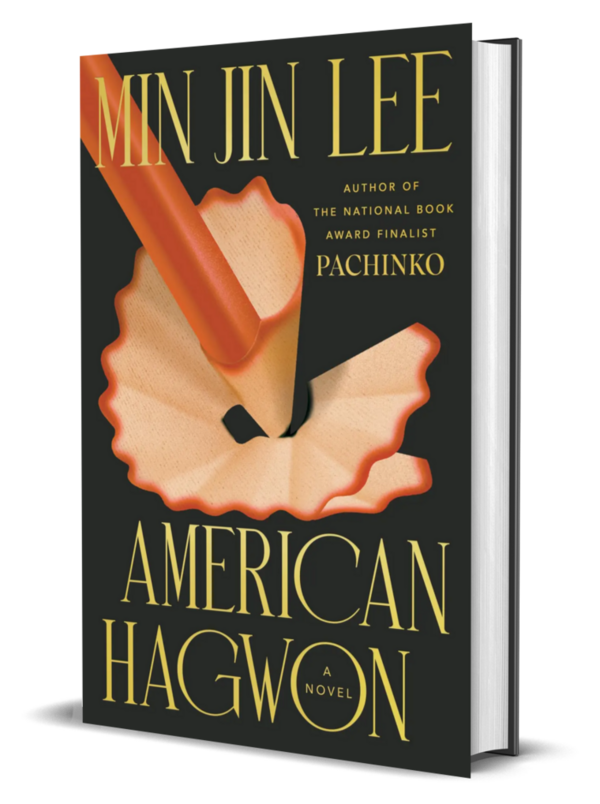
The National Book Award finalist and New York Times bestselling author of Pachinko returns with a breathtaking contemporary epic: a masterpiece by turns sweeping and intimate, that reckons with ambition and moderation, lust and loyalty, personal dreams and familial duty.
Min Jin Lee brings grand ambition, fierce heart, and the tenderest hope to a novel I didn’t want to end.” —Roxane Gay, bestselling author of Bad Feminist and Hunger
In schools and churches, hotel rooms and nail salons, law firms and fried-fish shops; in cramped, dingy apartments and luxury, gated communities, the men, women, and children in American Hagwon struggle to find satisfaction and meaning in a world that seems to grow less forgiving with each passing year. Once comfortably middle class in Korea, John and Helen Koh and their three children—Bo, DH, and Mido—find their lives upended, first by a shocking betrayal by John’s oldest friend, then by the 1997 Asian financial crisis.
Desperately striving to regain their footing, they leave Seoul for Sydney and eventually settle in Southern California—where new vistas of opportunity open up for the children as their parents, strangers in a strange land, must adjust to a new life in which their experience and education mean little, and they set their sights on whatever it takes to provide for their children’s futures. The Kohs, their friends, relatives, and even their foes move in and out of each other’s lives as they navigate new courses across the years, always nursing the almost all-consuming faith that education will lead the next generation to success and security.
In American Hagwon, Min Jin Lee has crafted an unforgettable, panoramic novel where the smallest of gestures can have enormous repercussions, where the bonds of family and of memory twist and fray but rarely break, and where willful self-sacrifice—for the benefit of loved ones and even strangers—is a kind of prayer.
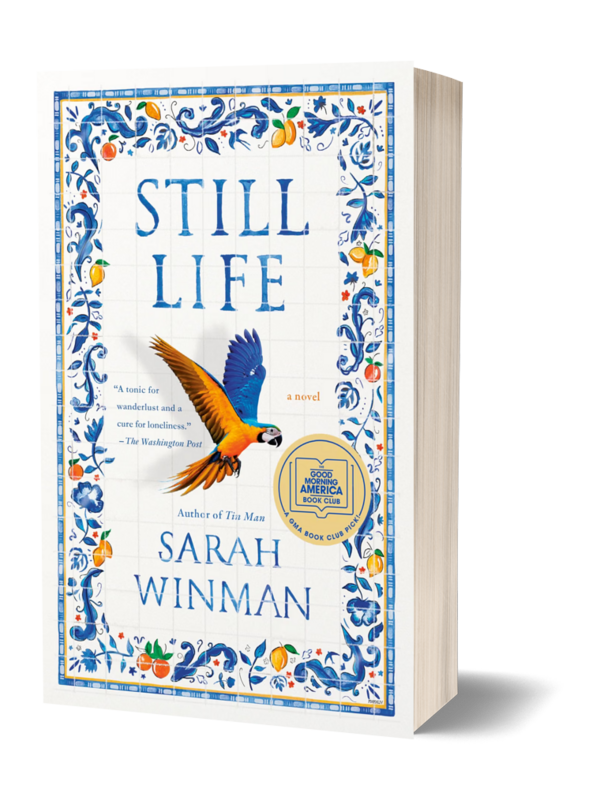
Tuscany, 1944: As Allied troops advance and bombs fall around deserted villages, a young English soldier, Ulysses Temper, finds himself in the wine cellar of a deserted villa. There, he has a chance encounter with Evelyn Skinner, a middle-aged art historian who has come to Italy to salvage paintings from the ruins and recall long-forgotten memories of her own youth. In each other, Ulysses and Evelyn find a kindred spirit amongst the rubble of war-torn Italy, and set off on a course of events that will shape Ulysses's life for the next four decades.
As Ulysses returns home to London, reimmersing himself in his crew at The Stoat and Parrot -- a motley mix of pub crawlers and eccentrics -- he carries his time in Italy with him. And when an unexpected inheritance brings him back to where it all began, Ulysses knows better than to tempt fate, and returns to the Tuscan hills.
With beautiful prose, extraordinary tenderness, and bursts of humor and light, Still Life is a sweeping portrait of unforgettable individuals who come together to make a family, and a richly drawn celebration of beauty and love in all its forms.
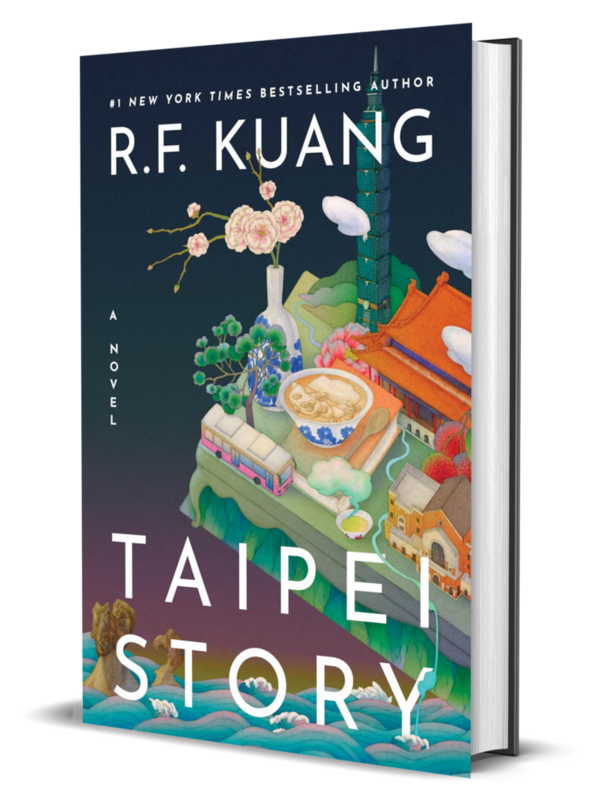
From R.F. Kuang, the acclaimed #1 New York Times bestselling author of Katabasis and Yellowface, comes a wryly humorous and profoundly moving coming-of-age novel that grapples with grief, language, and culture shock—all set against the backdrop of an unforgettable summer in Taipei.
College freshman Lily Chen is off to spend the summer in Taipei at an intensive language program like so many Chinese American students before her, hoping to connect with the culture she inherited but never fully understood. But a promising start quickly unravels. Her classes are grueling, her roommate is driving her insane, and a reckless trip to the hot springs with a guy she barely knows soon has her classmates viciously gossiping. She feels adrift, a foreigner in a country she thought would feel like home.
Then shocking news Lily’s grandfather has passed away. The loss forces her to grapple with now-unanswerable questions about her family history. As Lily grieves, she’s drawn into a journey of self-discovery—piecing together memories, stories, and silences over a series of hilarious and devastating attempts at connection.
Taipei Story What if the diaspora fantasy of homecoming never comes true? What if learning a language can’t bring you any closer to the people you’re trying to reach? What if you search for your family’s history, but your family doesn’t want to share? What if you wait too long to ask the right questions? As Lily struggles for answers, her summer becomes a poignant search for understanding—of herself, her family, and the meaning of home.
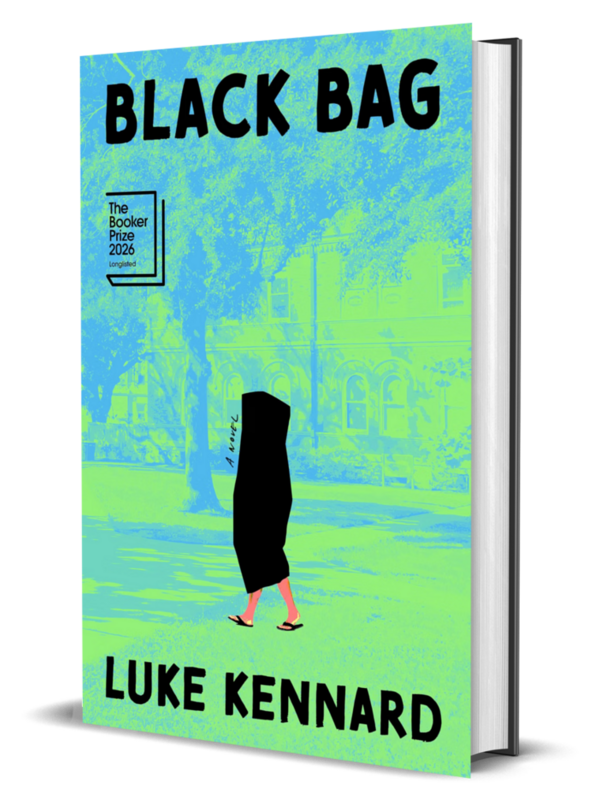
LONGLISTED FOR THE BOOKER PRIZE 2026
An out-of-work actor accepts the role of a lifetime—sitting soundlessly in a lecture theater, zipped into a large leather bag—to aid a professor’s psychological experiment. What could possibly go wrong?
In Luke Kennard’s audacious new novel, a penniless actor picks up a job working for Dr. Blend, a university professor who is conducting a psychological experiment. Dr. Blend wants to know: how will his students react to someone zipped into an oversized bag, sitting at the back of the lecture hall over a series of Fall lectures?
The role, eagerly accepted, soon yields unexpected consequences, from a professor of post-humanism developing research questions of her own—in particular, can you love someone secreted away inside a black bag?—to the actor’s childhood friend forming a vision for monetizing this unique new situation. In the end, only Black Bag will be able to say what it all means . . .
A warped campus novel, an investigation into the crisis of masculinity, and an off-kilter love story, Black Bag is a firework of a novel: blazingly funny and profoundly humane.
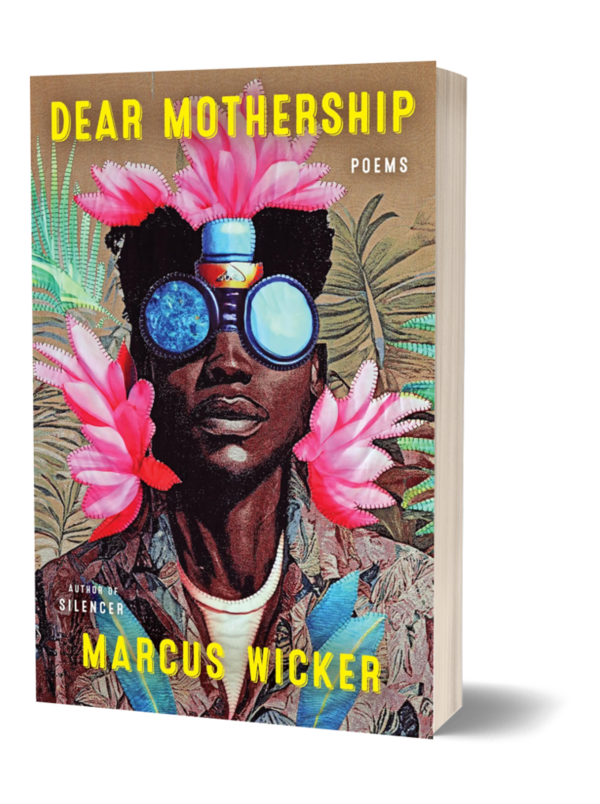
From the author of Maybe the Saddest Thing and Silencer comes a playful yet profound poetry collection that orbits the intersections of public loss, private grief, (dis)connection, capitalism, and identity.
In Dear Mothership, Marcus Wicker channels the lyrical dexterity of Outkast and the speculative vision of poet Robert Hayden to chart a course through personal and political upheaval.
The collection’s centerpiece is the “Break Beat Crown”—Wicker’s original take on the heroic crown of sonnets—presented as a travelogue from an extraterrestrial who has touched down in modern-day Atlanta. Across linked poems, the outsider records field notes on pandemic discord, isolation, tenderness, late-stage capitalism, empathy, and art. The longer the speaker inhabits a dysfunctional society, the more alien he feels. In addition to these science fictional experiments, Wicker delivers affecting, personal poems grounded in lived experience: lingering grief over two miscarriages, the sudden death of a friend, a sustained search for joy on the other side of those heartbreaks.
With its singular imagination, Dear Mothership kindles a new understanding of what makes us most human.

From acclaimed columnist and political commentator Michael Harriot, a searingly smart and bitingly hilarious retelling of American history that corrects the record and showcases the perspectives and experiences of Black Americans.
America’s backstory is a whitewashed mythology implanted in our collective memory. It is the story of the pilgrims on the Mayflower building a new nation. It is George Washington’s cherry tree and Abraham Lincoln’s log cabin. It is the fantastic tale of slaves that spontaneously teleported themselves here with nothing but strong backs and negro spirituals. It is a sugarcoated legend based on an almost true story.
It should come as no surprise that the dominant narrative of American history is blighted with errors and oversights—after all, history books were written by white men with their perspectives at the forefront. It could even be said that the devaluation and erasure of the Black experience is as American as apple pie.
In Black AF History, Michael Harriot presents a more accurate version of American history. Combining unapologetically provocative storytelling with meticulous research based on primary sources as well as the work of pioneering Black historians, scholars, and journalists, Harriot removes the white sugarcoating from the American story, placing Black people squarely at the center. With incisive wit, Harriot speaks hilarious truth to oppressive power, subverting conventional historical narratives with little-known stories about the experiences of Black Americans. From the African Americans who arrived before 1619 to the unenslavable bandit who inspired America’s first police force, this long overdue corrective provides a revealing look into our past that is as urgent as it is necessary. For too long, we have refused to acknowledge that American history is white history. Not this one. This history is Black AF.

From the author of the acclaimed The World Wasn’t Ready for You comes a thrilling first novel, set in a near future where artificial intelligence runs the world, involving a young medical student who must unravel family secrets to uncover the truth of his father’s mysterious death.
In a time not so far from our own, society is run by a global AI system controlled by an all powerful corporation. The Shepherd Organization oversees every medical school in the country save one in New Orleans, the renegade Hippocrates which still insists on human-led medicine. It is the last choice school for an ambitious young New Yorker named Pok. But after his father—himself a physician—dies under mysterious circumstance that seems connected to “the shepherds” and their megalomaniacal young CEO, Pok finds himself on a quest for answers that leads right to Hippocrates. Once enrolled, he stumbles upon a further mystery: a strange illness is plaguing newcomers to New Orleans who grew up under shepherd rule. What is causing this fatal anomaly? And how does it relate to the mystery of Pok’s father’s death and his own mysterious past?
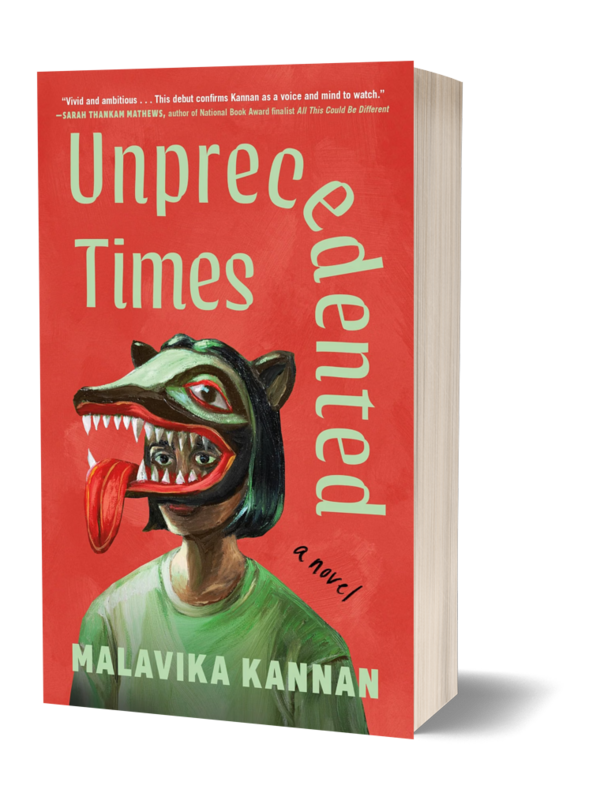
Malavika Kannan establishes herself as an inimitable voice of Gen Z in this piercing coming-of-age debut novel.
Which comes first: experience or narrative? Rishi thinks she knows the answer as she arrives on campus for her first year at Stanford. A burnt-out youth climate activist, she used to want to save the world, but now she just wants to have gay sex. Her plan is set—she’s going to leave behind the strict trappings of her Indian American childhood in Florida, study literature, experiment with love, and write all about it. Within a few months, she makes her first best friend, falls in love with her situationship, and promptly gets her heart broken.
What is not a part of Rishi’s plan is the onset of the COVID pandemic. As the outside world becomes a terrifying place, she increasingly finds solace in the friendships she’s made. Instead of virtual college, however, Rishi and her classmates join a farm collective, where their political discussions and growing disillusionment collide with sexual tension and responsibility. It’s only when those relationships start fracturing under the stress of careless decisions, unrequited crushes, jealousies, and, yes, unprecedented times, that Rishi begins to question her own story.
Unprecedented Times captures the beauty, humor, pain, and straight-up chaos that exist in relationships between best friends and lovers, mothers and daughters, and between storytellers and themselves. Malavika Kannan’s fresh, arresting novel is a testament to the power of self-narrative for Gen Z American women: of writing oneself into existence where no previous script exists.
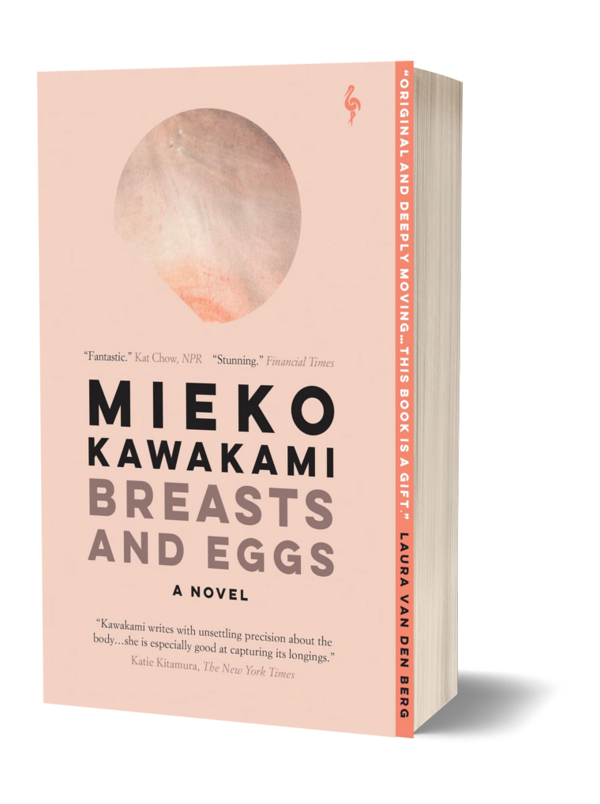
A BEST BOOK OF 2020 TIME Magazine・The Atlantic・Book Riot・Electric Literature・The New York Times (Notable Book of the Year)
Challenging every preconception about storytelling and prose style, mixing wry humor and riveting emotional depth, Kawakami is today one of Japan’s most important and best-selling writers. She exploded onto the cultural scene first as a musician, then as a poet and popular blogger, and is now an award-winning novelist.
Breasts and Eggs paints a portrait of contemporary womanhood in Japan and recounts the intimate journeys of three women as they confront oppressive mores and their own uncertainties on the road to finding peace and futures they can truly call their own.
It tells the story of three women: the thirty-year-old Natsu, her older sister, Makiko, and Makiko’s daughter, Midoriko. Makiko has traveled to Tokyo in search of an affordable breast enhancement procedure. She is accompanied by Midoriko, who has recently grown silent, finding herself unable to voice the vague yet overwhelming pressures associated with growing up. Her silence proves a catalyst for each woman to confront her fears and frustrations.
On another hot summer’s day ten years later, Natsu, on a journey back to her native city, struggles with her own indeterminate identity as she confronts anxieties about growing old alone and childless.
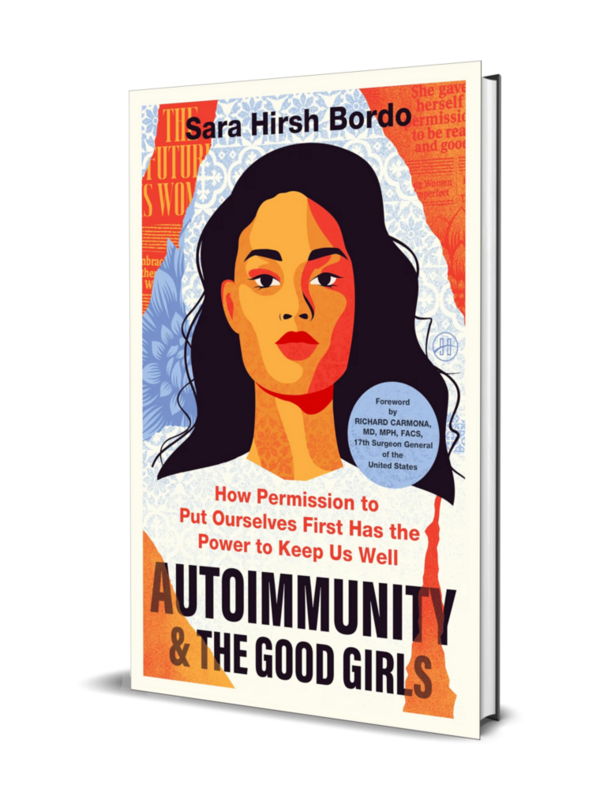
The inspirational, deeply researched wellness journey by the award-winning filmmaker, activist, and founder of Women Rising, shining a light on how too many girls are trained to self-silence and serve others—and how we can heal.
For generations, women have been told to be “good”—to put others first, to silence their own voices, to neglect their own needs. But a new groundswell of evidence reveals the cost: when our lives are compromised, so are our immune systems.
Raised in a big Texas-Lebanese family as the eldest and only daughter, Sara Hirsh Bordo grew up caring for everyone else’s needs at the expense of her own. Later, as an acclaimed director lifting up other women’s stories, she watched her own body collapse under the weight of autoimmune disease and cancer. Only when she finally reclaimed sovereignty over her own voice, did she heal.
Determined to understand this link, Sara funded the first quantitative research at the intersection of female empowerment and autoimmunity. The results were groundbreaking: women raised in caretaker roles—especially eldest daughters—are disproportionately likely to develop autoimmune diseases such as Hashimoto’s, lupus, multiple sclerosis, fibromyalgia, chronic fatigue syndrome, and more. This study, endorsed by former U.S. Surgeon General Dr. Richard Carmona, garnered national media attention and has been shared across 20 countries.
Weaving together memoir, exclusive expert interviews, evidence-based findings, and women’s personal stories, Autoimmunity and the Good Girls is a rousing testament to the missing modality in women’s health— sovereign self-permission to speak up, to transform, and heal.
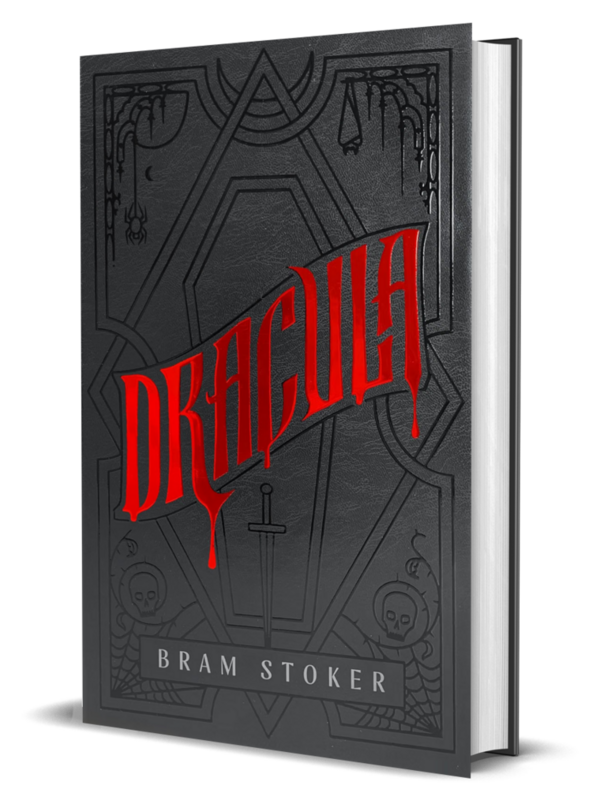
When Jonathan Harker visits Transylvania to help Count Dracula with the purchase of a London house, he makes a series of horrific discoveries about his client. Soon afterwards, various bizarre incidents unfold in England: an apparently unmanned ship is wrecked off the coast of Whitby; a young woman discovers strange puncture marks on her neck; and the inmate of a lunatic asylum raves about the 'Master' and his imminent arrival.
In Dracula, Bram Stoker created one of the great masterpieces of the horror genre, brilliantly evoking a nightmare world of vampires and vampire hunters and also illuminating the dark corners of Victorian sexuality and desire.
This Norton Critical Edition includes a rich selection of background and source materials in three areas: Contexts includes probable inspirations for Dracula in the earlier works of James Malcolm Rymer and Emily Gerard. Also included are a discussion of Stoker's working notes for the novel and "Dracula's Guest," the original opening chapter to Dracula. Reviews and Reactions reprints five early reviews of the novel. "Dramatic and Film Variations" focuses on theater and film adaptations of Dracula, two indications of the novel's unwavering appeal. David J. Skal, Gregory A. Waller, and Nina Auerbach offer their varied perspectives. Checklists of both dramatic and film adaptations are included.
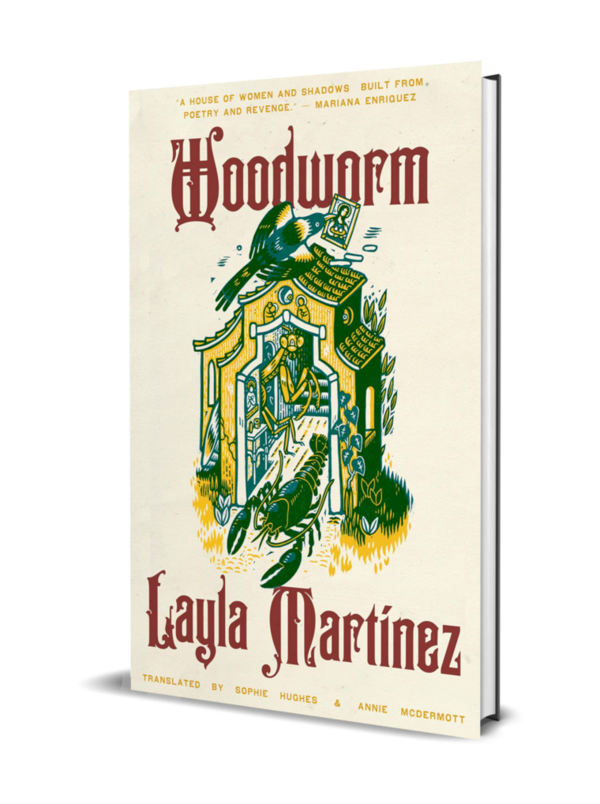
The house breathes. The house contains bodies and secrets. The house is visited by ghosts, by angels that line the roof like insects, and by saints that burn the bedsheets with their haloes. It was built by a smalltime hustler as a means of controlling his wife, and even after so many years, their daughter and her granddaughter can’t leave. They may be witches or they may just be angry, but when the mysterious disappearance of a young boy draws unwanted attention, the two isolated women, already subjects of public scorn, combine forces with the spirits that haunt them in pursuit of something that resembles justice.
In this lush translation by Sophie Hughes and Annie McDermott, Layla Martinez’s eerie debut novel is class-conscious horror that drags generations of monsters into the sun. Described by Mariana Enriquez as “a house of women and shadows, built from poetry and revenge,” this vision of a broken family in our unjust world places power in the hands of the eccentric, the radical, and the desperate.
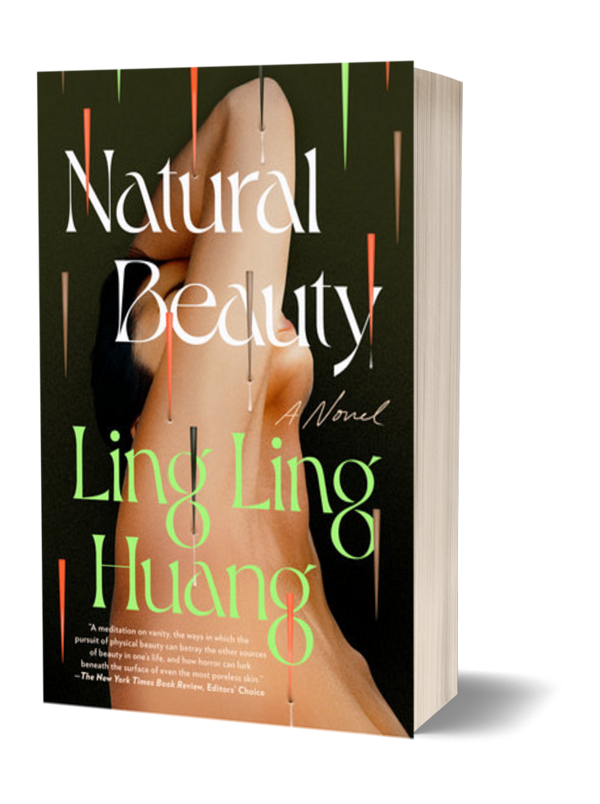
Sly, surprising, and razor-sharp, Natural Beauty follows a young musician into an elite, beauty-obsessed world where perfection comes at a staggering cost.
Our narrator produces a sound from the piano no one else at the Conservatory can. She employs a technique she learned from her parents—also talented musicians—who fled China in the wake of the Cultural Revolution. But when an accident leaves her parents debilitated, she abandons her future for a job at a high-end beauty and wellness store in New York City.
Holistik is known for its remarkable products and procedures—from remoras that suck out cheap Botox to eyelash extensions made of spider silk—and her new job affords her entry into a world of privilege and a long-awaited sense of belonging. She becomes transfixed by Helen, the niece of Holistik’s charismatic owner, and the two strike up a friendship that hazily veers into more. All the while, our narrator is plied with products that slim her thighs, smooth her skin, and lighten her hair. But beneath these creams and tinctures lies something sinister.
A piercing, darkly funny debut, Natural Beauty explores questions of consumerism, self-worth, race, and identity—and leaves readers with a shocking and unsettling truth.
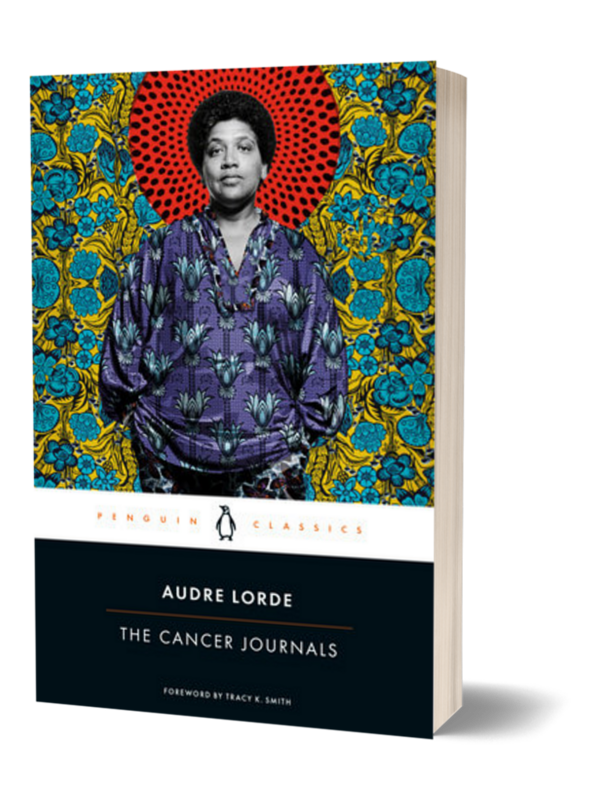
Moving between journal entry, memoir, and exposition, Audre Lorde fuses the personal and political as she reflects on her experience coping with breast cancer and a radical mastectomy.
First published over forty years ago, The Cancer Journals is a startling, powerful account of Audre Lorde's experience with breast cancer and mastectomy. Long before narratives explored the silences around illness and women's pain, Lorde questioned the rules of conformity for women's body images and supported the need to confront physical loss not hidden by prosthesis. Living as a "black, lesbian, mother, warrior, poet," Lorde heals and re-envisions herself on her own terms and offers her voice, grief, resistance, and courage to those dealing with their own diagnosis. Poetic and profoundly feminist, Lorde's testament gives visibility and strength to women with cancer to define themselves, and to transform their silence into language and action.
A BEST BOOK OF 2020 TIME Magazine・The Atlantic・Book Riot・Electric Literature・The New York Times (Notable Book of the Year)
Challenging every preconception about storytelling and prose style, mixing wry humor and riveting emotional depth, Kawakami is today one of Japan’s most important and best-selling writers. She exploded onto the cultural scene first as a musician, then as a poet and popular blogger, and is now an award-winning novelist.
Breasts and Eggs paints a portrait of contemporary womanhood in Japan and recounts the intimate journeys of three women as they confront oppressive mores and their own uncertainties on the road to finding peace and futures they can truly call their own.
It tells the story of three women: the thirty-year-old Natsu, her older sister, Makiko, and Makiko’s daughter, Midoriko. Makiko has traveled to Tokyo in search of an affordable breast enhancement procedure. She is accompanied by Midoriko, who has recently grown silent, finding herself unable to voice the vague yet overwhelming pressures associated with growing up. Her silence proves a catalyst for each woman to confront her fears and frustrations.
On another hot summer’s day ten years later, Natsu, on a journey back to her native city, struggles with her own indeterminate identity as she confronts anxieties about growing old alone and childless.
The inspirational, deeply researched wellness journey by the award-winning filmmaker, activist, and founder of Women Rising, shining a light on how too many girls are trained to self-silence and serve others—and how we can heal.
For generations, women have been told to be “good”—to put others first, to silence their own voices, to neglect their own needs. But a new groundswell of evidence reveals the cost: when our lives are compromised, so are our immune systems.
Raised in a big Texas-Lebanese family as the eldest and only daughter, Sara Hirsh Bordo grew up caring for everyone else’s needs at the expense of her own. Later, as an acclaimed director lifting up other women’s stories, she watched her own body collapse under the weight of autoimmune disease and cancer. Only when she finally reclaimed sovereignty over her own voice, did she heal.
Determined to understand this link, Sara funded the first quantitative research at the intersection of female empowerment and autoimmunity. The results were groundbreaking: women raised in caretaker roles—especially eldest daughters—are disproportionately likely to develop autoimmune diseases such as Hashimoto’s, lupus, multiple sclerosis, fibromyalgia, chronic fatigue syndrome, and more. This study, endorsed by former U.S. Surgeon General Dr. Richard Carmona, garnered national media attention and has been shared across 20 countries.
Weaving together memoir, exclusive expert interviews, evidence-based findings, and women’s personal stories, Autoimmunity and the Good Girls is a rousing testament to the missing modality in women’s health— sovereign self-permission to speak up, to transform, and heal.
The house breathes. The house contains bodies and secrets. The house is visited by ghosts, by angels that line the roof like insects, and by saints that burn the bedsheets with their haloes. It was built by a smalltime hustler as a means of controlling his wife, and even after so many years, their daughter and her granddaughter can’t leave. They may be witches or they may just be angry, but when the mysterious disappearance of a young boy draws unwanted attention, the two isolated women, already subjects of public scorn, combine forces with the spirits that haunt them in pursuit of something that resembles justice.
In this lush translation by Sophie Hughes and Annie McDermott, Layla Martinez’s eerie debut novel is class-conscious horror that drags generations of monsters into the sun. Described by Mariana Enriquez as “a house of women and shadows, built from poetry and revenge,” this vision of a broken family in our unjust world places power in the hands of the eccentric, the radical, and the desperate.
Moving between journal entry, memoir, and exposition, Audre Lorde fuses the personal and political as she reflects on her experience coping with breast cancer and a radical mastectomy.
First published over forty years ago, The Cancer Journals is a startling, powerful account of Audre Lorde's experience with breast cancer and mastectomy. Long before narratives explored the silences around illness and women's pain, Lorde questioned the rules of conformity for women's body images and supported the need to confront physical loss not hidden by prosthesis. Living as a "black, lesbian, mother, warrior, poet," Lorde heals and re-envisions herself on her own terms and offers her voice, grief, resistance, and courage to those dealing with their own diagnosis. Poetic and profoundly feminist, Lorde's testament gives visibility and strength to women with cancer to define themselves, and to transform their silence into language and action.

“This book arms readers with a sense of vital energy, often lost due to burnout, compassion fatigue, and microaggressions. Audiences curious about navigating the intersection between feminism and daily life, intellectualism, poetry, and activism will love this title.” — Library Journal
Do you refuse to laugh at offensive jokes? Have you ever been accused of ruining dinner by pointing out your companion’s sexist comment? Are you often told to stop being so “woke”? If so, you might be a feminist killjoy—and this handbook is for you. In this book, feminist theorist Sara Ahmed shows how killing joy can be a radical world-making project.
Presenting sharp analysis of literature, film, and influential feminist works, and drawing on her own experiences as a queer feminist scholar-activist of color, Ahmed reveals the invaluable lessons of the feminist killjoy, from the importance of asking questions to the power of the eye roll. The Feminist Killjoy Handbook offers an outstretched hand to feminist killjoys everywhere and an essential intellectual guide to the transformative power of getting in the way.

Internationally acclaimed Egyptian feminist writer Nawal El Saadawi's landmark novel Woman at Point Zero, published here with a new foreword.
Firdaus is on death row. Her crime, the murder of a man. Born into poverty in a rural Egyptian village, her childhood dreams and ambitions had been met with neglect and abuse by the world and the men who rule it. Driven to sex work to support herself, she is faced with the moral outrage of society and the bitter knowledge that for a woman, true freedom comes only when all hope is abandoned. In Woman at Point Zero, Firdaus tells her unforgettable story.
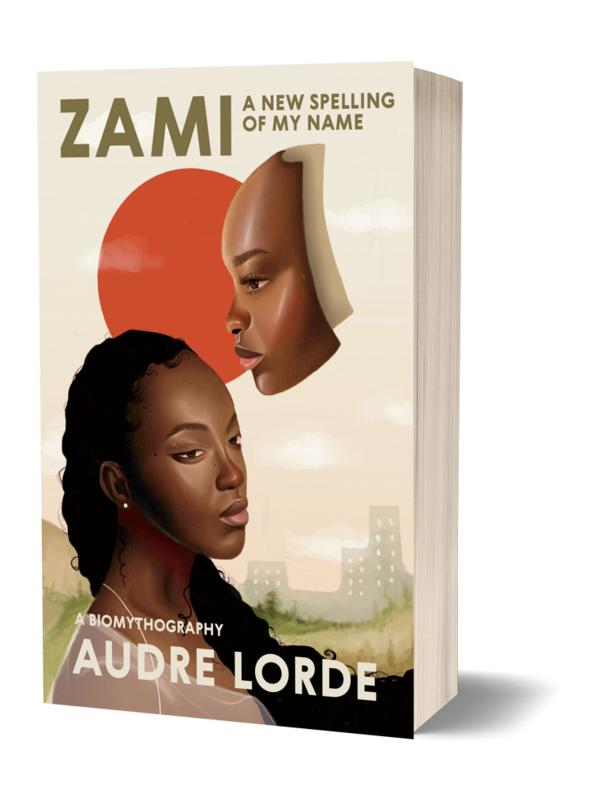
Zami: A Carriacou name for women who work together as friends and lovers
“Zami is a fast-moving chronicle. From the author’s vivid childhood memories in Harlem to her coming of age in the late 1950s, the nature of Audre Lorde’s work is cyclical. It especially relates the linkage of women who have shaped her . . . Lorde brings into play her craft of lush description and characterization. It keeps unfolding page after page.”—Off Our Backs
“Among the elements that make the book so good are its personal honesty and lack of pretentiousness, characteristics that shine through the writing bespeaking the evolution of a strong and remarkable character.”—The New York Times
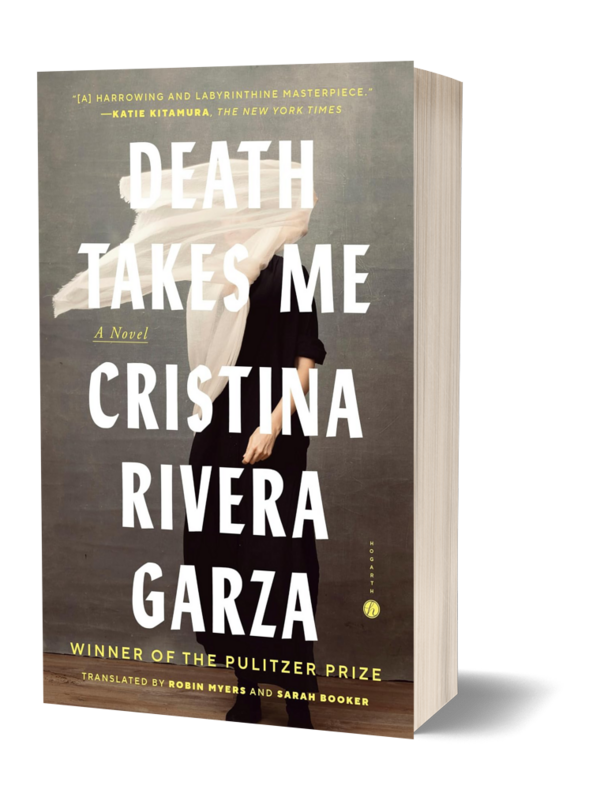
From the Pulitzer Prize-winning author of Liliana's Invincible Summer, a dreamlike, genre-defying novel about a professor and detective seeking justice in a world suffused with gendered violence.
“Deeply rewarding . . . a dreamscape with a powerful undertow . . . [a] harrowing and labyrinthine masterpiece.”—Katie Kitamura, The New York Times (Editors’ Choice)
A BEST BOOK OF THE YEAR: The New York Times Book Review, The New Yorker, Esquire, Marie Claire, Denver Public Library
A city is always a cemetery.
A professor named Cristina Rivera Garza stumbles upon the corpse of a mutilated man in a dark alley and reports it to the police. When shown a crime scene photo, she finds a stark warning written in tiny print with coral nail polish on the brick wall beside the body: “Beware of me, my love / beware of the silent woman in the desert.”
The professor becomes the first informant on the case, which is led by a detective newly obsessed with poetry and trailed by a long list of failures. But what has the professor really seen? As the bodies of more castrated men are found alongside lines of verse, the detective tries to decipher the meaning of the poems to put a stop to the violence spreading throughout the city.
Originally written in Spanish, where the word “victim” is always feminine, Death Takes Me is a thrilling masterpiece of literary fiction that flips the traditional crime narrative of gendered violence on its head. As sharp as the cuts on the bodies of the victims, it unfolds with the charged logic of a dream, moving from the police station to the professor’s classroom and through the slippery worlds of Latin American poetry and art in an imaginative exploration of the unstable terrains of desire and sexuality.

A punk revival of Medea as a meddling anti-angel of birth and death, from the International Booker Prize–nominated author of Reservoir Bitches.
In the mythic but all-too-familiar country of Aztlán, the violence of the cartel and the military are ever-present and indistinguishable, and everyday people strive to survive in the cross fire. Enter Medea: a deity with punk-rock flair, equal parts midwife and gravedigger, ancient but never too old to be petty.
In this novel in stories from the author of the International Booker Prize–nominated Reservoir Bitches, a reimagined Medea helps a trophy girlfriend with her abortion, accompanies a mother in search of her lost son in the desert, and embraces tragic victims of the state and its proxy wars. Dahlia de la Cerda’s prose pierces the heart and introduces readers to a magnetic new version of a mythological icon—a femme fatale legend in a fatalistic world.
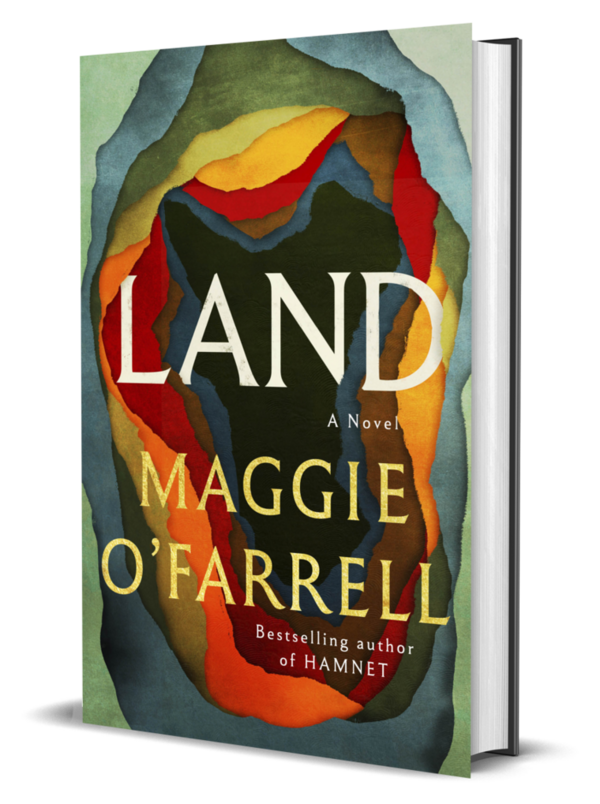
The award-winning, bestselling author of Hamnet and The Marriage Portrait returns with a soaring historical novel set in Ireland in the years before and after the Great Hunger.
On a windswept peninsula stretching out into the Atlantic, Tomás and his reluctant son, Liam, are working for the great Ordnance Survey project to map the whole of Ireland. The year is 1865, and in a country not long since ravaged and emptied by the Great Hunger, the task is not an easy one. Tomás, however, is determined that his maps will be a record of the disaster.
The British soldiers in charge are due to arrive any day, expecting the work to be completed, but Tomás is unexpectedly sent off course by an unsettling encounter in a copse. His life, and the lives of those of his family, will never be the same again. Liam is terrified by the sudden change in his taciturn father. What was it that caused such cracks to open in Tomás, and how is Liam, aged only ten, going to finish the mapping and get them both home?
Land is a novel about separation and reunion, tragedy and recovery, colonization and rebellion. It is a story of buried treasure, overlapping lives, ancient woodland, persistent ghosts, a particularly loyal dog, and how, when it comes to both land and history, nothing ever goes away. As spellbinding and varied as the landscape that inspired it, Land is, above all, a story of survival, for our times and for all time.
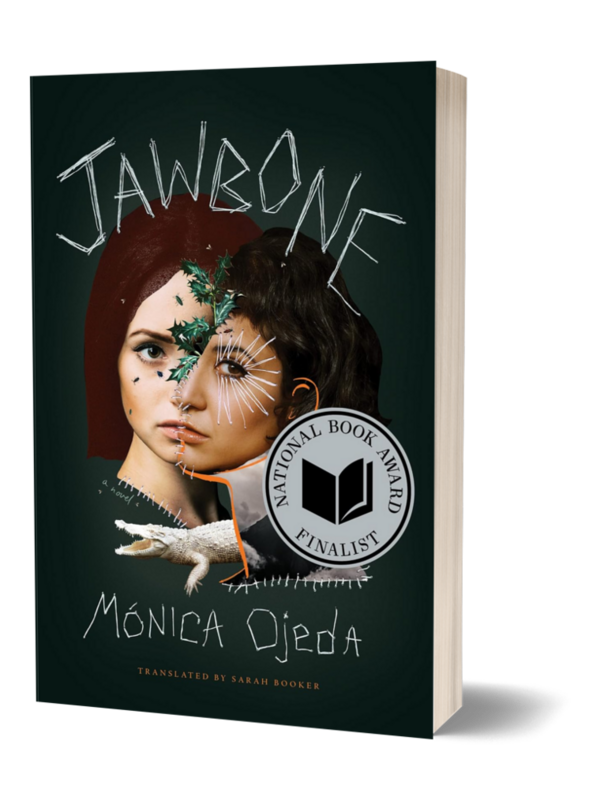
“Was desire something like being possessed by a nightmare?”
Fernanda and Annelise are so close they are practically sisters: a double image, inseparable. So how does Fernanda end up bound on the floor of a deserted cabin, held hostage by one of her teachers and estranged from Annelise?
When Fernanda, Annelise, and their friends from the Delta Bilingual Academy convene after school, Annelise leads them in thrilling but increasingly dangerous rituals to a rhinestoned, Dior-scented, drag-queen god of her own invention. Even more perilous is the secret Annelise and Fernanda share, rooted in a dare in which violence meets love. Meanwhile, their literature teacher Miss Clara, who is obsessed with imitating her dead mother, struggles to preserve her deteriorating sanity. Each day she edges nearer to a total break with reality.
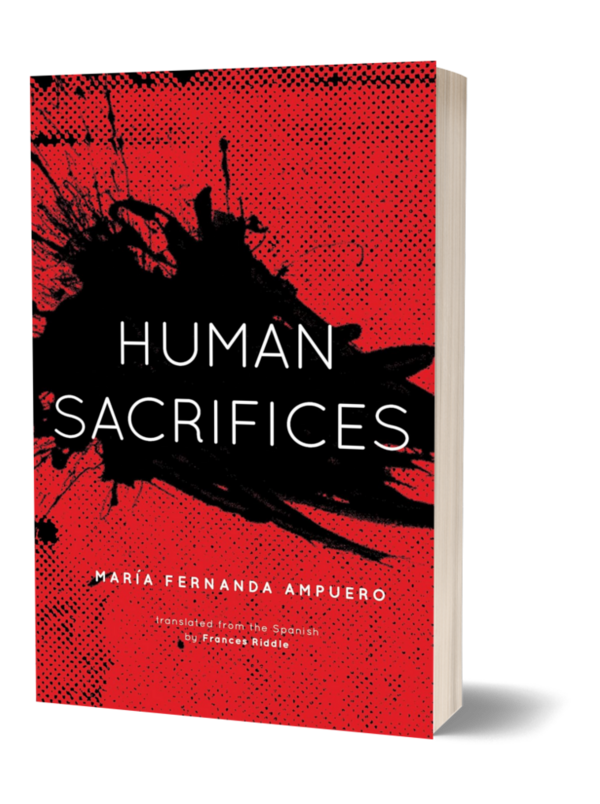
A groundbreaking voice in contemporary Latin American literature, María Fernanda Ampuero’s writing is “raw and savage” as she confronts machismo, inequity, and violence in this acclaimed short story collection (Vistazo).
An undocumented woman answers a job posting only to find herself held hostage, a group of outcasts obsess over boys drowned while surfing, and an unhappy couple finds themselves trapped in a terrifying maze. With scalpel-like precision, Ampuero considers the price paid by those on the margins so that the elite might lounge comfortably, considering themselves safe in their homes.
Simultaneously terrifying and exquisite, Human Sacrifices is “tropical gothic” at its finest—decay and oppression underlie our humid and hostile world, where working-class women and children are consistently the weakest links in a capitalist economy. Against this backdrop of corrosion and rot, these twelve stories contemplate the nature of exploitation and abuse, illuminating the realities of those society consumes for its own pitiless ends.
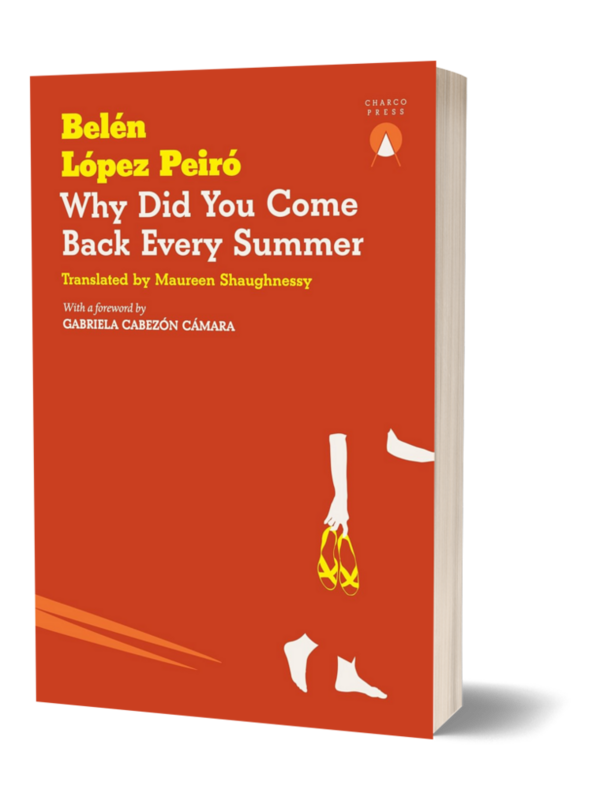
A fractured account of family abuse, secrets, and the cost of pursuing the truth.
In the most private spaces, the most intimate betrayals occur. Belén López Peiró places us squarely in the tenderest of times―young teenagehood, in a home about to be ruptured by sexual assault. In this home, for this young woman, your assailant is your uncle, and also a police commissioner. The people who shelter you will reject you: your mother is his sister-in-law, your beloved aunt his wife and your cousin and friend his daughter. And the truth of what happened will depend entirely on you.
Why Did You Come Back Every Summer is a document of uncertainty, self-doubt, and the appearance of progress when there is none. A chorus of voices interrupt and overtake each other; interviews and reports are filed. The truth will be heard but how and by whom? Loyalties will shift and slip. And certain questions have no easy answers. What do you owe to your family? What do they owe you? How far will you go to get yourself back?
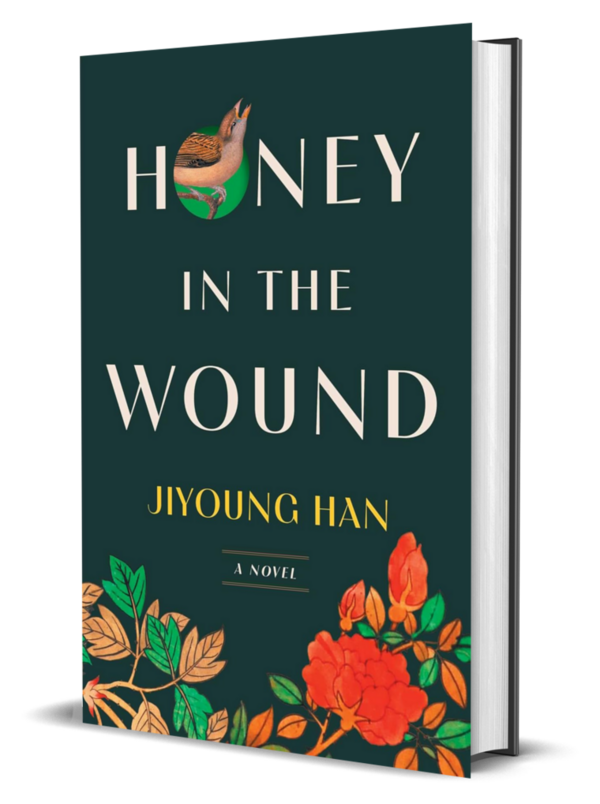
A lyrical and suspenseful debut novel about a mysteriously gifted Korean family confronting the brutality of the Japanese empire, Honey in the Wound is an epic tale of survival and the reclamation of power.
A sister disappears and returns as a tiger. A mother’s voice compels the truth from any tongue. A granddaughter divines secrets in others’ dreams. These women are all of one lineage—a Korean family split across decades and borders by Japanese imperialism.
At this saga’s heart is Young-Ja, a girl who infuses food with her emotions. She revels in her gift for cooking, nourishing the people she loves with her cheerfulness. But her sunny childhood comes to an end in 1931 when Japanese soldiers crush her family’s defiance against the Empire. Young-Ja is cast adrift, her food turning increasingly bitter with grief. When a Korean rebel fighter notices her talents, however, she is whisked off to Manchuria to join a secretive sisterhood of beautiful teahouse spies. There, Young-Ja finds a new sense of belonging and starts using her abilities for the resistance. But the Imperial Army is not yet finished with her…
Decades later, Young-Ja lives alone in Seoul, withdrawn from the world until her Tokyo-born granddaughter Rinako bursts into her life with the ability to see into dreams. In cultivating a tentative bond, they confront the long-buried past in a stunning emotional climax.
As an unforgettable family perseveres in the long shadow of colonialism, Honey in the Wound transports readers to mountain forests where tiger-girls stalk, to Manchurian teahouses and opium dens where charming smiles veil secrets, and to the modern metropolises of Tokyo and Seoul where restless ghosts stir. This debut novel is a tender yet powerful multi-generational drama that shines light onto the twentieth century’s darkest corners and gives voice to those who bore witness.
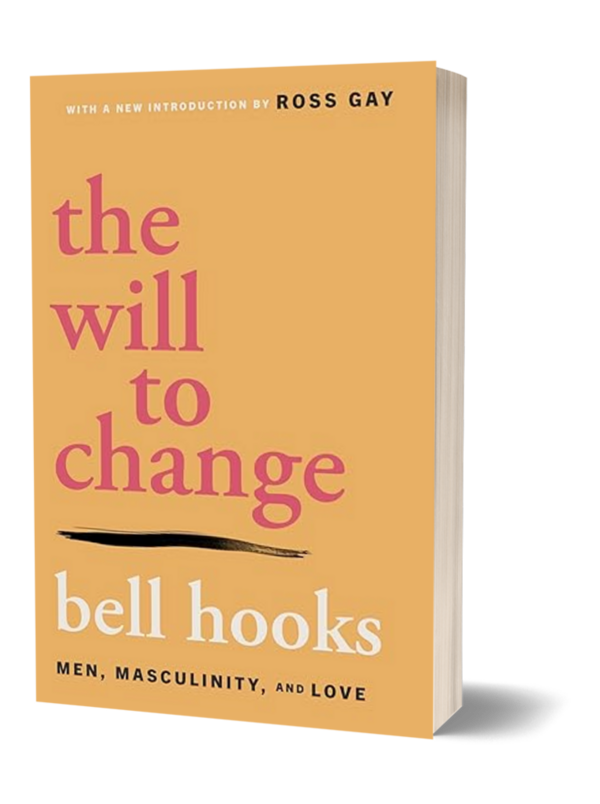
From New York Times bestselling author, feminist pioneer, and cultural icon bell hooks, an evergreen treatise on how patriarchy and toxic masculinity hurts us all.
Feminist writing did not tell us about the deep inner misery of men.
Everyone needs to love and be loved—including men. But to know love, men must be able to look at the ways in which patriarchal culture keeps them from understanding themselves. In The Will to Change, bell hooks provides a compassionate guide for men of all ages and identities to understand how to be in touch with their feelings, and how to express versus repress the emotions that are a fundamental part of who we are.
With trademark candor and fierce intelligence, hooks addresses the most common concerns of men, such as fear of intimacy and loss of their patriarchal place in society, in new and challenging ways. The Will to Change “creates space for men to acknowledge their traumas and heal—not only for their sake, but for the sake of everyone in their lives” (BuzzFeed).

An inclusive and essential new resource for reproductive health―including period problems, pelvic pain, menopause, fertility, sexual health, vaginal and urinary conditions, and overall wellbeing―from leading expert and fierce advocate Dr. Karen Tang
Did you know that up to 90% of women experience menstrual abnormalities or pelvic issues in their lifetime? Yet these conditions are overwhelmingly misunderstood, misdiagnosed, or dismissed. The root causes for these issues, such as PCOS, endometriosis, fibroids, ovarian cysts, PMDD, or pelvic floor dysfunction, don’t receive the stream of funding for research and new treatments that other conditions do, despite affecting up to half the population.
Dr. Karen Tang is on a mission to transform how we engage with our bodies and our healthcare. It’s Not Hysteria is a comprehensive guide to common conditions and potential treatment options, with practical tools such as symptom prompts and sample questions for your provider, to equip readers to take control of their gynecologic health.
Reproductive healthcare, from abortion to gender-affirming care, is under siege. The onus continues to fall on patients to find and advocate for the care they need. In the face of uncertainty and misinformation, It’s Not Hysteria is destined to become a new classic that educates and empowers women and those assigned female at birth.
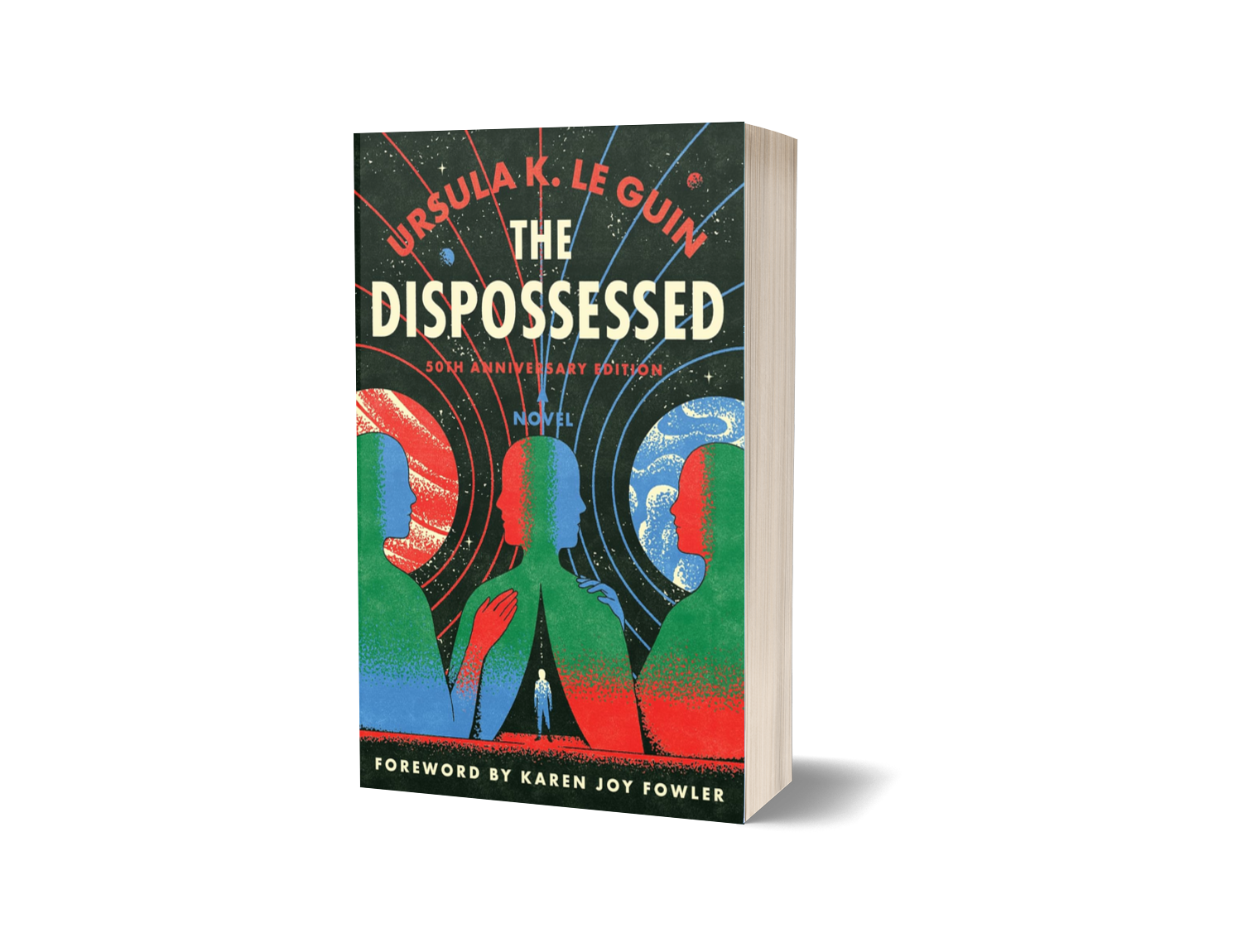
In celebration of its fiftieth anniversary, a commemorative edition of Ursula K. Le Guin’s Hugo, Locus, and Nebula Award–winning classic, a profound and thoughtful work of philosophical science fiction exploring anarchism and capitalism, individualism and collectivism, and one ambitious man’s quest to bridge the ideological chasm separating two worlds. This special edition includes a new foreword by Karen Joy Fowler.
A science fiction classic for the ages, The Dispossessed is the spellbinding story of anarchist Shevek, the “galactically famous scientist,” who single-handedly attempts to reunite two planets cut off from each other by centuries of distrust.
Anarres, Shevek’s homeland, is a bleak moon settled by an anarchic utopian civilization, where there is no government, and everyone, at least nominally, is a revolutionary. It has long been isolated from other worlds, including its mother planet, Urras―defined by warring nations, great poverty, and immense wealth. Now Shevek, a brilliant physicist, is determined to unify the two civilizations. In the face of great hostility, outright threats, and the pain of separation from his family, he makes an unprecedented trip to Urras. Greater than any concern for his own wellbeing is the belief that the walls of hatred, distrust, and philosophic division between his planet and the rest of the civilized universe must be torn down. He will seek answers, question the unquestionable, and explore differences in customs and cultures, determined to tear down the walls of hatred that have kept them apart in this landmark of social science fiction.
To visit Urras―to learn, to teach, to share―will require great sacrifice and risks, which Shevek willingly accepts. Almost immediately upon his arrival, he finds not the egotistical philistines he expected, but an intelligent, complex people who warmly welcome him. But soon the ambitious scientist and his gift is seen as a threat, and in the profound conflict that ensues, he must reexamine his beliefs even as he ignites the fires of change.
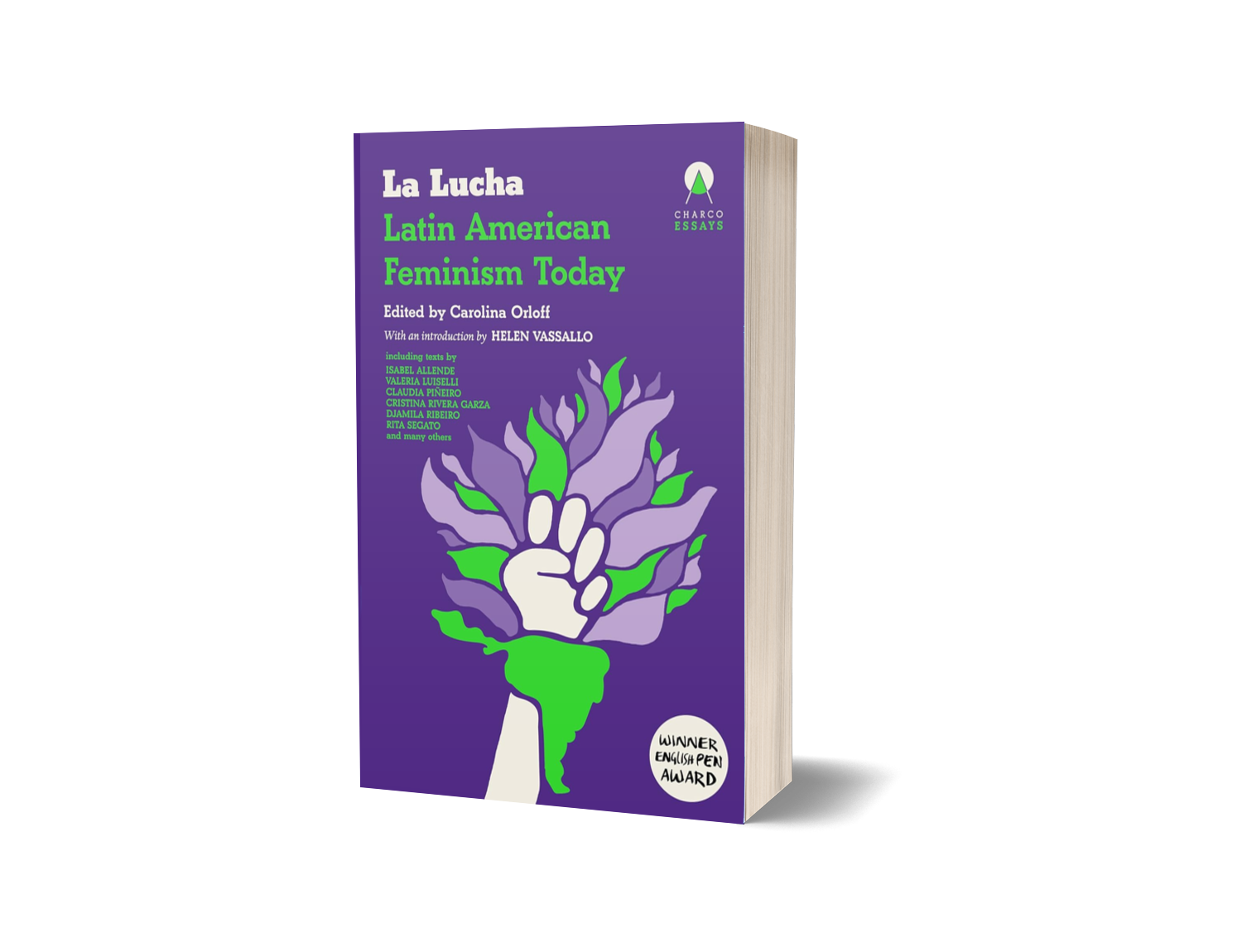
From Mexico to Patagonia, the struggle for women's rights in Latin America comes alive in the voices of the artists and activists making the change.
La Lucha gathers the voices of 30 artists, scholars, and activists, from 17 countries, actively engaged in the fight for women’s rights in Latin America. From the patriarchy to femicide, to the inflections of identity embedded in colour, class, and indigenous cultures, their struggle embodies the contested definitions and priorities of feminism. Their solidarity, and tirelessness, has yielded striking, game-changing results in areas as disparate, and as fundamental to women’s lives, as reproductive health, environmentalism, anti-colonialism, and human rights. With contributors that include Isabel Allende, Selva Almada, Gabriela Cabezón Cámara, Valeria Luiselli, Lina Meruane, Claudia Piñeiro, and Cristina Rivera Garza, this unprecedented collection is sure to challenge, provoke, and inspire.
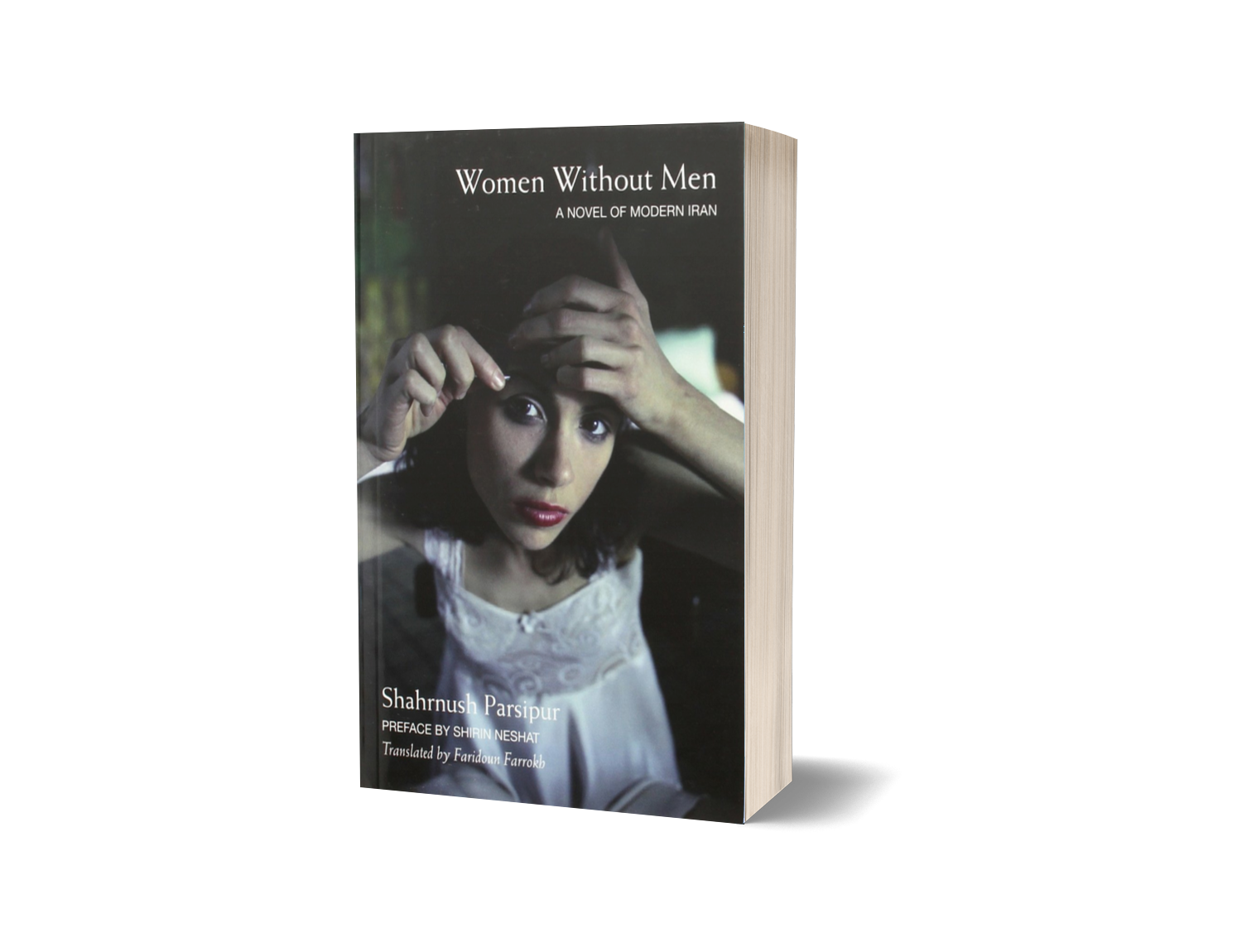
Banned shortly after publication for its depiction of female freedom, “Women Without Men” creates an evocative and powerfully drawn allegory of life in contemporary Iran.
"Using the techniques of both the fabulist and the polemicist, Parsipur continues her protest against traditional Persian gender relations in this charming, powerful novella." —Publishers Weekly
This modern literary masterpiece follows the interwoven destinies of five women—including a wealthy middle-aged housewife, a prostitute, and a schoolteacher—as they arrive by different paths to live together in an abundant garden on the outskirts of Tehran. Drawing on elements of Islamic mysticism and recent Iranian history, this unforgettable novel depicts women escaping the narrow confines of family and society, and imagines their future living in a world without men.
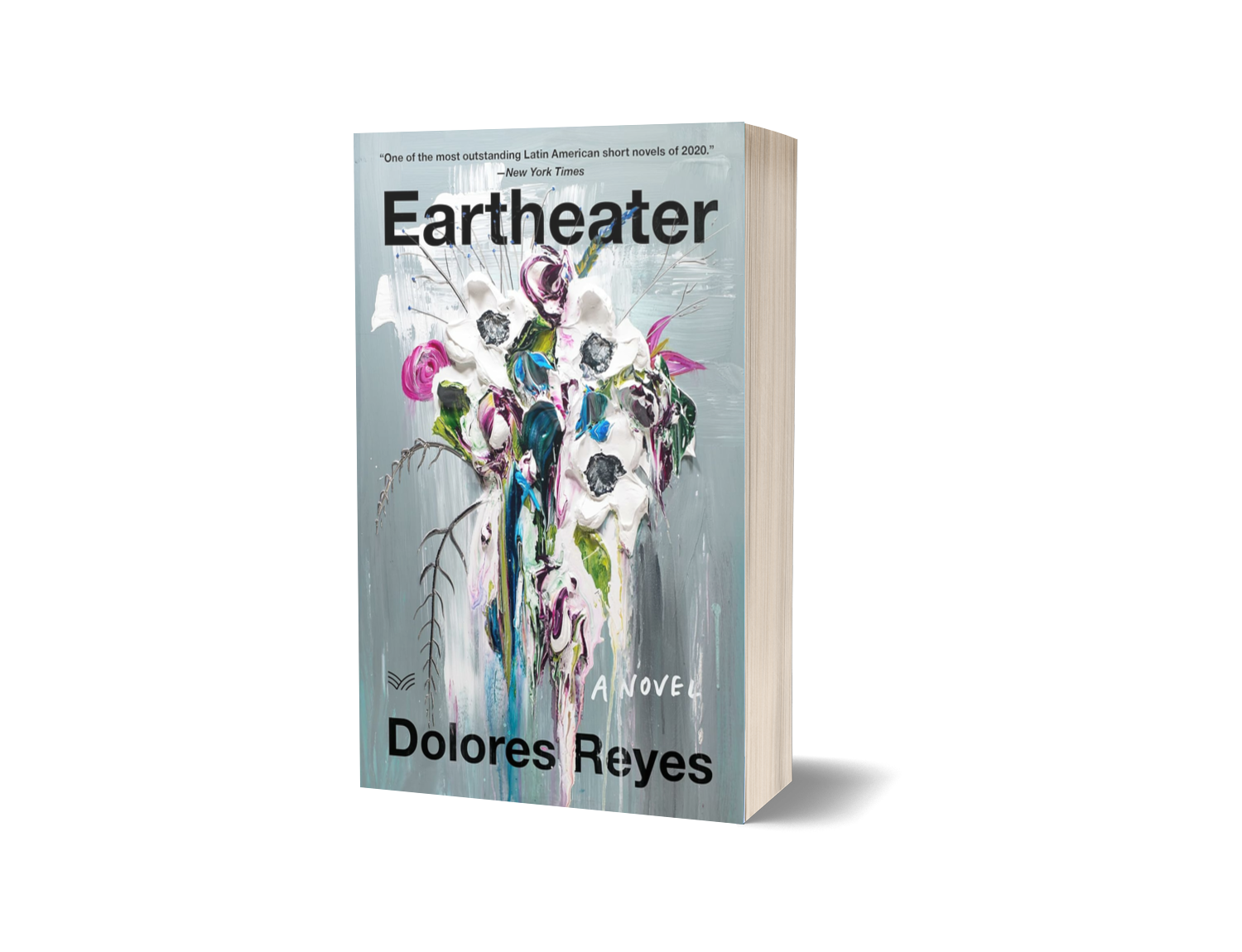
NAMED A "FALL 2020 MUST-READ" AND ONE OF THE "BEST BOOKS OF FALL 2020" BY TIME, VULTURE, THE BOSTON GLOBE, COSMOPOLITAN, WIRED, TOR AND MORE
Electrifying and provocative, visceral and profound, a powerful literary debut novel about a young woman whose compulsion to eat earth gives her visions of murdered and missing people—an imaginative synthesis of mystery and magical realism that explores the dark tragedies of ordinary lives.
Set in an unnamed slum in contemporary Argentina, Eartheater is the story of a young woman who finds herself drawn to eating the earth—a compulsion that gives her visions of broken and lost lives. With her first taste of dirt, she learns the horrifying truth of her mother’s death. Disturbed by what she witnesses, the woman keeps her visions to herself. But when Eartheater begins an unlikely relationship with a withdrawn police officer, word of her ability begins to spread, and soon desperate members of her community beg for her help, anxious to uncover the truth about their own loved ones.
Surreal and haunting, spare yet complex, Eartheater is a dark, emotionally resonant tale told from a feminist perspective that brilliantly explores the stories of those left behind—the women enduring the pain of uncertainty, whose lives have been shaped by violence and loss.
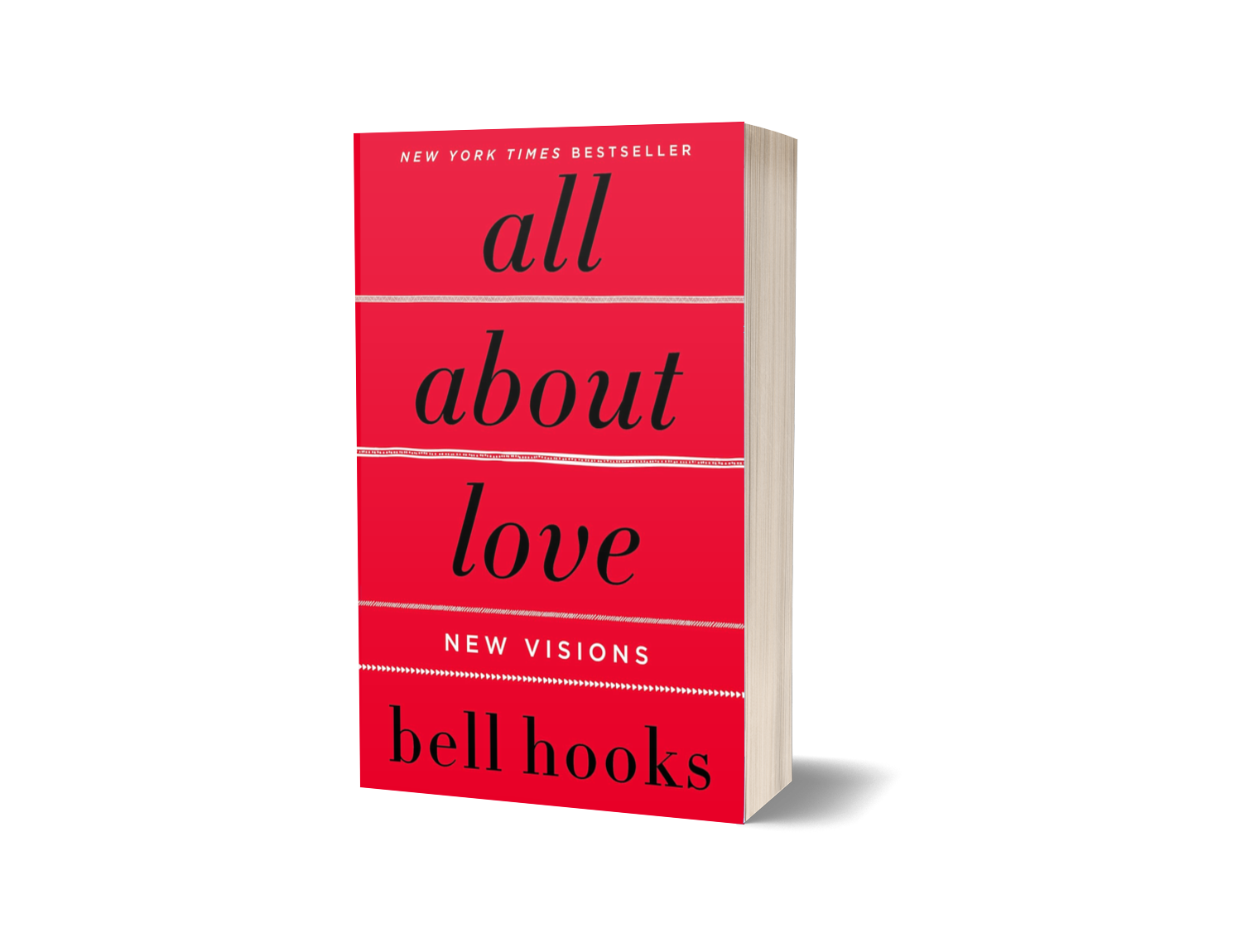
A New York Times bestseller and enduring classic, All About Love is the acclaimed first volume in feminist icon bell hooks' "Love Song to the Nation" trilogy. All About Love reveals what causes a polarized society, and how to heal the divisions that cause suffering. Here is the truth about love, and inspiration to help us instill caring, compassion, and strength in our homes, schools, and workplaces.
“The word ‘love’ is most often defined as a noun, yet we would all love better if we used it as a verb,” writes bell hooks as she comes out fighting and on fire in All About Love. Provocative and intensely personal, renowned scholar, cultural critic and feminist bell hooks offers a proactive new ethic for a society stricken with lovelessness—not the lack of romance, but the lack of care, compassion, and unity. People are divided, she declares, by society’s failure to provide a model for learning to love.
In this landmark book, bell hooks explores the question “What is love?” Her answers strike at both the mind and heart. Disputing that the ideal love is infused with sex and desire, she provides a new path to love that is sacred, redemptive, and healing for individuals and for a nation. All About Love is a powerful, timely affirmation of just how profoundly love and community can change hearts and minds for the better.

Short stories from the “cursed mother of magical realism” (El Mundo), now in English for the first time
A woman flits between two realities centuries apart, as scenes from the violent conquest of Mexico bleed their way into her comfortable contemporary life. Two little girls visit the home of a sorcerer who tortures women named after the days of the week. Girls become dogs, a laborer hides human bones in bricks he’ll use to build a new development, and an old woman appears at an acquaintance’s door one night with a knife and a bone-chilling confession.
With The Week of Colors, Elena Garro laid the groundwork for the literary movements that would shape the landscape of Latin American fiction and beyond. Here you’ll find the early roots of magical realism, feminist horror, and anticolonial speculative fiction. In The Week of Colors, Garro highlights the violence in our history, our homes, and our hearts, in vivid color.
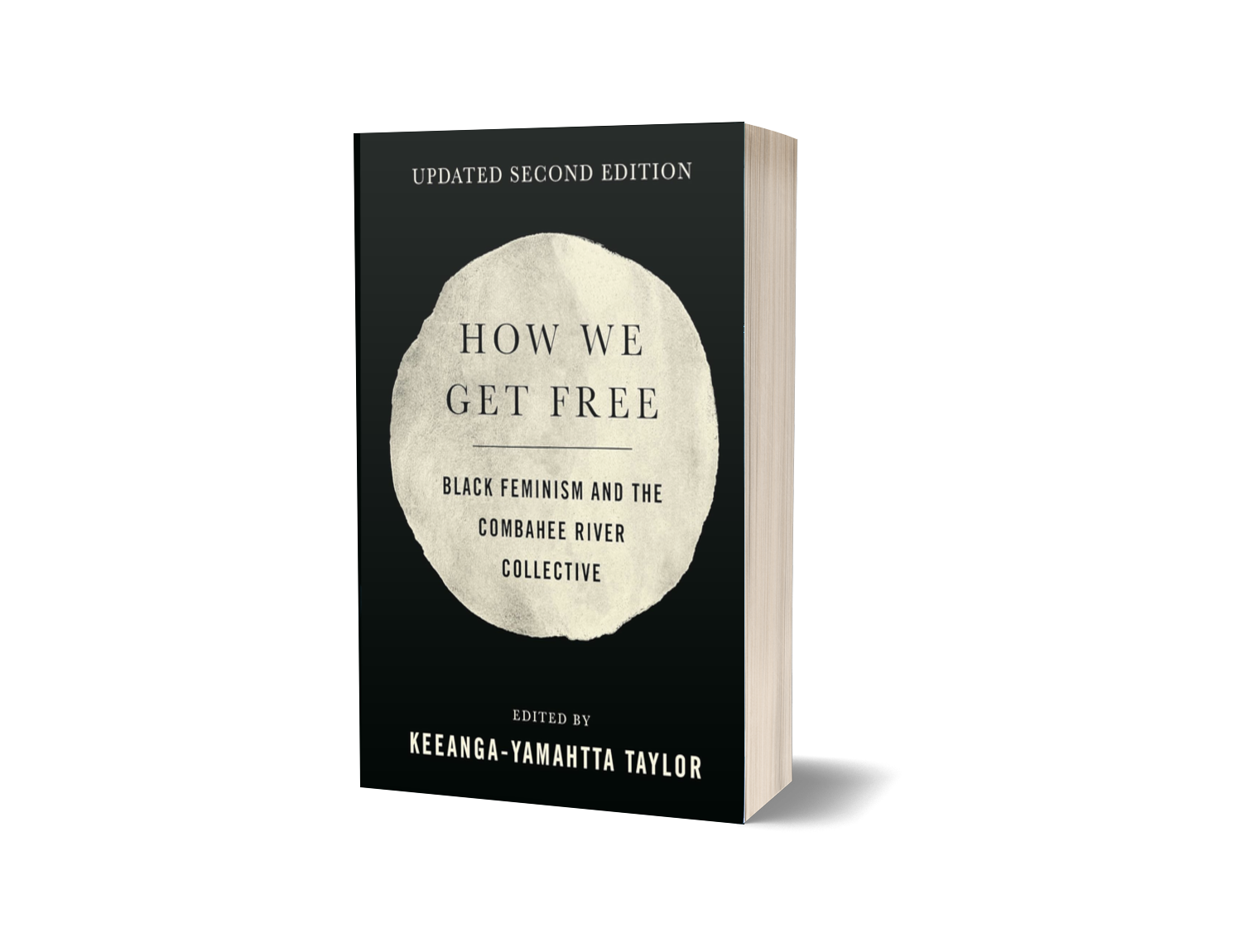
Winner of the 2018 Lambda Literary Award for LGBTQ Nonfiction
“If Black women were free, it would mean that everyone else would have to be free.”
—Combahee River Collective Statement
The Combahee River Collective, a pathbreaking group of radical Black feminists, was one of the most important organizations to develop out of the antiracist and women’s liberation movements of the 1960s and ’70s. In this collection of essays and interviews edited by activist-scholar Keeanga-Yamahtta Taylor, founding members and contemporary activists reflect on the organization’s contributions to Black feminism and its impact on today’s struggles.
This expanded second edition features a new introduction by Taylor and a powerful new interview with Angela Y. Davis.
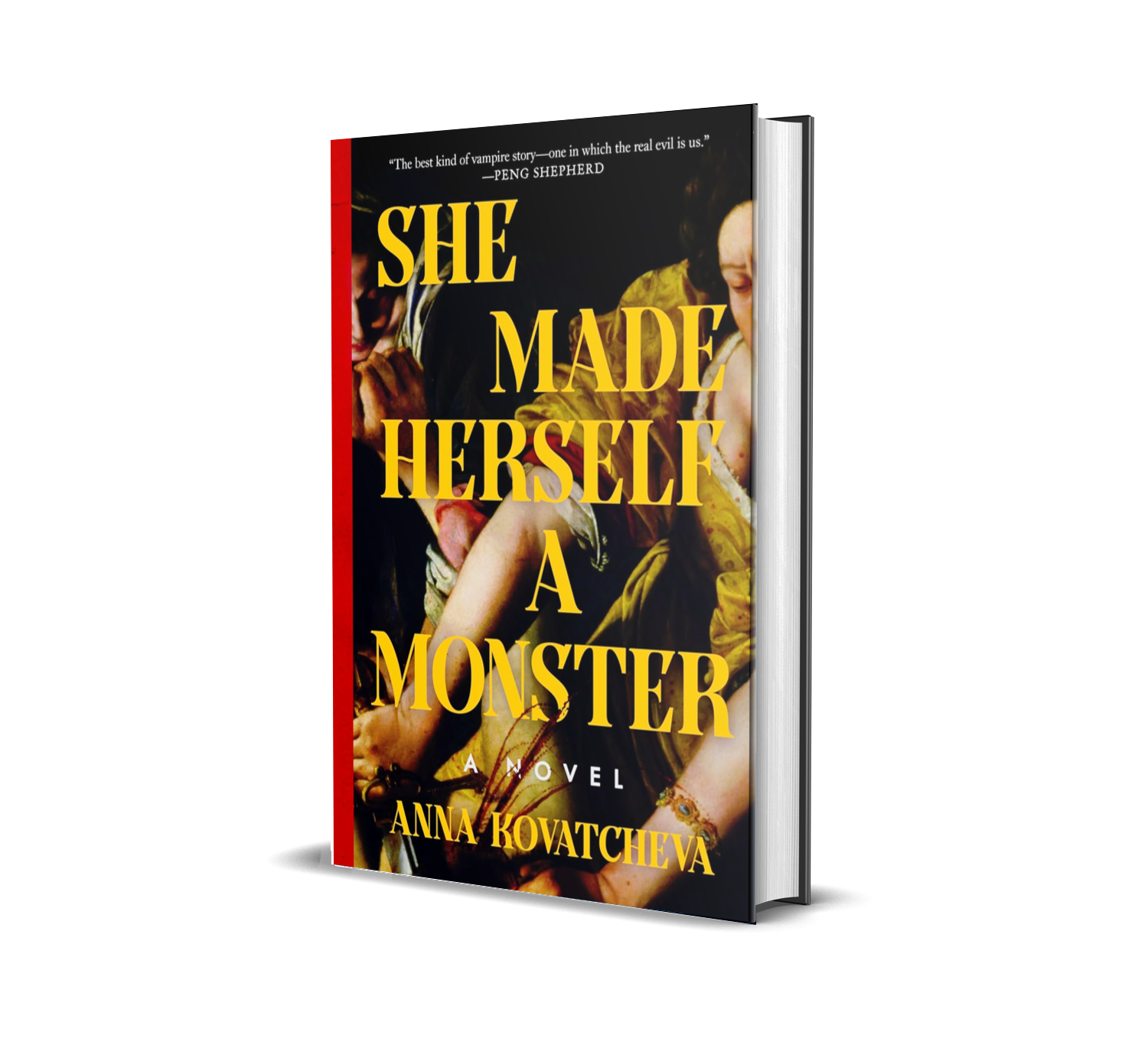
A heady, dark-hued Gothic gem of a debut novel: in nineteenth-century Bulgaria, a self-proclaimed vampire slayer—in truth, a traveling con artist—joins forces with a teenage girl to create a monster deadly enough to vanquish their own demons.
We make monsters in order to destroy them. For thousands of years, we’ve named witches and burned them, suspected demons and exorcised them. When crops die and children fall ill, who better to blame than a monster?
Yana rides from one desolate town to the next, staging grisly displays while the villagers sleep: animal corpses in the public square, eggs filled with blood in the chicken coop. She tells the stricken villagers stories of vampires that stalk the night. Then she eliminates the threat, and sows seeds of hope in her wake.
The village Koprivci is plagued by exceptional illness and misfortune, its children rarely surviving infancy. There, Yana meets Anka: a headstrong orphan who the villagers blame for their curse. As Anka approaches womanhood, the village Captain is grooming her for marriage against her will. Anka is powerless against him—that is, until Yana arrives. Together, the orphan and the vampire slayer hatch a plan: to conjure a monster so vile, it might provide cover for Anka to escape. But their plan quickly takes on a horrifying life of its own...
Inspired by Slavic folklore, She Made Herself a Monster concocts a clever mix of witchery, ghost stories, heresy, and deception to spin a feminist fable about agency and the power of collective action. It is a haunting and astoundingly cathartic tale of two women who will stop at nothing to take control of their fate.
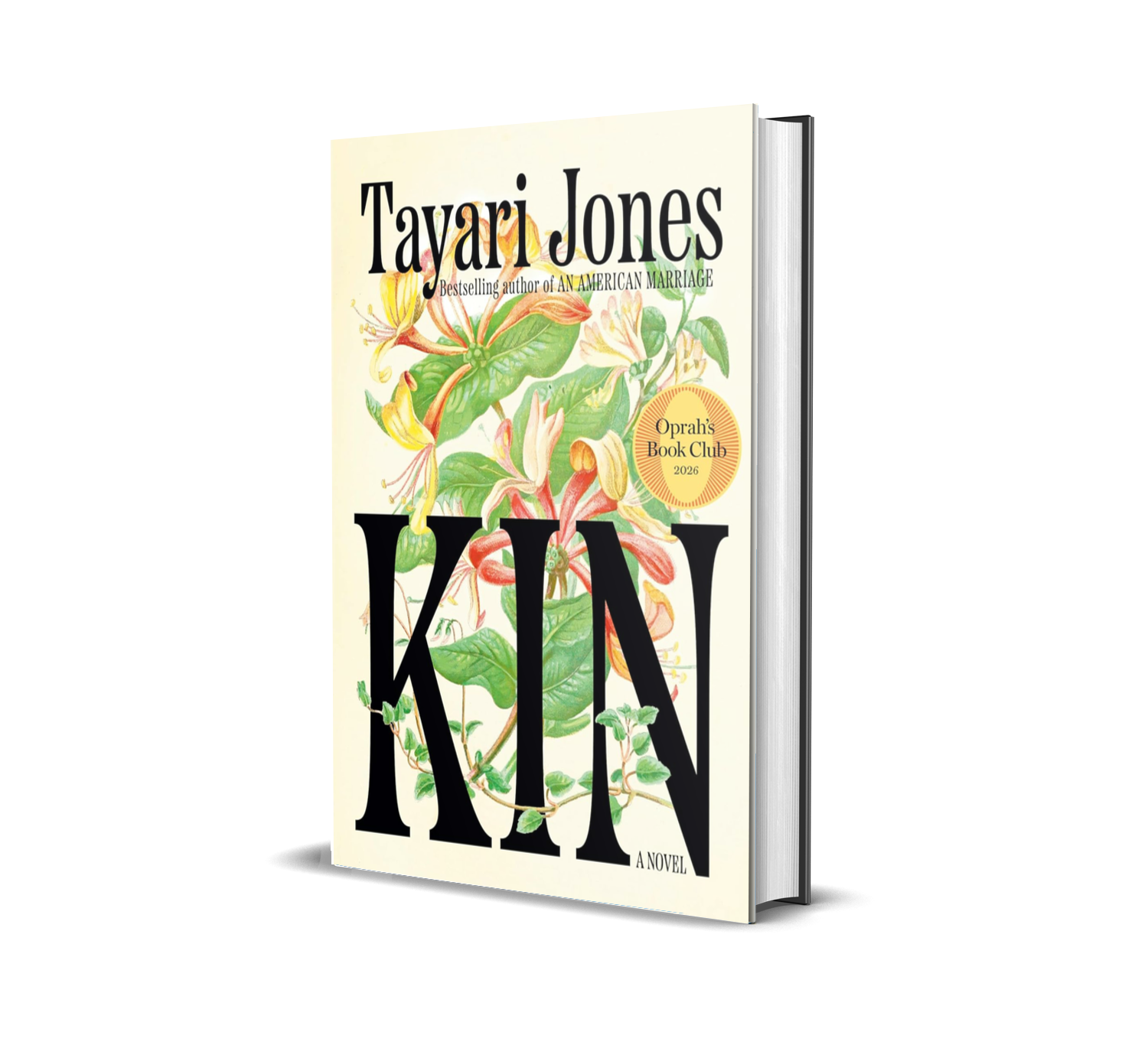
OPRAH'S BOOK CLUB PICK
NEW YORK TIMES BESTSELLER
A magnificent new novel from the bestselling, award-winning author of An American Marriage—Tayari Jones has written an unforgettable novel that sparkles with wit and intelligence and deep feeling about two lifelong friends whose worlds converge after many years apart in the face of a devastating tragedy.
Vernice and Annie, two motherless daughters raised in Honeysuckle, Louisiana, have been best friends and neighbors since earliest childhood but are fated to live starkly different lives. Raised by a fierce aunt determined to give her a stable home in the wake of her mother’s death, Vernice leaves Honeysuckle at eighteen for Spelman College, where she joins a sisterhood of powerfully connected Black women and discovers a world of affluence, manners, aspiration, and inequality. Annie, abandoned by her mother as a child and fixated on the idea of finding her and filling the bottomless hole left by her absence, sets off on a journey that will take her into a world of peril and adversity, as well as love and adventure, culminating in a battle for her life.
A novel about mothers and daughters, friendship and sisterhood, and the complexities of being a woman in the American South, Kin is an exuberant, emotionally rich, unforgettable work from one of the brightest and most irresistible voices in contemporary fiction.
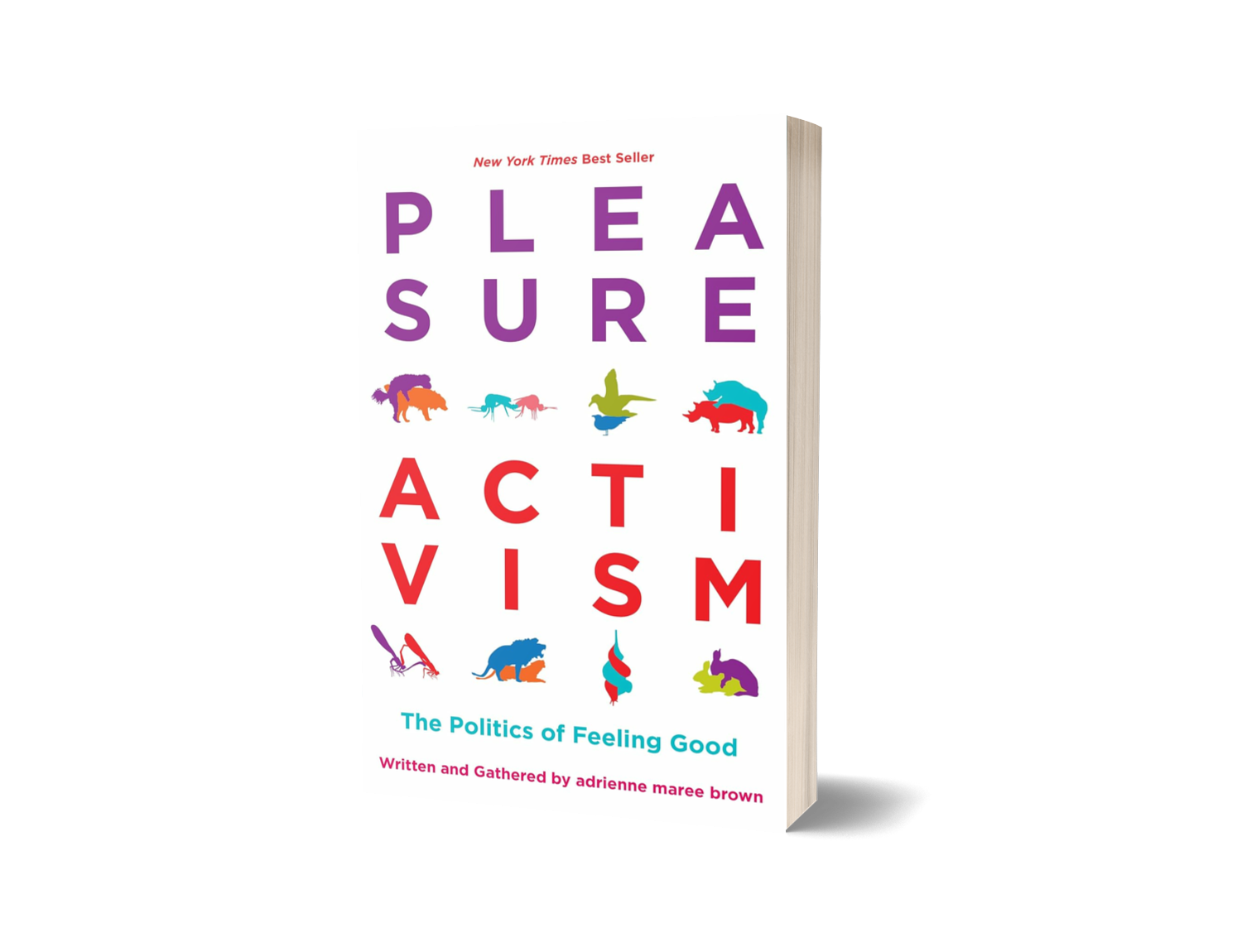
How do we make social justice the most pleasurable human experience? How can we awaken within ourselves desires that make it impossible to settle for anything less than a fulfilling life? Author and editor Adrienne Maree Brown finds the answer in something she calls “pleasure activism,” a politics of healing and happiness that explodes the dour myth that changing the world is just another form of work.
Drawing on the black feminist tradition, she challenges us to rethink the ground rules of activism. Her mindset-altering essays are interwoven with conversations and insights from other feminist thinkers, including Audre Lorde, Joan Morgan, Cara Page, Sonya Renee Taylor, and Alexis Pauline Gumbs. Together they cover a wide array of subjects—from sex work to climate change, from race and gender to sex and drugs—building new narratives about how politics can feel good and how what feels good always has a complex politics of its own.
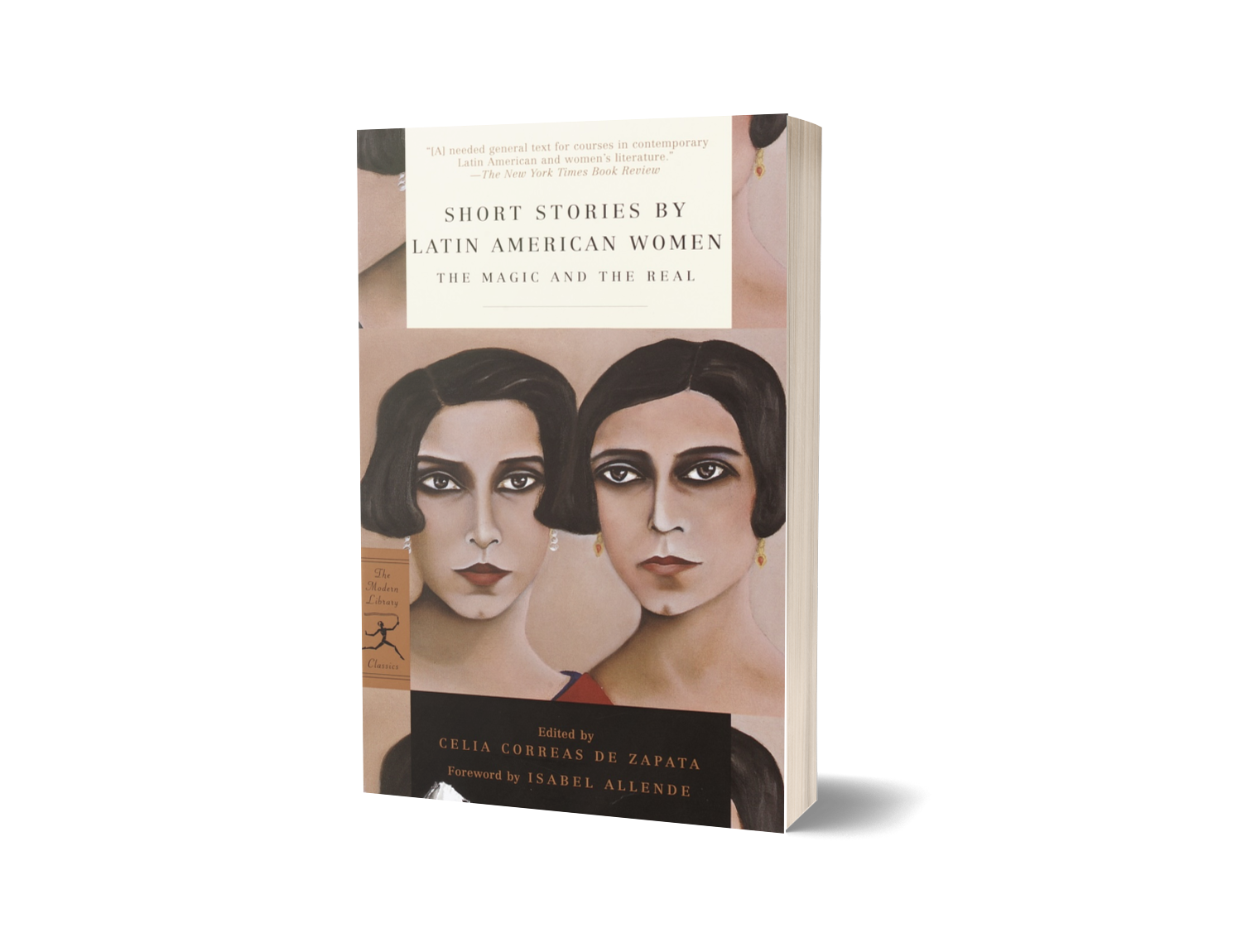
Celia Correas de Zapata, an internationally recognized expert in the field of Latin American fiction written by women, has collected stories by thirty-one authors from fourteen countries, translated into English by such renowned scholars and writers as Gregory Rabassa and Margaret Sayers Peden. Contributors include Dora Alonso, Rosario Ferré, Elena Poniatowska, Ana Lydia Vega, and Luisa Valenzuela. The resulting book is a literary tour de force, stories written by women in this hemisphere that speak to cultures throughout the world. In her Foreword, Isabel Allende states, “This anthology is so valuable; it lays open the emotions of writers who, in turn, speak for others still shrouded in silence.”
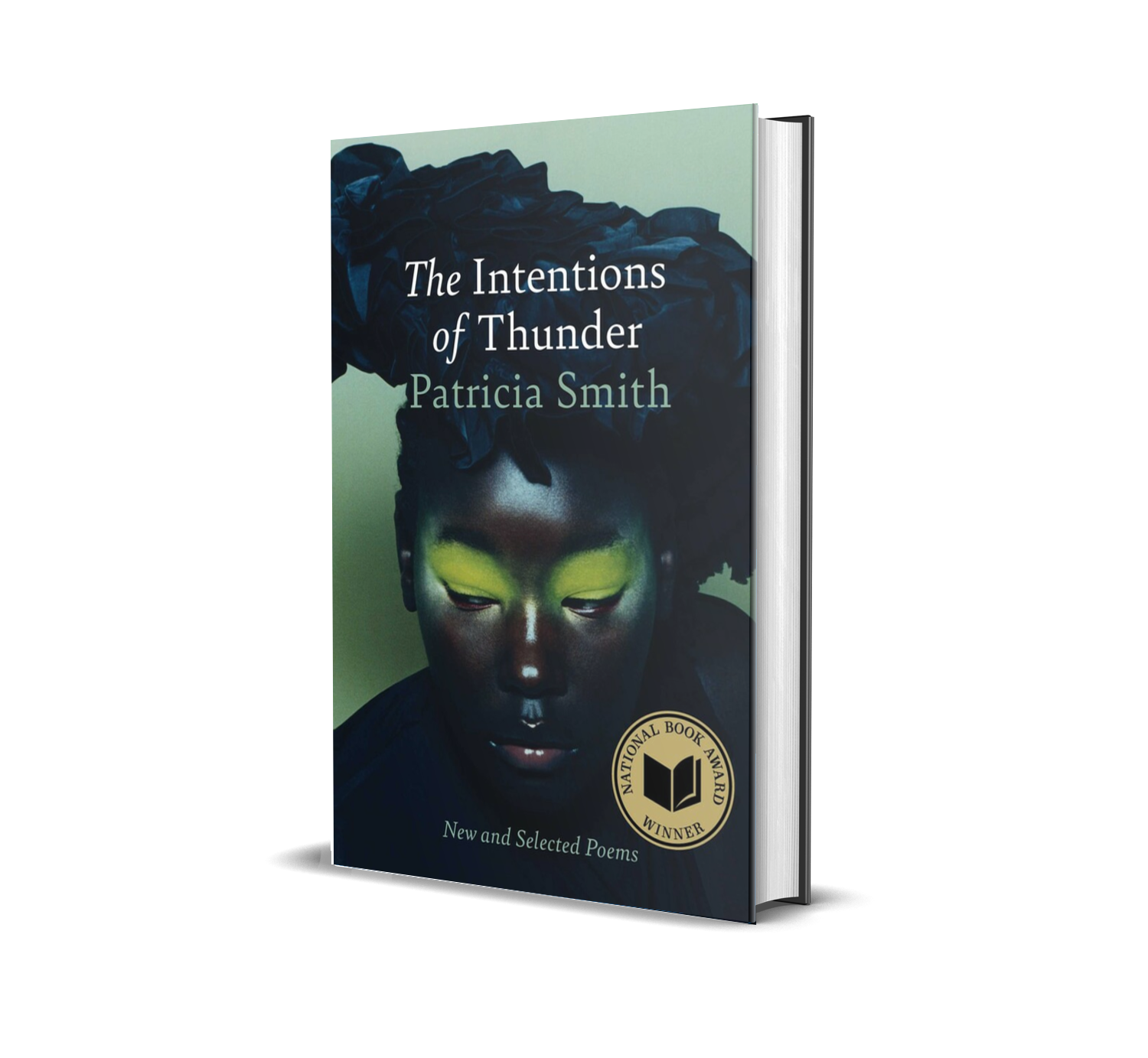
WINNER OF THE 2025 NATIONAL BOOK AWARD FOR POETRY
A collection of the finest new and selected poems from one of the most groundbreaking voices in contemporary poetry, a “masterful performer and poet of voices too little heard” (Poetry Foundation).
The Intentions of Thunder gathers, for the first time, the essential work from across Patricia Smith’s decorated career. Here, Smith’s poems, affixed with her remarkable gift of insight, present a rapturous ode to life. With careful yet vaulting movement, these poems traverse the redeeming landscape of pain, confront the frightening revelations of history, and disclose the joyous possibilities of the future. The result is a profound testament to the necessity of poetry—all the careful witness, embodied experience, and bristling pleasure that it bestows—and of Smith’s necessary voice.
Lyrical and sly, meditative and volcanic, The Intentions of Thunder stunningly explores the fullness of living. The inimitable poetry of Patricia Smith radiates in The Intentions of Thunder—reaffirming Smith’s place as one of the indispensable poets of our time.

No one likes talking about death, taxes, or financial planning. But too many smart, capable, well-educated women like you are blindsided when unexpected curveballs complicate their personal and financial lives. You need a comprehensive, easy-to-follow guide to help you get all your legal affairs in order so you’re ready for anything life throws your way.
Attorney Naz Barouti has spent her career empowering women with the knowledge they need to protect their estates, their families, and themselves. In Love, Death, and Money, she covers all the essential components of an estate plan, from setting up wills and trusts, to preparing an advance healthcare directive, to establishing a prenup, legal guardianship, or durable power of attorney.
Whether you’re entering into a relationship or exiting one, a young single woman just starting out or a mother concerned for her children’s well-being—now you can face the future powerfully and fully prepared.
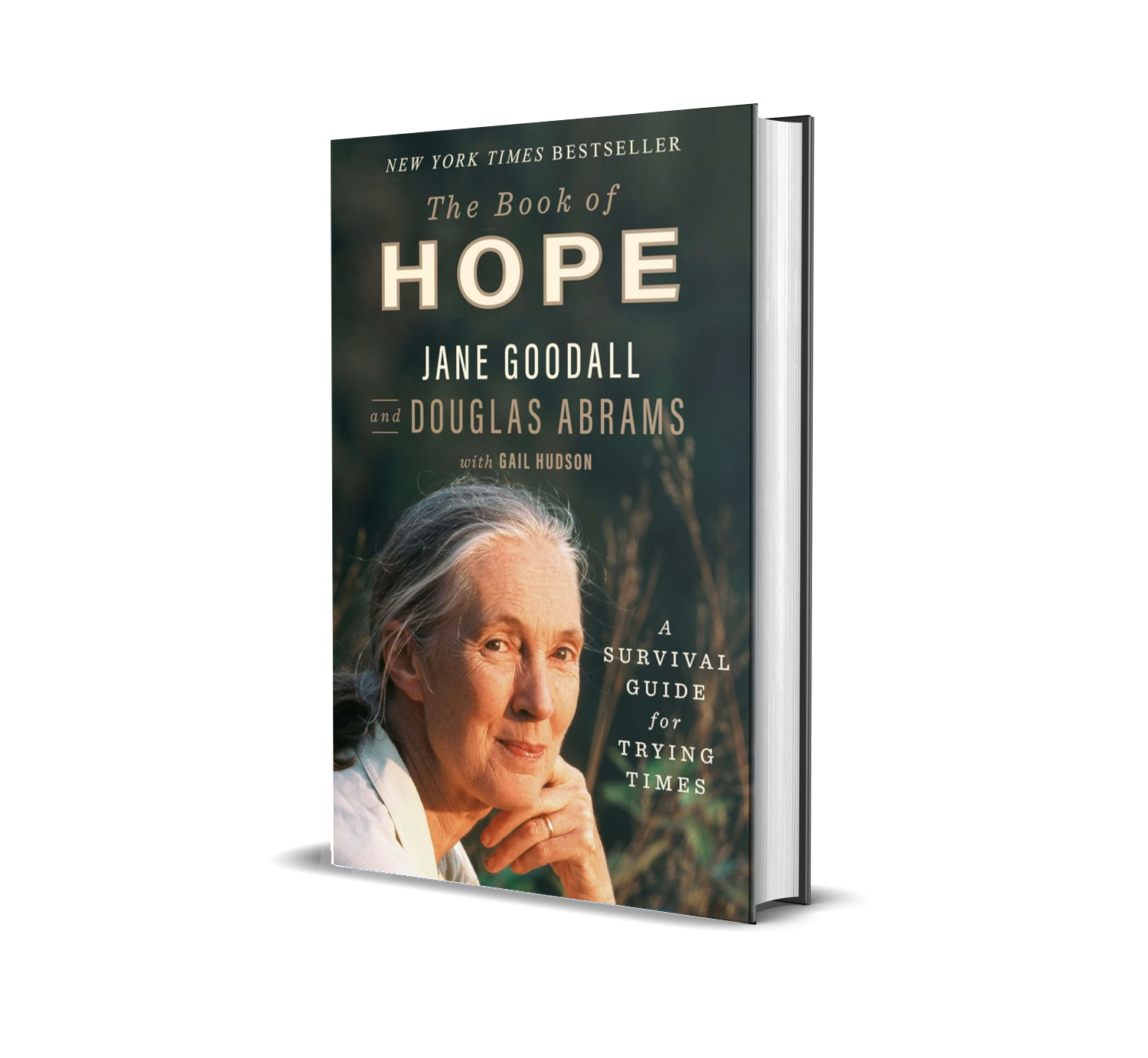
THE INSTANT NEW YORK TIMES BESTSELLER
In a world that seems so troubled, how do we hold on to hope?
Looking at the headlines—the worsening climate crisis, a global pandemic, loss of biodiversity, political upheaval—it can be hard to feel optimistic. And yet hope has never been more desperately needed.
In this urgent book, Jane Goodall, one of the world's most famous naturalists, and Douglas Abrams, the internationally bestselling co-author of The Book of Joy, explore through intimate and thought-provoking dialogue one of the most sought after and least understood elements of human nature: hope. In The Book of Hope, Jane focuses on her "Four Reasons for Hope": The Amazing Human Intellect, The Resilience of Nature, The Power of Young People, and The Indomitable Human Spirit.
Drawing on decades of work that has helped expand our understanding of what it means to be human and what we all need to do to help build a better world, The Book of Hope touches on vital questions, including: How do we stay hopeful when everything seems hopeless? How do we cultivate hope in our children? What is the relationship between hope and action? Filled with moving and inspirational stories and photographs from Jane’s remarkable career, The Book of Hope is a deeply personal conversation with one of the most beloved figures in the world today.
While discussing the experiences that shaped her discoveries and beliefs, Jane tells the story of how she became a messenger of hope, from living through World War II to her years in Gombe to realizing she had to leave the forest to travel the world in her role as an advocate for environmental justice. And for the first time, she shares her profound revelations about her next, and perhaps final, adventure.
The second book in the Global Icons Series—which launched with the instant classic The Book of Joy with His Holiness the Dalai Lama and Archbishop Desmond Tutu—The Book of Hope is a rare and intimate look not only at the nature of hope but also into the heart and mind of a woman who revolutionized how we view the world around us and has spent a lifetime fighting for our future.
There is still hope, and this book will help guide us to it.
Moving between journal entry, memoir, and exposition, Audre Lorde fuses the personal and political as she reflects on her experience coping with breast cancer and a radical mastectomy.
First published over forty years ago, The Cancer Journals is a startling, powerful account of Audre Lorde's experience with breast cancer and mastectomy. Long before narratives explored the silences around illness and women's pain, Lorde questioned the rules of conformity for women's body images and supported the need to confront physical loss not hidden by prosthesis. Living as a "black, lesbian, mother, warrior, poet," Lorde heals and re-envisions herself on her own terms and offers her voice, grief, resistance, and courage to those dealing with their own diagnosis. Poetic and profoundly feminist, Lorde's testament gives visibility and strength to women with cancer to define themselves, and to transform their silence into language and action.
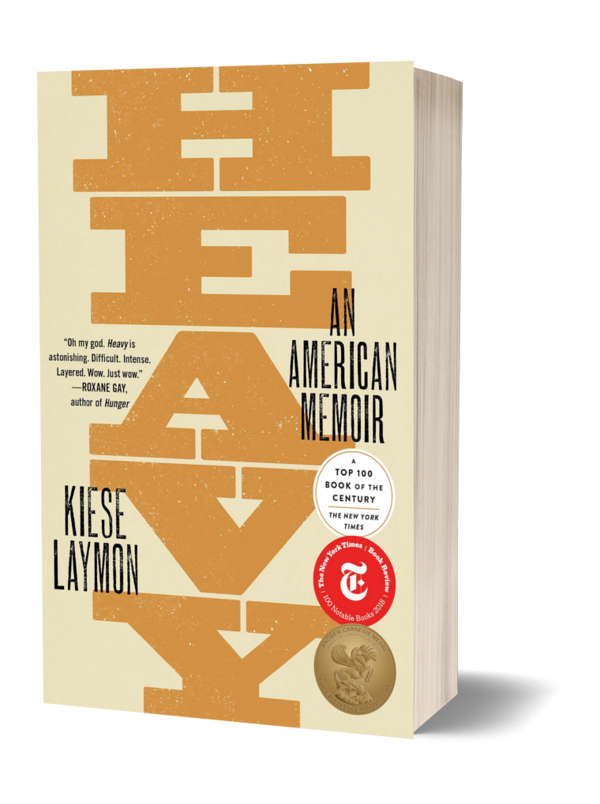
In this powerful and provocative memoir, genre-bending essayist and novelist Kiese Laymon explores what the weight of a lifetime of secrets, lies, and deception does to a black body, a black family, and a nation teetering on the brink of moral collapse.
Kiese Laymon is a fearless writer. In his essays, personal stories combine with piercing intellect to reflect both on the state of American society and on his experiences with abuse, which conjure conflicted feelings of shame, joy, confusion and humiliation. Laymon invites us to consider the consequences of growing up in a nation wholly obsessed with progress yet wholly disinterested in the messy work of reckoning with where we’ve been.
In Heavy, Laymon writes eloquently and honestly about growing up a hard-headed black son to a complicated and brilliant black mother in Jackson, Mississippi. From his early experiences of sexual violence, to his suspension from college, to his trek to New York as a young college professor, Laymon charts his complex relationship with his mother, grandmother, anorexia, obesity, sex, writing, and ultimately gambling. By attempting to name secrets and lies he and his mother spent a lifetime avoiding, Laymon asks himself, his mother, his nation, and us to confront the terrifying possibility that few in this nation actually know how to responsibly love, and even fewer want to live under the weight of actually becoming free.
A personal narrative that illuminates national failures, Heavy is defiant yet vulnerable, an insightful, often comical exploration of weight, identity, art, friendship, and family that begins with a confusing childhood—and continues through twenty-five years of haunting implosions and long reverberations.
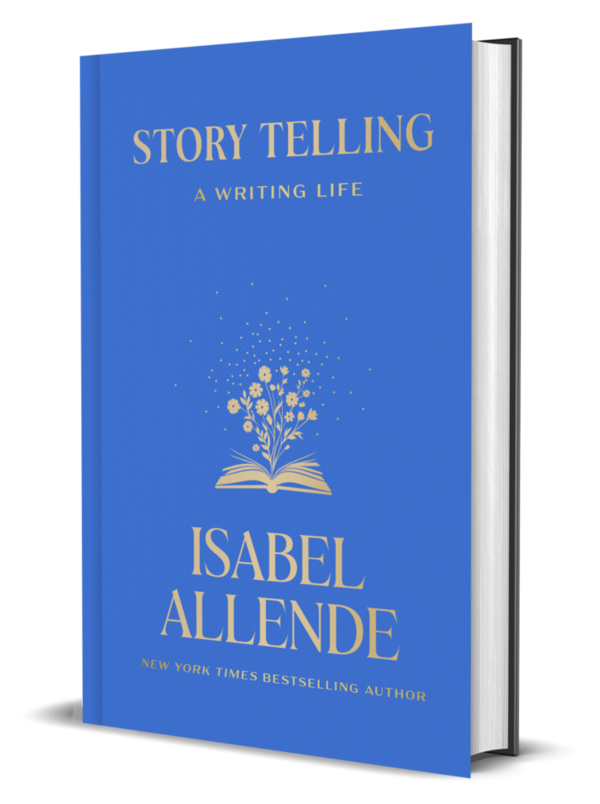
A profound exploration of the art and magic of writing by New York Times bestselling author Isabel Allende.
In this deeply personal and insightful book, Isabel Allende delves into her creative process, reflecting on nearly half a century of writing that has captivated millions of readers worldwide.
For Allende, writing is more than a craft. It is an addiction, a means of preserving memory, and a way to make sense of life. She offers readers an intimate glimpse into her creative world, where stories take shape through intuition, discipline, and deep connection to the human experience. It is also a glimpse into the life of a writer who views literature as a portal to understanding the chaos of life.
Story Telling is not a prescriptive guide to writing. Rather, it is a conversation. In it, Allende shares her triumphs, her mistakes, and the lessons learned through the challenges and joys of writing. She intertwines her own stories with invaluable wisdom for anyone pursuing the craft, making this book equally a memoir, a master class in the alchemy of storytelling, and a celebration of the enduring power of narrative.
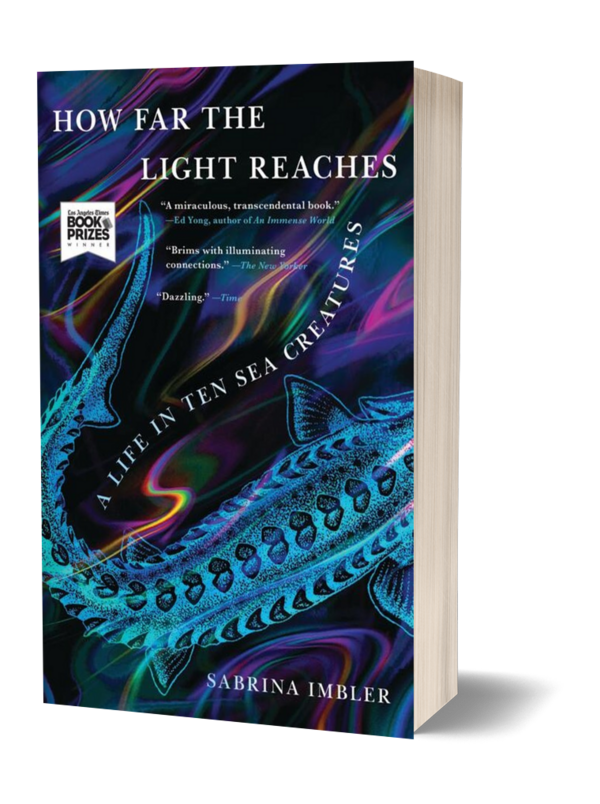
WINNER OF THE LOS ANGELES TIMES BOOK PRIZE in SCIENCE & TECHNOLOGY
Finalist for the Lambda Literary Award One of TIME’s 10 Best Nonfiction Books of the Year • A PEOPLE Best New Book • A Barnes & Noble and SHELF AWARENESS Best Book of 2022 • An Indie Next Pick • One of Winter’s Most Eagerly Anticipated Books: VANITY FAIR, VULTURE, BOOKRIOT
A fascinating tour of creatures from the surface to the deepest ocean floor: this "miraculous, transcendental book" invites us to envision wilder, grander, and more abundant possibilities for the way we live (Ed Yong, author of An Immense World).
A queer, mixed race writer working in a largely white, male field, science and conservation journalist Sabrina Imbler has always been drawn to the mystery of life in the sea, and particularly to creatures living in hostile or remote environments. Each essay in their debut collection profiles one such creature, including:
the mother octopus who starves herself while watching over her eggs
the Chinese sturgeon whose migration route has been decimated by pollution and dams
the bizarre, predatory Bobbitt worm (named after Lorena),
the common goldfish that flourishes in the wild, and more.
Imbler discovers that some of the most radical models of family, community, and care can be found in the sea, from gelatinous chains that are both individual organisms and colonies of clones to deep-sea crabs that have no need for the sun, nourished instead by the chemicals and heat throbbing from the core of the Earth. Exploring themes of adaptation, survival, sexuality, and care, and weaving the wonders of marine biology with stories of their own family, relationships, and coming of age, How Far the Light Reaches is a shimmering, otherworldly debut that attunes us to new visions of our world and its miracles.
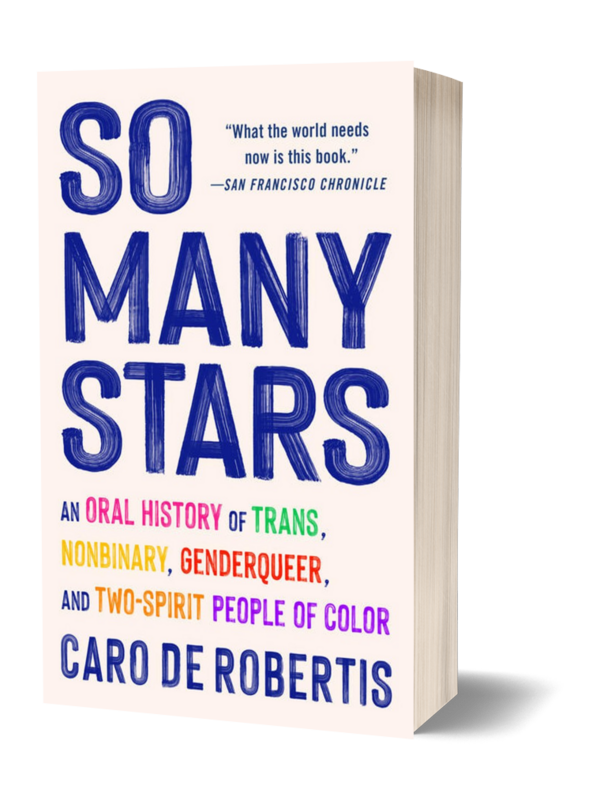
Named a Most Recommended Book of the Year by Electric Literature, Book Riot, The Mary Sue and Ms. Magazine.
From an acclaimed novelist, a first-of-its-kind, deeply personal, and moving oral history of a generation of trans and gender nonconforming elders of color—from leading activists to artists to ordinary citizens—who tell their own stories of breathtaking courage, cultural innovations, and acts of resistance.
So Many Stars knits together the voices of trans, nonbinary, genderqueer, and two-spirit elders of color as they share authentic, intimate accounts of how they created space for themselves and their communities in the world. This singular project collects the testimonies of twenty elders, each a glimmering thread in a luminous tapestry, preserving their words for future generations—who can more fully exist in the world today because of these very trailblazers.
De Robertis creates a collective coming-of-age story based on hundreds of hours of interviews, offering rare snapshots of ordinary life: kids growing up, navigating family issues and finding community, coming out and changing how they identify over the years, building movements and weathering the AIDS crisis, and sharing wisdom for future generations. Often narrating experiences that took place before they had the array of language that exists today to self-identify beyond the gender binary, this generation lived through remarkable changes in American culture, shaped American culture, and yet rarely takes center stage in the history books. Their stories feel particularly urgent in the current political moment, but also remind readers that their experiences are not new, and that young trans and nonbinary people today belong to a long lineage.
The anecdotes in these pages are riveting, joyful, heartbreaking, full of personality and wisdom, and artfully woven together into one immersive narrative. In De Robertis’s words, So Many Stars shares “behind-the-scenes tales of what it meant—and still means—to create an authentic life, against the odds.”

We all feel it, the teetering toward a place in America from which there is no return. The battle to remain hopeful in spite of injustice after injustice. In this powerful story of one lawyer's fight for his community, both justice and hope are redeemed.
The Greenwood neighborhood of North Tulsa was once a promised land for African Americans, deemed "Black Wall Street." But on May 31, 1921, the deadliest race massacre in U.S. history sent Greenwood up in flames. At the time, Lessie Randle was just a child running to safety as bullets ricocheted around her. Almost a century later, lawyer Damario Solomon-Simmons knocks on her door asking if she'd be willing to run toward justice this time.
In Redeem a Nation, we follow Solomon-Simmons's fight for justice, from the courtrooms of Tulsa to our nation's capital, representing three centenarians: the last survivors of the Tulsa Race Massacre. Documenting a race against the calendar and the courts, Redeem a Nation grapples with the truth about corruption and disenfranchisement in America through this historic legal case for reparations and the deeply moving stories of survivors and descendants of the Massacre.
Yet this isn't just a story of Tulsa. The community is a microcosm of the continued harm America inflicts through racial violence and economic injustice. The damage of generational poverty and loss of opportunity isn't some relic of the past. It is happening right now. Redeem a Nation offers a way forward for communities across the nation through systemic change and community love. The time is now to resist, repair, and redeem a land once promised.
"You think we can win?" Randle asked that day. This story is Solomon-Simmons's answer.
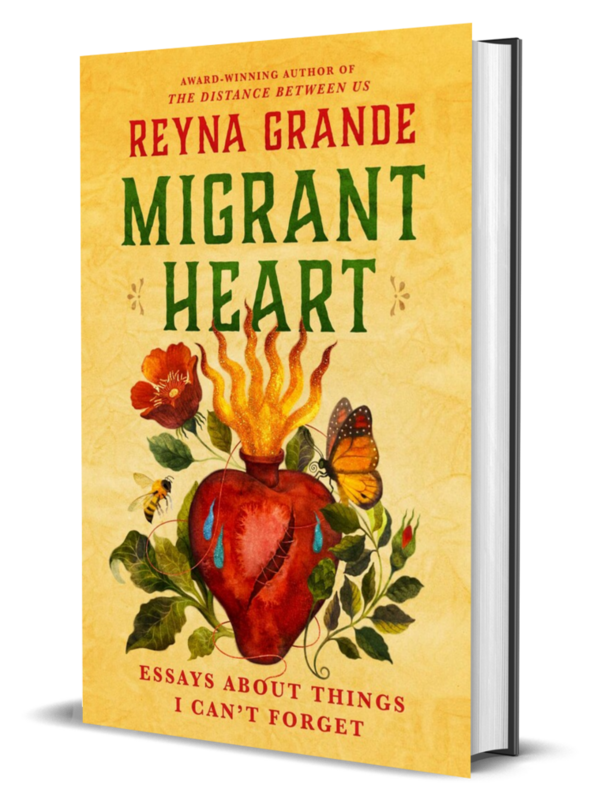
An ambitious memoir in essays by beloved bestselling author Reyna Grande that illuminates the hidden cost of the American Dream and the complex journey of healing that follows survival.
What is the true power of stories? Can they heal the jagged edges of a traumatic childhood? Is the cost of telling the story worth the price of the cure?
Reyna Grande has spent her career capturing the raw reality of life across borders. In this intricate and deeply intimate memoir-in-essays, the author of the landmark memoirs The Distance Between Us and A Dream Called Home again turns her gaze inward to explore the scars left by migration and the ongoing work of stitching herself back together.
With her signature blend of sophistication and raw honesty, Grande interrogates how living between two nations, two languages, and two identities has shaped the woman, mother, and writer she has become. Moving from the legacy of violence in her hometown of Iguala, Mexico, to a bittersweet family vacation in Europe spent reconciling her own impoverished past with her children's world of abundance, she uncovers startling truths about the nature of survival.
Whether being racially profiled in the Arizona borderlands or finding unexpected wisdom from the slugs in her garden, Grande unflinchingly asks: How do we bridge the gap between who we were and who we have become? How do we turn pain into power? When memory threatens to define us, how can we use story to heal while still honoring our boundaries?
Migrant Heart is a powerful testament to Grande's role as a storyteller and cultural witness. It expands our understanding of life in the United States and the complex people who cross and live within its borders. It is an essential read for the seekers, the dreamers, and anyone who believes in the enduring, transformative power of finding one's voice.
Great and Unfortunate Things is Jason Arday’s memoir of overcoming remarkable challenges and responding to adversity with resilience.
Jason Arday grew up in a lively corner of South London as the second youngest of three boys. He was diagnosed with autism and developmental delays at age three, and experts told his parents he would never speak, write, or live independently—and should be institutionalized.
His parents refused. Instead, his extraordinary mother, Giff, drawing on her faith and thinking outside the box, embraced his neurodivergence and devoted herself to helping him realize a potential few others believed possible—using everything from the proverbs of her West African culture to music, sports, and film to help him make sense of the world.
In Great and Unfortunate Things, we see how Arday went from being nonverbal as a child and illiterate until he was eighteen to scaling unimag-inable heights as an adult. Without romanticizing the struggle, this is a story of determination against seemingly insurmountable odds—and of a family and a small group of believers whose compassion helped him see what is possible.
A powerful story for our moment, Arday’s journey is a testament to resilience, dignity, and the life-changing force of community in action.
From a celebrated Native journalist, an electrifying memoir of travel, love, friendships, and connection across cultures.
"Best memoir of the summer." —Piper Kerman, author of Orange Is the New Black
"An origin story of a mighty, independent Indigenous woman finding her power in a broader, borderless world." —Chris La Tray (Anishinaabe), author of Becoming Little Shell
Growing up on the Torres Martinez Reservation in Southern California, Terria Smith longed for adventure. She became a journalist, hitting the road and reporting on the rich lives of Native people around the United States. As her hunger for travel grew, so did her understanding of community, and what it means to be a world citizen today. I Love You So Many—named after a favorite expression of her Spanish-speaking relatives—follows Smith from her ancestral homelands to Cuba, Iceland, Guyana, and back again. With exuberant, laugh-out-loud style she tells stories about forging profound friendships, falling in and out of love, and celebrating the determination that carried her through hard and heady times alike. She brings a fresh sensibility to travel writing, building enduring relationships with the people and cultures she visits. For Smith, travel is deeply rooted in Native traditions: It’s about sharing, reciprocity, risk-taking, and the valuable (and sometimes awkward) work of bridging and holding differences. As fun as it is poignant, I Love You So Many is an irresistible tribute to getting out and living a life in full.
Zami: A Carriacou name for women who work together as friends and lovers
“Zami is a fast-moving chronicle. From the author’s vivid childhood memories in Harlem to her coming of age in the late 1950s, the nature of Audre Lorde’s work is cyclical. It especially relates the linkage of women who have shaped her . . . Lorde brings into play her craft of lush description and characterization. It keeps unfolding page after page.”—Off Our Backs
“Among the elements that make the book so good are its personal honesty and lack of pretentiousness, characteristics that shine through the writing bespeaking the evolution of a strong and remarkable character.”—The New York Times
In this part-memoir, part-manifesto, an acclaimed poet interprets Black radical literary traditions to reimagine freedom through refusal.
Over the past decade, Camonghne Felix has been at the center of American politics, working in strategy, communications, and as a speechwriter. Throughout it all, she has maintained her unwavering belief in language’s foundational revolutionary potential, outside of its deployment for legislative and political ends. In this groundbreaking work of nonfiction, she argues that Black radical poetic traditions model an ethical code and overcome entrenched structures of patriarchy and paternalism, inventing a new form that examines the historical and legislative, and the personal and poetic.
Felix draws on stories from her life in campaigns and the decisions she has had to make: preparing speeches for candidates, responding to harassment, recruiting staff. She recounts her moving personal history—accompanying her mother, a lawyer, to court, and her father, a participant in the Grenadian revolution of 1983, to protests—as well as her coming-of-age being schooled in a wider tradition of Black radical thinkers, from Gwendolyn Brooks to Audre Lorde.
Through rupture, rhythm, and a refusal of politics as usual, Let the Poets Govern encourages us to hold ourselves to the standards of our highest ideals and embraces our shared humanity.
In this inspirational and unflinchingly honest memoir, acclaimed author Reyna Grande describes her childhood torn between the United States and Mexico, and shines a light on the experiences, fears, and hopes of those who choose to make the harrowing journey across the border.
Reyna Grande vividly brings to life her tumultuous early years in this “compelling...unvarnished, resonant” (BookPage) story of a childhood spent torn between two parents and two countries. As her parents make the dangerous trek across the Mexican border to “El Otro Lado” (The Other Side) in pursuit of the American dream, Reyna and her siblings are forced into the already overburdened household of their stern grandmother. When their mother at last returns, Reyna prepares for her own journey to “El Otro Lado” to live with the man who has haunted her imagination for years, her long-absent father.
Funny, heartbreaking, and lyrical, The Distance Between Us poignantly captures the confusion and contradictions of childhood, reminding us that the joys and sorrows we experience are imprinted on the heart forever, calling out to us of those places we first called home.
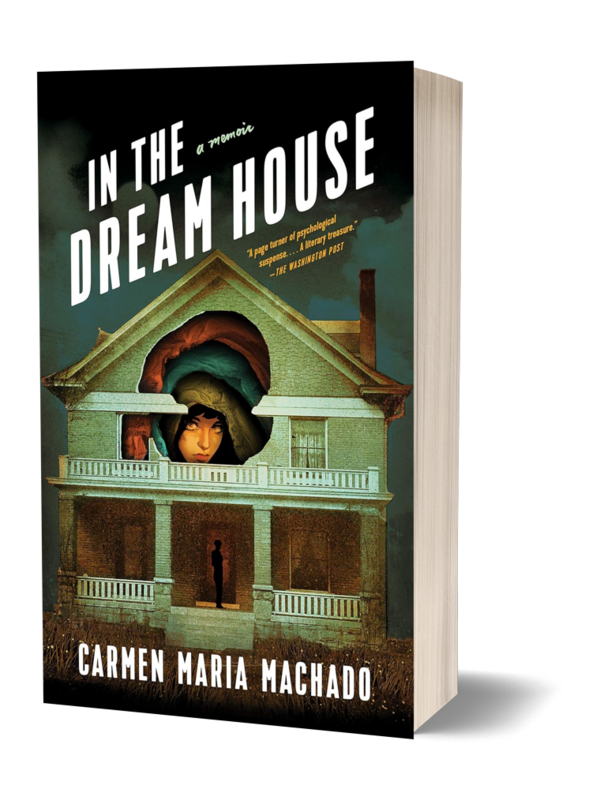
A revolutionary memoir about domestic abuse by the award-winning author of Her Body and Other Parties
In the Dream House is Carmen Maria Machado’s engrossing and wildly innovative account of a relationship gone bad, and a bold dissection of the mechanisms and cultural representations of psychological abuse. Tracing the full arc of a harrowing relationship with a charismatic but volatile woman, Machado struggles to make sense of how what happened to her shaped the person she was becoming.
And it’s that struggle that gives the book its original structure: each chapter is driven by its own narrative trope―the haunted house, erotica, the bildungsroman―through which Machado holds the events up to the light and examines them from different angles. She looks back at her religious adolescence, unpacks the stereotype of lesbian relationships as safe and utopian, and widens the view with essayistic explorations of the history and reality of abuse in queer relationships.
Machado’s dire narrative is leavened with her characteristic wit, playfulness, and openness to inquiry. She casts a critical eye over legal proceedings, fairy tales, Star Trek, and Disney villains, as well as iconic works of film and fiction. The result is a wrenching, riveting book that explodes our ideas about what a memoir can do and be.
A fractured account of family abuse, secrets, and the cost of pursuing the truth.
In the most private spaces, the most intimate betrayals occur. Belén López Peiró places us squarely in the tenderest of times―young teenagehood, in a home about to be ruptured by sexual assault. In this home, for this young woman, your assailant is your uncle, and also a police commissioner. The people who shelter you will reject you: your mother is his sister-in-law, your beloved aunt his wife and your cousin and friend his daughter. And the truth of what happened will depend entirely on you.
Why Did You Come Back Every Summer is a document of uncertainty, self-doubt, and the appearance of progress when there is none. A chorus of voices interrupt and overtake each other; interviews and reports are filed. The truth will be heard but how and by whom? Loyalties will shift and slip. And certain questions have no easy answers. What do you owe to your family? What do they owe you? How far will you go to get yourself back?
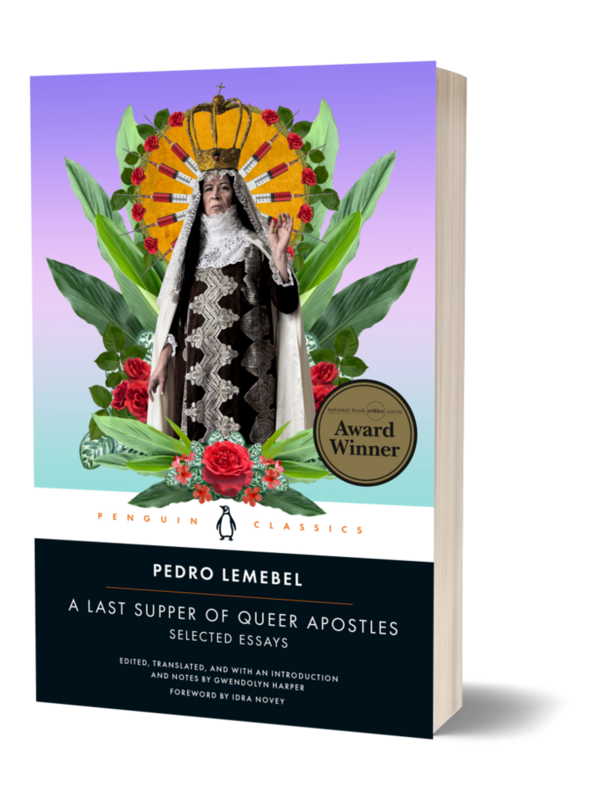
Winner of the National Book Critics Circle Translation Prize
*Finalist for the National Translation Award*
*Honorable Mention for the Society of Authors TA (Translators Association) First Translation Prize*
*Honorable Mention for the Queen Sofía Spanish Institute Translation Prize*
“These days, when an American president has decreed that ‘there are only two genders: male and female’ . . . an undaunted, lyrical voice from a southern corner of the hemisphere offers a model of resistance.” —The New Yorker
“Intoxicating . . . Sexy, political and deeply humane . . . We all owe Penguin Classics a round of shots for A Last Supper of Queer Apostles.” —The Washington Post
A galvanizing look at life on the margins of society by a crowning figure of Latin America's queer counterculture who celebrated “melodrama, kitsch, extravagance, and vulgarity of all kinds” (Garth Greenwell) in playful, performative, linguistically inventive essays, now in English for the first time.
“I speak from my difference,” wrote Pedro Lemebel, an openly queer writer and artist living through Chile’s AIDS epidemic and the collapse of the Pinochet dictatorship. In brilliantly innovative essays—known as crónicas—that combine memoir, reportage, fiction, history, and poetry, he brought visibility and dignity to sexual minorities, the poor, and the powerless. Touching on everything from Che Guevara to Elizabeth Taylor, from the aftermath of authoritarian rule to the daily lives of Chile’s locas—a slur for trans women and effeminate gay men that he boldly reclaims—his writing infuses political urgency with playfulness, realism with absurdism, and resistance with camp, and his AIDS crónicas immortalize a generation of Chileans doubly “disappeared” by casting each loca, as she falls sick, in the starring role of her own private tragedy. This volume brings together the best of his work, introducing readers of English to the subversive genius of a literary activist and queer icon whose acrobatic explorations of the Santiago demimonde reverberate around the world.

NEW YORK TIMES BESTSELLER
ONE OF TIME’S TEN MOST IMPORTANT NONFICTION BOOKS OF THE TWENTIETH CENTURY
The “extraordinary” (The New York Times) autobiography of the legendary civil rights leader once called the most dangerous man in America—essential reading for anyone who wants to understand this nation’s history
In the searing pages of this classic biography, Malcolm X, the Muslim leader, firebrand, and activist, tells the remarkable story of his life and the growth of the Black Muslim movement to veteran writer and journalist Alex Haley. Haley worked with Malcolm X for nearly two years; all the while, Malcolm did “not expect to live long enough to read this book in its finished form.” As clear-eyed about his own fate as he was about the plight of his community, Malcolm saw his truth-telling as a gift that would live beyond his own mortality.
Raised in Lansing, Michigan, Malcolm Little journeyed on a road to fame as astonishing as it was unpredictable. Drifting from childhood poverty to petty crime, Malcolm found himself in jail. It was there that he encountered the teachings of the Black Muslim leader Elijah Muhammad. The newly renamed Malcolm X devoted himself body and soul to Islam, quickly becoming the Nation’s foremost spokesman. When his conscience forced him to leave the group, Malcolm founded the Organization of Afro-American Unity to spread an inspiring message of pride, power, and self-determination across the country.
The Autobiography of Malcolm X stands as the definitive statement of a movement and a man whose work was never completed but whose message is timeless. This commemorative edition, published on the 100th anniversary of Malcolm X’s birth, is both a celebration of the lasting impact of his story and a chance to interrogate how far we’ve collectively come. In revisiting his incisive perspective on the lies and limitations of the American Dream, we gain extraordinary insight into the most urgent issues of our own time.
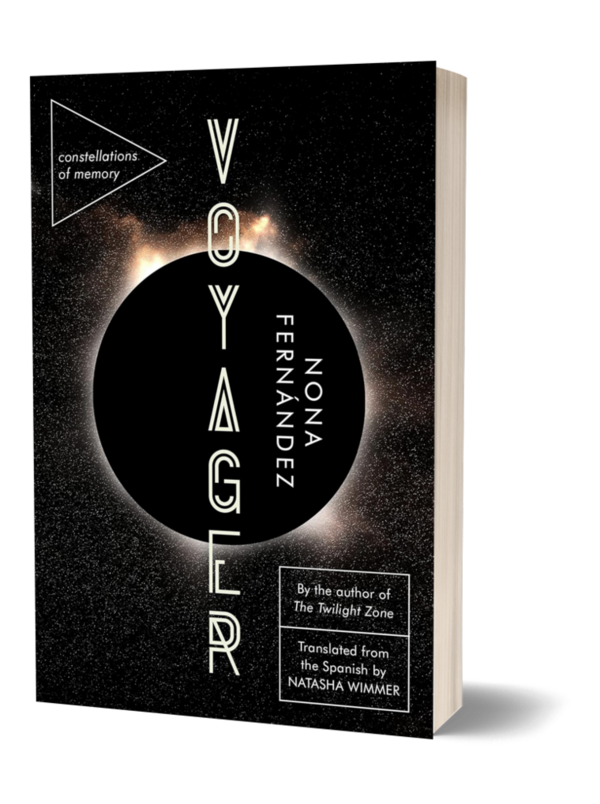
A startling book-length essay, at once grand and intimate, from National Book Award finalist Nona Fernández.
Voyager begins with Nona Fernández accompanying her elderly mother to the doctor to seek an explanation for her frequent falls and inability to remember what preceded them. As the author stares at the image of her mother’s brain scan, it occurs to her that the electrical signals shown on the screen resemble the night sky.
Inspired by the mission of the Voyager spacecrafts, Fernández begins a process of observation and documentation. She describes a recent trip to the remote Atacama desert―one of the world’s best spots for astronomical observation―to join people who, like her, hope to dispel the mythologized history of Chile’s new democracy. Weaving together the story of her mother’s illness with story of her country and of the cosmos itself, Fernández braids astronomy and astrology, neuroscience and memory, family history and national history into this brief but intensely imagined autobiographical essay. Scrutinizing the mechanisms of personal, civic, and stellar memory, she insists on preserving the truth of what we’ve seen and experienced, and finding ways to recover what people and countries often prefer to forget.
In Voyager, Fernández finds a new container for her profound and surreal reckonings with the past. One of the great chroniclers of our day, she has written a rich and resonant book.
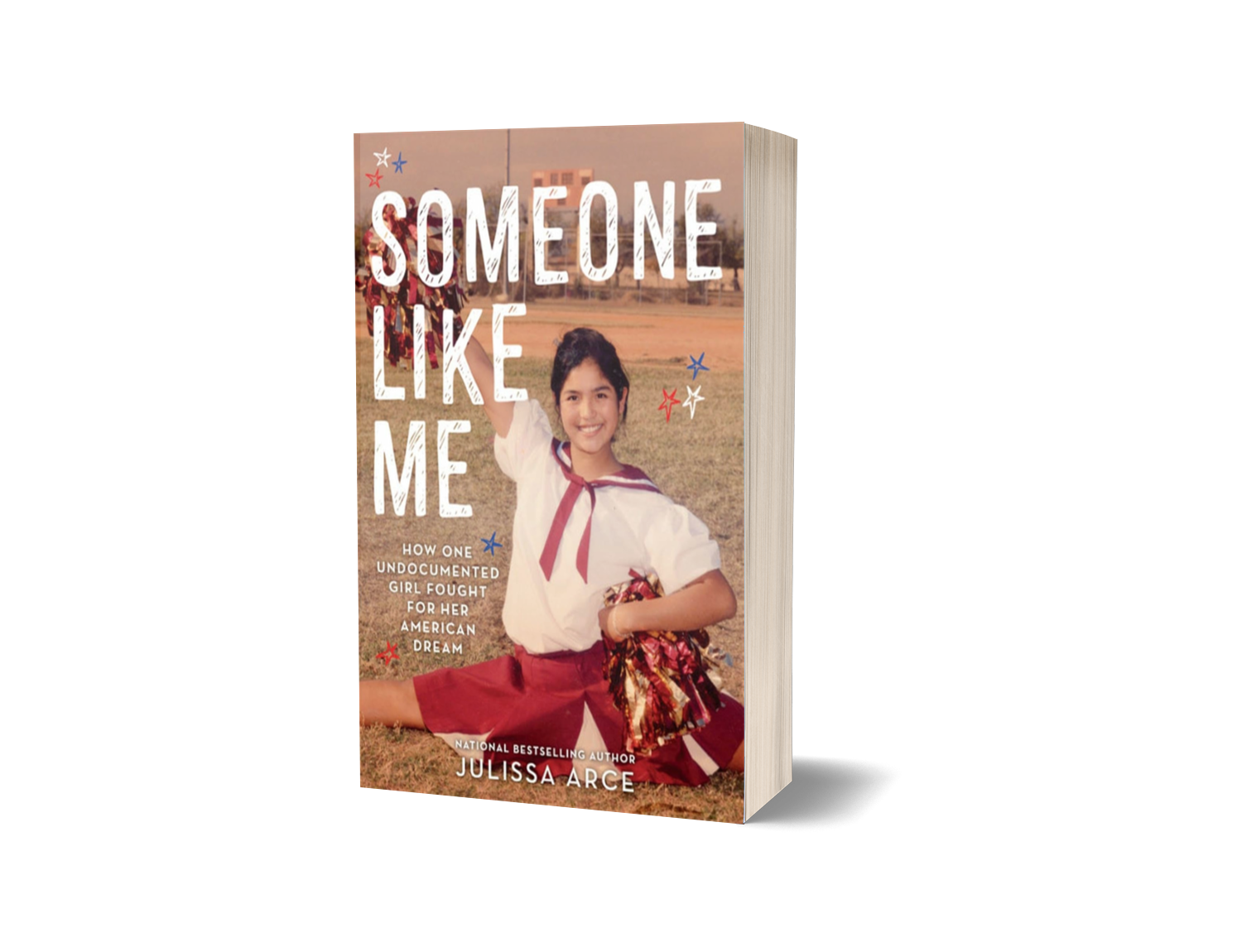
A remarkable true story from social justice advocate and national bestselling author Julissa Arce about her journey to belong in America while growing up undocumented in Texas.
Born in the picturesque town of Taxco, Mexico, Julissa Arce was left behind for months at a time with her two sisters, a nanny, and her grandma while her parents worked tirelessly in America in hopes of building a home and providing a better life for their children. That is, until her parents brought Julissa to Texas to live with them. From then on, Julissa secretly lived as an undocumented immigrant, went on to become a scholarship winner and an honors college graduate, and climbed the ladder to become a vice president at Goldman Sachs.
This moving, at times heartbreaking, but always inspiring story will show young readers that anything is possible. Julissa's story provides a deep look into the little-understood world of a new generation of undocumented immigrants in the United States today--kids who live next door, sit next to you in class, or may even be one of your best friends.
THE INSTANT NEW YORK TIMES BESTSELLER
In a world that seems so troubled, how do we hold on to hope?
Looking at the headlines—the worsening climate crisis, a global pandemic, loss of biodiversity, political upheaval—it can be hard to feel optimistic. And yet hope has never been more desperately needed.
In this urgent book, Jane Goodall, one of the world's most famous naturalists, and Douglas Abrams, the internationally bestselling co-author of The Book of Joy, explore through intimate and thought-provoking dialogue one of the most sought after and least understood elements of human nature: hope. In The Book of Hope, Jane focuses on her "Four Reasons for Hope": The Amazing Human Intellect, The Resilience of Nature, The Power of Young People, and The Indomitable Human Spirit.
Drawing on decades of work that has helped expand our understanding of what it means to be human and what we all need to do to help build a better world, The Book of Hope touches on vital questions, including: How do we stay hopeful when everything seems hopeless? How do we cultivate hope in our children? What is the relationship between hope and action? Filled with moving and inspirational stories and photographs from Jane’s remarkable career, The Book of Hope is a deeply personal conversation with one of the most beloved figures in the world today.
While discussing the experiences that shaped her discoveries and beliefs, Jane tells the story of how she became a messenger of hope, from living through World War II to her years in Gombe to realizing she had to leave the forest to travel the world in her role as an advocate for environmental justice. And for the first time, she shares her profound revelations about her next, and perhaps final, adventure.
The second book in the Global Icons Series—which launched with the instant classic The Book of Joy with His Holiness the Dalai Lama and Archbishop Desmond Tutu—The Book of Hope is a rare and intimate look not only at the nature of hope but also into the heart and mind of a woman who revolutionized how we view the world around us and has spent a lifetime fighting for our future.
There is still hope, and this book will help guide us to it.
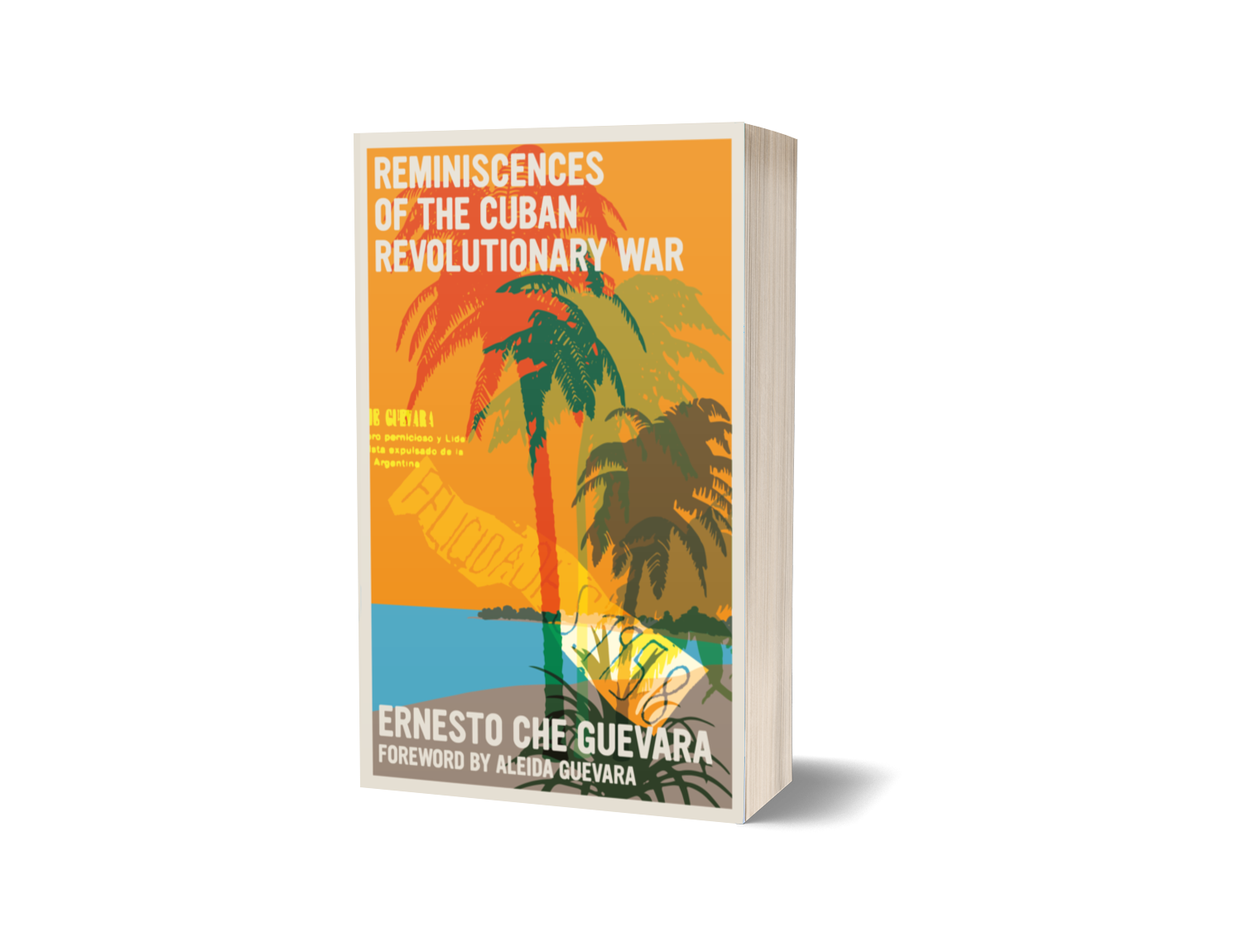
From the official Che Guevara Library
Che Guevara's definitive account of the Cuban revolutionary war, in an updated edition.
Includes photos and new foreword by Aleida Guevara—Che's eldest daughter who is a physician.
There is no better account of the Cuban revolutionary war than this little book by guerilla leader Che Guevara. Assembled from his campaign diary, first published in 1963, later corrected and edited by Che, and published here finally in an authoritative edition that includes not only his corrections, but also a number of short essays and articles published just after the revolution's triumph. As always, Che's writing is intimate, searching, and self-critical.
Having initially joined the Cuban expedition as troop doctor, Che describes his dilemma in having to choose between a backpack of medicines and a box of ammunition (he chose the box of ammunition). In another justly famous chapter of the book, "The Murdered Puppy," Che describes how he had to give the order to have a dog killed. Throughout this book, the sweep of history and matters of life and death are rendered in small and intimate ways.
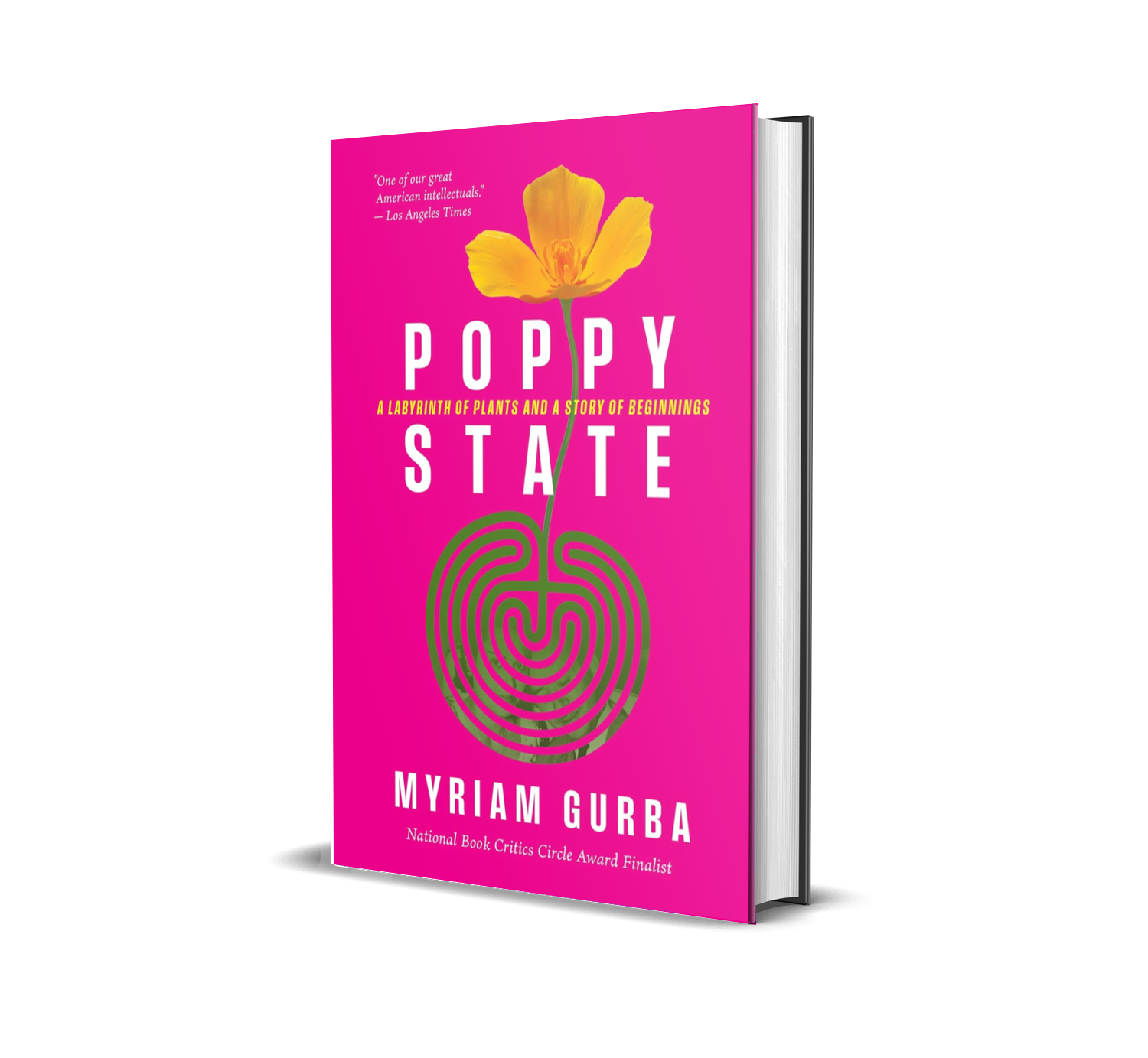
From the award-winning author of Creep comes a powerful book by a writer at the peak of her powers—at once a love letter to California and a literary tour de force that tells the story of resilience and reclamation through a relationship with plants, memory, myth, and indigenous knowledge.
Myriam Gurba has lived in California her entire life, with its plants and soils, forests and ecology, immersing herself in the language of the landscape as refracted through the languages and memories of her ancestors. In Poppy State, California plants serve as structural anchors in a wildly inventive work of narrative nonfiction that is part botanical criticism, part personal storytelling, and part study of place. The reader is invited to commune with California with Gurba as their guide, ushered through a compendium of anecdotes, reminiscences, utterances, lists, incantations, newspaper articles, and other ephemera.
Through the stories of these plants she comes to a new understanding of what occurs in the cultivation of a soul. Gurba learns if she can care for her body as she does her plants, her soul can thrive—like the California poppy on her kitchen windowsill. And through walks in the Angeles National Forest, she visits oaks, crows, elderberries, and sycamores, while foraging for acorns, flowers, and berries to adorn her altar at home. Poppy State is a riveting tour de force.
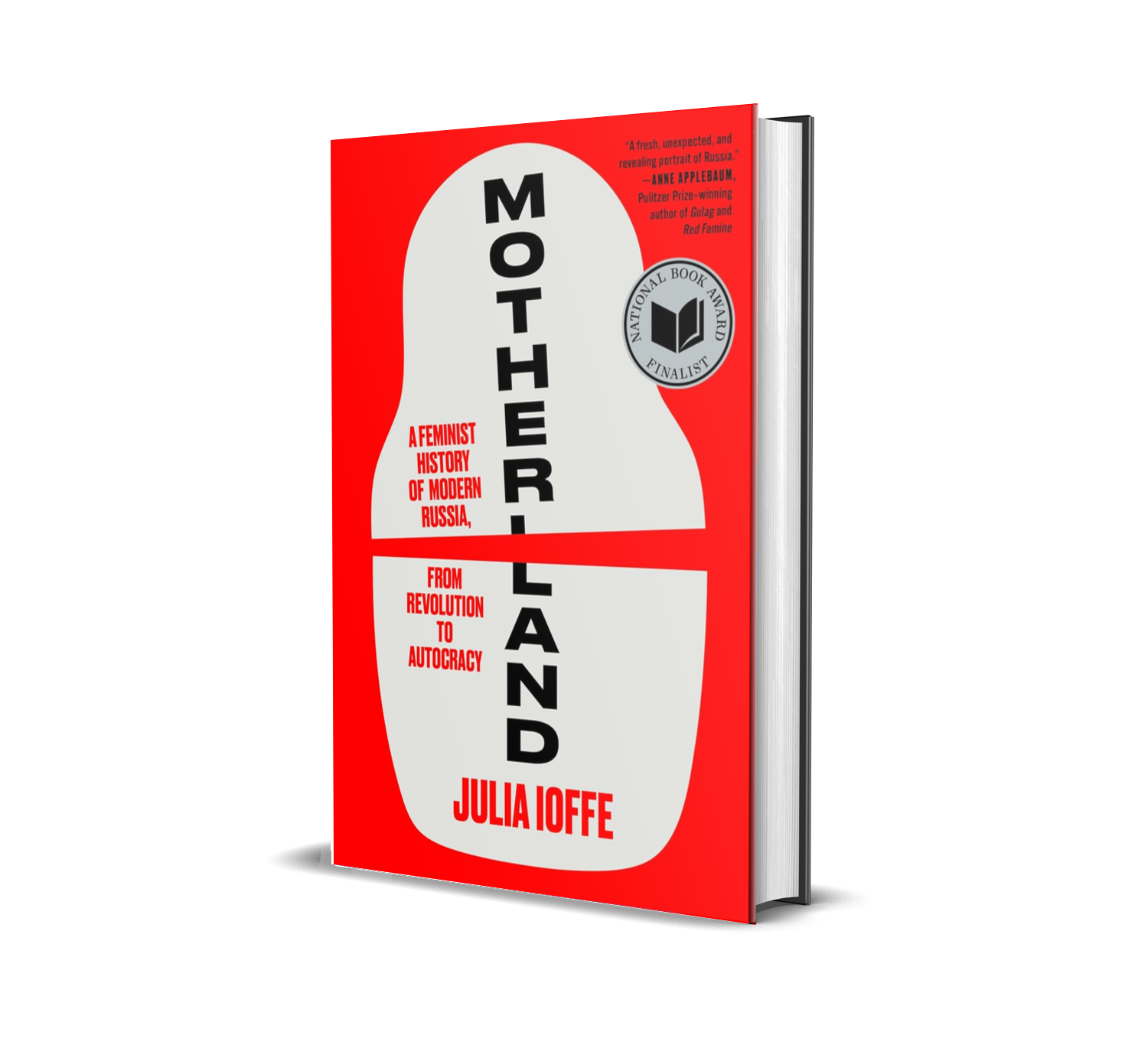
FINALIST FOR THE NATIONAL BOOK AWARD
NAMED ONE OF THE 10 BEST BOOKS OF 2025 BY THE WASHINGTON POST
NAMED ONE OF THE 100 NOTABLE BOOKS OF 2025 BY THE NEW YORK TIMES
A GUARDIAN BEST BOOK OF 2025
NAMED ONE OF THE BEST BOOKS OF FALL 2025 BY ELLE
ONE OF CHICAGO PUBLIC LIBRARY'S MUST-READ BOOKS OF 2025
Acclaimed journalist Julia Ioffe tells the story of modern Russia through the history of its women, from revolution to utopia to autocracy.
In 1990, seven-year-old Julia Ioffe and her family fled the Soviet Union. Nearly twenty years later, Ioffe returned to Moscow—only to discover just how much Russian society had changed while she had been living in America. The Soviet women she had known growing up—doctors, engineers, scientists—seemed to have been replaced by women desperate to marry rich and become stay-at-home moms. How had Russia gone from portraying itself as the vanguard of world feminism to becoming a bastion of conservative Christian values?
In Motherland, Ioffe turns modern Russian history on its head, telling it exclusively through the stories of its women. From her own physician great-grandmothers to Lenin’s lover, a feminist revolutionary; from the hundreds of thousands of Soviet girls who fought in World War II to the millions of single mothers who rebuilt and repopulated a devastated country; from the members of Pussy Riot to Yulia Navalnaya, the wife of opposition leader Alexey Navalny, Ioffe chronicles one of the most audacious social experiments in history and documents how it failed the very women it was meant to liberate—and how that failure paved the way for the revanche of Vladimir Putin.
Part memoir, part journalistic exploration, part history, Motherland paints a portrait of modern Russia through the women who shaped it. With deep emotion, Ioffe reveals what it means to live through the cataclysms of revolution, war, idealism, and heartbreak—and how the story of Russia today is inextricably tied to the sacrifices of its women.
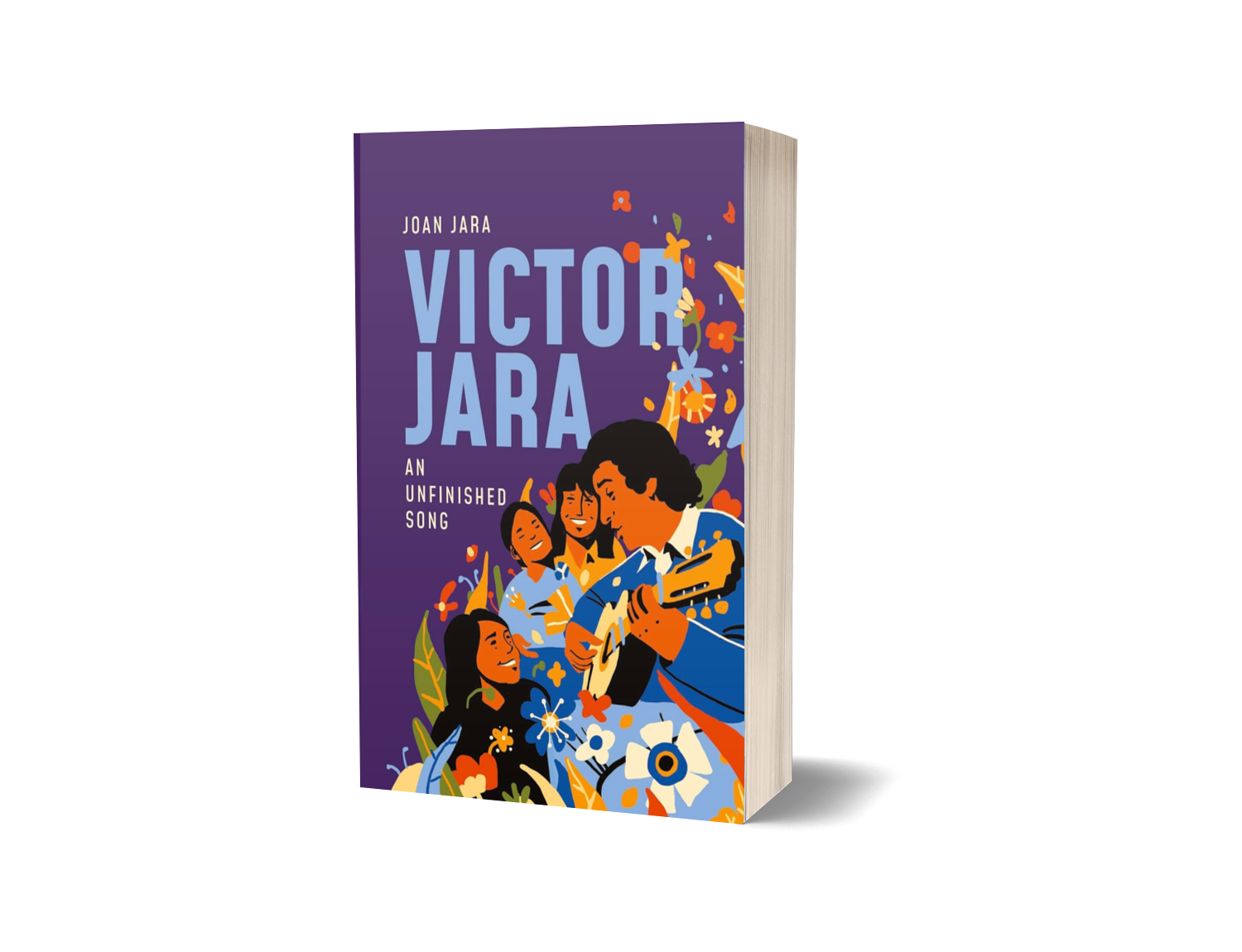
A lively and honest biography that graphically traces the emergence of Victor Jara's theatre, music and poems, and the crucial role they played in the Chilean workers' movement.
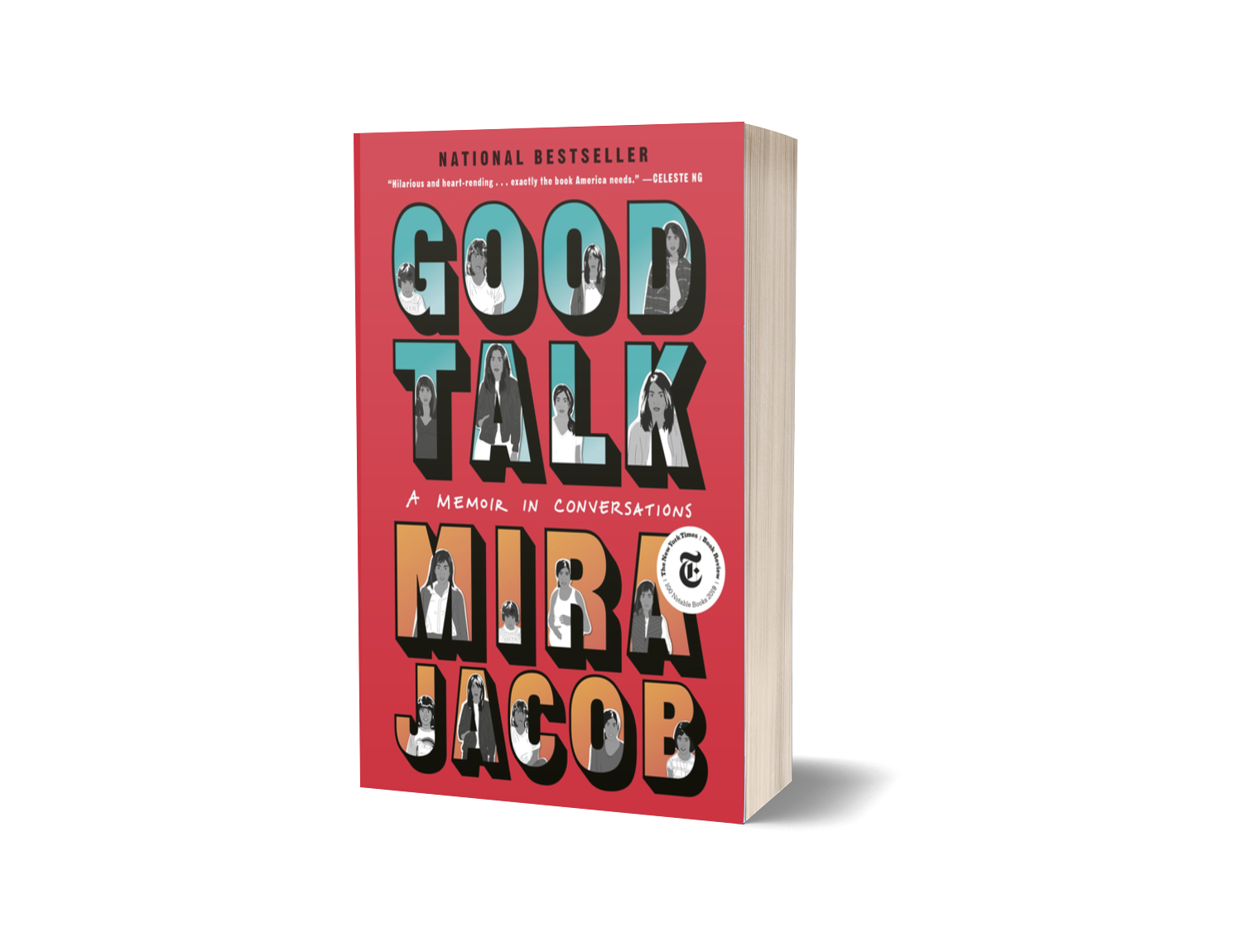
A bold, wry, and intimate graphic memoir about American identity, interracial family, and the realities that divide us, from the acclaimed author of The Sleepwalker's Guide to Dancing.
"Who taught Michael Jackson to dance?"
"Is that how people really walk on the moon?"
"Is it bad to be brown?"
"Are white people afraid of brown people?"
Like many six-year-olds, Mira Jacob's half-Jewish, half-Indian son, Z, has questions about everything. At first they are innocuous enough, but as tensions from the 2016 election spread from the country into his own family, they become much, much more complicated. Trying to answer him honestly, Mira has to think back to where she's gotten her own answers--her most formative conversations about race, color, sexuality, and of course, love.
How brown is too brown?
Can Indians be racist?
What does real love between really different people look like?
Written with humor and vulnerability, this deeply relatable graphic memoir is a love letter to the art of conversation--and to the hope that hovers in our most difficult questions.
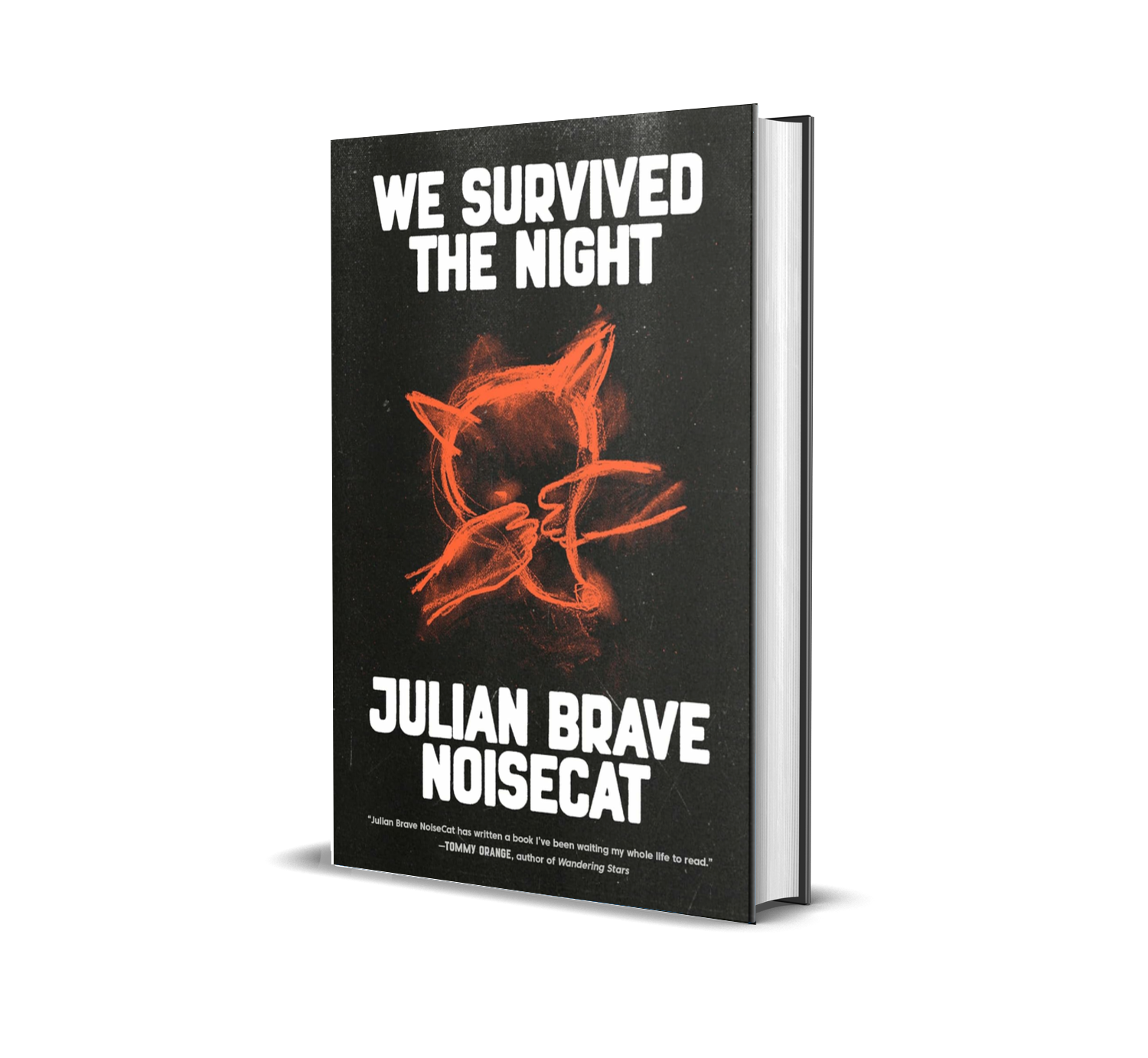
NAMED A NOTABLE BOOK OF THE YEAR BY NPR • A stunning narrative from one of the most powerful young writers at work today, and the director of the Oscar®-nominated documentary, Sugarcane, We Survived the Night interweaves oral history with hard-hitting journalism and a deeply personal father-son journey into a searing portrait of Indigenous survival, love, and resurgence.
Julian Brave NoiseCat’s childhood was rich with culture and contradictions. When his Secwépemc and St’at’imc father, an artist haunted by a turbulent past, abandoned the family, NoiseCat and his non-Native mother were embraced by the urban Native community in Oakland, California, as well as by family on the Canim Lake Indian Reserve in British Columbia. In his father’s absence, NoiseCat immersed himself in Native history and culture to understand the man he seldom saw—his past, his story, where he came from—and, by extension, himself.
Years later, NoiseCat sets out across the continent to correct the erasure, invisibility, and misconceptions surrounding the First Peoples of this land as he develops his voice as a storyteller and artist. Told in the style of a "Coyote Story," a legend about the trickster forefather of NoiseCat’s people who was revered for his wit and mocked for his tendency to self-destruct, We Survived the Night brings a traditional art form nearly annihilated by colonization back to life on the page. Through a dazzling blend of history and mythology, memoir and reportage, NoiseCat unravels old stories and braids together new ones. He grapples with the erasure of North America's First Peoples and the trauma that cascades across generations, while illuminating the vital Indigenous cultural, environmental, and political movements reshaping the future. He chronicles the historic ascent of the first Native American cabinet secretary in the United States and the first Indigenous sovereign of Canada; probes the colonial origins and limits of racial ideology and Indian identity through the story of the Lumbee Tribe of North Carolina; and hauls the golden eggs of an imperiled fish out of the sea alongside the Tlingit of Sitka, Alaska. This is a rewriting and a restoration—of Native history and, more intimately, of family and self, as NoiseCat seeks to reclaim a culture effaced by colonization and reconcile with a father who left. Virtuosic, compelling, and deeply moving, this is at once an intensely personal journey and a searing portrait of Indigenous survival, love, and resurgence.
Drawing from five years of on-the-ground reporting, We Survived the Night paints a profound and unforgettable portrait of contemporary Indigenous life, alongside an intimate and deeply powerful reckoning between a father and a son. A soulful, formally daring, and indelible work from an important new voice.
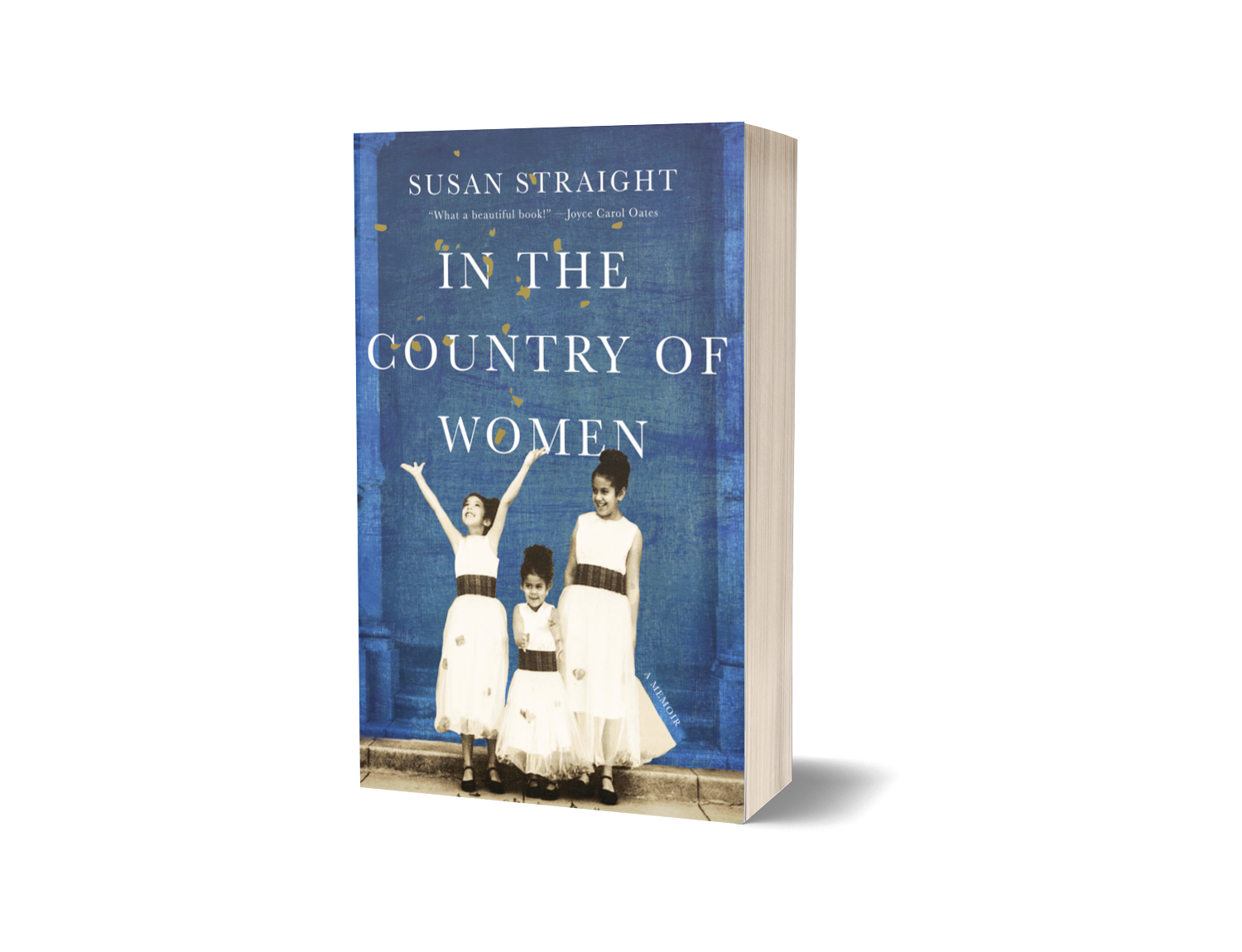
One of NPR's Best Books of the Year
In the Country of Women is a valuable social history and a personal narrative that reads like a love song to America and indomitable women. In inland Southern California, near the desert and the Mexican border, Susan Straight, a self–proclaimed book nerd, and Dwayne Sims, an African American basketball player, started dating in high school. After college, they married and drove to Amherst, Massachusetts, where Straight met her teacher and mentor, James Baldwin, who encouraged her to write. Once back in Riverside, at driveway barbecues and fish fries with the large, close–knit Sims family, Straight—and eventually her three daughters—heard for decades the stories of Dwayne’s female ancestors. Some women escaped violence in post–slavery Tennessee, some escaped murder in Jim Crow Mississippi, and some fled abusive men. Straight’s mother–in–law, Alberta Sims, is the descendant at the heart of this memoir. Susan’s family, too, reflects the hardship and resilience of women pushing onward—from Switzerland, Canada, and the Colorado Rockies to California.
A Pakistani word, biraderi, is one Straight uses to define a complex system of kinship and clan—those who become your family. An entire community helped raise her daughters. Of her three girls, now grown and working in museums and the entertainment industry, Straight writes, “The daughters of our ancestors carry in their blood at least three continents. We are not about borders. We are about love and survival.”

#1 NEW YORK TIMES BESTSELLER
The unforgettable memoir by the late Virginia Roberts Giuffre, the woman who dared to take on Jeffrey Epstein and Ghislaine Maxwell
The world knows Virginia Roberts Giuffre as Jeffrey Epstein and Ghislaine Maxwell’s most outspoken victim: the woman whose decision to speak out helped send both serial abusers to prison, whose photograph with Prince Andrew catalyzed his fall from grace. But her story has never been told in full, in her own words—until now.
In April 2025, Giuffre took her own life. She left behind a memoir written in the years preceding her death and stated unequivocally that she wanted it published. Nobody’s Girl is the riveting and powerful story of an ordinary girl who would grow up to confront extraordinary adversity.
Here, Giuffre offers an unsparing and definitive account of her time with Epstein and Maxwell, who trafficked her and others to numerous prominent men. She also details the molestation she suffered as a child, as well as her daring escape from Epstein and Maxwell’s grasp at nineteen. Giuffre remade her life from scratch and summoned the courage to not only hold her abusers to account but also advocate for other victims. The pages of Nobody’s Girl preserve her voice—and her legacy—forever.
Nobody’s Girl is an astonishing affirmation of Giuffre’s unshakable will—first, to claw her way out of victimhood, and then to shine light on wrongdoing and fight for a safer, fairer world. Equal parts intimate and fierce, it is a remarkable narrative of fortitude in the face of depravity and despair.
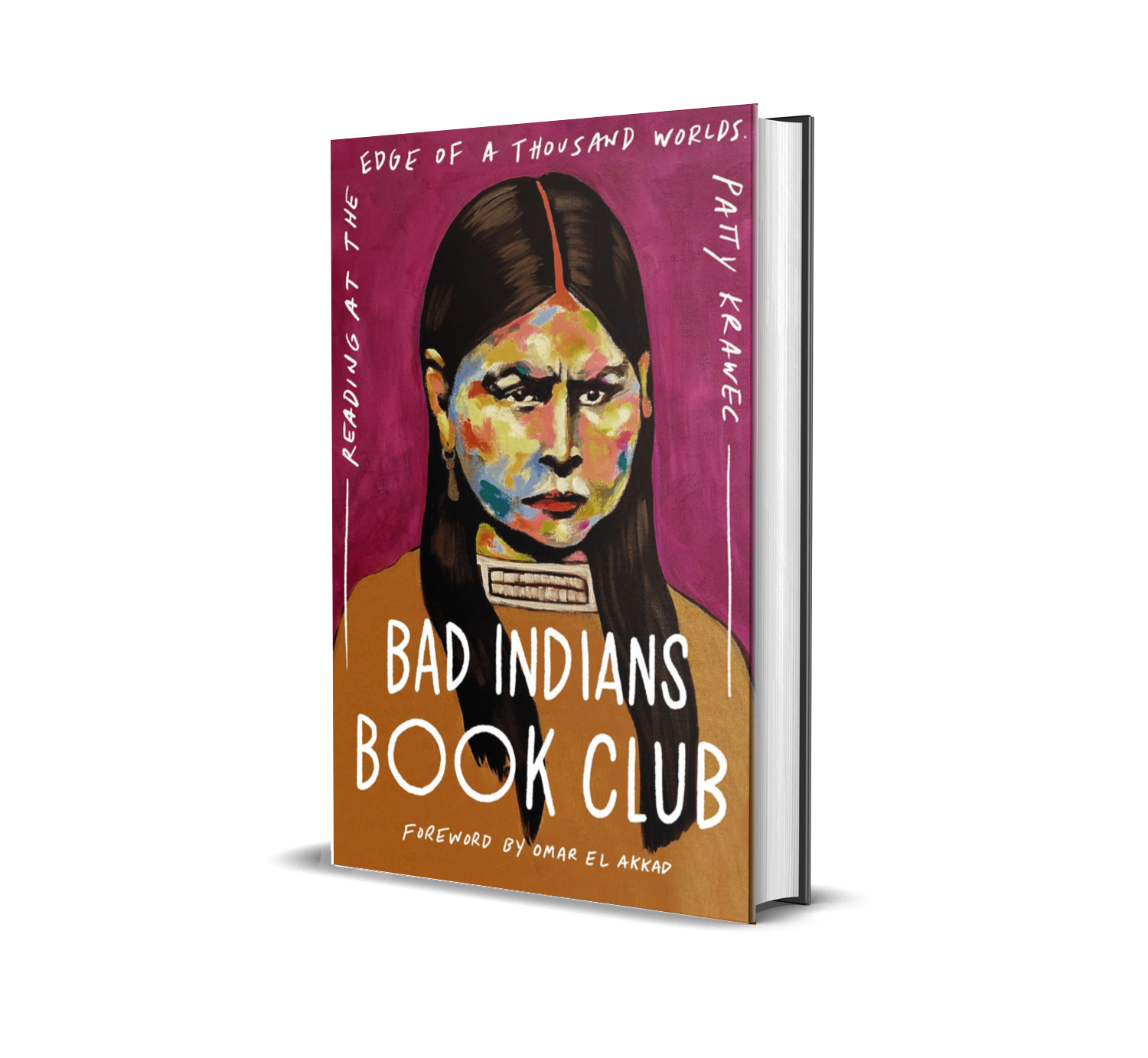
In this powerful reframing of the stories that make us, Anishinaabe writer Patty Krawec leads us into the borderlands of history, science, memoir, and fiction to ask: What worlds do books written by marginalized people describe and invite us to inhabit?
When a friend asked what books could help them understand Indigenous lives, Patty Krawec, author of Becoming Kin, gave them a list. This list became a book club and then a podcast about a year of Indigenous reading, and then this book. The writers in Bad Indians Book Club refuse to let dominant stories displace their own and resist the way wemitigoozhiwag--European settlers--craft the prevailing narrative and decide who they are.
In Bad Indians Book Club, we examine works about history, science, and gender as well as fiction, all written from the perspective of "Bad Indians"--marginalized writers whose refusal to comply with dominant narratives opens up new worlds. Interlacing chapters with short stories about Deer Woman, who is on her own journey to decide who she is, Krawec leads us into a place of wisdom and medicine where the stories of marginalized writers help us imagine other ways of seeing the world. As Krawec did for her friend, she recommends a list of books to fill in the gaps on our own bookshelves and in our understanding.
Becoming Kin, which novelist Omar El Akkad called a "searing spear of light," led readers to talk back to the histories they had received. Now, in Bad Indians Book Club comes a potent challenge to all the stories settler colonialism tells--stories that erase and appropriate, deny and deflect. Following Deer Woman, who is shaped by the profuse artistry of Krawec, we enter the multiple worlds Indigenous and other subaltern stories create. Together we venture to the edges of worlds waiting to be born.
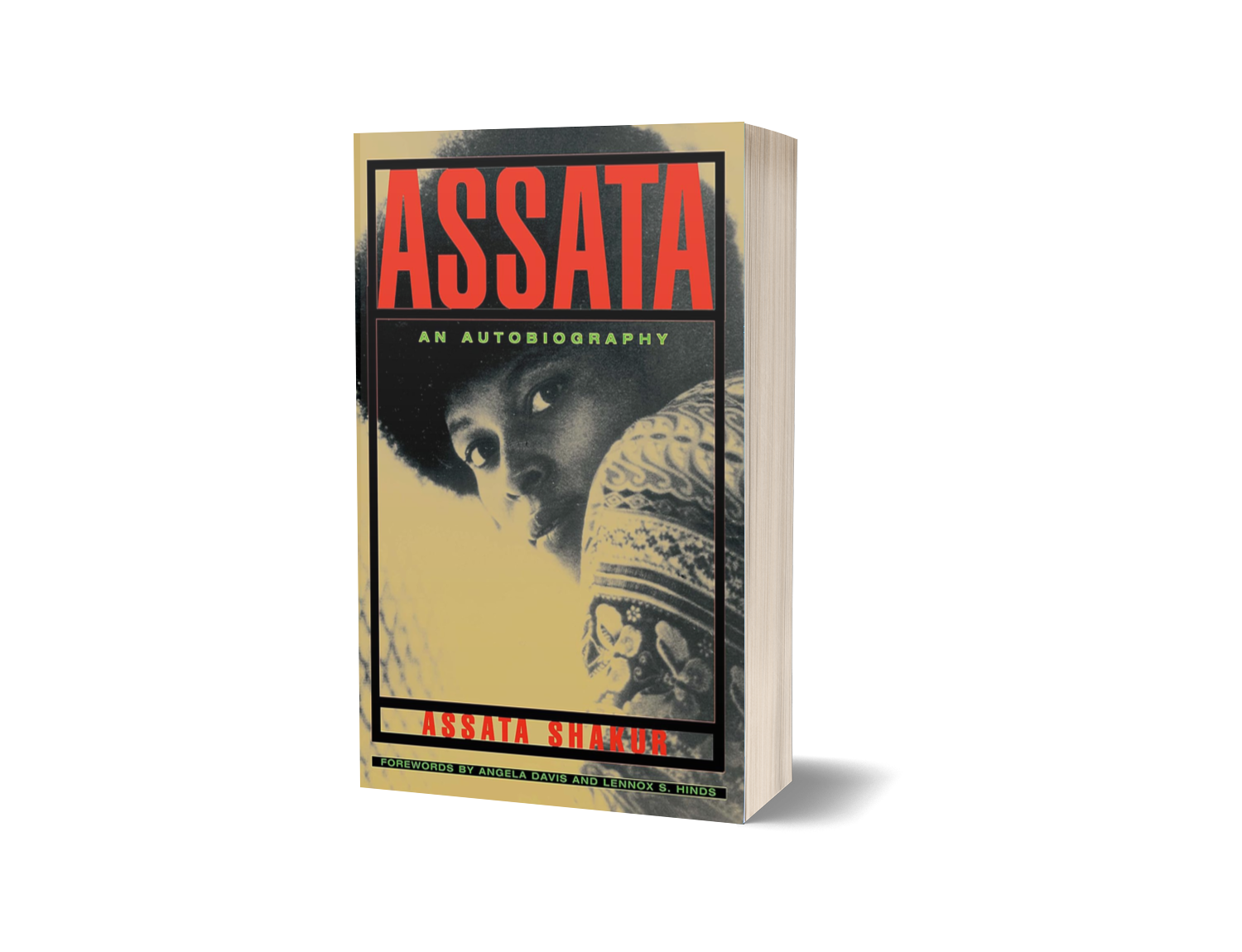
On May 2, 1973, Black Panther Assata Shakur (aka JoAnne Chesimard) lay in a hospital, close to death, handcuffed to her bed, while local, state, and federal police attempted to question her about the shootout on the New Jersey Turnpike that had claimed the life of a white state trooper. Long a target of J. Edgar Hoover's campaign to defame, infiltrate, and criminalize Black nationalist organizations and their leaders, Shakur was incarcerated for four years prior to her conviction on flimsy evidence in 1977 as an accomplice to murder.
This intensely personal and political autobiography belies the fearsome image of JoAnne Chesimard long projected by the media and the state. With wit and candor, Assata Shakur recounts the experiences that led her to a life of activism and portrays the strengths, weaknesses, and eventual demise of Black and White revolutionary groups at the hand of government officials. The result is a signal contribution to the literature about growing up Black in America that has already taken its place alongside The Autobiography of Malcolm X and the works of Maya Angelou.
Two years after her conviction, Assata Shakur escaped from prison. She was given political asylum by Cuba, where she now resides.

Cazzu es una de las traperas más importantes de Latinoamérica. No es casual que la llamen La Jefa. No es casual que su perreo moleste a muchos, interpele a tantas, y no deje indiferente a nadie.
Durante años, Cazzu se enfrentó a una pregunta: “¿Cómo se siente tener éxito en un género musical tan machista?”. Y como le ocurre a casi cualquier mujer virtuosa y con notoriedad, le pidieron que diera explicaciones. Pero ¿por qué se lo preguntaban más a ella que a los hombres? Y, sobre todo, ¿es realmente machista el reggaetón?
Este libro nació como respuesta y como exploración a esa dualidad que anida en el género: letras que sexualizan a las mujeres, pero también mujeres que expresan su deseo, saben lo que quieren, cómo y cuándo. Las reggaetoneras, dice Cazzu, son lamentablemente una utopía: ejercen su derecho al sexo sin correr peligro y sin preocuparse por la condena social.
En Perreo, una revolución, repasa su recorrido, una trayectoria marcada por la superación de innumerables desafíos y traiciones. Armada de un gran talento y una fuerza de trabajo incansable, desde muy joven construyó una carrera notable y atrevida que la catapultó a los grandes escenarios del mundo, consolidándose como una de las traperas más importantes de Latinoamérica.
La definen la delicadeza y la potencia, la ternura y la rebeldía. No es casual que la llamen La Jefa. La voz de Cazzu es única, sí, pero es el grito contenido de muchas que no tienen voz.
«El reggaetón incomoda, despierta la cólera en los más conservadores, porque propone otra mujer, una perra desinhibida que controla su cuerpo, sus decisiones y su sexualidad, y que con su actitud ridiculiza cualquier opinión ofensiva».
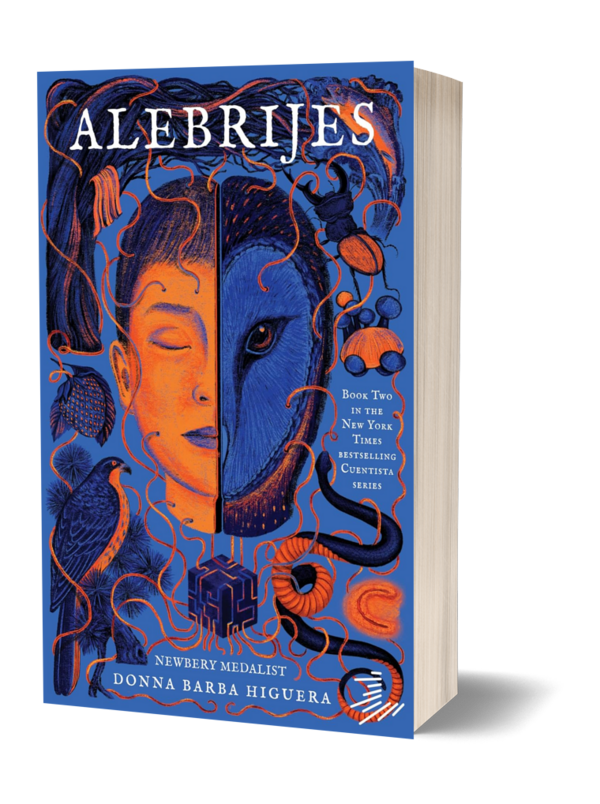
The sequel to the New York Times bestselling The Last Cuentista series from Newbery medalist Donna Barba Higuera!
For 400 years, Earth has been a barren wasteland. The few humans that survive scrape together an existence in the cruel city of Pocatel – or go it alone in the wilderness beyond, filled with wandering spirits and wyrms. They don’t last long.
13 year-old pickpocket Leandro and his sister Gabi do what they can to forge a life in Pocatel. The city does not take kindly to Cascabel like them – the descendants of those who worked the San Joaquin Valley for generations.
When Gabi is caught stealing precious fruit from the Pocatelan elite, Leando takes the fall. But his exile proves more than he ever could have imagined -- far from a simple banishent, his consciousness is placed inside an ancient drone and left to fend on its own. But beyond the walls of Pocatel lie other alebrijes like Leandro who seek for a better world -- as well as mutant monsters, wasteland pirates, a hidden oasis, and the truth.
From Newbery and Pura Belpré medalist Donna Barba Higuera comes the second book in the Cuentista series, featuring her signature blend of dystopian scifi and Mexican folklore in a funhouse mirror of our own civilization.
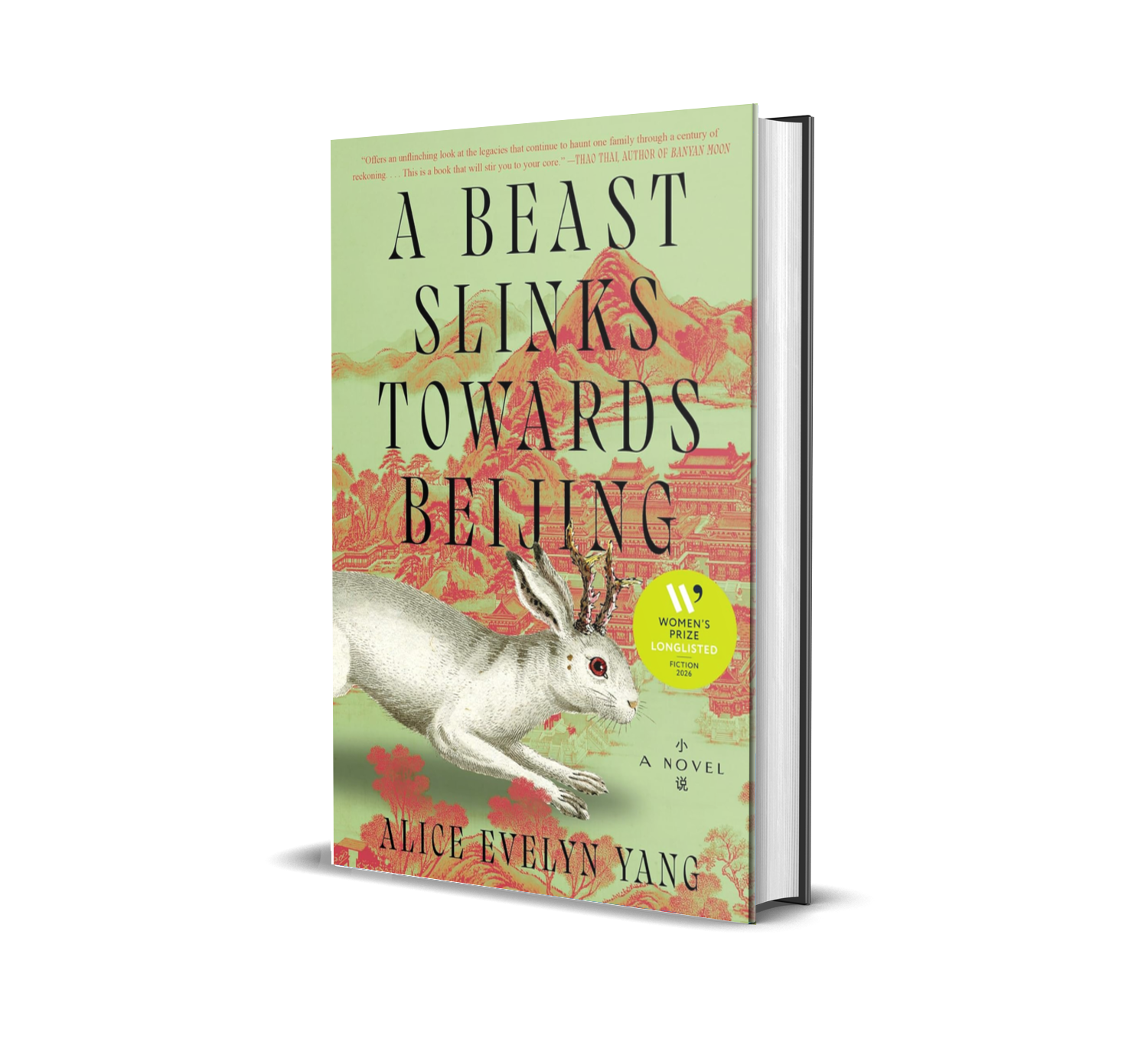
LONGLISTED FOR THE 2026 WOMEN'S PRIZE FOR FICTION
A dark, magical realist debut family saga that moves through the Japanese occupation of Manchuria, the Cultural Revolution, and the present day to explore the effects of intergenerational trauma, the legacy of colonialism, and the inescapability of fate.
Qianze has not seen her father in eleven years, since he walked out of her life the night of her fourteenth birthday and disappeared without a trace. But then she gets a call—there is a man on the porch of her childhood home, and he’s asking for her. This man isn’t the Ba Qianze remembers: he is much older, more fragile, and worst of all, haunted by a half-forgotten prophecy.
While Qianze wrestles with what she owes this near-stranger, Ba begins telling stories of his past. From his bloody days as a Red Guard during the Cultural Revolution to his mother’s youth under Japanese occupation, he circles around the prophecy he came to deliver. Qianze has always longed to know more about her family history, but as Ba reveals a past far darker than she could have imagined, she finds herself plagued by strange visions—fox spirits trail her on her evening commute, a terrifying jackalope stalks her nightmares, and the looming prophecy slinks ever closer.
Spanning decades and continents, A Beast Slinks Towards Beijing employs a combination of stunningly rendered folklore and atmospheric prose to examine the legacy of colonialism through the eyes of three generations. Alice Evelyn Yang’s debut novel is a story of family and forgiveness, of folklore and fate, that will leave you unsettled and undone.
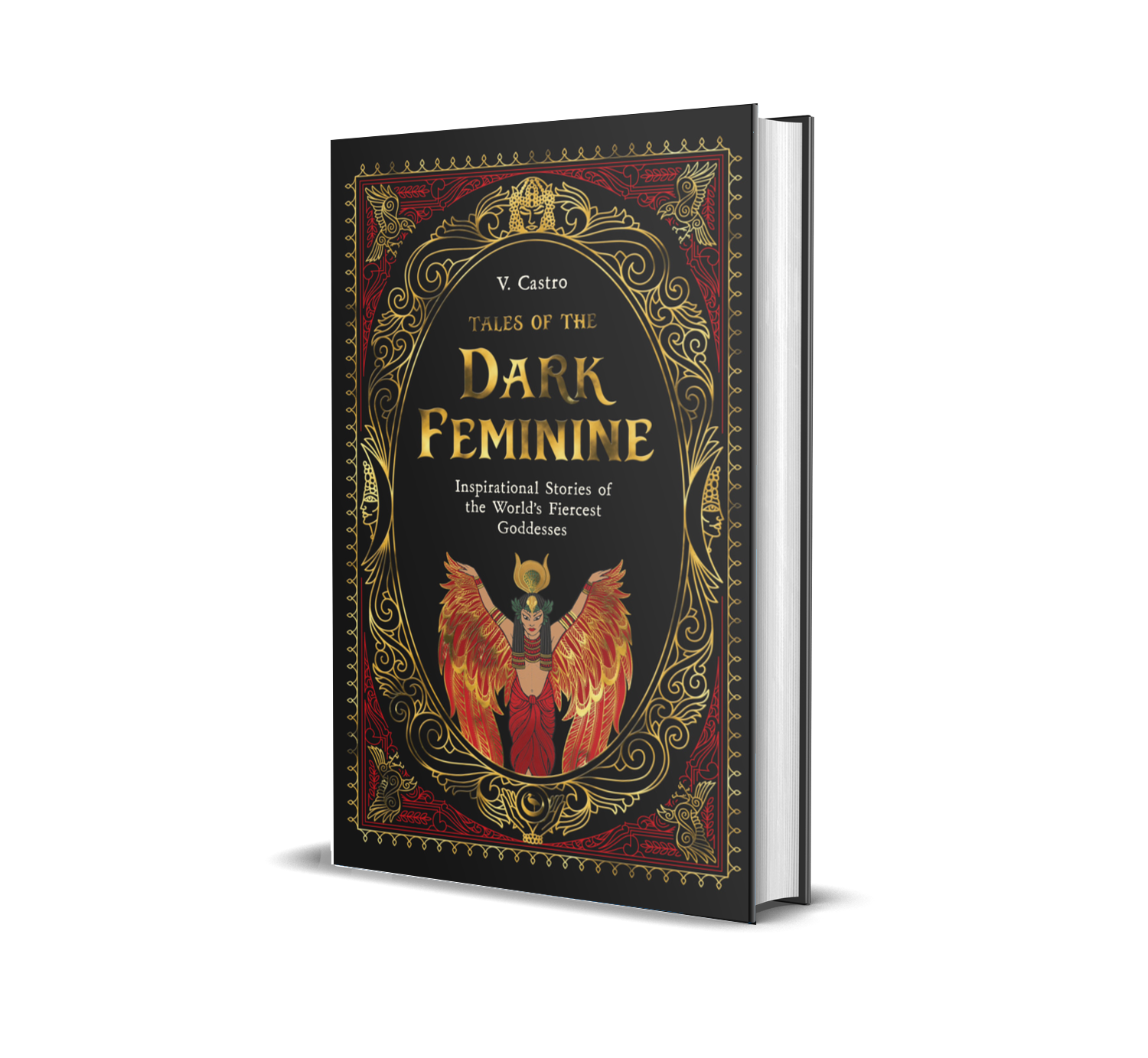
Dive into a dark, empowering world where folktales, horror and feminist magic collide. This collection features 26 modern retellings of legends and folktales about fierce female deities and spirits from around the world. Perfect for women who own their power.
Dark goddess energy is powerful and transformative, embodying the sensual, the hunter, the warrior, the mother, and even the grotesque and horrific. These 26 tales of powerful female goddesses and spirits will entrance those daring enough to explore the shadows of the human psyche, offering lessons from our ancient origins and help us understand ourselves in today's world. Embrace your own inner darkness alongside these fierce deities and spirits, such as:
The fierce Indian goddess Kali, who teaches not to fear endings but instead use our creativity to remove obstacles and carve out our own path.
The mighty Yoruba orisha Yemaya, who birthed the waters of the whole planet, and teaches of the need to nurture and love oneself.
The ravenous Egyptian goddess Sekhmet, who is the very definition of "I am woman, hear me roar!"
The occult Greek goddess Hecate, beloved of modern witches, who offers a stunning portrayal of femininity manifesting in magic.
And many more!
The retold legends are accompanied by information about the goddess's history, symbols and core energy. This stunning volume is perfect for those who love fantasy and horror and all who wish to learn about the powerful female archetypes in cultures around the world.

From the acclaimed author of The Wilds comes an electric story collection that blends folklore, fairy tales, Southern Gothic, and horror, reveling in the collision of the familiar with the wildly surreal.
In a plague-stricken medieval convent, a nun works on a forbidden mystic manuscript. In rural South Carolina, an alligator named Dragon becomes a beloved pet for a precocious, tough-talking twelve-year-old. During a long, muggy July, an adolescent girl finds unexpected power as her family obsesses over the horror film The Exorcist. On the outskirts of a Southern college town, a young woman resists the tyranny of a shape-shifting older professor as she develops her own sorceress skills. And at a feminist art colony in the North Carolina mountains, a group of mothers contends with the supernatural talents their children have picked up from a pair of mysterious orphans who live in the woods.
With exuberance, ferocity, and astounding imagination, Julia Elliott’s Hellions jumps from the occult to the comic, from the horrific to the wondrous, in eleven stories of earthbound characters who long for the otherworldly.

The residents of a desolate town nestled in the Ecuadorian Andes are forced to reckon with the legend of Mildred, a girl wronged by the town years ago
Cocuán, a desolate town nestled between the hot jungle and the frigid Andes, is about to slip away from memory. This is where Mildred was born, and where everything she had—her animals, her home, her lands—was taken from her after her mother’s death. Years later, a series of strange events, disappearances, and outbursts of collective delirium will force its residents to reckon with the legend of old Mildred. Once again, they will feel the shadow of death that has hung over the town ever since she was wronged. The voices of nine characters—Mildred, Ezequiel, Agustina, Manzi, Carmen, Víctor, Baltasar, Hermosina, and Filatelio—tell us of the past and present of that doomed place and Mildred's fate. Natalia García Freire’s vivid language blurs the lines between dreams and reality and transports the reader to the hypnotic Andean universe of Ecuador.

The River Has Roots is the hugely anticipated solo debut of the New York Times bestselling and Hugo Award winning author Amal El-Mohtar. Follow the river Liss to the small town of Thistleford, on the edge of Faerie, and meet two sisters who cannot be separated, even in death.
The hardcover edition features beautiful interior illustrations and a foil case stamp.
“Oh what is stronger than a death? Two sisters singing with one breath.”
In the small town of Thistleford, on the edge of Faerie, dwells the mysterious Hawthorn family.
There, they tend and harvest the enchanted willows and honour an ancient compact to sing to them in thanks for their magic. None more devotedly than the family’s latest daughters, Esther and Ysabel, who cherish each other as much as they cherish the ancient trees.
But when Esther rejects a forceful suitor in favor of a lover from the land of Faerie, not only the sisters’ bond but also their lives will be at risk…

From the Epic Inspiration of the Major Motion Picture―Now Streaming
What happened to young Elphaba before her witchy powers took hold in Wicked? Almost 30 years after the publication of the original novel, for the first time Gregory Maguire reveals the story of prickly young Elphie, the future Wicked Witch of the West—setting the stage for the blockbuster international phenomenon that is Wicked: The Musical.
Elphaba, the Wicked Witch of the West, will grow to have a feisty and somewhat uncompromising character in adult life. But she is always a one-off, from her infancy; Elphie is the riveting coming-of-age story of a very peculiar and relatable young girl.
Young Elphie is shaped and molded by the behaviors of her promiscuous mother, Melena, and her pious father, Frex. She suffers ordinary childhood jealousies when her sister, saintly Nessarose, and brother, junior felon Shell, arrive. She first encounters the mistreatment of the Animal populations of Oz, which live adjacent to but not intertwined with human settlements, haunted by a Monkey and receiving aid from Dwarf Bears. She thrashes through her first bruising attempts at friendship, a possible lifeline from her tricky family life. And she gleans the benefits of an education, haphazard though it must be—until she arrives at the doors of Shiz University, about to meet the radiant creature that is Galinda.
Elphie is destined to be a witch; she bears the markings from childhood—most evidently in her green skin but more obscurely and profoundly in her cunning and perhaps amoral behaviors, as she seeks to make do, to slip by, to sneak out, to endure, and to aspire.
A deep exploration of the regenerative and magical secrets of sacred masculinity hidden in familiar myths both ancient and modern
• Reveals the restorative fungi archetype of Osiris, the Orphic mysteries as an underground mycelium linking forests and people, how Dionysus teaches us about invasive species and playful sexuality, and the ecology of Jesus as depicted in his nature-focused parables
• Liberates Tristan, Merlin, and the Grail legends from the bounds of Campbell’s hero’s journey and invites the masculine into more nuanced, complex ways of dealing with trauma, growth, and self-knowledge
Long before the sword-wielding heroes of legend readily cut down forests, slaughtered the old deities, and vanquished their enemies, there were playful gods, animal-headed kings, mischievous lovers, trickster harpists, and vegetal magicians with flowering wands. As eco-feminist scholar Sophie Strand discovered, these wilder, more magical modes of the masculine have always been hidden in plain sight.
Sharing the culmination of eight years of research into myth, folklore, and the history of religion, Strand leads us back into the forgotten landscapes and hidden secrets of familiar myths, revealing the beautiful range of the divine masculine, including expressions of male friendship, male intimacy, and male creative collaboration. In discussing Dionysus and Osiris, Strand encourages us to think like an ecosystem instead of like an individual. She connects dying, vegetal gods to the virtuous cycle of composting and decay, highlighting the ways in which mushrooms can restore soil and heal polluted landscapes. Exploring esoteric Christianity, the author celebrates the Gnostic Jesus of the Gospel of Thomas, imagining the ecology that the Rabbi Yeshua would have actually been referencing in his nature-focused parables. Strand frees Tristan, Merlin, and the Grail legends from the bounds of Campbell’s hero’s journey and invites the masculine into more nuanced, complex ways of dealing with trauma, growth, and self-knowledge.
Strand reseeds our minds with new visions of male identity and shows how each of us, regardless of gender, can develop a matured ecological empathy and witness a blossoming of sacred masculine powers that are soft, curious, connective, and celebratory.

One hot summer night, best friends Lourdes, Fernanda, Ana, Perla, and Pauline hold a séance. It's all fun and games at first, but their tipsy laughter turns to terror when the flames burn straight through their prayer candles and Fernanda starts crawling toward her friends and chanting in Nahuatl, the language of their Aztec ancestors.
Over the next few weeks, shy, modest Fernanda starts acting strangely-smearing herself in black makeup, shredding her hands on rose thorns, sucking sin out of the mouths of the guilty. The local priest is convinced it's a demon, but Lourdes begins to suspect it's something else-something far more ancient and powerful.
As Father Moreno's obsession with Fernanda grows, Lourdes enlists the help of her "Bruja Craft Crew" and a professor, Dr. Camacho, to understand what is happening to her friend in this unholy tale of possession-gone-right.

A FOLK TALE. A HORROR STORY. A LOVE STORY. AN ENCHANTMENT.
“This is the book I've been waiting for. Dark, twisted, and utterly enthralling, The Lamb is a novel I will never forget.”—Molly Aitken, author of Bright I Burn
From an incendiary new talent, a contemporary queer folktale about a mother and daughter living in the woods, for fans of Angela Carter, Margaret Atwood, and Julia Armfield.
Margot and Mama have lived by the forest ever since Margot can remember.
When Margot is not at school, they spend quiet days together in their cottage, waiting for strangers to knock on their door. Strays, Mama calls them. People who have strayed too far from the road. Mama loves the strays. She feeds them wine, keeps them warm. Then she satisfies her burning appetite by picking apart their bodies.
But Mama’s want is stronger than her hunger sometimes, and when a beautiful, white-toothed stray named Eden turns up in the heart of a snowstorm, Margot must confront the shifting dynamics of her family, untangle her own desires, and make her bid for freedom.
With this gothic coming-of-age tale, debut novelist Lucy Rose explores how women swallow their anger, desire, and animal instincts—and wrings the relationship between mother and daughter until blood drips from it.

Significantly expanded and updated—a lively excursion into Japanese folklore and its increasing influence within global popular culture.
Monsters, spirits, fantastic beings, and supernatural creatures haunt the folklore and popular culture of Japan. Broadly labeled yōkai, they appear in many forms, from tengu mountain goblins and kappa water sprites, to shape-shifting kitsune foxes and long-tongued ceiling-lickers. Popular today in anime, manga, film, and video games, many yōkai originated in local legends, folktales, and regional ghost stories. The Book of Yōkai invites readers to examine how people create, transmit, and collect folklore, and how they make sense of the mysteries in the world around them.
Revised and expanded, this second edition features fifty new illustrations, including an all-new yōkai gallery of stunning color images tracing the visual history of yōkai across centuries. In clear and accessible language, Michael Dylan Foster unpacks the cultural and historical contexts of yōkai, interpreting their varied meanings and introducing people who have pursued them through the ages.

After battling the impossible, Zélie and Amari have finally succeeded in bringing magic back to the land of Orïsha. But the ritual was more powerful than they could’ve imagined, reigniting the powers of not only the maji, but of nobles with magic ancestry, too.
Now, Zélie struggles to unite the maji in an Orïsha where the enemy is just as powerful as they are. But when the monarchy and military unite to keep control of Orïsha, Zélie must fight to secure Amari's right to the throne and protect the new maji from the monarchy's wrath.
With civil war looming on the horizon, Zélie finds herself at a breaking point: she must discover a way to bring the kingdom together or watch as Orïsha tears itself apart.
Children of Virtue and Vengeance is the stunning sequel to Tomi Adeyemi's New York Times-bestselling debut Children of Blood and Bone, the first book in the Legacy of Orïsha trilogy.
An Instant #1 New York Times Bestseller
A TIME Top 100 Fantasy Books of All Time
New allies rise.
The Blood Moon nears.
Zélie faces her final enemy.
The king who hunts her heart.
When Zélie seized the royal palace that fateful night, she thought her battles had come to an end. The monarchy had finally fallen. The maji had risen again. Zélie never expected to find herself locked in a cage and trapped on a foreign ship. Now warriors with iron skulls traffic her and her people across the seas, far from their homeland.
Then everything changes when Zélie meets King Baldyr, her true captor, the ruler of the Skulls, and the man who has ravaged entire civilizations to find her. Baldyr’s quest to harness Zélie’s strength sends Zélie, Amari, and Tzain searching for allies in unknown lands.
But as Baldyr closes in, catastrophe charges Orïsha’s shores. It will take everything Zélie has to face her final enemy and save her people before the Skulls annihilate them for good.

Había una vez . . .
There lived a girl named Petra Peña, who wanted nothing more than to be a storyteller, like her abuelita.
But Petra’s world is ending. Earth has been destroyed by a comet, and only a few hundred scientists and their children — among them Petra and her family — have been chosen to journey to a new planet. They are the ones who must carry on the human race.
Hundreds of years later, Petra wakes to this new planet — and the discovery that she is the only person who remembers Earth. A sinister Collective has taken over the ship during its journey, bent on erasing the sins of humanity’s past. They have systematically purged the memories of all aboard — or purged them altogether.
Petra alone now carries the stories of our past, and with them, any hope for our future. Can she make them live again?
Pura Belpré Honor-winning author Donna Barba Higuera presents us with a brilliant journey through the stars, to the very heart of what makes us human.

NEW YORK TIMES BESTSELLER
From the New York Times bestselling duo who brought you GLORY: Magical Visions of Black Beauty comes CROWNED: Magical Folk and Fairy Tales from the Diaspora. Filled with visual magic and storytelling wonder, these stories reimagine our favorite and most beloved childhood fairy tales and folktales to encourage creativity, empower imagination, and foster self-esteem.
With a Foreword by Pulitzer Prize winner Salamishah Tillet
Revisit beloved classics, but with a twist, such as The Little Mermaid, Sleeping Beauty, Hansel and Gretel, Red Riding Hood, The Poisoned Apple, and find new favorites with stories created especially for the collection: Anansi and the Three Trials, Aku the Sun Maker, How the Zebra Got Its Stripes, The Legend of Princess Yennenga, and John Henry, the Steel-Drivin' Man.
A gift that will keep giving, CROWNED is a joyous celebration of Black beauty, determination, and imagination and a must-have for children and parents everywhere.
Winner of the NAACP Image Award for Outstanding Literary Work (Fiction)
These nearly 150 African American folktales animate our past and reclaim a lost cultural legacy to redefine American literature.
Drawing from the great folklorists of the past while expanding African American lore with dozens of tales rarely seen before, The Annotated African American Folktales revolutionizes the canon like no other volume. Following in the tradition of such classics as Arthur Huff Fauset’s “Negro Folk Tales from the South” (1927), Zora Neale Hurston’s Mules and Men (1935), and Virginia Hamilton’s The People Could Fly (1985), acclaimed scholars Henry Louis Gates Jr. and Maria Tatar assemble a groundbreaking collection of folktales, myths, and legends that revitalizes a vibrant African American past to produce the most comprehensive and ambitious collection of African American folktales ever published in American literary history. Arguing for the value of these deceptively simple stories as part of a sophisticated, complex, and heterogeneous cultural heritage, Gates and Tatar show how these remarkable stories deserve a place alongside the classic works of African American literature, and American literature more broadly.
Opening with two introductory essays and twenty seminal African tales as historical background, Gates and Tatar present nearly 150 African American stories, among them familiar Brer Rabbit classics, but also stories like “The Talking Skull” and “Witches Who Ride,” as well as out-of-print tales from the 1890s’ Southern Workman. Beginning with the figure of Anansi, the African trickster, master of improvisation—a spider who plots and weaves in scandalous ways—The Annotated African American Folktales then goes on to draw Caribbean and Creole tales into the orbit of the folkloric canon. It retrieves stories not seen since the Harlem Renaissance and brings back archival tales of “Negro folklore” that Booker T. Washington proclaimed had emanated from a “grapevine” that existed even before the American Revolution, stories brought over by slaves who had survived the Middle Passage. Furthermore, Gates and Tatar’s volume not only defines a new canon but reveals how these folktales were hijacked and misappropriated in previous incarnations, egregiously by Joel Chandler Harris, a Southern newspaperman, as well as by Walt Disney, who cannibalized and capitalized on Harris’s volumes by creating cartoon characters drawn from this African American lore.
Presenting these tales with illuminating annotations and hundreds of revelatory illustrations, The Annotated African American Folktales reminds us that stories not only move, entertain, and instruct but, more fundamentally, inspire and keep hope alive.
The Annotated African American Folktales includes:
Introductory essays, nearly 150 African American stories, and 20 seminal African tales as historical background
The familiar Brer Rabbit classics, as well as news-making vernacular tales from the 1890s’ Southern Workman
An entire section of Caribbean and Latin American folktales that finally become incorporated into the canon
Approximately 200 full-color, museum-quality images

The stories collected in The Dawn of the World were related by the Miwok elders "after the first rains of the winter season, usually in the ceremonial roundhouse and always at night by the dim light of a flickering fire. They constitute the religious history of the tribe, and from time immemorial have been handed down by word of mouth," writes C. Hart Merriam. Included are creation myths and accounts of the First People, beings who antedated humans, as well as tales about animals, death and ghosts, witches and giants, and natural phenomena.

Within every woman there lives a powerful force, filled with good instincts, passionate creativity, and ageless knowing. She is the Wild Woman, who represents the instinctual nature of women. But she is an endangered species. For though the gifts of wildish nature belong to us at birth, society’s attempt to “civilize” us into rigid roles has muffled the deep, life-giving messages of our own souls.
In Women Who Run with the Wolves, Dr. Clarissa Pinkola Estés unfolds rich intercultural myths, fairy tales, folk tales, and stories, many from her own traditions, in order to help women reconnect with the fierce, healthy, visionary attributes of this instinctual nature. Through the stories and commentaries in this remarkable book, we retrieve, examine, love, and understand the Wild Woman, and hold her against our deep psyches as one who is both magic and medicine.
Dr. Estés has created a new lexicon for describing the female psyche. Fertile and life-giving, it is a psychology of women in the truest sense, a knowing of the soul.

Due to high demand, shipping delays are occurring. Place your order now to save your place in line.
Beware the housebound kitty-cat. Japanese lore tells us that if you keep a cat as a pet too long, its tail will split, it will begin walking on its hind legs, and that beloved kitty may just hunt you down. Japanese mythology teems with tales of supernatural cats, which have, in turn, inspired generations of artists.
In this second edition of Kaibyō: The Supernatural Cats of Japan, folklore expert Zack Davisson illuminates the vast realm of kaibyō, or supernatural cats, with historical and modern cultural contexts. Lushly illustrated in full color with dozens of ukiyo-e and drawings, including new artwork by iconic artist Takashi Murakami. A must-have book for the Japanophile and cat-lover alike!

In the beginning, there is no he. There is no she.
Two cells make up one cell. This is the mathematics behind creation. One plus one makes one. Life begets life. We are the period to a sentence, the effect to a cause, always belonging to someone. We are never our own.
This is why we are so lonely.
She of the Mountains, the first novel by Lamdba Literary Award finalist (God Loves Hair) is a beautifully rendered illustrated book that weaves a passionate, contemporary love story with a re-imagining of Hindu mythology. Both narratives explore the complex ways that we are formed and transformed by love, and show how the process of learning to love and be loved by another can ultimately—and sometimes painfully—bring us back to ourselves.
Rhea and her twin brother, Lexos, have spent an eternity using cunning and magic to help rule their small, unstable country. Rhea controls the seasons to show favor to their most loyal stewards with bountiful harvests and short winters, while Lexos keeps the tides strong and impassable to maintain the country’s borders.
Reigning over them both is their father, who holds dominion over death, using his most powerful weapon—fear—to keep people, and his children, in line.
For a hundred years, Rhea and Lexos have been each other’s ally, defending themselves and their younger siblings against their father’s increasingly unpredictable anger while also trying to keep up the appearance of unity and prosperity within their borders.
Now, with an independence movement gaining ground, other nations jockeying for power, and their father’s iron grip weakening, the twins must take matters into their own hands to sleep the world from crashing down around them. But as Rhea and Lexos travel beyond the security of their home to try and see their family, they begin to draw very different conclusions about their father’s style of rule. And if the siblings aren’t careful, they’ll end up facing each other on the battlefield.

For the 75th anniversary of her birth, a Deluxe Edition of the master of the literary supernatural’s most celebrated book—featuring a new introduction by Kelly Link
Angela Carter was a storytelling sorceress, the literary godmother of Neil Gaiman, David Mitchell, Audrey Niffenegger, J. K. Rowling, Kelly Link, and other contemporary masters of supernatural fiction. In her masterpiece, The Bloody Chamber—which includes the story that is the basis of Neil Jordan’s 1984 movie The Company of Wolves—she spins subversively dark and sensual versions of familiar fairy tales and legends like “Little Red Riding Hood,” “Bluebeard,” “Puss in Boots,” and “Beauty and the Beast,” giving them exhilarating new life in a style steeped in the romantic trappings of the gothic tradition.
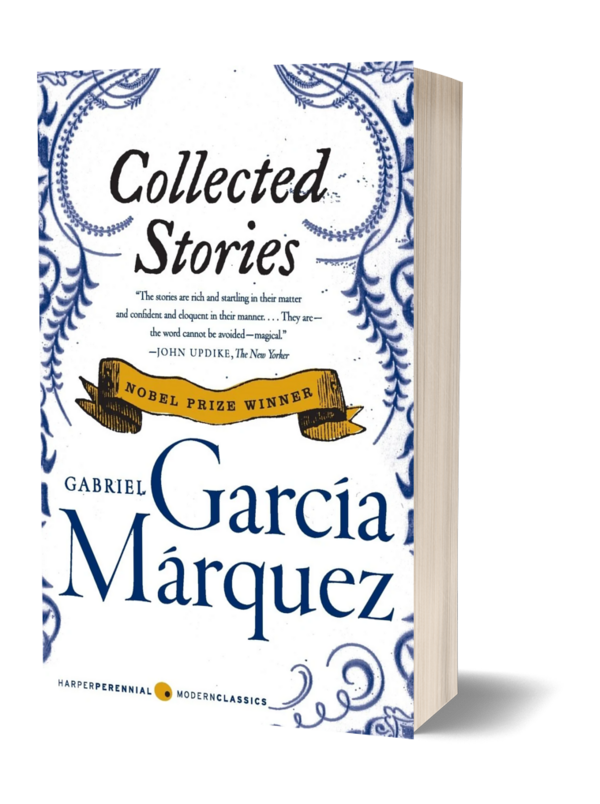
"García Márquez has extraordinary strength and firmness of imagination and writes with the calmness of a man who knows exactly what wonders he can perform." —Alfred Kazin, New York Times Book Review
Collected here are twenty-six of Gabriel Garcia Marquez's most brilliant and enchanting short stories, presented in the chronological order of their publication in Spanish from three volumes: Eyes of a Blue Dog, Big Mama's Funeral, and The Incredible and Sad Tale of lnnocent Eréndira and Her Heartless Grandmother. Combining mysticism, history, and humor, the stories in this collection span more than two decades, illuminating the development of Marquez's prose and exhibiting the themes of family, poverty, and death that resound throughout his fiction.
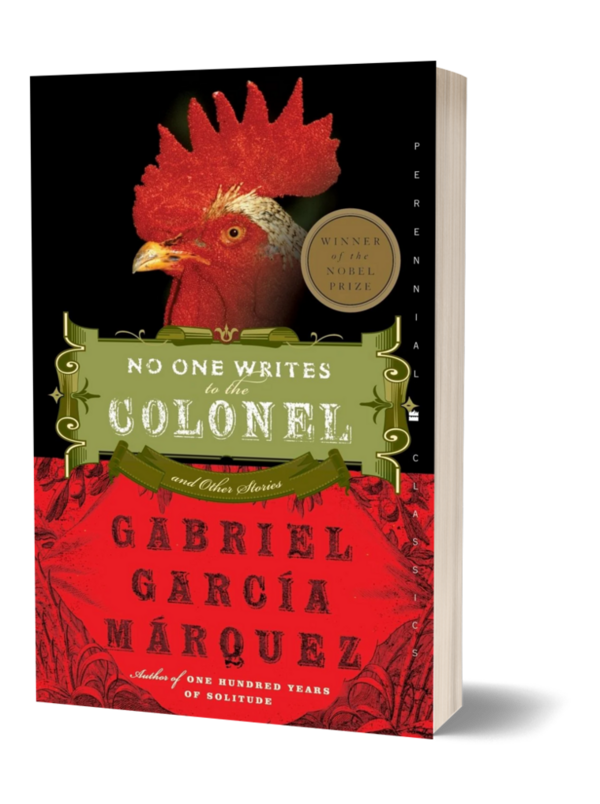
Written with compassionate realism and wit, the stories in this mesmerizing collection depict the disparities of town and village life in South America, of the frightfully poor and outrageously rich, of memories and illusions, and of lost opportunities and present joys.
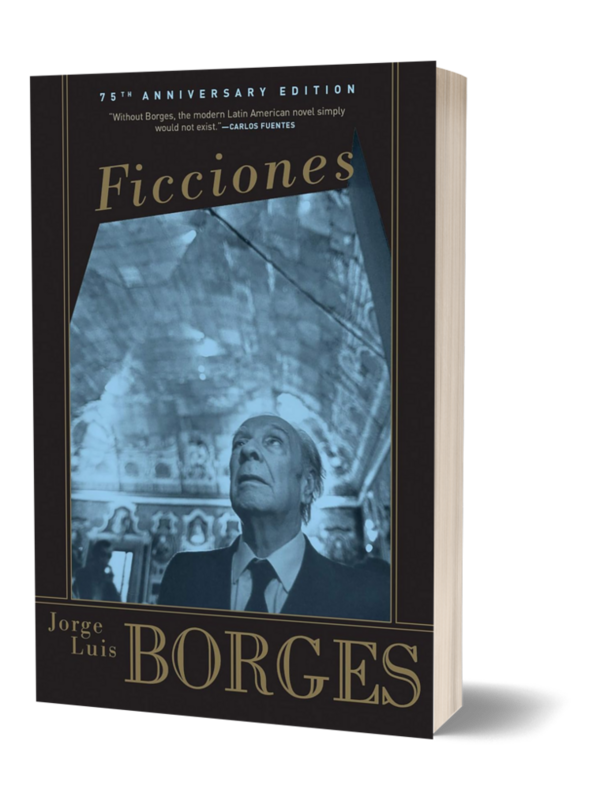
“These brief Ficciones have to be read one at a time, and slowly; then they throb with uncanny and haunting power.” —The Atlantic Monthly
The seventeen pieces in Ficciones demonstrate the gargantuan powers of imagination, intelligence, and style of one of the greatest writers of this or any other century.
Borges sends us on a journey into a compelling, bizarre, and profoundly resonant realm; we enter the fearful sphere of Pascal’s abyss, the surreal and literal labyrinth of books, and the iconography of eternal return. More playful and approachable than the fictions themselves are Borges’s Prologues, brief elucidations that offer the uninitiated a passageway into the whirlwind of Borges’s genius and mirror the precision and potency of his intellect and inventiveness, his piercing irony, his skepticism, and his obsession with fantasy. To enter the worlds in Ficciones is to enter the mind of Jorge Luis Borges, wherein lies Heaven, Hell, and everything in between.
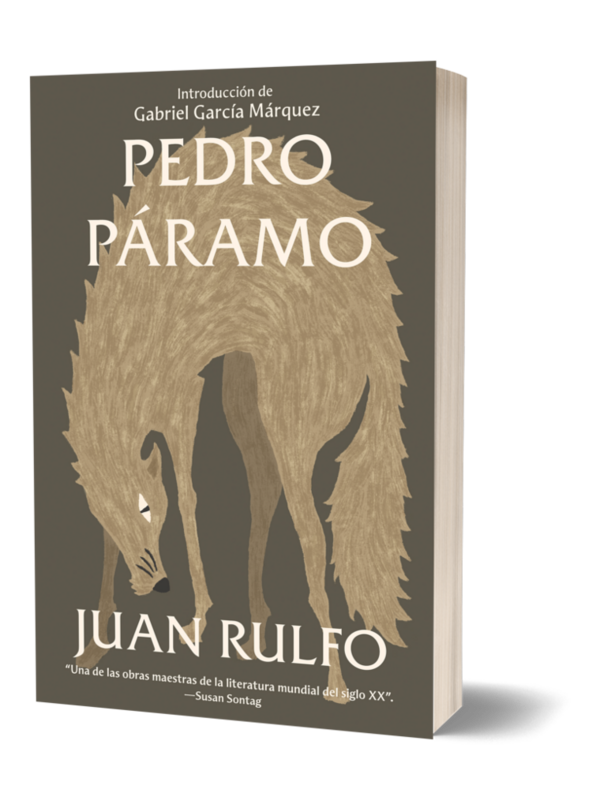
Ahora una pelicula en Netflix
Con introducción de Gabriel García Márquez
“Vine a Comala porque me dijeron que acá vivía mi padre, un tal Pedro Páramo. Mi madre me lo dijo. Y yo le prometí que vendría a verlo en cuanto ella muriera”.
Obra maestra del universo literario en español, esta portentosa novela mexicana narra la historia de Pedro Páramo, un caudillo local de quien dependen la vida y la muerte de un pueblo, Comala, y del hijo que va a buscarlo porque así se lo prometió a su madre moribunda. El narrador, JuanPreciado, llega a un pueblo deshabitado pero lleno de susurros, y a través de estos conoce la destrucción que trajo la convulsa pasión de Pedro Páramo hacia Susana San Juan. Publicada en 1955 y aclamada por el público y la crítica, Pedro Páramo representa un cambio radical con la novela realista de la época. Edición con introducción de Gabriel García Márquez.
“No vayas a pedirle nada. Exígele lo nuestro. Lo que estuvo obligado a darme y nunca me dio… El olvido en que nos tuvo, mi hijo, cóbraselo caro”.
A lyrical and suspenseful debut novel about a mysteriously gifted Korean family confronting the brutality of the Japanese empire, Honey in the Wound is an epic tale of survival and the reclamation of power.
A sister disappears and returns as a tiger. A mother’s voice compels the truth from any tongue. A granddaughter divines secrets in others’ dreams. These women are all of one lineage—a Korean family split across decades and borders by Japanese imperialism.
At this saga’s heart is Young-Ja, a girl who infuses food with her emotions. She revels in her gift for cooking, nourishing the people she loves with her cheerfulness. But her sunny childhood comes to an end in 1931 when Japanese soldiers crush her family’s defiance against the Empire. Young-Ja is cast adrift, her food turning increasingly bitter with grief. When a Korean rebel fighter notices her talents, however, she is whisked off to Manchuria to join a secretive sisterhood of beautiful teahouse spies. There, Young-Ja finds a new sense of belonging and starts using her abilities for the resistance. But the Imperial Army is not yet finished with her…
Decades later, Young-Ja lives alone in Seoul, withdrawn from the world until her Tokyo-born granddaughter Rinako bursts into her life with the ability to see into dreams. In cultivating a tentative bond, they confront the long-buried past in a stunning emotional climax.
As an unforgettable family perseveres in the long shadow of colonialism, Honey in the Wound transports readers to mountain forests where tiger-girls stalk, to Manchurian teahouses and opium dens where charming smiles veil secrets, and to the modern metropolises of Tokyo and Seoul where restless ghosts stir. This debut novel is a tender yet powerful multi-generational drama that shines light onto the twentieth century’s darkest corners and gives voice to those who bore witness.
House of Mist stands as one of the first South American novels written in the style that was later called magical realism. Of this story of a young bride struggling with her marriage to an aloof landowner―and the mysteries surrounding their life together―in a house deep in the lush Chilean woods, Penelope Mesic wrote in the Chicago Tribune that Bombal showed "bold disregard for simple realism in favor of a heightened reality in which the external world reflects the internal truth of the characters' feeling . . . mingling . . . fantasy, memory and event."
"One of the most outstanding representations of the avant-garde in Latin America." -Women Writers of Spanish America
NAMED A "FALL 2020 MUST-READ" AND ONE OF THE "BEST BOOKS OF FALL 2020" BY TIME, VULTURE, THE BOSTON GLOBE, COSMOPOLITAN, WIRED, TOR AND MORE
Electrifying and provocative, visceral and profound, a powerful literary debut novel about a young woman whose compulsion to eat earth gives her visions of murdered and missing people—an imaginative synthesis of mystery and magical realism that explores the dark tragedies of ordinary lives.
Set in an unnamed slum in contemporary Argentina, Eartheater is the story of a young woman who finds herself drawn to eating the earth—a compulsion that gives her visions of broken and lost lives. With her first taste of dirt, she learns the horrifying truth of her mother’s death. Disturbed by what she witnesses, the woman keeps her visions to herself. But when Eartheater begins an unlikely relationship with a withdrawn police officer, word of her ability begins to spread, and soon desperate members of her community beg for her help, anxious to uncover the truth about their own loved ones.
Surreal and haunting, spare yet complex, Eartheater is a dark, emotionally resonant tale told from a feminist perspective that brilliantly explores the stories of those left behind—the women enduring the pain of uncertainty, whose lives have been shaped by violence and loss.
Short stories from the “cursed mother of magical realism” (El Mundo), now in English for the first time
A woman flits between two realities centuries apart, as scenes from the violent conquest of Mexico bleed their way into her comfortable contemporary life. Two little girls visit the home of a sorcerer who tortures women named after the days of the week. Girls become dogs, a laborer hides human bones in bricks he’ll use to build a new development, and an old woman appears at an acquaintance’s door one night with a knife and a bone-chilling confession.
With The Week of Colors, Elena Garro laid the groundwork for the literary movements that would shape the landscape of Latin American fiction and beyond. Here you’ll find the early roots of magical realism, feminist horror, and anticolonial speculative fiction. In The Week of Colors, Garro highlights the violence in our history, our homes, and our hearts, in vivid color.
LONGLISTED FOR THE 2026 WOMEN'S PRIZE FOR FICTION
A dark, magical realist debut family saga that moves through the Japanese occupation of Manchuria, the Cultural Revolution, and the present day to explore the effects of intergenerational trauma, the legacy of colonialism, and the inescapability of fate.
Qianze has not seen her father in eleven years, since he walked out of her life the night of her fourteenth birthday and disappeared without a trace. But then she gets a call—there is a man on the porch of her childhood home, and he’s asking for her. This man isn’t the Ba Qianze remembers: he is much older, more fragile, and worst of all, haunted by a half-forgotten prophecy.
While Qianze wrestles with what she owes this near-stranger, Ba begins telling stories of his past. From his bloody days as a Red Guard during the Cultural Revolution to his mother’s youth under Japanese occupation, he circles around the prophecy he came to deliver. Qianze has always longed to know more about her family history, but as Ba reveals a past far darker than she could have imagined, she finds herself plagued by strange visions—fox spirits trail her on her evening commute, a terrifying jackalope stalks her nightmares, and the looming prophecy slinks ever closer.
Spanning decades and continents, A Beast Slinks Towards Beijing employs a combination of stunningly rendered folklore and atmospheric prose to examine the legacy of colonialism through the eyes of three generations. Alice Evelyn Yang’s debut novel is a story of family and forgiveness, of folklore and fate, that will leave you unsettled and undone.
Longlisted for the PEN/Faulkner Award
Finalist for the Ferro-Grumley Award for LGBTQ Fiction
Finalist for the California Book Award
Longlisted for the Carnegie Medal for Excellence, the Aspen Words Literary Prize, and the New American Voices Award
An electrifying debut speculative fiction story collection about Central American identity that spans past, present, and future worlds to reveal what happens when your life is no longer your own.
An ordinary man wakes one morning to discover he’s a famous reggaetón star. An aging abuela slowly morphs into a marionette puppet. A struggling academic discovers the horrifying cost of becoming a Self-Made Man.
In There Is a Rio Grande in Heaven, Ruben Reyes Jr. conjures strange, dreamlike, and surreal worlds to explore what we would do if we woke up one morning and our lives were unrecognizable. Boundaries between the past, present, and future are blurred. Menacing technology and unchecked bureaucracy cut through everyday life with uncanny dread. The characters, from mango farmers to popstars to ex-guerilla fighters to cyborgs, are forced to make uncomfortable choices—choices that not only mean life or death, but might also allow them to be heard in a world set on silencing the voices of Central Americans.
Blazing with heart, humor, and inimitable style, There Is a Rio Grande in Heaven subverts everything we think we know about migration and its consequences, capturing what it means to take up a new life—whether willfully or forced—with piercing and brilliant clarity. A gifted new storyteller and trailblazing stylist, Reyes not only transports to other worlds but alerts us to the heartache and injustice of our own.
A spellbinding and darkly humorous coming-of-age story about an unusual boy, whose family lives on the fringe of society and struggles to survive in a hostile world that shuns and fears them.
He was born an outsider, like the rest of his family. Poor yet resilient, he lives in the shadows with his aunt Libby and uncle Darren, folk who stubbornly make their way in a society that does not understand or want them. They are mongrels, mixed blood, neither this nor that. The boy at the center of Mongrels must decide if he belongs on the road with his aunt and uncle, or if he fits with the people on the other side of the tracks.
For ten years, he and his family have lived a life of late-night exits and narrow escapes--always on the move across the South to stay one step ahead of the law. But the time is drawing near when Darren and Libby will finally know if their nephew is like them or not. And the close calls they've been running from for so long are catching up fast now. Everything is about to change.
A compelling and fascinating journey, Mongrels alternates between past and present to create an unforgettable portrait of a boy trying to understand his family and his place in a complex and unforgiving world. A smart and innovative story-- funny, bloody, raw, and real--told in a rhythmic voice full of heart, Mongrels is a deeply moving, sometimes grisly, novel that illuminates the challenges and tender joys of a life beyond the ordinary in a bold and imaginative new way.
In the mode of Flights, a novel about the rich stories of small places, from the Nobel Prize-winning, New York Times-bestselling author.
When the narrator of House of Day, House of Night arrives with her husband in a village in remote southwest Poland, she knows no one. Before long, though, she discovers that everyone--and everything—there has a story. With the help of her neighbor, the eccentric Marta, she pieces together the fragments of the living and the dead. There’s the drunk Marek Marek, who discovers he shares his body with a bird, and Franz Frost, whose nightmares come to him from a newly discovered planet. There’s the man whose death – with one leg on the Polish side, one on the Czech - was an international incident. And there are the German soldiers, not long departed, who still haunt the region. Shard by shard, from the founding of the town to the lives of its saints, these stories capture not only a history but a cosmology.
Another brilliant “constellation novel” in the mode of her Booker-winning Flights, House of Day, House of Night interweaves narrative, musings, history, and mythology, reminding us that the story of any place, no matter how humble, is fascinating and boundless, and awaits any of us with the imagination to seek it.
The residents of a desolate town nestled in the Ecuadorian Andes are forced to reckon with the legend of Mildred, a girl wronged by the town years ago
Cocuán, a desolate town nestled between the hot jungle and the frigid Andes, is about to slip away from memory. This is where Mildred was born, and where everything she had—her animals, her home, her lands—was taken from her after her mother’s death. Years later, a series of strange events, disappearances, and outbursts of collective delirium will force its residents to reckon with the legend of old Mildred. Once again, they will feel the shadow of death that has hung over the town ever since she was wronged. The voices of nine characters—Mildred, Ezequiel, Agustina, Manzi, Carmen, Víctor, Baltasar, Hermosina, and Filatelio—tell us of the past and present of that doomed place and Mildred's fate. Natalia García Freire’s vivid language blurs the lines between dreams and reality and transports the reader to the hypnotic Andean universe of Ecuador.

It surprises no one that the charming but wayward Vadinho dos Guimaraes–a gambler notorious for never winning—dies during Carnival. His long suffering widow Dona Flor devotes herself to her cooking school and her friends, who urge her to remarry. She is soon drawn to a kind pharmacist who is everything Vadinho was not, and is altogether happy to marry him. But after her wedding she finds herself dreaming about her first husband’s amorous attentions; and one evening Vadinho himself appears by her bed, as lusty as ever, to claim his marital rights.
Originally published by Alfred A. Knopf in 1969.

Full of “sensual dreams [and] unexplained phenomena,” this “best-known and most-respected” coming-of-age classic from the godfather of Chicano literature follows a young boy growing up in the llano, or plains, of post-World War II New Mexico, and the generous curandera who introduces him to the sacred side of life (New York Times).
A PBS Great American Read
Winner of the Premio Quinto Sol Award
Recipient of the National Humanities Medal
“I pulled this baby into the light of life . . . Only I will know his destiny.”
Antonio Marez is six years old when the woman who helped usher him into the world comes to stay with his family in New Mexico. Venerated by some as a miracle-worker—and disparaged by others as a bruja—Ultima, a curandera, or healer, opens Tony’s eyes to the spiritual roots of his culture, and introduces him to a magical, if sometimes frightening, new world: a realm in which she operates as a shaman.
Suddenly, the ordinary challenges and triumphs of childhood become extraordinary. As Ultima shows Tony how to cure ailments, reverse curses, and restore peace to those who have lost it, he embarks on a singular quest, one in which he probes the family ties that bind and rend him, questions the Catholicism that shaped him, and explores the Spanish, Mexican, and Native American influences that informed not only his heritage, but his very sense of self. And at each life turn there is Ultima, who was there the day he was born . . . and will nurture the birth of his soul.
A rich and wondrous story that reveals universal truths about the human condition and celebrates the beauty of Chicano culture.
Includes a Reading Group Guide.

At the end of the world, a woman must hide her secret power and find her kidnapped daughter in this “intricate and extraordinary” Hugo Award winning novel of power, oppression, and revolution. (The New York Times)
This is the way the world ends. . .for the last time.
It starts with the great red rift across the heart of the world’s sole continent, spewing ash that blots out the sun. It starts with death, with a murdered son and a missing daughter. It starts with betrayal, and long dormant wounds rising up to fester.
This is the Stillness, a land long familiar with catastrophe, where the power of the earth is wielded as a weapon. And where there is no mercy.
Read the first book in the critically acclaimed, three-time Hugo award-winning trilogy by NYT bestselling author N. K. Jemisin.

A Best Book of 2023 from: Washington Post, Good Housekeeping, Real Simple, Harper's Bazaar, Elle, Time, NPR
A GOOD MORNING AMERICA BOOK CLUB PICK!
Winner of the NAACP Image Award, Outstanding Literary Work, Fiction
Shortlisted for The Center for Fiction First Novel Prize
From National Book Award-winning author Elizabeth Acevedo comes the story of one Dominican American family told through the voices of its women
Flor has a gift: she can predict, to the day, when someone will die. So when she decides she wants a living wake—a party to bring her family and community together to celebrate the long life she’s led—her sisters are surprised. Has Flor foreseen her own death, or someone else’s? Does she have other motives? She refuses to tell her sisters, Matilde, Pastora, and Camila.
But Flor isn’t the only person with secrets: her sisters are hiding things, too. And the next generation, cousins Ona and Yadi, face tumult of their own.
Spanning the three days prior to the wake, Family Lore traces the lives of each of the Marte women, weaving together past and present, Santo Domingo and New York City. Told with Elizabeth Acevedo’s inimitable and incandescent voice, this is an indelible portrait of sisters and cousins, aunts and nieces—one family’s journey through their history, helping them better navigate all that is to come.

Read Review Here
A blazingly smart and voracious debut about an artist-turned-stay-at-home mother who becomes convinced that she's turning into a dog.
One day, the mother was a mother, but then one night, she was quite suddenly something else...
An ambitious mother puts her art career on hold to stay at home with her newborn son, but the experience does not match her imagination. Two years later, she steps into the bathroom for a break from her toddler's demands, only to discover a dense patch of hair on the back of her neck. In the mirror, her canines suddenly look sharper than she remembers. Her husband, who travels for work five days a week, casually dismisses her fears.
As the mother's symptoms intensify, and her temptation to give in to her new dog impulses peaks, she struggles to keep her alter-canine identity secret. She discovers the mysterious academic tome which becomes her bible, A Field Guide to Magical Women: A Mythical Ethnography, and meets a group of mommies involved in a multilevel-marketing scheme who may also be more than what they seem.
An outrageously original novel of ideas about art, power, and womanhood wrapped in a satirical fairy tale, Nightbitch will make you want to howl with laughter and recognition. And you should. You should howl as much as you want.

An original film coming to Netflix in Fall 2024, directed by Rodrigo Prieto, cinematographer of Killers of the Flower Moon
A New York Times Book Review Editors’ Choice
A New York Times Book Review Paperback Row Selection
The highly influential masterpiece of Latin American literature, now published in a new, authoritative translation, and featuring a foreword by Gabriel García Márquez
A masterpiece of the surreal that influenced a generation of writers in Latin America,Pedro Páramois the otherworldly tale of one man’s quest for his lost father. That man swears to his dying mother that he will find the father he has never met—Pedro Páramo—but when he reaches the town of Comala, he finds it haunted by memories and hallucinations. There emerges the tragic tale of Páramo himself, and the town whose every corner holds the taint of his rotten soul. Although initially published to a quiet reception,Pedro Páramowas soon recognized as a major novel that has served as a touchstone text for writers including Mario Vargas Llosa and José Donoso. Now published in a new translation from the definitive Spanish edition by celebrated Rulfo scholar Douglas J. Weatherford, and featuring a foreword by Gabriel García Márquez, this new edition of the novel cements its place as one of the seminal literary texts of the twentieth century.

One of the Best Books of the 21st Century by The New York Times
WINNER of the NATIONAL BOOK AWARD
A NEW YORK TIMES TOP 10 BEST BOOK OF THE YEAR
A finalist for the Kirkus Prize, Andrew Carnegie Medal, Aspen Words Literary Prize, and a New York Times bestseller, this majestic, stirring, and widely praised novel from two-time National Book Award winner Jesmyn Ward, the story of a family on a journey through rural Mississippi, is a “tour de force” (O, The Oprah Magazine) and a timeless work of fiction that is destined to become a classic.
Jojo is thirteen years old and trying to understand what it means to be a man. He doesn’t lack in fathers to study, chief among them his Black grandfather, Pop. But there are other men who complicate his understanding: his absent White father, Michael, who is being released from prison; his absent White grandfather, Big Joseph, who won’t acknowledge his existence; and the memories of his dead uncle, Given, who died as a teenager.
His mother, Leonie, is an inconsistent presence in his and his toddler sister’s lives. She is an imperfect mother in constant conflict with herself and those around her. She is Black and her children’s father is White. She wants to be a better mother but can’t put her children above her own needs, especially her drug use. Simultaneously tormented and comforted by visions of her dead brother, which only come to her when she’s high, Leonie is embattled in ways that reflect the brutal reality of her circumstances.
When the children’s father is released from prison, Leonie packs her kids and a friend into her car and drives north to the heart of Mississippi and Parchman Farm, the State Penitentiary. At Parchman, there is another thirteen-year-old boy, the ghost of a dead inmate who carries all of the ugly history of the South with him in his wandering. He too has something to teach Jojo about fathers and sons, about legacies, about violence, about love.
The House of the Spirits, which introduced Isabel Allende as one of the world’s most gifted storytellers, brings to life the triumphs and tragedies of three generations of the Trueba family. The patriarch Esteban is a volatile, proud man whose voracious pursuit of political power is tempered only by his love for his delicate wife Clara, a woman with a mystical connection to the spirit world. When their daughter Blanca embarks on a forbidden love affair in defiance of her implacable father, the result is an unexpected gift to Esteban: his adored granddaughter Alba, a beautiful and strong-willed child who will lead her family and her country into a revolutionary future.
One of the most important novels of the twentieth century, The House of the Spirits is an enthralling epic that spans decades and lives, weaving the personal and the political into a universal story of love, magic, and fate.

Chosen as a Most Anticipated Book of 2024 by Oprah’s Book Club, Elle, Reader's Digest, The Rumpus, Kirkus Reviews, The Millions, Lit Hub, and more
From a writer of singular voice and vision, a mesmerizing epic that reimagines the past to explore the true nature of freedom
In this ingenious, sweeping novel, Phillip B. Williams introduces us to an enigmatic woman named Saint, a fearsome conjuror who, in the 1830s, annihilates plantations all over Arkansas to rescue the people enslaved there. She brings those she has freed to a haven of her own creation: a town just north of St. Louis, magically concealed from outsiders, named Ours.
It is in this miraculous place that Saint’s grand experiment—a truly secluded community where her people may flourish—takes root. But although Saint does her best to protect the inhabitants of Ours, over time, her conjuring and memories begin to betray her, leaving the town vulnerable to intrusions by newcomers with powers of their own. As the cracks in Saint’s creation are exposed, some begin to wonder whether the community’s safety might be yet another form of bondage.
Set over the course of four decades and steeped in a rich tradition of American literature informed by Black surrealism, mythology, and spirituality, Ours is a stunning exploration of the possibilities and limitations of love and freedom by a writer of capacious vision and talent.

Grieving mother Magos cuts out a piece of her deceased eleven-year-old son Santiago’s lung. Acting on fierce maternal instinct and the dubious logic of an old folktale, she nurtures the lung until it gains sentience, growing into the carnivorous little Monstrilio she keeps hidden within the walls of her family’s decaying Mexico City estate. Eventually, Monstrilio begins to resemble the Santiago he once was, but his innate impulses—though curbed by his biological and chosen family’s communal care—threaten to destroy this fragile second chance at life.
A thought-provoking meditation on grief, acceptance, and the monstrous sides of love and loyalty, Gerardo Sámano Córdova blends bold imagination and evocative prose with deep emotional rigor. Told in four acts that span the globe from Brooklyn to Berlin, Monstrilio offers, with uncanny clarity, a cathartic and precise portrait of being human.
A sweeping, multi-generational tale blending fable, farce, and fantasy—a masterpiece of modern fiction perfect for fans of One Hundred Years of Solitude
Whale is the English-language debut of a beloved and bestselling South Korean author, a born storyteller with a cinematic, darkly humorous, and thoroughly original perspective.
A woman sells her daughter to a passing beekeeper for two jars of honey. A baby weighing fifteen pounds is born in the depths of winter but named “Girl of Spring.” A storm brings down the roof of a ramshackle restaurant to reveal a hidden fortune. These are just a few of the events that set Myeong-kwan Cheon’s beautifully crafted, wild world in motion.
Whale, set in a remote village in South Korea, follows the lives of many linked characters, including Geumbok, an extremely ambitious woman who has been chasing an indescribable thrill ever since she first saw a whale crest in the ocean; her mute daughter, Chunhui, who communicates with elephants; and a one-eyed woman who controls honeybees with a whistle. Brimming with surprises and wicked humor, Whale is an adventure satire of epic proportions by one of the most original voices in international literature.
INTERNATIONAL BESTSELLER
Over 80 million copies sold worldwide
A special 25th anniversary edition of the extraordinary international bestseller, including a new Foreword by Paulo Coelho.
Combining magic, mysticism, wisdom, and wonder into an inspiring tale of self-discovery, The Alchemist has become a modern classic, selling millions of copies worldwide and transforming countless readers' lives across generations.
Paulo Coelho's masterpiece tells the mystical story of Santiago, an Andalusian shepherd boy who yearns to travel in search of a worldly treasure. His quest will lead him to riches far different—and far more satisfying—than he ever imagined. Santiago's journey teaches us the essential wisdom of listening to our hearts, recognizing opportunity and learning to read the omens strewn along life's path, and, most importantly, following our dreams.
INSTANT NEW YORK TIMES BESTSELLER
I am a Weyward, and wild inside.
2019: Under cover of darkness, Kate flees London for ramshackle Weyward Cottage, inherited from a great aunt she barely remembers. With its tumbling ivy and overgrown garden, the cottage is worlds away from the abusive partner who tormented Kate. But she begins to suspect that her great aunt had a secret. One that lurks in the bones of the cottage, hidden ever since the witch-hunts of the 17th century.
1619: Altha is awaiting trial for the murder of a local farmer who was stampeded to death by his herd. As a girl, Altha’s mother taught her their magic, a kind not rooted in spell casting but in a deep knowledge of the natural world. But unusual women have always been deemed dangerous, and as the evidence for witchcraft is set out against Altha, she knows it will take all of her powers to maintain her freedom.
1942: As World War II rages, Violet is trapped in her family's grand, crumbling estate. Straitjacketed by societal convention, she longs for the robust education her brother receives––and for her mother, long deceased, who was rumored to have gone mad before her death. The only traces Violet has of her are a locket bearing the initial W and the word weyward scratched into the baseboard of her bedroom.
Weaving together the stories of three extraordinary women across five centuries, Emilia Hart's Weyward is an enthralling novel of female resilience and the transformative power of the natural world.
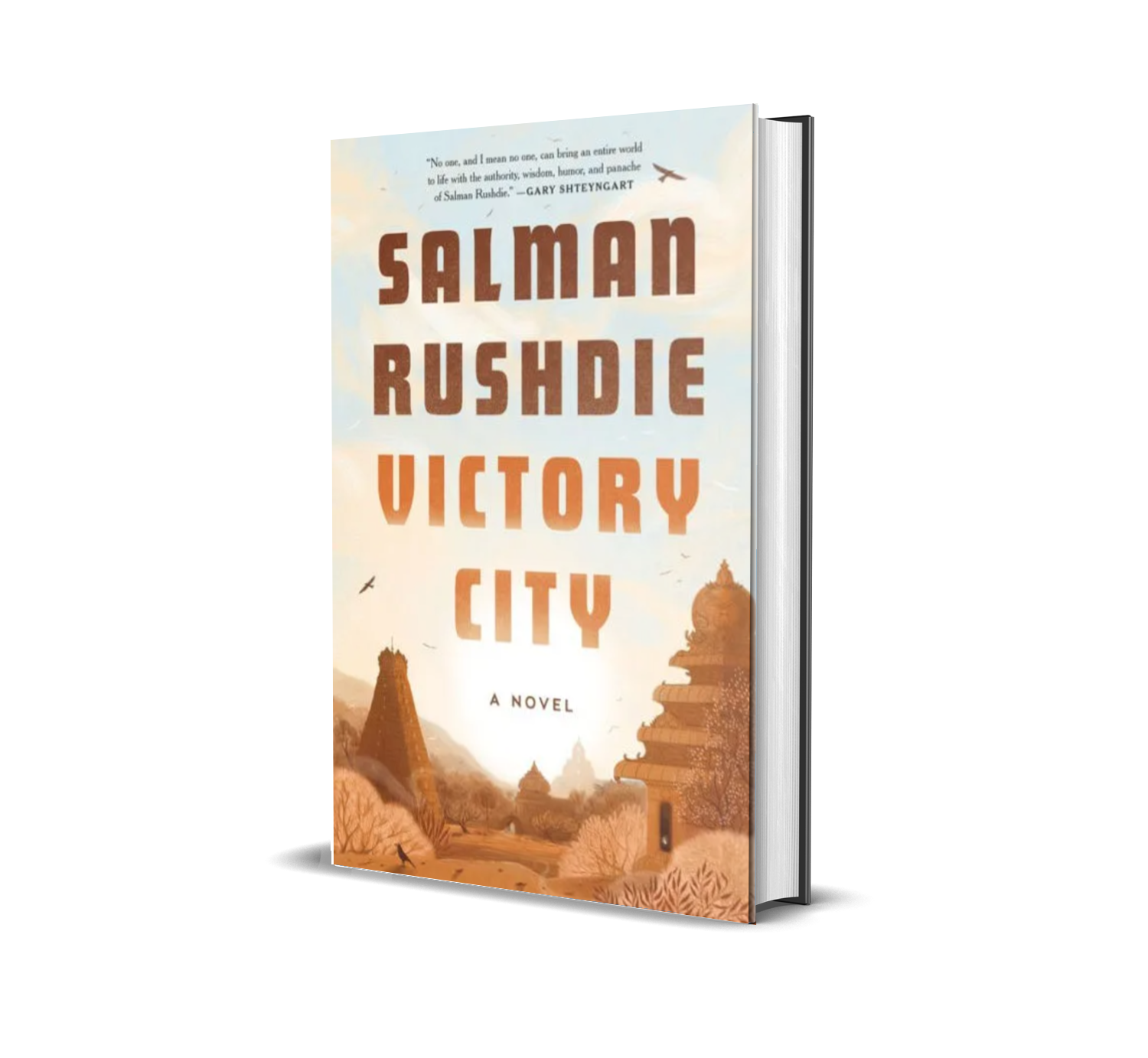
NEW YORK TIMES EDITORS’ CHOICE
ONE OF THE MOST ANTICIPATED BOOKS OF 2023: Time, The Washington Post, The Guardian, USA Today, The Tampa Bay Times, The Week, CNBC, Business Insider, Kirkus Reviews
The epic tale of a woman who breathes a fantastical empire into existence, only to be consumed by it over the centuries—from the transcendent imagination of Booker Prize–winning, internationally bestselling author Salman Rushdie
In the wake of an unimportant battle between two long-forgotten kingdoms in fourteenth-century southern India, a nine-year-old girl has a divine encounter that will change the course of history. After witnessing the death of her mother, the grief-stricken Pampa Kampana becomes a vessel for a goddess, who begins to speak out of the girl’s mouth. Granting her powers beyond Pampa Kampana’s comprehension, the goddess tells her that she will be instrumental in the rise of a great city called Bisnaga—“victory city”—the wonder of the world.
Over the next 250 years, Pampa Kampana’s life becomes deeply interwoven with Bisnaga’s, from its literal sowing from a bag of magic seeds to its tragic ruination in the most human of ways: the hubris of those in power. Whispering Bisnaga and its citizens into existence, Pampa Kampana attempts to make good on the task that the goddess set for her: to give women equal agency in a patriarchal world. But all stories have a way of getting away from their creator, and Bisnaga is no exception. As years pass, rulers come and go, battles are won and lost, and allegiances shift, the very fabric of Bisnaga becomes an ever more complex tapestry—with Pampa Kampana at its center.
Brilliantly styled as a translation of an ancient epic, Victory City is a saga of love, adventure, and myth that is in itself a testament to the power of storytelling.
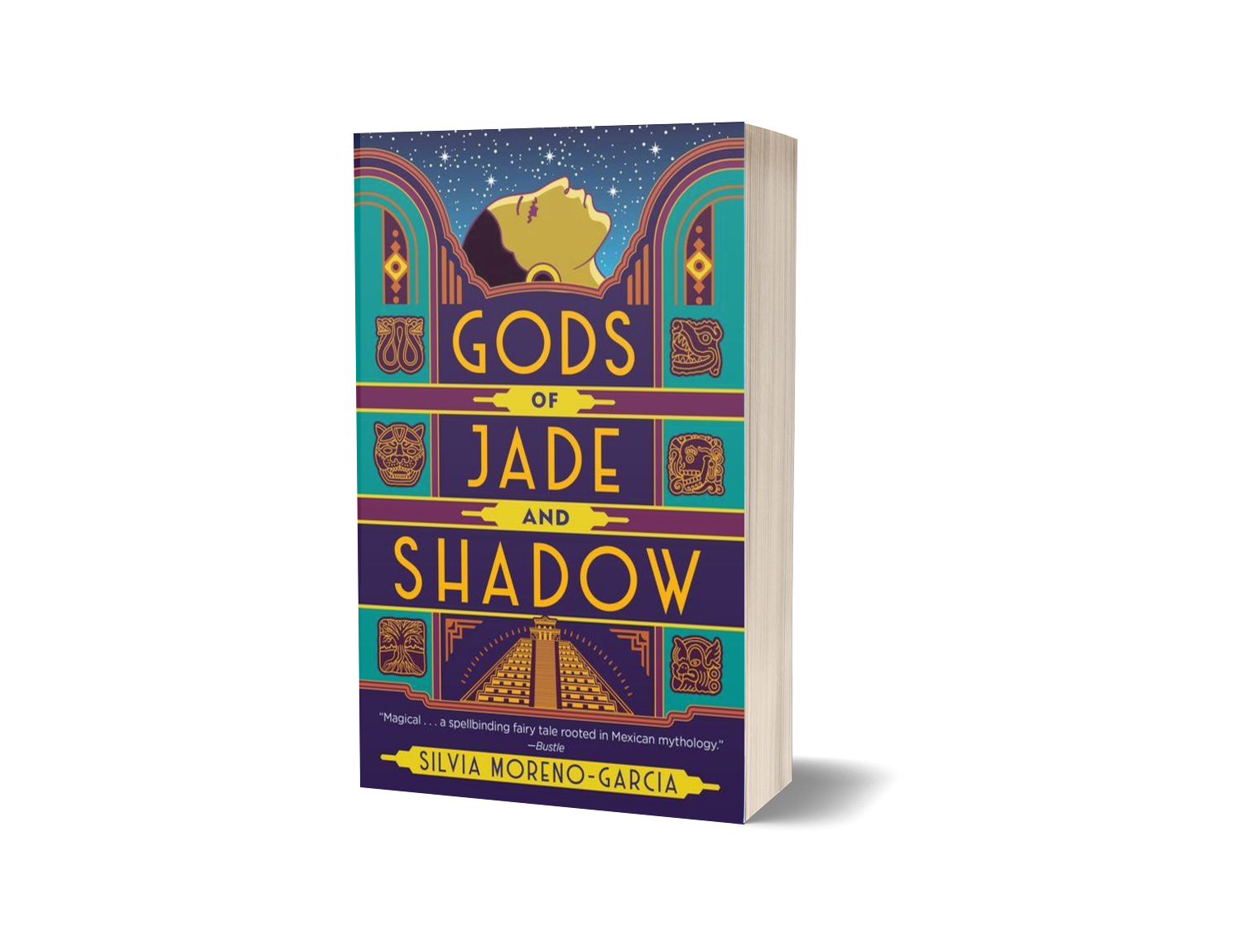
The Jazz Age is in full swing, but Casiopea Tun is too busy cleaning the floors of her wealthy grandfather’s house to listen to any fast tunes. Nevertheless, she dreams of a life far from her dusty, small town in southern Mexico. A life she can call her own.
Yet this new life seems as distant as the stars, until the day she finds a curious wooden box in her grandfather’s room. She opens it–and accidentally frees the spirit of the Mayan God of Death, who requests her help in recovering his throne from his treacherous brother. Failure will mean Casiopea’s demise, but success could make her dreams come true.
In the company of the strangely alluring god and armed with her wits, Casiopea begins an adventure that will take her on a cross-country odyssey, from the jungles of Yucatán to the bright lights of Mexico City–and deep into the darkness of the Mayan underworld.

One of the most influential literary works of our time, One Hundred Years of Solitude remains a dazzling and original achievement by the masterful Gabriel Garcia Marquez, winner of the Nobel Prize in Literature.
One Hundred Years of Solitude tells the story of the rise and fall, birth and death of the mythical town of Macondo through the history of the Buendiá family. Inventive, amusing, magnetic, sad and alive with unforgettable men and women—brimming with truth, compassion, and a lyrical magic that strikes the soul—this novel is a masterpiece in the art of fiction.
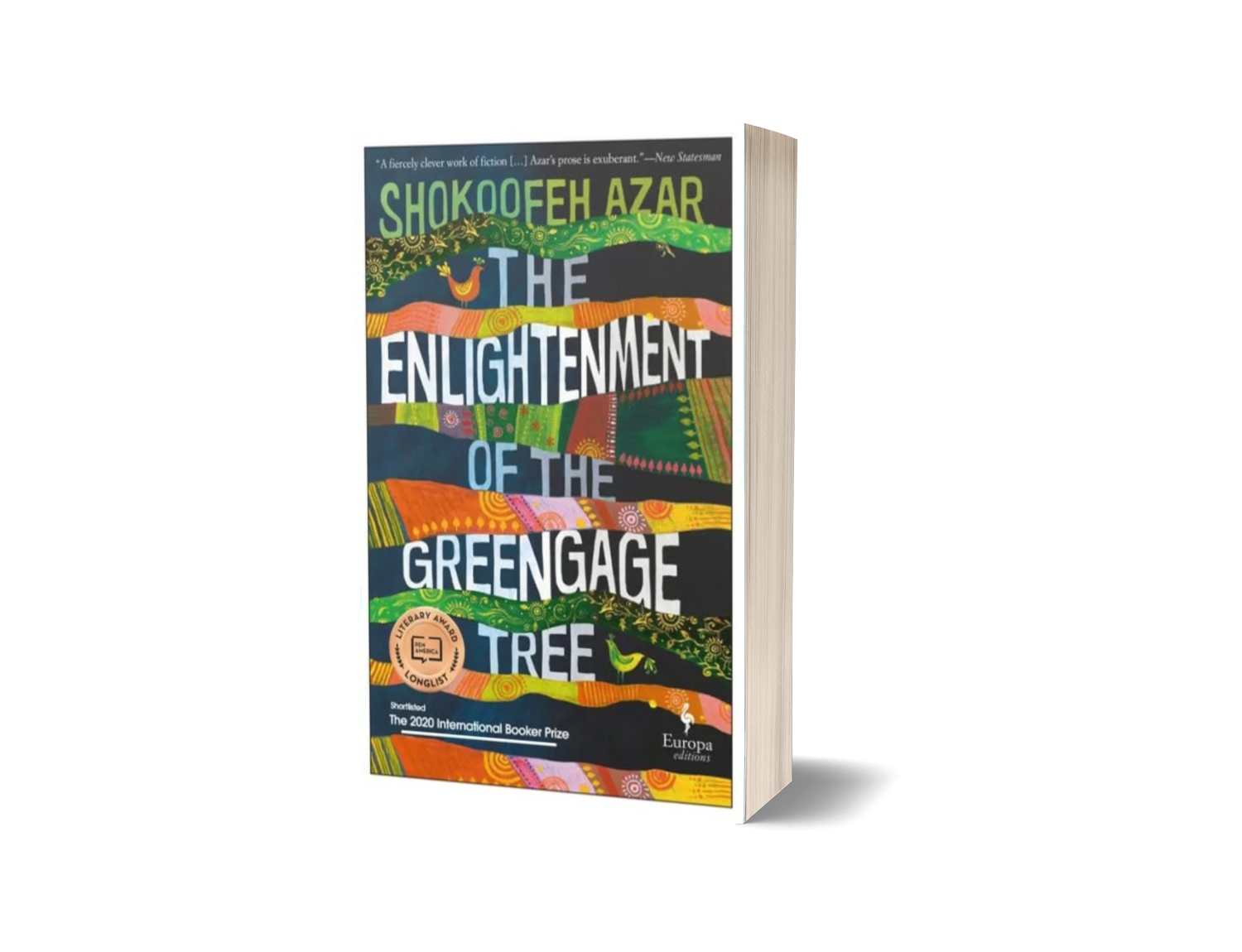
A timely and timeless story by one of Iran's rising literary stars about the unbreakable connection between the living and the dead.
Set in Iran in the decade following the 1979 Islamic Revolution, this moving, richly imagined novel is narrated by the ghost of Bahar, a thirteen-year-old girl whose family is compelled to flee their home in Tehran for a new life in a small village. While hoping to preserve both their intellectual freedom and their lives, they soon find themselves caught up in the post-revolutionary chaos that sweeps across the country.

This acclaimed post-apocalyptic novel of hope and terror from an award-winning author “pairs well with 1984 or The Handmaid’s Tale” and includes a foreword by LeVar Burton and an afterword by N. K. Jemisin (John Green, New York Times).
When global climate change and economic crises lead to social chaos in the early 2020s, California becomes full of dangers, from pervasive water shortage to masses of vagabonds who will do anything to live to see another day. Fifteen-year-old Lauren Olamina lives inside a gated community with her preacher father, family, and neighbors, sheltered from the surrounding anarchy. In a society where any vulnerability is a risk, she suffers from hyperempathy, a debilitating sensitivity to others’ emotions.
Precocious and clear-eyed, Lauren must make her voice heard in order to protect her loved ones from the imminent disasters her small community stubbornly ignores. But what begins as a fight for survival soon leads to something much more: the birth of a new faith . . . and a startling vision of human destiny.

Read the cult-favorite coming-of-age story that takes a sometimes heartbreaking, often hysterical, and always honest look at high school in all its glory. Now a major motion picture starring Logan Lerman and Emma Watson, The Perks of Being a Wallflower is a funny, touching, and haunting modern classic.
The critically acclaimed debut novel from Stephen Chbosky, Perks follows observant “wallflower” Charlie as he charts a course through the strange world between adolescence and adulthood. First dates, family drama, and new friends. Sex, drugs, and The Rocky Horror Picture Show. Devastating loss, young love, and life on the fringes. Caught between trying to live his life and trying to run from it, Charlie must learn to navigate those wild and poignant roller-coaster days known as growing up.
A years-long #1 New York Times bestseller, an American Library Association Best Book for Young Adults and Best Book for Reluctant Readers, and with millions of copies in print, this novel for teen readers (or “wallflowers” of more advanced age) will make you laugh, cry, and perhaps feel nostalgic for those moments when you, too, tiptoed onto the dance floor of life.

Here is a book as joyous and painful, as mysterious and memorable, as childhood itself. I Know Why the Caged Bird Sings captures the longing of lonely children, the brute insult of bigotry, and the wonder of words that can make the world right. Maya Angelou’s debut memoir is a modern American classic beloved worldwide.
Sent by their mother to live with their devout, self-sufficient grandmother in a small Southern town, Maya and her brother, Bailey, endure the ache of abandonment and the prejudice of the local “powhitetrash.” At eight years old and back at her mother’s side in St. Louis, Maya is attacked by a man many times her age—and has to live with the consequences for a lifetime. Years later, in San Francisco, Maya learns that love for herself, the kindness of others, her own strong spirit, and the ideas of great authors (“I met and fell in love with William Shakespeare”) will allow her to be free instead of imprisoned.
Poetic and powerful, I Know Why the Caged Bird Sings will touch hearts and change minds for as long as people read.
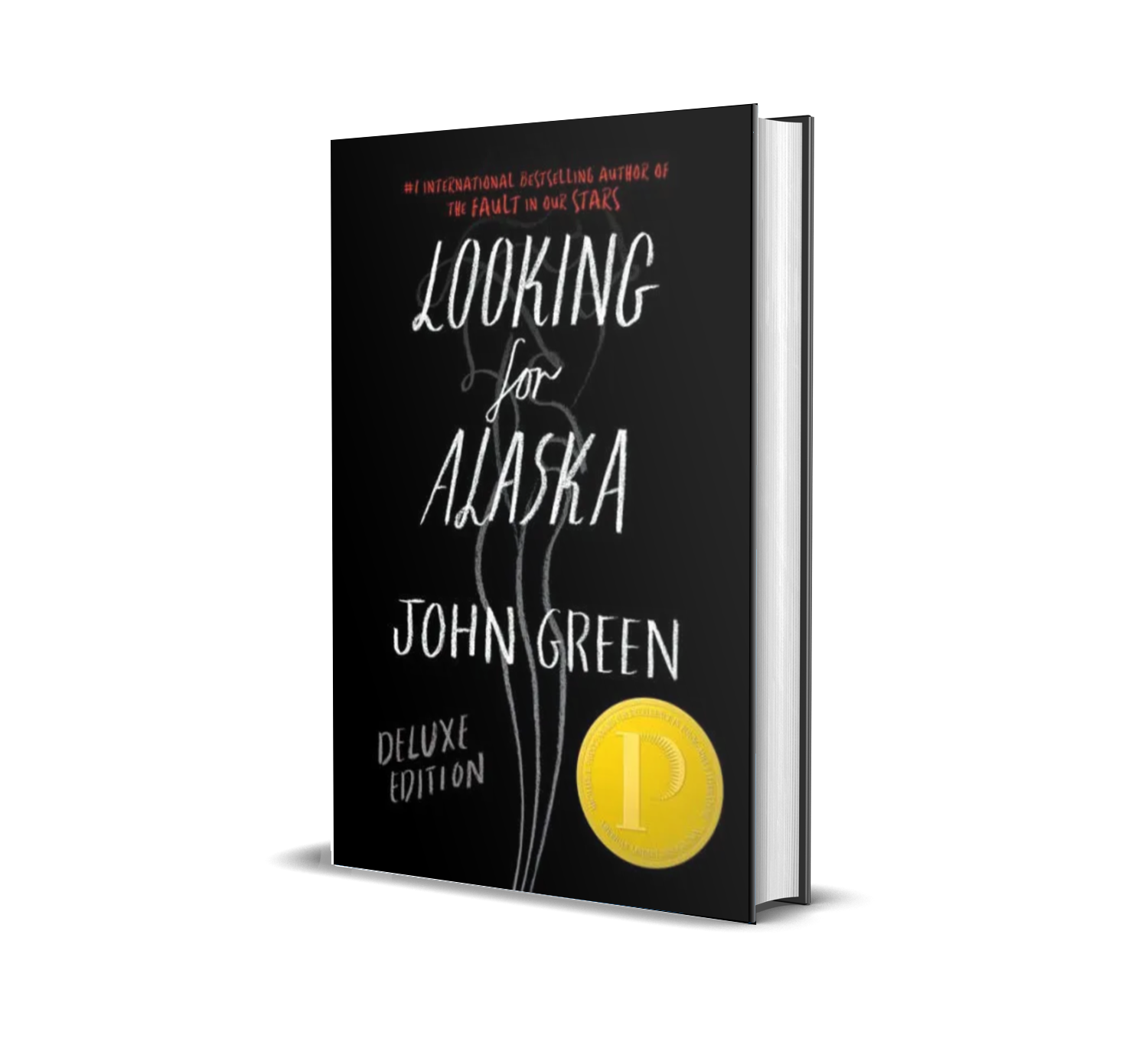
A gorgeous Collector's Edition
Deluxe hardcover features a stunning special edition jacket and 50 pages of all-new exclusive content, including:
- An introduction by John Green, extensive Q&A, and deleted scenes from the original manuscript.
A New York Times Bestseller
A USA Today Bestseller
NPR’s Top Ten Best-Ever Teen Novels
TIME magazine’s 100 Best Young Adult Novels of All Time
A PBS Great American Read Selection
NOW A HULU ORIGINAL SERIES!
Miles Halter is fascinated by famous last words—and tired of his safe life at home. He leaves for boarding school to seek what the dying poet Francois Rabelais called the "Great Perhaps.” Much awaits Miles at Culver Creek, including Alaska Young, who will pull Miles into her labyrinth and catapult him into the Great Perhaps.
Looking for Alaska brilliantly chronicles the indelible impact one life can have on another. A modern classic, this stunning debut marked #1 bestselling author John Green’s arrival as a groundbreaking new voice in contemporary fiction.
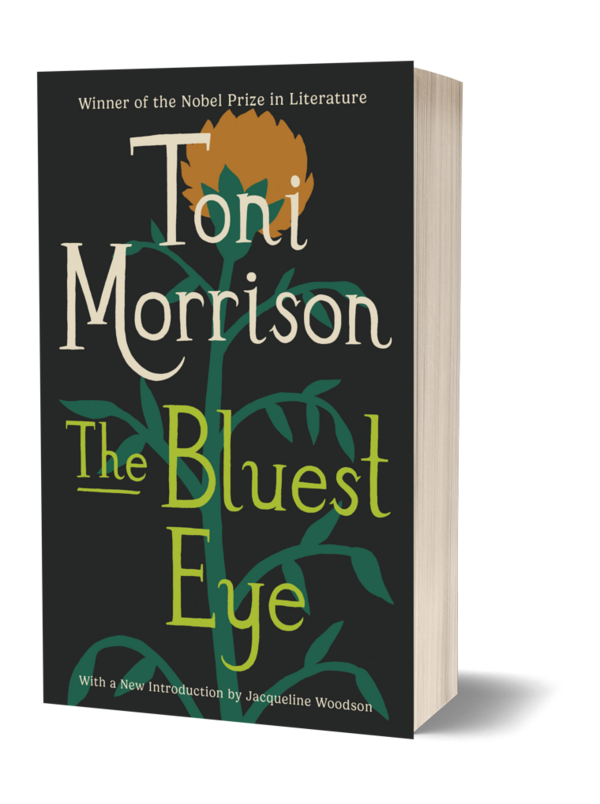
NATIONAL BESTSELLER
From the acclaimed Nobel Prize winner—a powerful examination of our obsession with beauty and conformity that asks questions about race, class, and gender with characteristic subtly and grace.
Pecola Breedlove, a young black girl, prays every day for beauty. Mocked by other children for the dark skin, curly hair, and brown eyes that set her apart, she yearns for the blond hair and blue eyes that she believes will allow her to finally fit in. Yet as her dream grows more fervent, her life slowly starts to disintegrate in the face of adversity and strife.

PULITZER PRIZE WINNER & NEW YORK TIMES BESTSELLER
Staring unflinchingly into the abyss of slavery, this spellbinding novel transforms history into a story as powerful as Exodus and as intimate as a lullaby. Sethe, its protagonist, was born a slave and escaped to Ohio, but eighteen years later, she is still not free. She has too many memories of Sweet Home, the beautiful farm where so many hideous things happened. And Sethe's new home is haunted by the ghost of her baby, who died nameless and whose tombstone is engraved with a single word: Beloved. Filled with bitter poetry and suspense as taut as a rope, Beloved is a towering achievement.

NEW YORK TIMES BESTSELLER & NATIONAL BOOK AWARD FINALIST
Perfect Mexican daughters do not go away to college. And they do not move out of their parents’ house after high school graduation. Perfect Mexican daughters never abandon their family.
But Julia is not your perfect Mexican daughter. That was Olga’s role.
Then a tragic accident on the busiest street in Chicago leaves Olga dead and Julia left behind to reassemble the shattered pieces of her family. And no one seems to acknowledge that Julia is broken, too. Instead, her mother seems to channel her grief into pointing out every possible way Julia has failed.
But it’s not long before Julia discovers that Olga might not have been as perfect as everyone thought. With the help of her best friend Lorena, and her first love, first everything boyfriend Connor, Julia is determined to find out. Was Olga really what she seemed? Or was there more to her sister’s story? And either way, how can Julia even attempt to live up to a seemingly impossible ideal?

One of the most controversial and acclaimed novels ever written, The Satanic Verses is Salman Rushdie’s best-known and most galvanizing book. Set in a modern world filled with both mayhem and miracles, the story begins with a bang: the terrorist bombing of a London-bound jet in midflight. Two Indian actors of opposing sensibilities fall to earth, transformed into living symbols of what is angelic and evil. This is just the initial act in a magnificent odyssey that seamlessly merges the actual with the imagined. A book whose importance is eclipsed only by its quality, The Satanic Verses is a key work of our times.
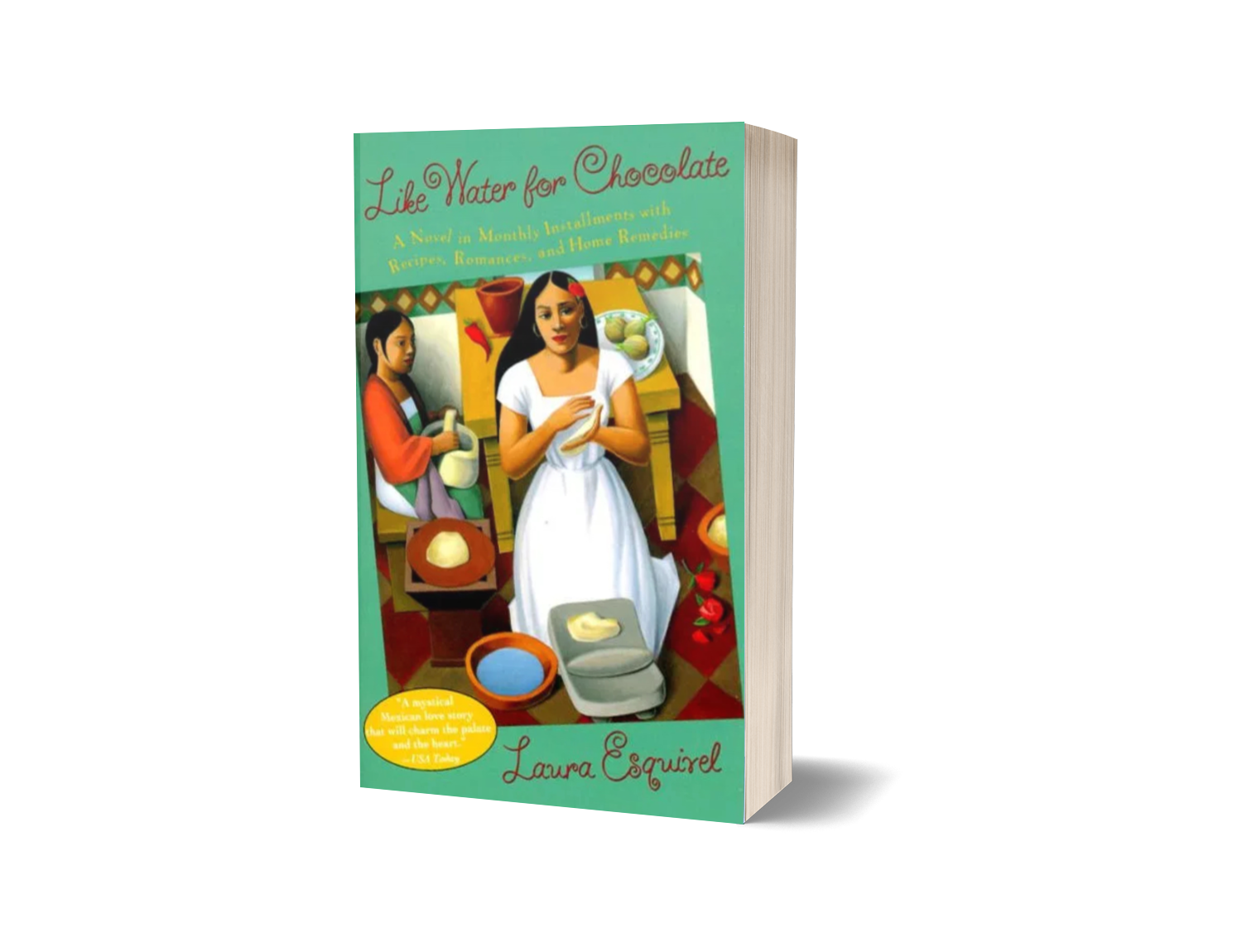
Earthy, magical, and utterly charming, this tale of family life in turn-of-the-century Mexico blends poignant romance, bittersweet wit, and delicious recipes.
This classic love story takes place on the De la Garza ranch, as the tyrannical owner, Mama Elena, chops onions at the kitchen table in her final days of pregnancy. While still in her mother's womb, her daughter to be weeps so violently she causes an early labor, and little Tita slips out amid the spices and fixings for noodle soup. This early encounter with food soon becomes a way of life, and Tita grows up to be a master chef, using cooking to express herself and sharing recipes with readers along the way.
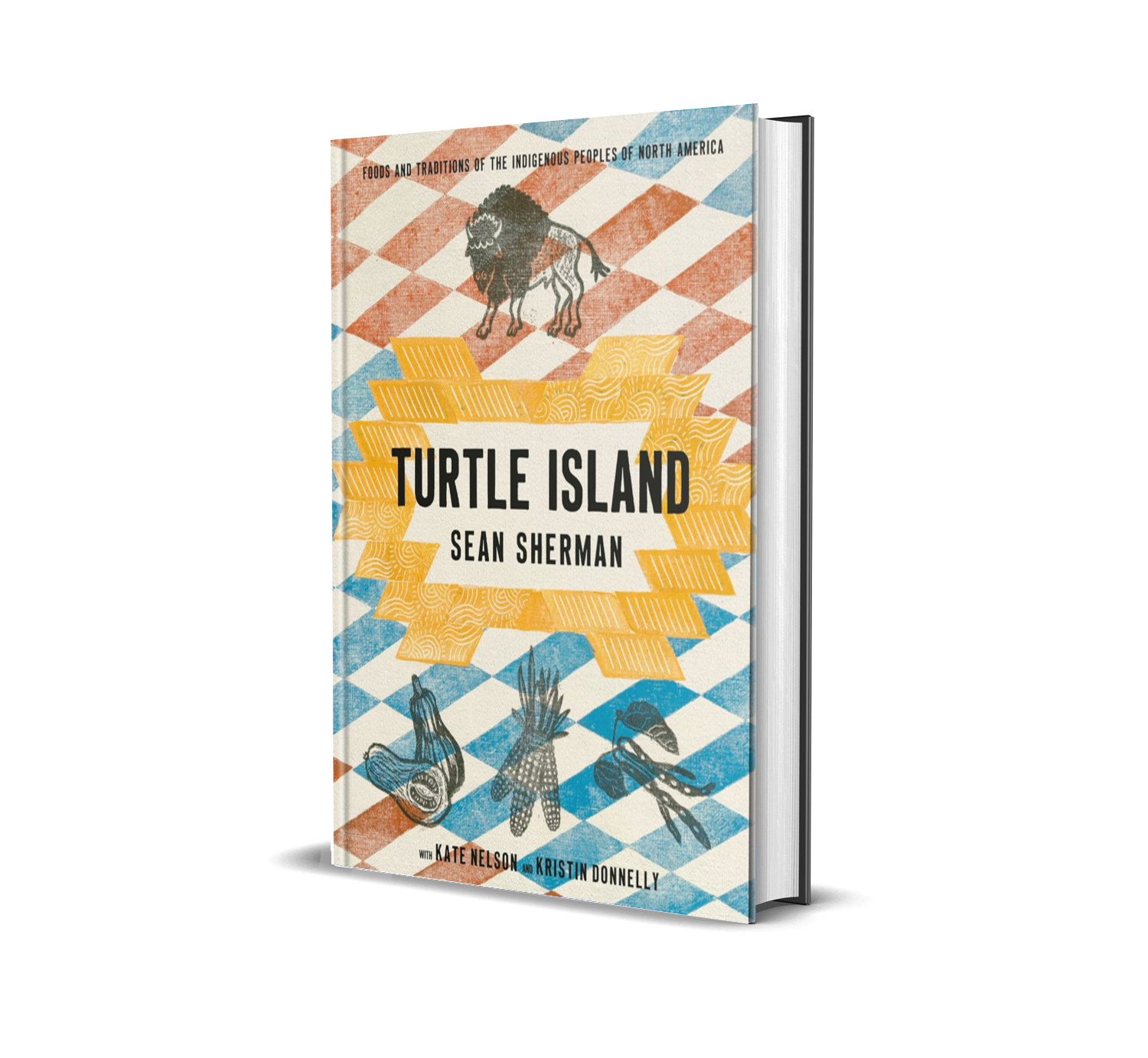
NATIONAL BESTSELLER
A BEST COOKBOOK OF THE YEAR: THE NEW YORK TIMES, THE WASHINGTON POST, SMITHSONIAN MAGAZINE, LIBRARY JOURNAL
Uncover the stories behind the foods that have linked the natural environments, traditions, and histories of Indigenous peoples across North America for millennia through more than 100 ancestral and modern recipes from three-time James Beard Award–winning Oglala Lakota chef Sean Sherman.
Growing up on South Dakota’s Pine Ridge Reservation, Oglala Lakota chef Sean Sherman understood that his people’s food was rich in flavor, heritage, and connection to the land. It was in the midst of a successful restaurant career mainly cooking European cuisines that he realized the lack of understanding about Native American foodways—a revelation that sent him on a journey to learn more about how Indigenous communities have preserved and evolved their cuisines through the centuries. Now a leading figure in the Indigenous food movement, he shares in Turtle Island the unique and diverse Native foodways of North America through both traditional and modern recipes made with ingredients that have nourished Indigenous peoples physically, spiritually, and culturally for generations.
Organized by region, this book delves into the rich culinary landscapes of Turtle Island—as many Indigenous cultures call this continent. Learn to eat with the seasons, consume meat and fish nose-to-tail, focus on plant-forward dishes, and discover how to better feed yourself. Alongside delicious recipes like Smoked Bison Ribeye, Wild-Rice Crusted Walleye Cakes, Charred Rainbow Trout with Grilled Ramps, Sweet Potato Soup with Dried Venison and Chile Oil, Sunflower Seed “Risotto,” and Sweet Corn Pudding with Woodland Berry Sauce (and so much more), you’ll see the inspiring Indigenous food scene through Sean’s eyes.
Exemplifying how Native foodways can teach us all to connect with the natural world around us, Turtle Island features rich narrative histories and spotlights the communities producing, gathering, and cooking these foods, including remarkable stories of ingenuity and adaptation that capture the resilience of Indigenous communities.
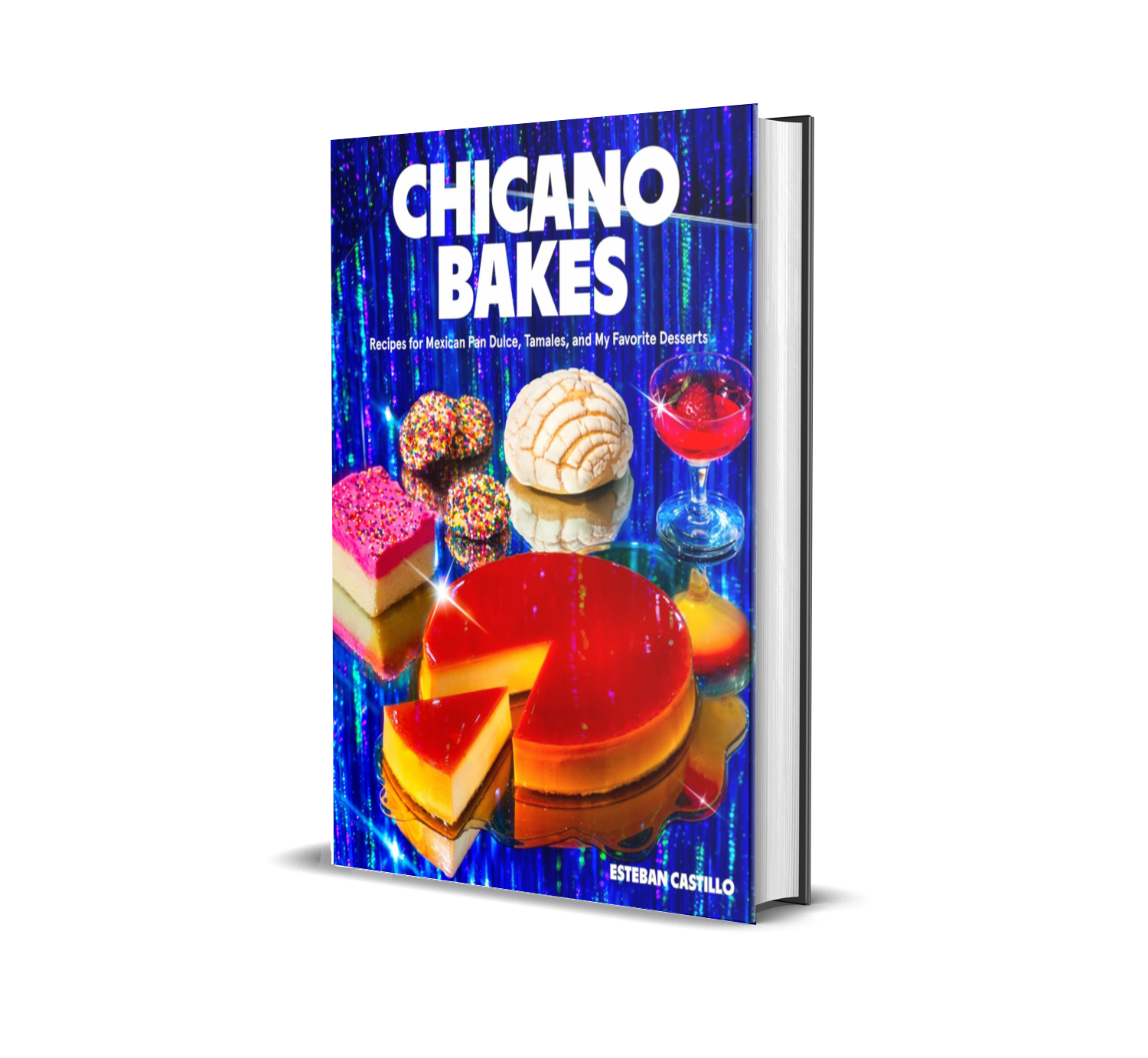
In this companion cookbook to Chicano Eats, the blogger, and winner of the Saveur Best New Voice People’s Choice Award shows off the sweet and dreamy side of Chicano cuisine in 80 recipes for irresistible desserts, cakes, tamales, pan dulce and drinks.
With Chicano Eats: Recipes from My Mexican American Kitchen, Esteban Castillo offered his readers a look into his life, family, and culture. For Esteban, sharing stories and recipes from his childhood was a cathartic experience, and seeing so many people make and enjoy the foods that meant so much to him growing up was a dream come true.
Now, this rising food star mines his culinary roots once more. Chicano Bakes features many of the mouthwatering delights Esteban enjoyed throughout his childhood, from Pan Dulce Mexicano (Mexican Sweet Bread), Postres (Desserts), and Pasteles (Cakes) to Antojitos (Bites) and Bebidas (Drinks). Here are easy-to-make recipes sure to become fan favorites, including:
Pan Dulce Mexicano (Mexican Sweet Bread)
Conchas de Vainilla (Vanilla Conchas)
Tres Leches Cake
Churro Cheesecake
Red Velvet Chocoflan
Ponche de Granada (Pomegranate Punch)
Tamales de Elote (Sweet Corn Tamales)
Strawberry Guava Shortbread Bars
Bolillos
Polvorones
Tamales de Chile Rojo (Red Chile Beef Tamales)
Rompope (Mexican Milk Punch)
Esteban encourages everyone—no matter their level of experience in the kitchen—to get baking, especially those in his community who may be intimidated or discouraged by other cookbooks that overlook their cultural tastes and traditions. Illustrated with more than 100 bright and inviting photographs that capture the flavor of the Chicano Eats brand, Chicano Bakes is an homage to a culture that has existed in the U.S. for generations—and whose influence continues to grow.

Winner of a 2023 IACP Cookbook Award and the Golden Poppy Book Award in the Glenn Goldman Cooking category
Six California Kitchens is the quintessential California cookbook, with farm-to-table recipes and stories from Sally Schmitt, the pioneering female chef and original founder of the French Laundry.
Sally Schmitt opened The French Laundry in Yountville in 1978 and designed her menus around local, seasonal ingredients—a novel concept at the time.
In this soon-to-be-classic cookbook, Sally Schmitt takes us through the six kitchens where she learned to cook, honed her skills, and spent her working life. Six California Kitchens weaves her remarkable story with 115 recipes that distill the ethos of Northern California cooking into simple, delicious dishes, plus evocative imagery, historic ephemera, and cooking wisdom.
With gorgeous food and sense-of-place photography, this is a masterful, story-rich cookbook for home and aspiring chefs who cook locally and seasonally, food historians, fans of wine country, and anyone who wants to bring the spirit of Northern California home with them.
PERSON OF NOTE: Sally Schmitt, who passed away just five days after her 90th birthday in 2022, was the great unsung hero of California cuisine, a pioneer of the farm-to-table movement, and original founder of the French Laundry restaurant in Napa Valley. This book celebrates a respected, reputable chef and shares a collection of her best recipes from a lifetime of cooking.
AMONG THE BEST COOKBOOKS THAT CAPTURE CALIFORNIA CUISINE: From a native Californian chef, who founded one of the most well-known and revered restaurants in California (and in the world), this book was written, photographed, and designed by members of Sally's family.
COMPELLING PACKAGE: This book is full of evocative images of Napa Valley, rustic kitchens, and the rugged California coastline. With lifestyle photography that offers a peek into the history of Northern California and its food revolution, this book will appeal to readers with its lovely design and package—but they'll stay for the inspiring story and approachable recipes.
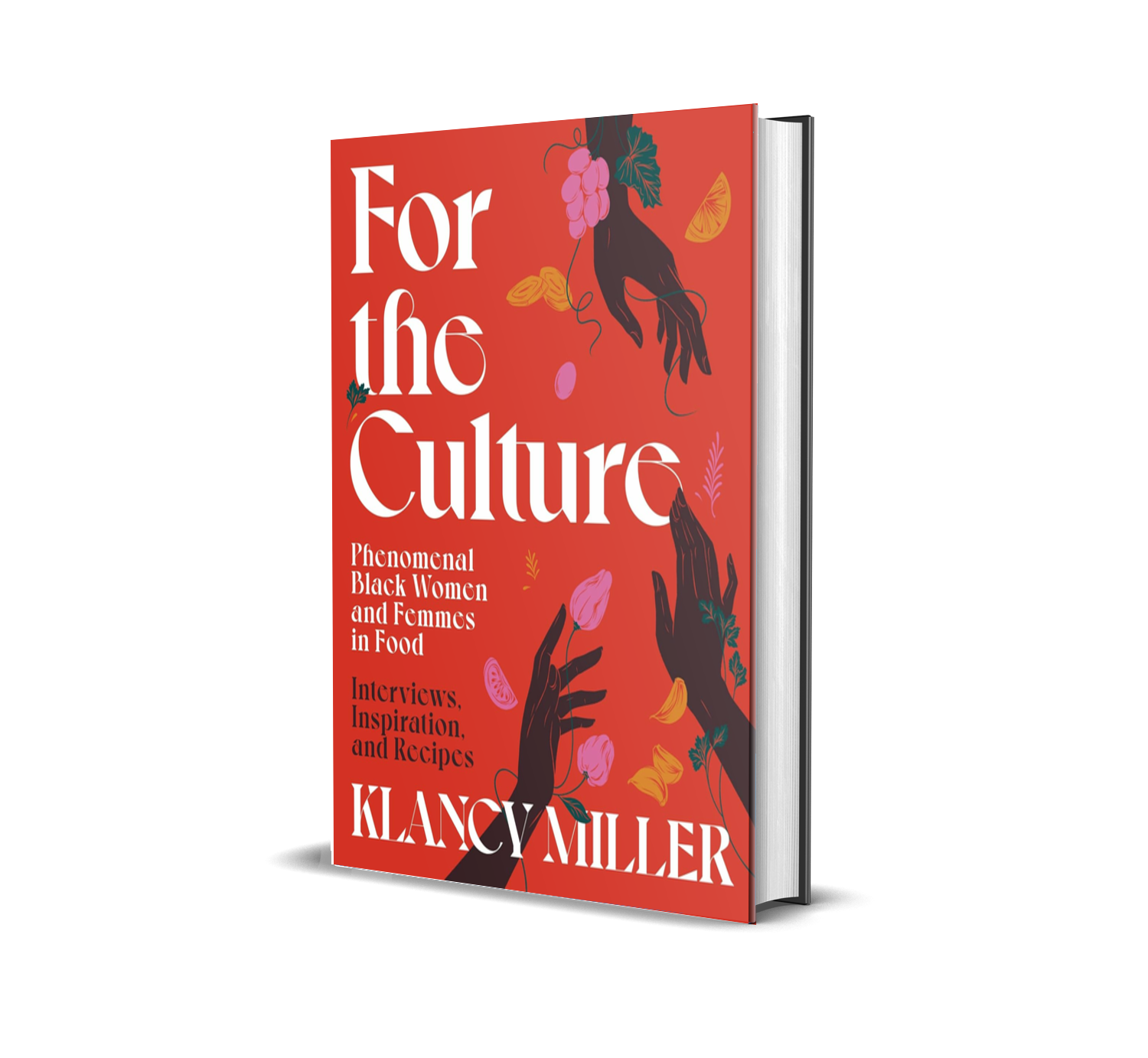
Winner of the 2024 IACP Cookbook Award for Literary or Historical Food Writing
A must-have anthology of the leading Black women and femmes shaping today’s food and hospitality landscape—from farm to table and beyond—chronicling their passions and motivations, lessons learned and hard-won wisdom, personal recipes, and more.
Chef and writer Klancy Miller found her own way by trial and error—as a pastry chef, recipe developer, author, and founder of For the Culture magazine—but what if she had known then what she knows now? What if she had known the extraordinary women profiled within these pages—entrepreneurs, chefs, food stylists, mixologists, historians, influencers, hoteliers, and more—and learned from their stories?
Like Leah Penniman, a farmer using Afro-Indigenous methods to restore the land and feed her community; Ashtin Berry, an activist, sommelier, and mixologist creating radical change in the hospitality industry and beyond; or Sophia Roe, a TV host and producer showcasing the inside stories behind today’s food systems. Toni Tipton-Martin, Mashama Bailey, Carla Hall, Nicole Taylor, Dr. Jessica B. Harris . . . In this gorgeous volume these luminaries and more share the vision that drives them, the mistakes they made along the way, advice for the next generation, and treasured recipes—all accompanied by stunning original illustrated portraits and vibrant food photography.
In addition, Miller shines a light on the matriarchs who paved the way for today’s tastemakers—Edna Lewis, B. Smith, Leah Chase, Vertamae Smart-Grosvenor, and Lena Richard.
These collective profiles are a one-of-a-kind oral history of a movement, captured in real time, and indispensable for anyone passionate about food.
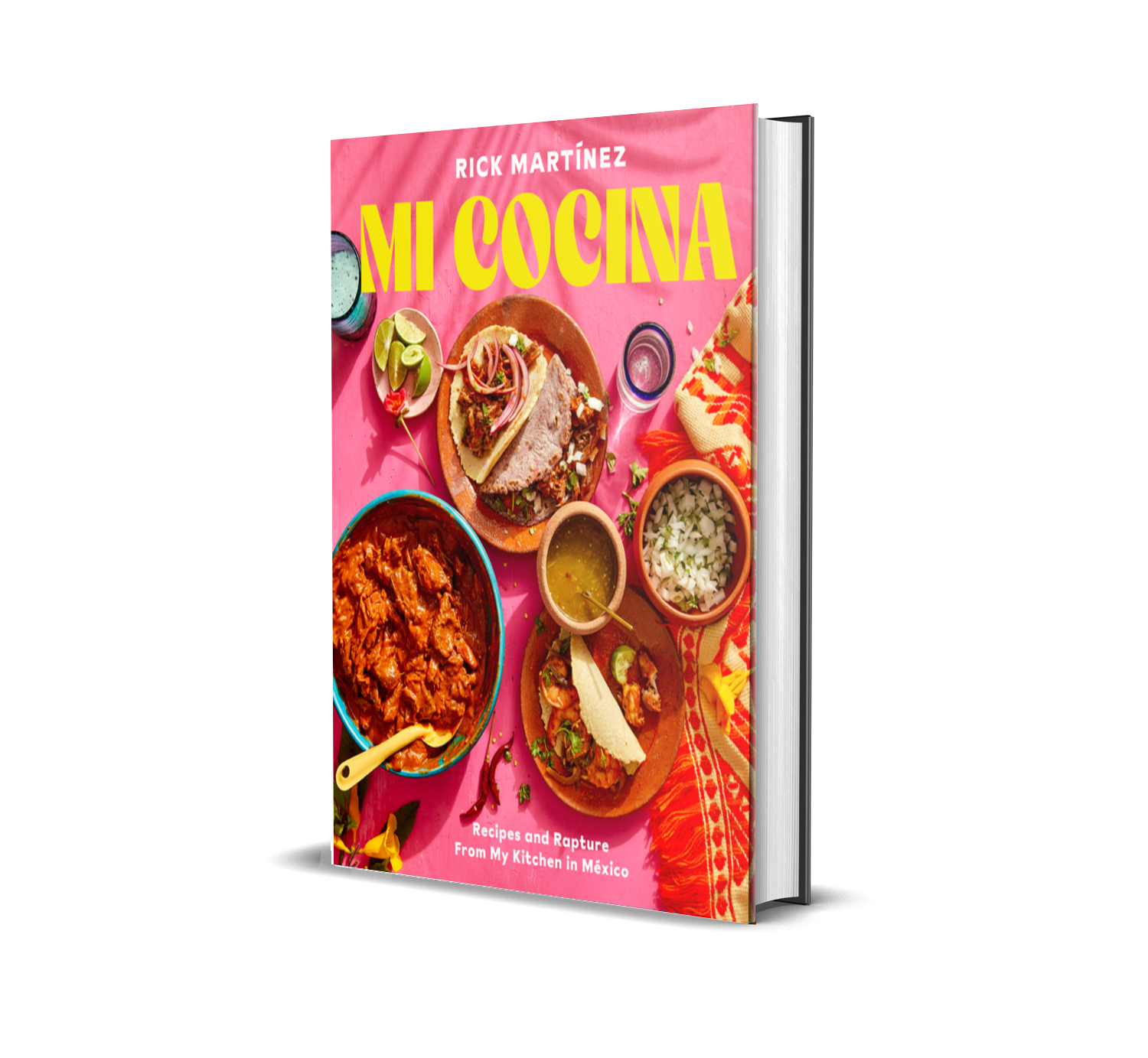
An enticing, regional, and stunning exploration of Mexican cuisine from beloved food writer and host of the Babish Culinary Universe show “Pruébalo” on YouTube and Food52’s “Sweet Heat” series, Rick Martínez.
In his first, much-anticipated cookbook, New York Times contributor, Food52 columnist, and former Bon Appétit food editor Rick Martínez introduces home cooks to the diverse culinary treasures of Mexico. In Mi Cocina, Rick travels to each of the seven regions in Mexico to explore 100 unique dishes, the recipe for each accompanied by stunning on-site photography.
In this beautifully personal tribute, Rick expresses Mexico’s regionality through dishes like Oaxaca’s Mole Coloradito (made with pasilla chiles, dried fruits, nuts, seeds, plantain, and bittersweet chocolate) and Tacos de Capeados (cornmeal-battered fried fish tacos with papaya and tomatillo) from coastal Baja. His recipes are based on his favorite home-tested version of each dish, veering from tradition when inspired—like in the Tlayuda con Tasajo in which a flank steak is marinated with miso paste before being grilled and added to a large tostada topped with refried beans and queso Oaxaca. Rick always keeps availability of ingredients in mind and provides substitutions and replacements when needed.
Readers will discover essays in each chapter on topics like the migration and culinary influence of people from the Middle East and China to Mexico, and Rick’s experiences of finding welcomeness, support, and a feeling of belonging in his new home in Mazatlán. The collective result is touching, transportive, and delicious.
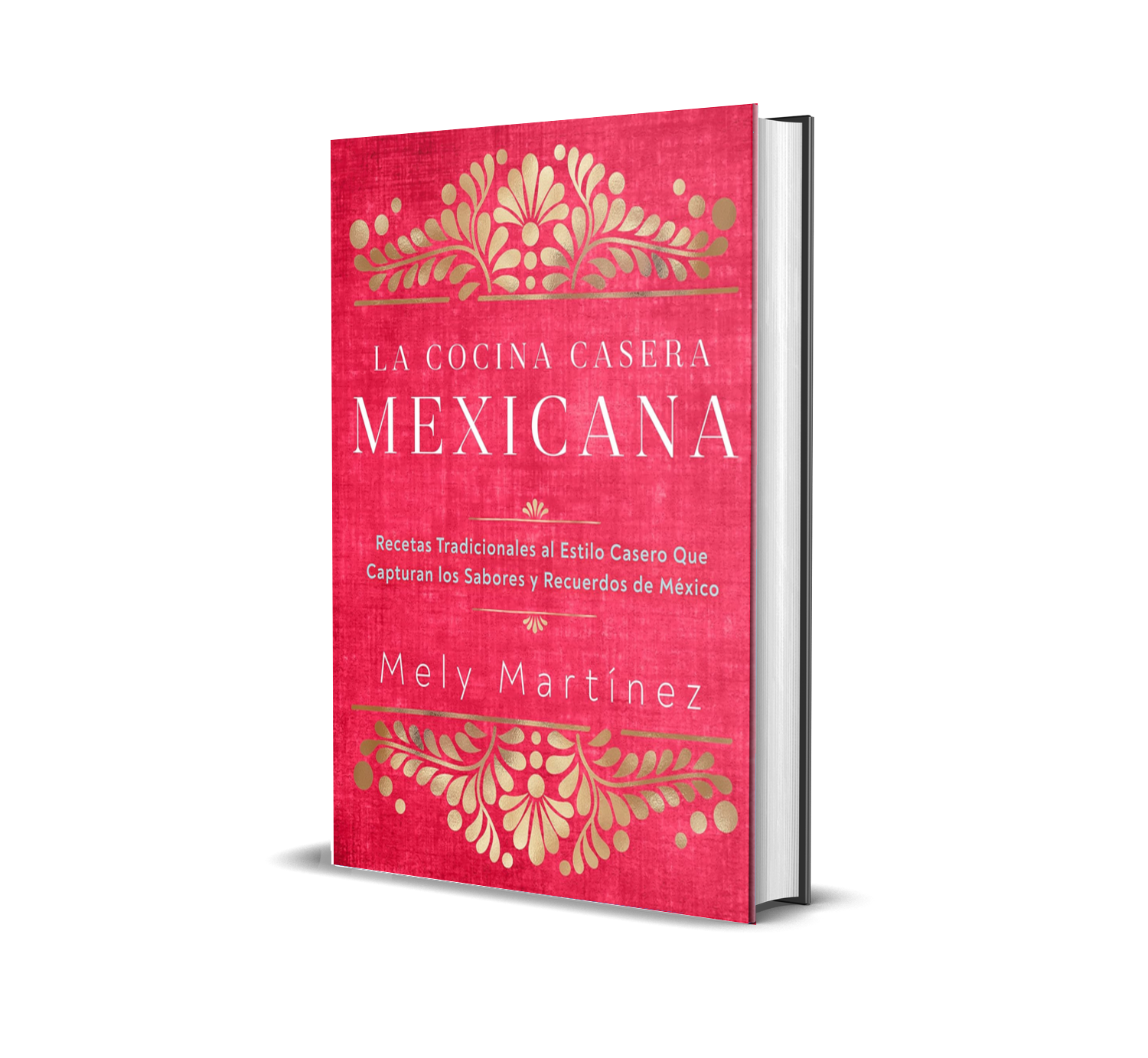
The long-awaited, best-selling cookbook from Mely Martínez, The Mexican Home Kitchen, compiles the traditional home-style dishes enjoyed every day in Mexican households.
Illustrated with stunning photography, this book includes recipes for stews, soups, and side dishes, along with famous dishes like mole, enchiladas, picadillo, and milanesa, and is rounded out with delicious salsas, drinks, and desserts.
For Mely Martínez, Mexican cooking has always been about family, community, and tradition. Born and raised in Tampico, Mely started helping in the kitchen at a very young age, since she was the oldest daughter of eight children, and spent summers at her grandmother’s farm in the state of Veracruz, where part of the daily activities included helping grind the corn to make masa. Mely started her popular blog, Mexico in My Kitchen, to share the recipes and memories of her home so that her son can someday recreate and share these dishes with his own family. It has become the go-to source for those looking for home-style Mexican cooking.
Recreate these favorite comfort foods:
Carnitas (tender, crispy pork)
Albondigas (Mexican meatballs)
Nopales (recipes made with cactus paddles)
Pozole (both red and green versions)
Camarones en Chipotle (deviled shrimp)
Buñuelos (crispy dough fritters coated in sugar)
Aguas Frescas (horchata, hibiscus, and tamarind flavors)
and much more!
Complete with easy-to-follow instructions, stories from Mexico, and tips for stocking your pantry, The Mexican Home Kitchen will have you enjoying this delicious cooking right in your own home.
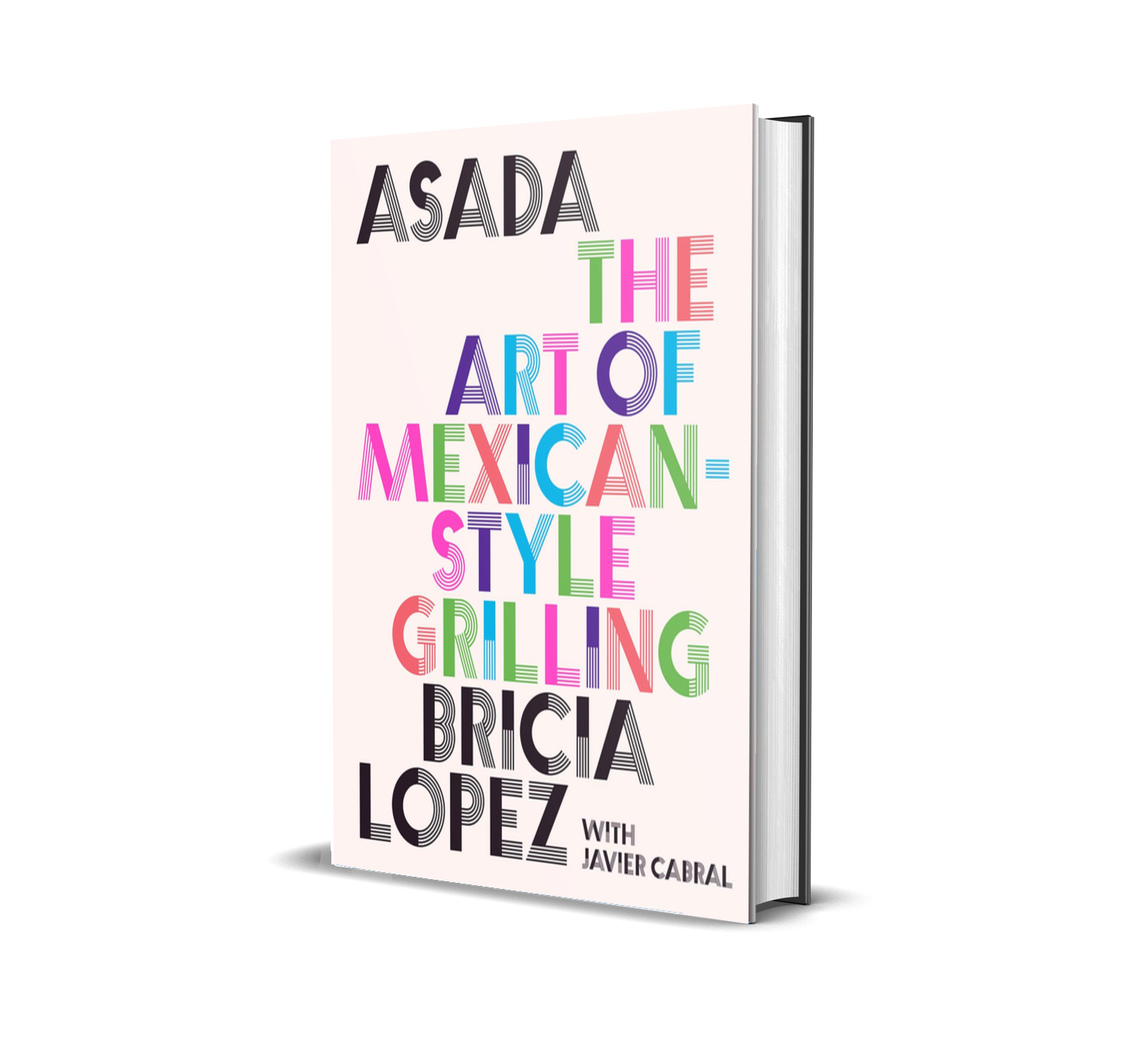
ONE OF THE BEST COOKBOOKS OF THE YEAR: New York Times, Los Angeles Times, San Francisco Chronicle, NPR, Food & Wine, Wired
Bricia Lopez and Javier Cabral, the James Beard Award–nominated authors of Oaxaca, are back with the first major cookbook about how to create asada—Mexican-style grilled meat—at home.
In millions of backyards across Southern California, an asada means a gathering of family, friends, great music, cold drinks, good times, and community—all centered around the primal allure of juicy, smoky grilled meat with flavors and spices traditional to Mexico. The smell of asada is a cloud of joy that lingers in the streets of Los Angeles.
With Asada: The Art of Mexican-Style Grilling, Mexican food authorities Bricia Lopez and Javier Cabral offer more than 100 recipes that show you how to prepare the right dishes and drinks for your next carne asada gathering. Asada will both guide you in crafting mouthwatering food and also inspire the right laidback atmosphere.
Everyone says they love a spicy margarita and asada tacos, but very few understand the culture that informs these flavors. Divided into the eight crucial elements of any carne asada: botanas (appetizers), carnes (meats), mariscos (seafood), side dishes and vegetables, salsas, aguas frescas, cocktails, and dessert, Asada walks you through every step. From Lopez’s secret “michelada marinade” to game-changing salsas that will elevate any grilled meat, this cookbook is the ultimate guide to making and beginning to understand the magic of asada.

Featured in: The New Yorker, Travel + Leisure, Financial Times, Condé Nast Traveller and National Geographic Traveller
Acclaimed Mexican chef Enrique Olvera presents the ultimate insider’s guide to preparing and enjoying authentic tacos.
Enrique Olvera is known for the sophisticated Mexican cuisine he serves at his globally renowned restaurants, including the iconic Pujol, in Mexico City. However, his true passion is the everyday taco, which he regards as the most ‘democratic’ of foods. In Sunny Days, Taco Nights, Olvera presents an in-depth exploration of the taco’s history and many different styles, ingredients, and accompaniments, and much more.
Equal parts culinary history and cookbook, the book features 100 recipes designed for home cooks, arranged into two main chapters: Classics, which features street tacos; and Originals, which explores Olvera’s contemporary reinventions of well-known originals. Classic recipes include Fish Tacos from northwest Mexico; Chicharron Tacos from Monterrey; Chorizo Tacos with spinach; and Steak Tacos common at street vendor tricycles in Mexico City. Contemporary reinventions include Brussels Sprouts Tacos with spicy peanut butter; Ceviche Tacos; Pork Belly Tacos with smoked beans; and Eggs & Green Bean Tacos inspired by Olvera’s childhood breakfasts.
Visually stunning, with vivid food photography and a palette inspired by native corn in Mexico, Sunny Days, Taco Nights is the definitive book on one of the world’s most beloved foods.

From the bestselling author of Salt, Fat, Acid, Heat—and one of America’s most beloved chefs and teachers—125 meticulously tested, flavor-forward, soul-nourishing recipes that bring joy and a sense of communion
With all the generosity of spirit that has endeared her to millions of fans, Samin Nosrat offers more than 125 of her favorite recipes—simply put, the things she most loves to cook for herself and for friends—and infuses them with all the beauty and care you would expect from the person Alice Waters called “America’s next great cooking teacher.” As Samin says, "Recipes, like rituals, endure because they’re passed down to us—whether by ancestors, neighbors, friends, strangers on the internet, or me to you. A written recipe is just a shimmering decoy for the true inheritance: the thread of connection that cooking it will unspool."
Good Things is an essential, joyful guide to cooking and living, whether you’re looking for a comforting tomato soup to console a struggling friend, seeking a deeper sense of connection in your life, or hosting a dinner for ten in your too-small dining room. Here you’ll find go-to recipes for ricotta custard pancakes, a showstopping roast chicken burnished with saffron, a crunchy, tingly Calabrian chili crisp, super-chewy sky-high focaccia, and a decades-in-the-making, childhood-evoking yellow cake with chocolate frosting. Along the way, you’ll also find plenty of tips, techniques, and lessons, from how to buy olive oil (check the harvest date) to when to splurge (salad dressing is where you want to use your best ingredients) to the best uses for your pressure cooker (chicken stock and dulce de leche, naturally).
Good Things captures, with Samin’s trademark blend of warmth, creativity, and precision, what has made cooking such an important source of delight and comfort in her life.
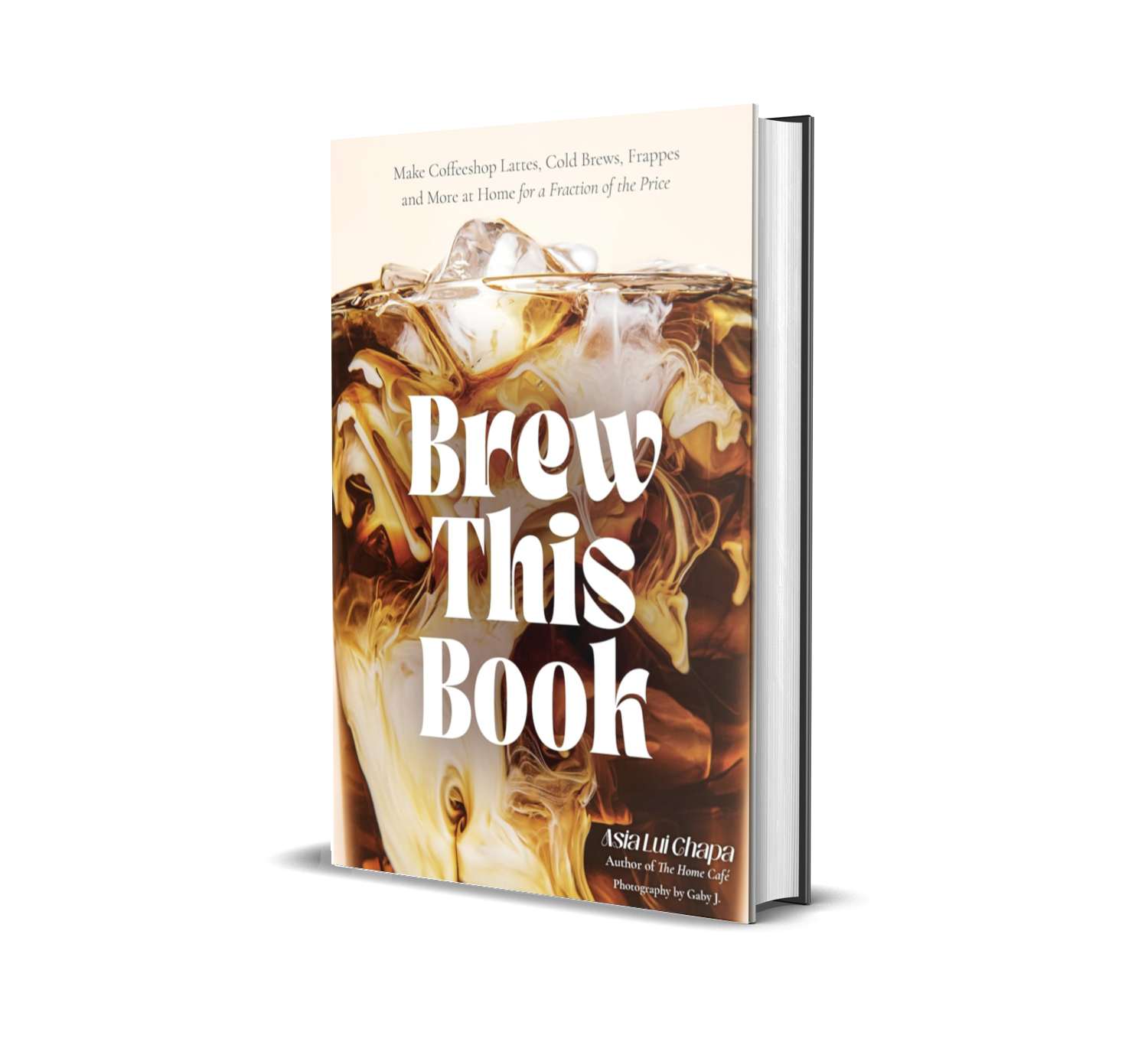
Ditch Overpriced Coffee, Make Your Favorite Drinks for Less
With this cozy collection of recipes, you’ll learn to brew luxurious café drinks at home and save tons on your daily caffeine expense. Asia Lui Chapa, author of The Home Café, shows you how to make everything from sweet, velvety lattes to inspired iced coffee creations for as little as 50 cents a cup. Using any beans, brew setups and ingredients you have on hand, you’ll recreate the warm flavors and rich aromas of your favorite coffee shop in drinks like:
- Caramel Cardamom Coffee
- Brown Sugar Flat White
- Vanilla Pistachio Latte
- Matcha Sweet Cream Iced Coffee
- Five Spice Cafecito de Olla
- Honey Espresso Con Panna
- Brown Sugar Coconut Shakerato
Get ready to slash your coffee budget in half and sip on a better, tastier mug each morning. It’s time to brew this book!

WINNER OF THE 2024 GUILD OF FOOD WRITERS AWARD FOR SPECIALIST OR SINGLE SUBJECT COOKBOOK
A sticky celebration of honey from bloom to plate, with 80 inspiring recipes straight from a beekeeper’s kitchen.
Amy Newsome is a cook, gardener and beekeeper—and this is her homage to honey and its deliciously distinct varietals from around the globe. Marvel at the floral intricacies of honey’s terroir and all its wonderful flavors, before getting stuck in with 80 sweet and savory recipes that celebrate the magic of cooking with honey; from honey ferments, fancy fritto misto, and Honeyed Chipotle Lamb Tacos, to Saffron & Apricot Honey Buns, Eucalyptus Honey Granita, and a Bergamot Bee's Knees to wash everything down.
Covering the beekeeper’s year and how honey is made, you will journey through the changing seasons, take a peak inside the hive and discover just how to create the perfect bee-friendly garden. This cookbook is an incredibly thoughtful collection of recipes and stories that offers an inspiring glimpse into the craft of beekeeping, and the remarkable world of the honeybee, confirming why and how we should be treating honey with the respect it deserves.
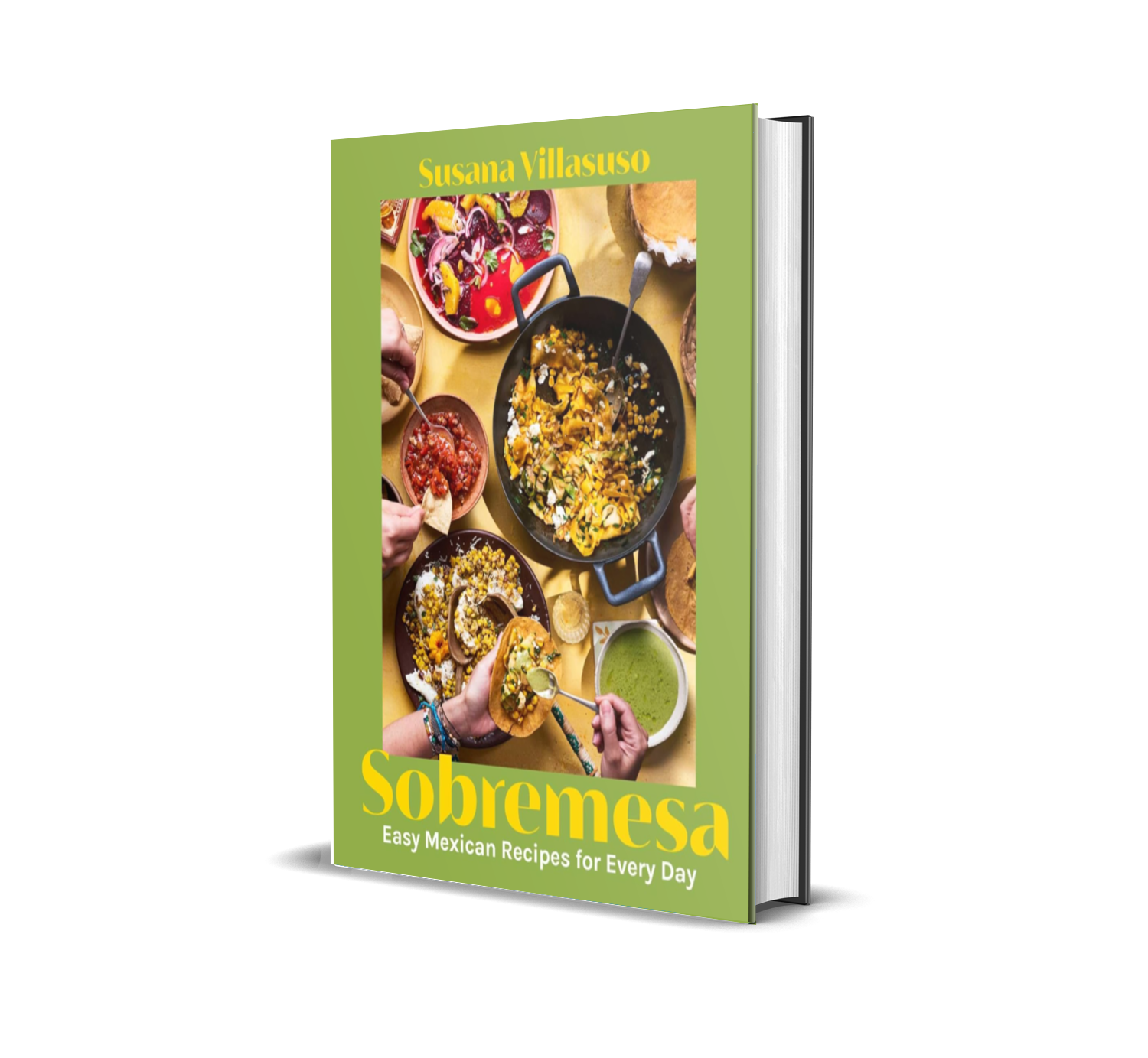
75 quick, easy and delicious recipes for Mexican weeknight meals, sharing plates, drinks, and desserts to make and enjoy together.
Sobremesa means “relaxing at the table after a heavy meal,” usually after getting together with family and friends. Mexican-born chef and recipe developer Susana Villasuso is on a mission to bring the flavors of Mexico to your table, and share her culture with the world. Inspired by the dishes she learned to cook from her mother and grandmother, this debut cookbook brings together authentic, modern, simple, and tasty recipes for feeding the whole family and for all occasions, made with everyday supermarket ingredients. It's a real taste of Mexico, with a modern twist.
Try some of Susana's family classics, such as: Crispy bean and ricotta taquitos with crema verde, Brown miso and porter carnitas, Salmon Ceviche with yellow beets and lime marinade, Mexican blood orange vanilla cake, and more.

A beautiful, rich, and groundbreaking book exploring Black foodways within America and around the world, curated by food activist and author of Vegetable Kingdom Bryant Terry.
In this stunning and deeply heartfelt tribute to Black culinary ingenuity, Bryant Terry captures the broad and divergent voices of the African Diaspora through the prism of food. With contributions from more than 100 Black cultural luminaires from around the globe, the book moves through chapters exploring parts of the Black experience, from Homeland to Migration, Spirituality to Black Future, offering delicious recipes, moving essays, and arresting artwork.
As much a joyful celebration of Black culture as a cookbook, Black Food explores the interweaving of food, experience, and community through original poetry and essays, including "Jollofing with Toni Morrison" by Sarah Ladipo Manyika, "Queer Intelligence" by Zoe Adjonyoh, "The Spiritual Ecology of Black Food" by Leah Penniman, and "Foodsteps in Motion" by Michael W. Twitty. The recipes are similarly expansive and generous, including sentimental favorites and fresh takes such as Crispy Cassava Skillet Cakes from Yewande Komolafe, Okra & Shrimp Purloo from BJ Dennis, Jerk Chicken Ramen from Suzanne Barr, Avocado and Mango Salad with Spicy Pickled Carrot and Rof Dressing from Pierre Thiam, and Sweet Potato Pie from Jenné Claiborne. Visually stunning artwork from such notables as Black Panther Party creative director Emory Douglas and artist Sarina Mantle are woven throughout, and the book includes a signature musical playlist curated by Bryant.
With arresting artwork and innovative design, Black Food is a visual and spiritual feast that will satisfy any soul.

2024 International Association of Culinary Professionals Cookbook Awards Finalist
Coffee lovers: here are recipes and inspiration for every taste, mood, and complexity, making for the perfect coffee drink for each moment of the day.
2024 International Association of Culinary Professionals Cookbook Awards Finalist
While the popularity of craft cocktails and home bartending have helped people create their own drink-driven memories, the possibilities for coffee have remained rather tame. Much more than a guide to beans or brewing, The New Art of Coffee shares how to create inspiring concoctions and flavor profiles from comforting and rejuvenating to celebratory and adventurous.
Nearly fifty recipes paired with beautiful photography will inspire and offer something for every taste and time of day—hot, iced, carbonated, post-workout, decaffeinated, alcoholic, and deconstructed. Organized by mood, the recipes range in complexity from a quick quaff to a showstopping slow build, allowing readers to match the drink with the moment.
Enjoy a Moonwater with breakfast, a Throw Em’ A Haymaker after a hard workout, or an Amuse as a happy-hour delight. The Don is the ideal after-dinner companion, and there’s nothing quite like powering down with a Windmill Cookie Steamer after a long day.

A guide to some of the world’s most fascinating places, as seen and experienced by writer, television host, and relentlessly curious traveler Anthony Bourdain
Anthony Bourdain saw more of the world than nearly anyone. His travels took him from the hidden pockets of his hometown of New York to a tribal longhouse in Borneo, from cosmopolitan Buenos Aires, Paris, and Shanghai to Tanzania’s utter beauty and the stunning desert solitude of Oman’s Empty Quarter—and many places beyond.
In World Travel, a life of experience is collected into an entertaining, practical, fun and frank travel guide that gives readers an introduction to some of his favorite places—in his own words. Featuring essential advice on how to get there, what to eat, where to stay and, in some cases, what to avoid, World Travel provides essential context that will help readers further appreciate the reasons why Bourdain found a place enchanting and memorable.
Supplementing Bourdain’s words are a handful of essays by friends, colleagues, and family that tell even deeper stories about a place, including sardonic accounts of traveling with Bourdain by his brother, Christopher; a guide to Chicago’s best cheap eats by legendary music producer Steve Albini, and more. Additionally, each chapter includes illustrations by Wesley Allsbrook.
For veteran travelers, armchair enthusiasts, and those in between, World Travel offers a chance to experience the world like Anthony Bourdain.
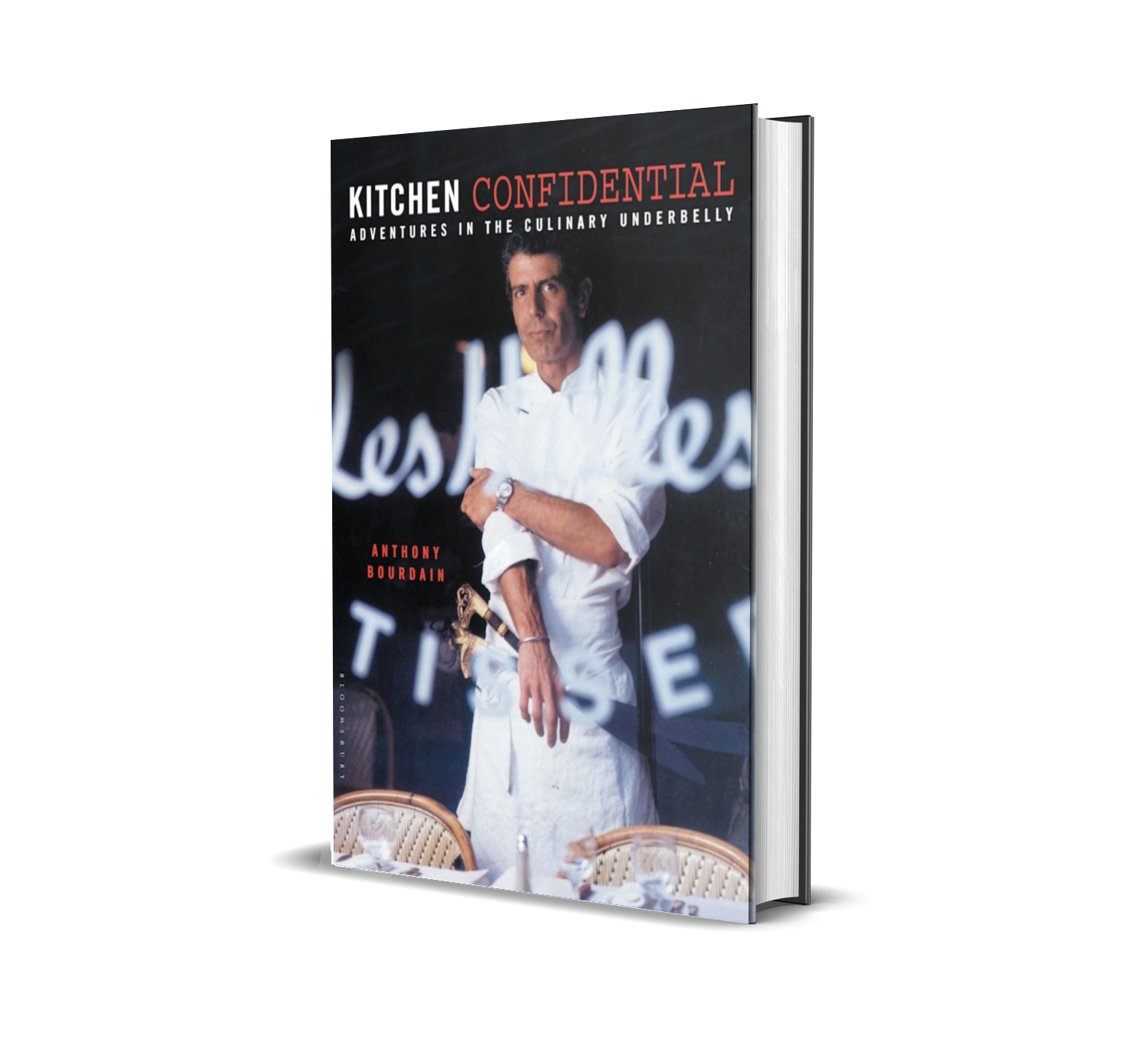
THE CLASSIC BESTSELLER and 'The greatest book about food ever written'
The New York Times bestselling memoir from Anthony Bourdain, the host of Parts Unknown.
Kitchen Confidential reveals what Bourdain calls "twenty-five years of sex, drugs, bad behavior and haute cuisine."
The New Yorker published Chef Bourdain's shocking, Don't Eat Before Reading This. Bourdain spared no one's appetite when he told all about what happens behind the kitchen door. Bourdain uses the same "take-no-prisoners" attitude in his deliciously funny and shockingly delectable book, sure to delight gourmands and philistines alike. From Bourdain's first oyster in the Gironde, to his lowly position as dishwasher in a honky tonk fish restaurant in Provincetown (where he witnesses for the first time the real delights of being a chef); from the kitchen of the Rainbow Room atop Rockefeller Center, to drug dealers in the east village, from Tokyo to Paris and back to New York again, Bourdain's tales of the kitchen are as passionate as they are unpredictable.
Kitchen Confidential will make your mouth water while your belly aches with laughter. You'll beg the chef for more, please.

The bestselling reference updated and expanded with seven new coffee-growing countries.
It is a good time for coffee lovers. The quality and variety of their beverage of choice has never been better, and they are enjoying the befits with relish, spending big dollars on quality beans, specialty coffees, and the coffee culture. They are learning more about what is in the cup, where it comes from, how it is roasted, and what makes one coffee bean different from another.
Where coffee is grown, how it is harvested, the roasting process and the water used to make the brew are just a few of the factors that influence the taste of what we drink. Champion barista and coffee roaster James Hoffman examines these key factors country by country—from Bolivia to Zambia—he identifies key characteristics and also gives practical advice on how to make superb coffee at home.
For this new edition, the author expanded his research travels over the last several years to include seven additional coffee-growing regions: the Democratic Republic of Congo, Uganda, China, the Philippines, Thailand, Haiti, and Puerto Rico. These are covered in 16 additional pages. As well, all of the book's maps have been updated to show greater detail, and all statistics and data have been updated to the most recent available.
Organized by continent and then country or region, The World Atlas of Coffee presents the world's favorite brew in color spreads packed with information.
The coverage in The World Atlas of Coffee is wide and deep. The book is used by baristas and coffee-tasting instructors in North America and overseas and has been welcomed by enthusiastic coffee drinkers everywhere. Appropriate for special and general collections alike, it is an essential selection.

Do you know your cappuccino from your cortado, or your Americano from your affogato? With this simple infographic guide that clearly explains the composition of all the main coffee drinks and guides you through key brewing methods, you’ll be able to identify what you’re drinking and how best you like it, making this an essential for anyone who’s addicted to great coffee.

Delightful Coffee Drinks Made Right in Your Own Kitchen
That first sip of caffeine is pure magic—so why not treat yourself and make it an all-out celebration? With this classy curation of recipes, you’ll find endless ideas to take your morning cup of tea or coffee to the next level with fun flourishes, new flavors and fresh takes—from fruity matcha spritzers to dessert-inspired lattes. These drinks make it easy to bring the warm aesthetic and delicious notes of a café into your own home. You’ll capture that quintessential barista taste without spending extra money or changing out of your pajamas. Cheers to that!
Near a village high in the Pyrenees, Domènec wanders across a ridge, fancying himself more a poet than a farmer, to “reel off his verses over on this side of the mountain.” He gathers black chanterelles, attends to a troubled cow. And then storm clouds swell, full of electrifying power. Reckless, gleeful, they release their bolts of lightning, one of which strikes Domènec. He dies. The ghosts of seventeenth-century witches gather around him, taking up the chanterelles he’d harvested before going on their merry ways. So begins this novel that is as much about the mountains and the mushrooms as it is about the human dramas that unfold in their midst.
When I Sing, Mountains Dance, winner of the European Union Prize, is a giddy paean to the land in all its interconnectedness, and in it Sola finds a distinct voice for each extraordinary consciousness: the lightning bolts, roe deer, mountains, the ghosts of the civil war, the widow Sió and later her grown children, Hilari and Mia, as well as Mia’s lovers with their long-buried secrets and their hidden pain.
Irene Solà animates the polyphonic world around us, the fierce music of the seasons, as well as the stories we tell to comprehend loss and love on a personal, historical, and even geological scale. Lyrical, elemental, and mythic, hers is a fearlessly imaginative new voice that brilliantly renders both our tragedies and our triumphs.
In celebration of its fiftieth anniversary, a commemorative edition of Ursula K. Le Guin’s Hugo, Locus, and Nebula Award–winning classic, a profound and thoughtful work of philosophical science fiction exploring anarchism and capitalism, individualism and collectivism, and one ambitious man’s quest to bridge the ideological chasm separating two worlds. This special edition includes a new foreword by Karen Joy Fowler.
A science fiction classic for the ages, The Dispossessed is the spellbinding story of anarchist Shevek, the “galactically famous scientist,” who single-handedly attempts to reunite two planets cut off from each other by centuries of distrust.
Anarres, Shevek’s homeland, is a bleak moon settled by an anarchic utopian civilization, where there is no government, and everyone, at least nominally, is a revolutionary. It has long been isolated from other worlds, including its mother planet, Urras―defined by warring nations, great poverty, and immense wealth. Now Shevek, a brilliant physicist, is determined to unify the two civilizations. In the face of great hostility, outright threats, and the pain of separation from his family, he makes an unprecedented trip to Urras. Greater than any concern for his own wellbeing is the belief that the walls of hatred, distrust, and philosophic division between his planet and the rest of the civilized universe must be torn down. He will seek answers, question the unquestionable, and explore differences in customs and cultures, determined to tear down the walls of hatred that have kept them apart in this landmark of social science fiction.
To visit Urras―to learn, to teach, to share―will require great sacrifice and risks, which Shevek willingly accepts. Almost immediately upon his arrival, he finds not the egotistical philistines he expected, but an intelligent, complex people who warmly welcome him. But soon the ambitious scientist and his gift is seen as a threat, and in the profound conflict that ensues, he must reexamine his beliefs even as he ignites the fires of change.
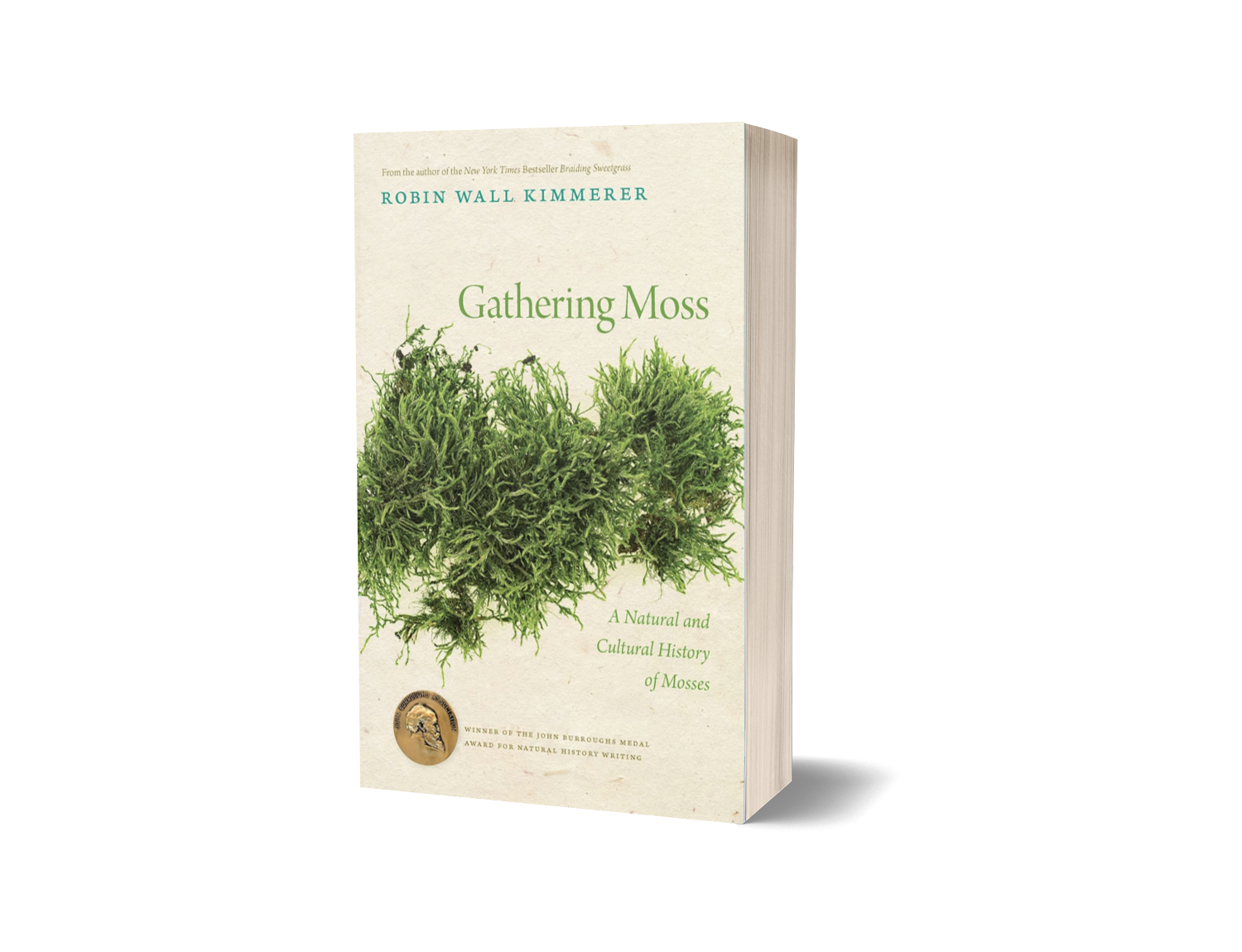
Living at the limits of our ordinary perception, mosses are a common but largely unnoticed element of the natural world. Gathering Moss is a beautifully written mix of science and personal reflection that invites readers to explore and learn from the elegantly simple lives of mosses.
Robin Wall Kimmerer's book is not an identification guide, nor is it a scientific treatise. Rather, it is a series of linked personal essays that will lead general readers and scientists alike to an understanding of how mosses live and how their lives are intertwined with the lives of countless other beings, from salmon and hummingbirds to redwoods and rednecks. Kimmerer clearly and artfully explains the biology of mosses, while at the same time reflecting on what these fascinating organisms have to teach us.
Drawing on her diverse experiences as a scientist, mother, teacher, and writer of Native American heritage, Kimmerer explains the stories of mosses in scientific terms as well as in the framework of indigenous ways of knowing. In her book, the natural history and cultural relationships of mosses become a powerful metaphor for ways of living in the world.
Gathering Moss will appeal to a wide range of readers, from bryologists to those interested in natural history and the environment, Native Americans, and contemporary nature and science writing.
THE INSTANT NEW YORK TIMES BESTSELLER
In a world that seems so troubled, how do we hold on to hope?
Looking at the headlines—the worsening climate crisis, a global pandemic, loss of biodiversity, political upheaval—it can be hard to feel optimistic. And yet hope has never been more desperately needed.
In this urgent book, Jane Goodall, one of the world's most famous naturalists, and Douglas Abrams, the internationally bestselling co-author of The Book of Joy, explore through intimate and thought-provoking dialogue one of the most sought after and least understood elements of human nature: hope. In The Book of Hope, Jane focuses on her "Four Reasons for Hope": The Amazing Human Intellect, The Resilience of Nature, The Power of Young People, and The Indomitable Human Spirit.
Drawing on decades of work that has helped expand our understanding of what it means to be human and what we all need to do to help build a better world, The Book of Hope touches on vital questions, including: How do we stay hopeful when everything seems hopeless? How do we cultivate hope in our children? What is the relationship between hope and action? Filled with moving and inspirational stories and photographs from Jane’s remarkable career, The Book of Hope is a deeply personal conversation with one of the most beloved figures in the world today.
While discussing the experiences that shaped her discoveries and beliefs, Jane tells the story of how she became a messenger of hope, from living through World War II to her years in Gombe to realizing she had to leave the forest to travel the world in her role as an advocate for environmental justice. And for the first time, she shares her profound revelations about her next, and perhaps final, adventure.
The second book in the Global Icons Series—which launched with the instant classic The Book of Joy with His Holiness the Dalai Lama and Archbishop Desmond Tutu—The Book of Hope is a rare and intimate look not only at the nature of hope but also into the heart and mind of a woman who revolutionized how we view the world around us and has spent a lifetime fighting for our future.
There is still hope, and this book will help guide us to it.
From the award-winning author of Creep comes a powerful book by a writer at the peak of her powers—at once a love letter to California and a literary tour de force that tells the story of resilience and reclamation through a relationship with plants, memory, myth, and indigenous knowledge.
Myriam Gurba has lived in California her entire life, with its plants and soils, forests and ecology, immersing herself in the language of the landscape as refracted through the languages and memories of her ancestors. In Poppy State, California plants serve as structural anchors in a wildly inventive work of narrative nonfiction that is part botanical criticism, part personal storytelling, and part study of place. The reader is invited to commune with California with Gurba as their guide, ushered through a compendium of anecdotes, reminiscences, utterances, lists, incantations, newspaper articles, and other ephemera.
Through the stories of these plants she comes to a new understanding of what occurs in the cultivation of a soul. Gurba learns if she can care for her body as she does her plants, her soul can thrive—like the California poppy on her kitchen windowsill. And through walks in the Angeles National Forest, she visits oaks, crows, elderberries, and sycamores, while foraging for acorns, flowers, and berries to adorn her altar at home. Poppy State is a riveting tour de force.
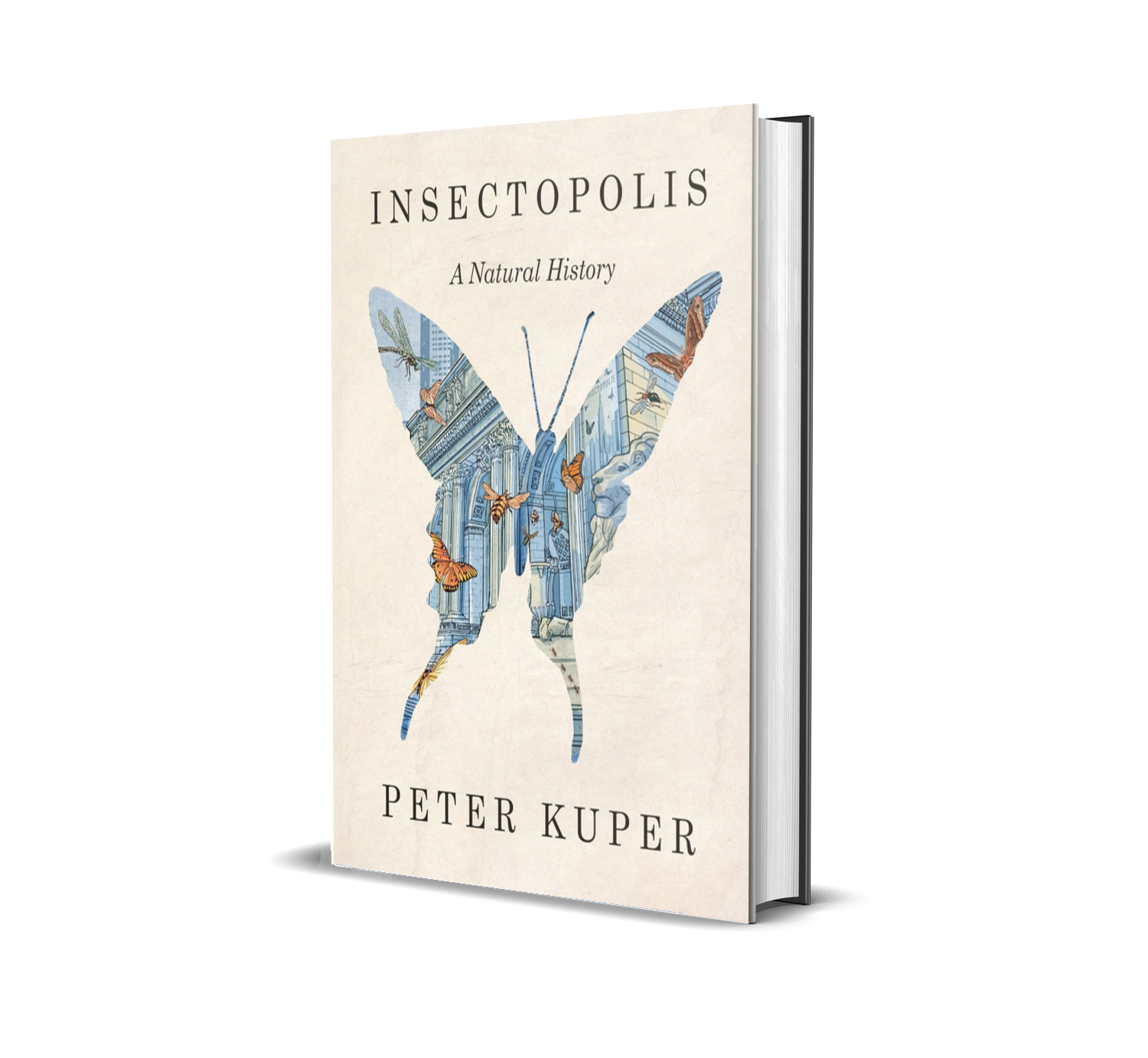
Shortlisted for the 2025 Wainwright Prize for Illustrative Books
Award-winning cartoonist Peter Kuper transports readers through the 400-million-year history of insects and the remarkable entomologists who have studied them.
This visually immersive work of graphic nonfiction dives into a world where ants, cicadas, bees, and butterflies visit a library exhibition that displays their stories and humanity’s connection to them throughout the ages. Kuper’s thrilling visual feast layers history and science, color and design, to tell the remarkable tales of dung beetles navigating by the stars, hawk-size prehistoric dragonflies hunting prey, and mosquitoes changing the course of human history.
Kuper also illuminates pioneering naturalists, from well-known figures like E. O. Wilson and Rachel Carson to unheralded luminaries like Charles Henry Turner, the Black American scholar who documented arthropod intelligence, and Maria Sybilla Merian, the seventeenth-century German regarded as the mother of entomology.
Galvanized by the sixth extinction and the ongoing insect crisis, Kuper takes readers on an unforgettable journey.
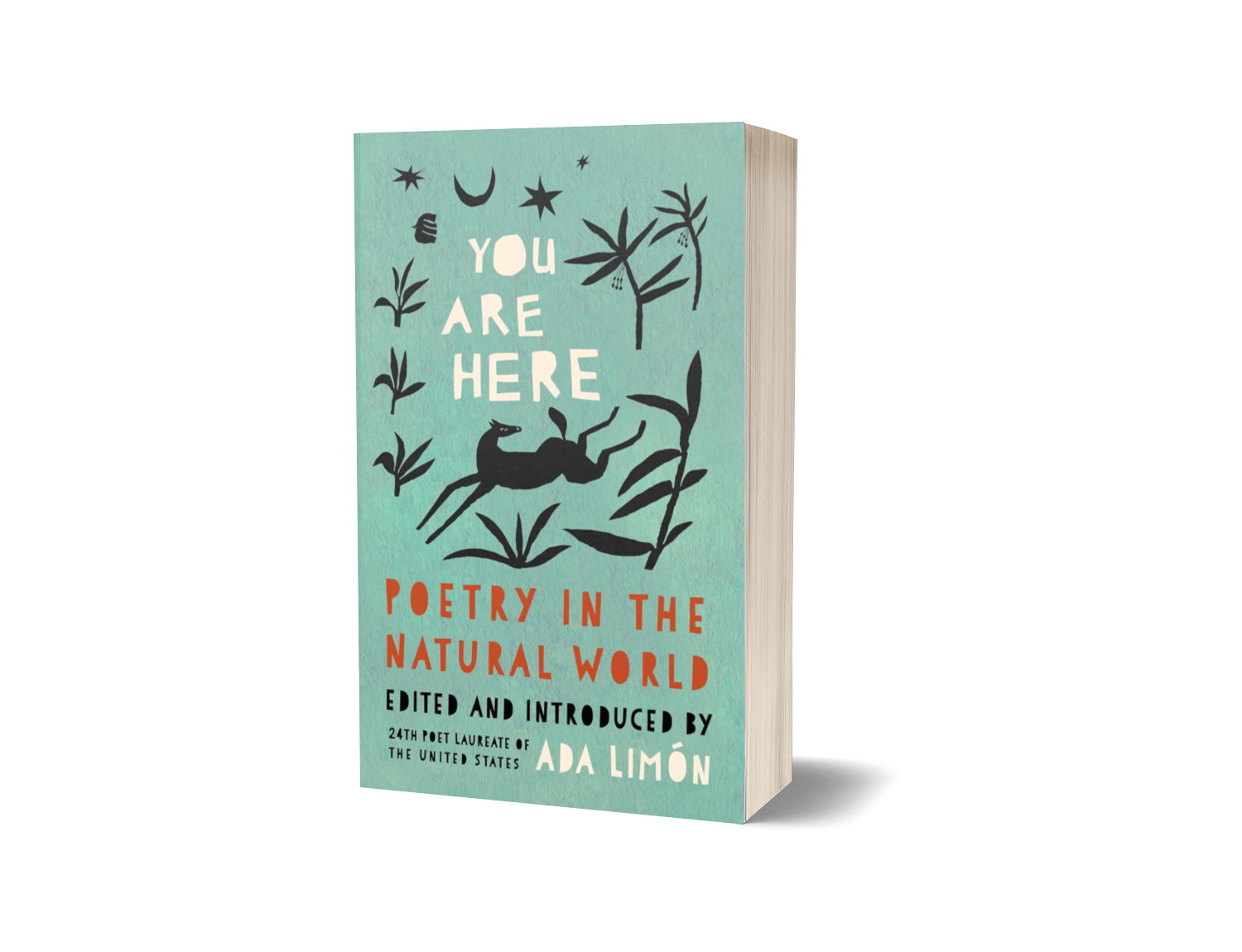
NATIONAL BESTSELLER
The #1 bestselling and beloved poetry anthology
Published in association with the Library of Congress and edited by the twenty-fourth Poet Laureate of the United States, a singular collection of poems reflecting on our relationship to the natural world by fifty of our most celebrated contemporary writers.
In recent years, our poetic landscape has evolved in profound and exciting ways. So has our planet. Edited and introduced by the twenty-fourth Poet Laureate of the United States, Ada Limón, this book challenges what we think we know about “nature poetry,” illuminating the myriad ways our landscapes—both literal and literary—are changing.
You Are Here features fifty previously unpublished poems from some of the nation’s most accomplished poets, including Joy Harjo, Diane Seuss, Rigoberto González, Jericho Brown, Aimee Nezhukumatathil, Paul Tran, and more. Each poem engages with its author’s local landscape—be it the breathtaking variety of flora in a national park, or a lone tree flowering persistently by a bus stop—offering an intimate model of how we relate to the world around us and a beautifully diverse range of voices from across the United States.
Joyful and provocative, wondrous and urgent, this singular collection of poems offers a lyrical reimagining of what “nature” and “poetry” are today, inviting readers to experience both anew.

From the best-selling author of Underland and "the great nature writer…of this generation" (Wall Street Journal), a revelatory book that transforms how we imagine rivers—and life itself.
Hailed in the New York Times as “a naturalist who can unfurl a sentence with the breathless ease of a master angler,” Robert Macfarlane brings his glittering style to a profound work of travel writing, reportage, and natural history. Is a River Alive? is a joyful, mind-expanding exploration of an ancient, urgent idea: that rivers are living beings who should be recognized as such in imagination and law.
Macfarlane takes readers on three unforgettable journeys teeming with extraordinary people, stories, and places: to the miraculous cloud-forests and mountain streams of Ecuador, to the wounded creeks and lagoons of India, and to the spectacular wild rivers of Canada—imperiled respectively by mining, pollution, and dams. Braiding these journeys is the life story of the fragile chalk stream a mile from Macfarlane’s house, a stream who flows through his own years and days.
Powered by dazzling prose and lit throughout by other minds and voices, Is a River Alive? will open hearts, challenge perspectives, and remind us that our fate flows with that of rivers—and always has.

REESE’S BOOK CLUB PICK
NEW YORK TIMES BESTSELLER
THE PERFECT GIFT FOR NATURE LOVERS, BIRDERS, AND GARDENERS, WITH ORIGINAL COLOR ART THROUGHOUT
From the beloved New York Times opinion writer: a luminous book that traces the passing of seasons, both personal and natural.
In The Comfort of Crows, Margaret Renkl presents a literary devotional: fifty-two chapters that follow the creatures and plants in her backyard over the course of a year. As we move through the seasons—from a crow spied on New Year’s Day, its resourcefulness and sense of community setting a theme for the year, to the lingering bluebirds of December, revisiting the nest box they used in spring—what develops is a portrait of joy and grief: joy in the ongoing pleasures of the natural world, and grief over winters that end too soon and songbirds that grow fewer and fewer.
Along the way, we also glimpse the changing rhythms of a human life. Grown children, unexpectedly home during the pandemic, prepare to depart once more. Birdsong and night-blooming flowers evoke generations past. The city and the country where Renkl raised her family transform a little more with each passing day. And the natural world, now in visible flux, requires every ounce of hope and commitment from the author—and from us. For, as Renkl writes, “radiant things are bursting forth in the darkest places, in the smallest nooks and deepest cracks of the hidden world.”
With fifty-two original color artworks by the author’s brother, Billy Renkl, The Comfort of Crows is a lovely and deeply moving book from a cherished observer of the natural world.

A gorgeous, witty account of birding, nature, and the beauty around us that hides in plain sight, written and illustrated by the best-selling author of The Joy Luck Club with a foreword by David Allen Sibley
"The drawings and essays in this book do a lot more than just describe the birds. They carry a sense of discovery through observation and drawing, suggest the layers of patterns in the natural world, and emphasize a deep personal connection between the watcher and the watched. The birds that inhabit Amy Tan’s backyard seem a lot like the characters in her novels.” —David Allen Sibley, from the foreword
Tracking the natural beauty that surrounds us, The Backyard Bird Chronicles maps the passage of time through daily entries, thoughtful questions, and beautiful original sketches. With boundless charm and wit, author Amy Tan charts her foray into birding and the natural wonders of the world.
In 2016, Amy Tan grew overwhelmed by the state of the world: Hatred and misinformation became a daily presence on social media, and the country felt more divisive than ever. In search of peace, Tan turned toward the natural world just beyond her window and, specifically, the birds visiting her yard. But what began as an attempt to find solace turned into something far greater—an opportunity to savor quiet moments during a volatile time, connect to nature in a meaningful way, and imagine the intricate lives of the birds she admired.

Exploding sharks, trees riding bicycles, a Hollywood-esque balloon dress, a giant sloth in costume, a stolen woodpecker, and a sentient bag of wasps—and remember: this is nonfiction.
Celebrated author and artist A. Kendra Greene’s No Less Strange or Wonderful is a brilliant and generous meditation— on the complex wonder of being alive, on how to pay attention to even the tiniest (sometimes strangest) details that glitter with insight, whimsy, and deep humanity, if only we’d really look.
In twenty-six sparkling essays, illuminated through both text and image, Greene is trying to make sense — of anything, really—but especially the things that matter most in life: love, connection, death, grief, the universe, meaning, nothingness, and everythingness. Through a series of encounters with strangers, children, and animals, the wild merges with the domestic; the everyday meets the sublime. Each essay returns readers to our smallest moments and our largest ones in a book that makes us realize—through its exuberant language, its playful curation, and its delightful associative leapfrogging—that they are, in fact, one in the same.

INSTANT NATIONAL BESTSELLER
A charming and eye-opening exploration of the special relationship between humans and chickens from Sy Montgomery, “one of our finest chroniclers of the natural world” (The New York Times).
For more than two decades, Sy Montgomery—whose The Soul of an Octopus was a National Book Award finalist—has kept a flock of chickens in her backyard. Each chicken has an individual personality (outgoing or shy, loud or quiet, reckless or cautious) and connects with Sy in her own way.
In this short, delightful book, Sy takes us inside the flock and reveals all the things that make chickens such remarkable creatures: only hours after leaving the egg, they are able to walk, run, and peck; relationships are important to them and the average chicken can recognize more than one hundred other chickens; they remember the past and anticipate the future; and they communicate specific information through at least twenty-four distinct calls. Visitors to her home are astonished by all this, but for Sy what’s more astonishing is how little most people know about chickens, especially considering there are about twenty percent more chickens on earth than people.
With a winning combination of personal narrative and science, What the Chicken Knows is exactly the kind of book that has made Sy Montgomery such a beloved and popular author.

A NATIONAL BESTSELLER
A MOST ANTICIPATED BOOK FROM BOSTON GLOBE, CHICAGO TRIBUNE, AND MORE!
From the #1 New York Times bestselling author Katherine Rundell comes a “rare and magical book” (Bill Bryson) reckoning with the vanishing wonders of our natural world
The world is more astonishing, more miraculous, and more wonderful than our wildest imaginings. In this brilliant and passionately persuasive book, Katherine Rundell takes us on a globe-spanning tour of the world's most awe-inspiring animals currently facing extinction.
Consider the seahorse: couples mate for life and meet each morning for a dance, pirouetting and changing colors before going their separate ways, to dance again the next day. The American wood frog survives winter by allowing itself to freeze solid, its heartbeat slowing until it stops altogether. Come spring, the heart kick-starts itself spontaneously back to life. As for the lemur, it lives in matriarchal troops led by an alpha female (it’s not unusual for female ring-tailed lemurs to slap males across the face when they become aggressive). Whenever they are cold or frightened, they group together in what’s known as a lemur ball, paws and tails intertwined, to form a furry mass as big as a bicycle wheel.
But each of these extraordinary animals is endangered or holds a sub-species that is endangered. This urgent, inspiring book of essays dedicated to 23 unusual and underappreciated creatures is a clarion call insisting that we look at the world around us with new eyes—to see the magic of the animals we live among, their unknown histories and capabilities, and above all how lucky we are to tread the same ground as such vanishing treasures.
Beautifully illustrated, and full of inimitable wit and intellect, Vanishing Treasures is a chance to be awestruck and lovestruck, to reckon with the beauty of the world, its fragility, and its strangeness.

This thrilling critique of the forces vying for our attention re-defines what we think of as productivity, show us a new way to connect with our environment, and reveals all that we've been too distracted to see about ourselves and our world.
When the technologies we use every day collapse our experiences into 24/7 availability, platforms for personal branding, and products to be monetized, nothing can be quite so radical as . . . doing nothing. Here, Jenny Odell sends up a flare from the heart of Silicon Valley, delivering an action plan to resist capitalist narratives of productivity and techno-determinism and to become more meaningfully connected in the process.
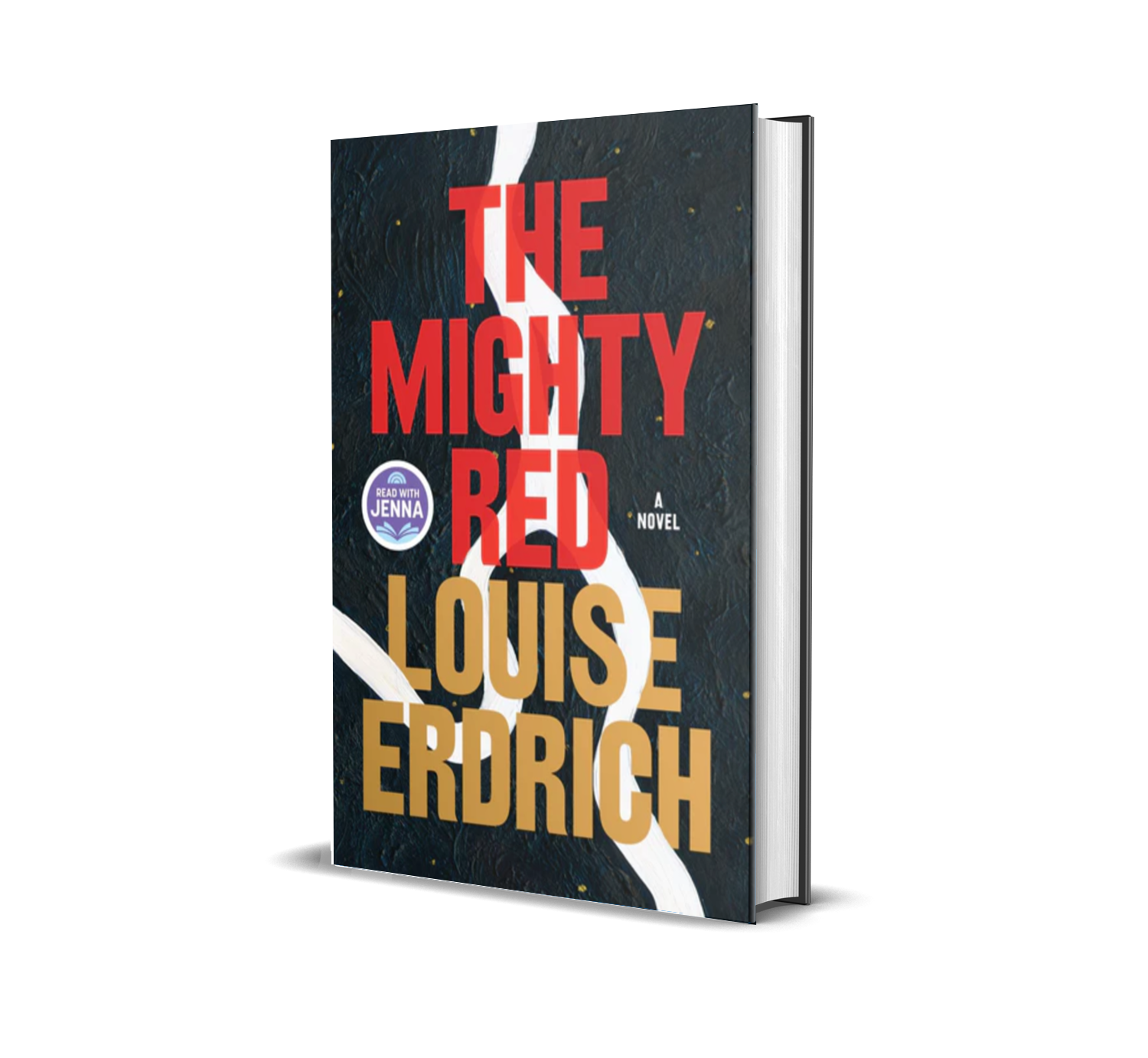
NEW YORK TIMES BESTSELLER
A READ WITH JENNA BOOK CLUB PICK
A FINALIST FOR THE KIRKUS PRIZE FOR FICTION
In this stunning novel, Pulitzer Prize and National Book Award–winning author Louise Erdrich tells a story of love, natural forces, spiritual yearnings, and the tragic impact of uncontrollable circumstances on ordinary people’s lives.
History is a flood. The mighty red . . .
In Argus, North Dakota, a collection of people revolve around a fraught wedding.
Gary Geist, a terrified young man set to inherit two farms, is desperate to marry Kismet Poe, an impulsive, lapsed Goth who can't read her future but seems to resolve his.
Hugo, a gentle red-haired, home-schooled giant, is also in love with Kismet. He’s determined to steal her and is eager to be a home wrecker.
Kismet's mother, Crystal, hauls sugar beets for Gary's family, and on her nightly runs, tunes into the darkness of late-night radio, sees visions of guardian angels, and worries for the future, her daughter’s and her own.
Human time, deep time, Red River time, the half-life of herbicides and pesticides, and the elegance of time represented in fracking core samples from unimaginable depths, is set against the speed of climate change, the depletion of natural resources, and the sudden economic meltdown of 2008-2009. How much does a dress cost? A used car? A package of cinnamon rolls? Can you see the shape of your soul in the everchanging clouds? Your personal salvation in the giant expanse of sky? These are the questions the people of the Red River Valley of the North wrestle with every day.
The Mighty Red is a novel of tender humor, disturbance, and hallucinatory mourning. It is about on-the-job pains and immeasurable satisfactions, a turbulent landscape, and eating the native weeds growing in your backyard. It is about ordinary people who dream, grow up, fall in love, struggle, endure tragedy, carry bitter secrets; men and women both complicated and contradictory, flawed and decent, lonely and hopeful. It is about a starkly beautiful prairie community whose members must cope with devastating consequences as powerful forces upend them. As with every book this great modern master writes, The Mighty Red is about our tattered bond with the earth, and about love in all of its absurdity and splendor.

From the #1 New York Times bestselling author of Braiding Sweetgrass, a bold and inspiring vision for how to orient our lives around gratitude, reciprocity, and community, based on the lessons of the natural world.
As Indigenous scientist and author of Braiding Sweetgrass Robin Wall Kimmerer harvests serviceberries alongside the birds, she considers the ethic of reciprocity that lies at the heart of the gift economy. How, she asks, can we learn from Indigenous wisdom and the plant world to reimagine what we value most? Our economy is rooted in scarcity, competition, and the hoarding of resources, and we have surrendered our values to a system that actively harms what we love. Meanwhile, the serviceberry’s relationship with the natural world is an embodiment of reciprocity, interconnectedness, and gratitude. The tree distributes its wealth—its abundance of sweet, juicy berries—to meet the needs of its natural community. And this distribution ensures its own survival. As Kimmerer explains, “Serviceberries show us another model, one based upon reciprocity, where wealth comes from the quality of your relationships, not from the illusion of self-sufficiency.”
As Elizabeth Gilbert writes, Robin Wall Kimmerer is “a great teacher, and her words are a hymn of love to the world.” The Serviceberry is an antidote to the broken relationships and misguided goals of our times, and a reminder that “hoarding won’t save us, all flourishing is mutual.”
Robin Wall Kimmerer is donating her advance payments from this book as a reciprocal gift, back to the land, for land protection, restoration, and justice.

From a fearless, internationally acclaimed activist comes an impassioned memoir about an indigenous childhood, a clash of cultures, and the fight to save the Amazon rainforest
We Will Be Jaguars is an astonishing memoir by an equally astonishing woman. Nenquimo is a winner of TIME magazine’s Earth Award, and MS. magazine named this book among the Most Anticipated Feminist Books of 2024.
Born into the Waorani tribe of Ecuador’s Amazon rainforest—one of the last to be contacted by missionaries in the 1950s—Nemonte Nenquimo had a singular upbringing.
She was taught about plant medicines, foraging, oral storytelling, and shamanism by her elders. At age fourteen, she left the forest for the first time to study with an evangelical missionary group in the city. Eventually, her ancestors began appearing in her dreams, pleading with her to return and embrace her own culture. She listened.
Two decades later, Nemonte has emerged as one of the most forceful voices in climate change activism. She has spearheaded the alliance of indigenous nations across the Upper Amazon and led her people to a landmark victory against Big Oil, protecting over a half million acres of primary rainforest. Her message is as sharp as a spear—honed by her experiences battling loggers, miners, oil companies and missionaries.
In We Will Be Jaguars, she partners with her husband, Mitch Anderson, founder of Amazon Frontlines, digging into generations of oral history, uprooting centuries of conquest, hacking away at racist notions of indigenous peoples, and ultimately revealing a life story as rich, harsh, and vital as the Amazon rainforest herself.

Winner of the Pulitzer Prize in Fiction
Named One of the Best Books of the 21st Century by the New York Times Book Review
A New York Times Notable Book and a Washington Post, Time, Oprah Magazine, Newsweek, Chicago Tribune, and Kirkus Reviews Best Book of the Year
The Overstory, winner of the 2019 Pulitzer Prize in Fiction, is a sweeping, impassioned work of activism and resistance that is also a stunning evocation of—and paean to—the natural world. From the roots to the crown and back to the seeds, Richard Powers’s twelfth novel unfolds in concentric rings of interlocking fables that range from antebellum New York to the late twentieth-century Timber Wars of the Pacific Northwest and beyond. There is a world alongside ours—vast, slow, interconnected, resourceful, magnificently inventive, and almost invisible to us. This is the story of a handful of people who learn how to see that world and who are drawn up into its unfolding catastrophe.

A masterful hybrid of nature writing and cultural studies that investigates our connection with deer—from mythology to biology, from forests to cities, from coexistence to control and extermination—and invites readers to contemplate the paradoxes of how humans interact with and shape the natural world
Deer have been an important part of the world that humans occupy for millennia. They’re one of the only large animals that can thrive in our presence. In the 21st century, our relationship is full of contradictions: We hunt and protect them, we cull them from suburbs while making them an icon of wilderness, we see them both as victims and as pests. But there is no doubt that we have a connection to deer: in mythology and story, in ecosystems biological and digital, in cities and in forests.
Delving into the historical roots of these tangled attitudes and how they play out in the present, Erika Howsare observes scientists capture and collar fawns, hunters show off their trophies, a museum interpreter teaching American history while tanning a deer hide, an animal-control officer collecting the carcasses of deer killed by sharpshooters, and a woman bottle-raising orphaned fawns in her backyard. As she reports these stories, Howsare’s eye is always on the bigger picture: Why do we look at deer in the ways we do, and what do these animals reveal about human involvement in the natural world? For readers of H is for Hawk and Fox & I, The Age of Deer offers a unique and intimate perspective on a very human relationship.

This "eye-opening and essential" book (Bill Gates) will transform how you see our biggest environmental problems—and explains how we can solve them.
It’s become common to tell kids that they’re going to die from climate change. We are constantly bombarded by doomsday headlines that tell us the soil won’t be able to support crops, fish will vanish from our oceans, and that we should reconsider having children.
But in this bold, radically hopeful book, data scientist Hannah Ritchie argues that if we zoom out, a very different picture emerges. In fact, the data shows we’ve made so much progress on these problems that we could be on track to achieve true sustainability for the first time in human history. Did you know that:
Carbon emissions per capita are actually down
Deforestation peaked back in the 1980s
The air we breathe now is vastly improved from centuries ago
And more people died from natural disasters a hundred years ago?
Packed with the latest research, practical guidance, and enlightening graphics, this book will make you rethink almost everything you’ve been told about the environment. Not the End of the World will give you the tools to understand our current crisis and make lifestyle changes that actually have an impact. Hannah cuts through the noise by outlining what works, what doesn’t, and what we urgently need to focus on so we can leave a sustainable planet for future generations.
These problems are big. But they are solvable. We are not doomed. We can build a better future for everyone. Let’s turn that opportunity into reality.

First Place Winner of the Society of Environmental Journalists' Rachel Carson Environment Book Award
From a former New York Times science writer, this urgent call to action—updated for paperback with a new preface and afterword—will empower you to stand up to climate change and environmental pollution by making simple but impactful everyday choices.
With urgency and wit, Tatiana Schlossberg explains that far from being only a distant problem of the natural world created by the fossil fuel industry, climate change is all around us, all the time, lurking everywhere in our convenience-driven society, all without our realizing it.
By examining the unseen and unconscious environmental impacts in four areas-the Internet and technology, food, fashion, and fuel – Schlossberg helps readers better understand why climate change is such a complicated issue, and how it connects all of us: How streaming a movie on Netflix in New York burns coal in Virginia; how eating a hamburger in California might contribute to pollution in the Gulf of Mexico; how buying an inexpensive cashmere sweater in Chicago expands the Mongolian desert; how destroying forests from North Carolina is necessary to generate electricity in England.
Cataloging the complexities and frustrations of our carbon-intensive society with a dry sense of humor, Schlossberg makes the climate crisis and its solutions interesting and relevant to everyone who cares, even a little, about the planet. She empowers readers to think about their stuff and the environment in a new way, helping them make more informed choices when it comes to the future of our world.
Most importantly, this is a book about the power we have as voters and consumers to make sure that the fight against climate change includes all of us and all of our stuff, not just industry groups and politicians. If we have any hope of solving the problem, we all have to do it together.

A New York Times Bestseller
A Washington Post Bestseller
A Los Angeles Times Bestseller
Named a “Best Essay Collection of the Decade” by Literary Hub
Updated with a new introduction from Robin Wall Kimmerer, the hardcover special edition of Braiding Sweetgrass, reissued in honor of the fortieth anniversary of Milkweed Editions, celebrates the book as an object of meaning that will last the ages. Beautifully bound with a new cover featuring an engraving by Tony Drehfal, this edition includes a bookmark ribbon, and five brilliantly colored illustrations by artist Nate Christopherson. In increasingly dark times, we honor the experience that more than two million readers have cherished about the book—gentle, simple, tactile, beautiful, even sacred—and offer an edition that will inspire readers to gift it again and again, spreading the word about scientific knowledge, indigenous wisdom, and the teachings of plants.
As a botanist, Robin Wall Kimmerer has been trained to ask questions of nature with the tools of science. As a member of the Citizen Potawatomi Nation, she embraces the notion that plants and animals are our oldest teachers. In Braiding Sweetgrass, Kimmerer brings these two lenses of knowledge together to take us on “a journey that is every bit as mythic as it is scientific, as sacred as it is historical, as clever as it is wise” (Elizabeth Gilbert).
Drawing on her life as an indigenous scientist, a mother, and a woman, Kimmerer shows how other living beings—asters and goldenrod, strawberries and squash, salamanders, algae, and sweetgrass—offer us gifts and lessons, even if we’ve forgotten how to hear their voices. In a rich braid of reflections that range from the creation of Turtle Island to the forces that threaten its flourishing today, she circles toward a central argument: that the awakening of a wider ecological consciousness requires the acknowledgment and celebration of our reciprocal relationship with the rest of the living world. For only when we can hear the languages of other beings will we be capable of understanding the generosity of the earth, and learn to give our own gifts in return.

Foreword by Tim Flannery, translated by Jane Billinghurst
AN INSTANT NEW YORK TIMES BESTSELLER
With over 2 million copies sold worldwide, this beautifully written book journeys deep into the forest to uncover the fascinating—and surprisingly moving—hidden life of trees.
Are trees social beings? In The Hidden Life of Trees forester and author Peter Wohlleben convincingly makes the case that, yes, the forest is a social network. He draws on groundbreaking scientific discoveries to describe how trees are like human families: tree parents live together with their children, communicate with them, support them as they grow, share nutrients with those who are sick or struggling, and even warn each other of impending dangers. Wohlleben also shares his deep love of woods and forests, explaining the amazing processes of life, death, and regeneration he has observed in his woodland.
After learning about the complex life of trees, a walk in the woods will never be the same again.
Includes a Note From a Forest Scientist, by Dr.Suzanne Simard
Published in Partnership with the David Suzuki Institute

A New York Times Bestseller
Barnes & Noble 2020 Book of the Year
An NPR Best Book of 2020
An Esquire Best Book of 2020
A BuzzFeed Best Book of 2020
A Smithsonian Magazine “Top Ten Book About Travel of 2020”
From beloved, award-winning poet Aimee Nezhukumatathil comes a debut work of nonfiction—a collection of essays about the natural world and how its inhabitants can teach, support, and inspire us.
As a child, Nezhukumatathil called many places home: the grounds of a Kansas mental institution, where her Filipina mother was a doctor; the open skies and tall mountains of Arizona, where she hiked with her Indian father; and the chillier climes of western New York and Ohio. But no matter where she was transplanted—no matter how awkward the fit or forbidding the landscape—she was able to turn to our world’s fierce and funny creatures for guidance.
“What the peacock can do,” she tells us, “is remind you of a home you will run away from and run back to all your life.” The axolotl teaches us to smile, even in the face of unkindness; the touch-me-not plant shows us how to shake off unwanted advances; the narwhal demonstrates how to survive in hostile environments. Even in the strange and the unlovely, Nezhukumatathil finds beauty and kinship. For it is this way with wonder: it requires that we are curious enough to look past the distractions in order to fully appreciate the world’s gifts.
Warm, lyrical, and gorgeously illustrated by Fumi Nakamura, World of Wonders is a book of sustenance and joy.

PART SWEEPING EVOCATION OF EARTH’S RHYTHMS, PART LITERARY ARCHIVE, PART POST-HUMAN NOVEL, THE NATURE BOOK COLLAGES DESCRIPTIONS OF THE NATURAL WORLD INTO A SINGULAR SYMPHONIC PAEAN TO THE PLANET.
What does our nature writing say about us, and more urgently, what would it say without us? Tom Comitta investigates these questions and more in The Nature Book, a “literary supercut” that arranges writing about the natural world from three hundred works of fiction into a provocative re-envisioning of the novel. With fiction’s traditional background of flora and fauna brought to the fore, people and their structures disappear, giving center stage to animals, landforms, and weather patterns—honored in their own right rather than for their ambient role in human drama. The Nature Book challenges the confines of anthropocentrism with sublime artistic vision, traversing mountains, forests, oceans, and space to shift our attention toward the magnificently complex and interconnected world around us.

NEW YORK TIMES BESTSELLER
ONE OF THE BEST BOOKS OF THE YEAR—Time, BBC Science Focus, The Daily Mail, Geographical, The Times, The Telegraph, New Statesman, London Evening Standard, Science Friday
Winner of the Wainwright Prize, the Royal Society Science Book Prize, and the Guild of Food Writers Award
When we think of fungi, we likely think of mushrooms. But mushrooms are only fruiting bodies, analogous to apples on a tree. Most fungi live out of sight yet make up a massively diverse kingdom of organisms that supports and sustains nearly all living systems. Fungi provide a key to understanding the planet on which we live and the ways we think, feel, and behave.
In the first edition of this mind-bending book, Sheldrake introduced us to this mysterious but massively diverse kingdom of life. This exquisitely designed volume, abridged from the original, features more than one hundred full-color images that bring the spectacular variety, strangeness, and beauty of fungi to life as never before.
Fungi throw our concepts of individuality and even intelligence into question. They are metabolic masters, earth makers, and key players in most of life’s processes. They can change our minds, heal our bodies, and even help us remediate environmental disasters. By examining fungi on their own terms, Sheldrake reveals how these extraordinary organisms—and our relationships with them—are changing our understanding of how life works.
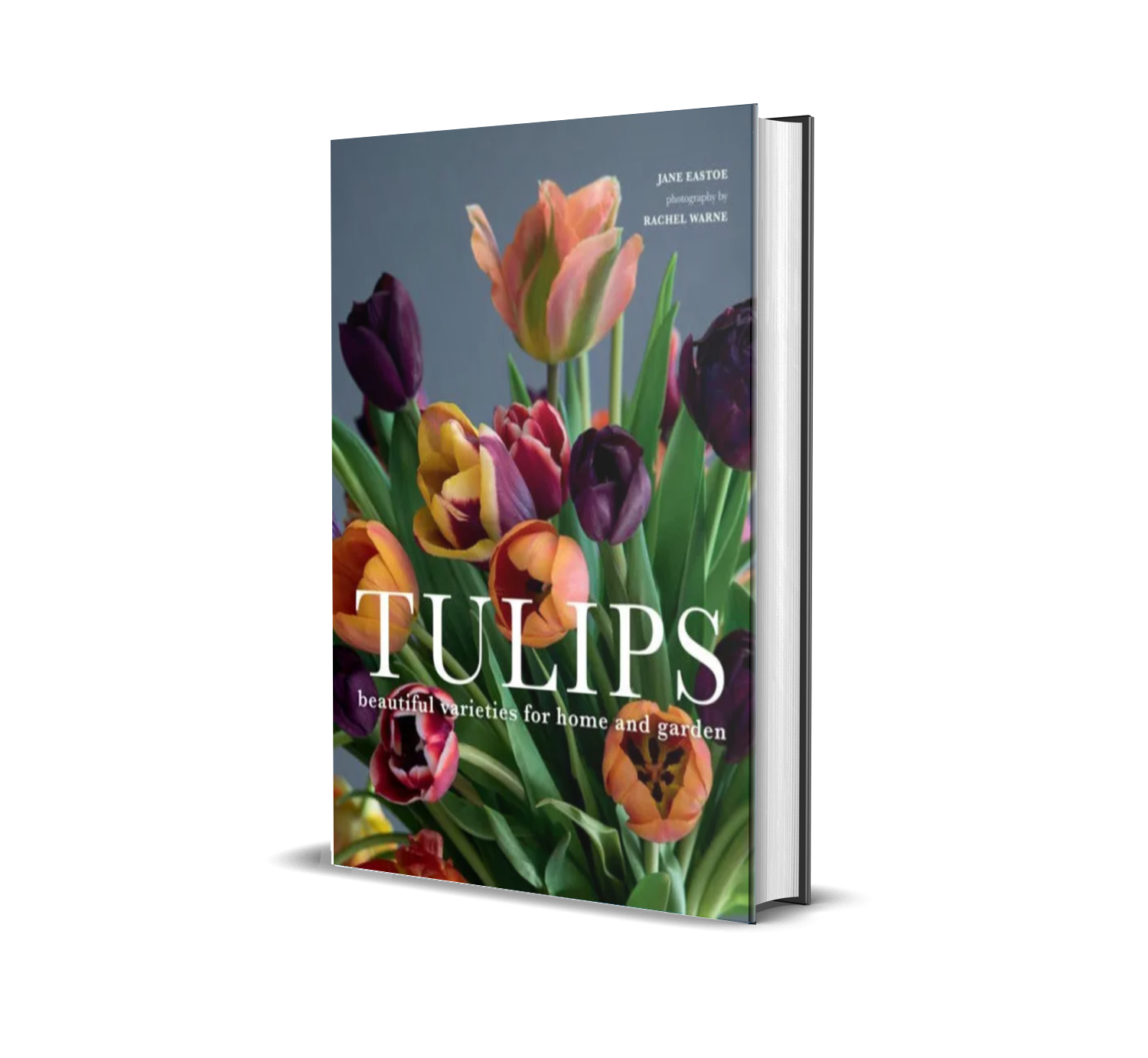
From the tulip fields of Netherlands to your garden flower patch, tulips are loved the world over. Jane Eastoe’s passion for gardening and Rachel Werne’s spectacular photography combine to showcase these gorgeous bulbs and show that anyone can grow and enjoy tulips at home. Tulips have more than 3,000 variations and their diverse textures mean that they can work anywhere, from vases to garden plots, from romantic bouquets to wedding boutonnieres.
Along with the fascinating history of the flowers, Tulips details more than 50 of the most beautiful varieties, detailing when they bloom, their size, and, of course, what they’ll look like. From the raspberry swirl of Zurel and the petticoat-like frills of Weber’s Parrot, to the crystal rim of the Mascotte and the flaming petals of the Fabio tulip, you’ll discover a stunning range of specimens to grow, including historical and contemporary varieties. With engaging commentary on each bloom, easy-to-follow advice and glorious photography, this book will appeal to everyone who appreciates the majesty of the tulip.

Bring beauty in the form of nature into your home and your lifestyle, no matter where you live, through artful floral arrangements, as well as indoor and outdoor flowering plants.
The Artistry of Flowers encourages everyone to live with florals and to appreciate their beauty as we appreciate art. Celebrated floral designer Gabriela Salazar teaches us how to look at flowers and understand their characteristics from an artist’s perspective. By exploring different shapes, colors, and textures, she shows us how to understand flowers and their living, transitory nature.
Drawing on her painting background, Salazar looks at floral arrangements as compositions. She highlights which type of blooms are best for different designs and shares building blocks for floral designs ranging from simple and sculptural to complex and colorful, including arrangements for any mood and different decor. Salazar inspires us to explore our creativity, empowering us to design our own arrangements.
Combining philosophical and practical tips, such as appreciating how flowers change over time and working with fragility The Artistry of Flowers is a treatise on flower appreciation. The stunning photography by Ngoc Minh Ngo—known for Rizzoli books such as In Bloom and Eden Revisited—complements Salazar’s enthusiastic instruction.

A one-of-a-kind guide to birding locally that encourages readers to slow down and notice the spectacular birds all around them.
Many birders travel far and wide to popular birding destinations to catch sight of rare or “exotic” birds. In Slow Birding, evolutionary biologist Joan E. Strassmann introduces readers to the joys of birding right where they are.
In this inspiring guide to the art of slow birding, Strassmann tells colorful stories of the most common birds to be found in the United States—birds we often see but might not have considered deeply before. For example, northern cardinals thrive in the city, where they are free from predators. White brows on a male white-throated sparrow indicate that he is likely to be a philanderer. This essential guide to the fascinating world of common, everyday birds features:
detailed portraits of individual bird species and the scientists who have discovered and observed them advice and guidance on what to look for when slow birding, so that you can uncover clues to the reasons behind specific bird behaviors bird-focused activities that will open your eyes more to the fascinating world of birds.
Slow Birding is the perfect guide for the birder looking to appreciate the beauty of the birds right in their own backyard, observing keenly how their behaviors change from day to day and season to season.

NEW YORK TIMES BESTSELLER
A “thrilling” (The New York Times), “dazzling” (The Wall Street Journal) tour of the radically different ways that animals perceive the world that will fill you with wonder and forever alter your perspective, by Pulitzer Prize-winning science journalist Ed Yong
ONE OF THE TEN BEST BOOKS OF THE YEAR: The Wall Street Journal, The New York Times, Time, People, The Philadelphia Inquirer, Slate, Reader’s Digest, Publishers Weekly, BookPag, Oprah Daily, The New Yorker, The Washington Post, The Guardian, Smithsonian Magazine, Prospect (UK), She Reads, Kirkus Reviews, Library Journal
The Earth teems with sights and textures, sounds and vibrations, smells and tastes, electric and magnetic fields. But every kind of animal, including humans, is enclosed within its own unique sensory bubble, perceiving but a tiny sliver of our immense world.
In An Immense World, Ed Yong coaxes us beyond the confines of our own senses, allowing us to perceive the skeins of scent, waves of electromagnetism, and pulses of pressure that surround us. We encounter beetles that are drawn to fires, turtles that can track the Earth’s magnetic fields, fish that fill rivers with electrical messages, and even humans who wield sonar like bats. We discover that a crocodile’s scaly face is as sensitive as a lover’s fingertips, that the eyes of a giant squid evolved to see sparkling whales, that plants thrum with the inaudible songs of courting bugs, and that even simple scallops have complex vision. We learn what bees see in flowers, what songbirds hear in their tunes, and what dogs smell on the street. We listen to stories of pivotal discoveries in the field, while looking ahead at the many mysteries that remain unsolved.
Funny, rigorous, and suffused with the joy of discovery, An Immense World takes us on what Marcel Proust called “the only true voyage . . . not to visit strange lands, but to possess other eyes.”
- AAPI Authors & Culture
- Aliens
- Anthology
- Astrology
- Astronomy
- Autobiography & Memoirs
- Banned
- Bestsellers
- Black / African Authors & Culture
- Business, Economics & Finance
- Children's
- Classics
- Comics & Graphic Novels
- Critically Acclaimed
- Dystopian
- Environmental & Nature
- Fairy, Folk Tales & Mythology
- Feminism & Women Studies
- Fiction
- Food & Beverages
- Founder's Faves
- Free Palestine
- Gardening
- Health & Fitness
- Hispanic/Latine Authors & Culture
- Historical
- Horror
- Indie Author
- Indigenous Authors & Culture
- Journal
- LGBTQ+
- Literary Fiction
- Magical Realism
- Medical
- Mental Health
- Middle Eastern Authors & Culture
- Misc Gifts
- Motivational & Self-Help
- Music
- NYT 100 Best Books of 21st Century
- Nobel Prize Winner
- Nonfiction
- Persian Authors & Culture
- Philosophy
- Poetry
- Political Science
- Psychology
- Pulitzer Prize Winner
- Reference
- Religion

“Insightful, humane, and original, Something Followed Us Home features the most exciting voices in dark fiction today and is a must read for any weird/lit/horror fan.” —Paul Tremblay, New York Times bestselling author of Horror Movie and A Head Full of Ghosts
Dive into the chilling depths of Latine horror with this groundbreaking anthology, edited by Bram Stoker Award winner Cynthia Pelayo, where each story reimagines immigration, colonization, faith, and folklore as the fears we inherit and carry across borders and generations.
Something followed us home. It crawled in with our prayers, slipped into our beds, watched from mirrors, waited in water, and learned our names.
Gathering chilling work from some of today’s most acclaimed Latiné voices, this horror anthology moves through haunted households, brutal landscapes, sacred spaces turned dangerous, and bodies claimed by forces both ancient and intimate. The dead murmur behind locked doors. Bones rebuild themselves under merciless suns. Love becomes a doorway for demonic hunger. Blood, devotion, and memory intertwine as the past presses back with teeth.
Something Followed Us Home is an unnerving, visceral, and impossible-to-shake collection that proves that what is carried forward does not remain quiet, and what follows us rarely leaves without taking something in return.
Featuring stories by: Agustina Bazterrica, Isabel Cañas, Gerardo Sámano Córdova, Zoraida Córdova, Ann Dávila Cardinal, Mariana Enriquez, Carolina Flórez-Cerchiaro, Xochitl Gonzalez, Leopoldo Goût, Ananda Lima, Juan Martinez, Mónica Ojeda, Daniel José Older, Cynthia Pelayo, Lilliam Rivera, Diana Rodriguez Wallach, Alex Segura